

Details
Description
Excellent Pre-Owned Condition.
Did you know that Seneca applied for a patent on Driftwood in May of 1953? The patent …
Read more
Excellent Pre-Owned Condition.
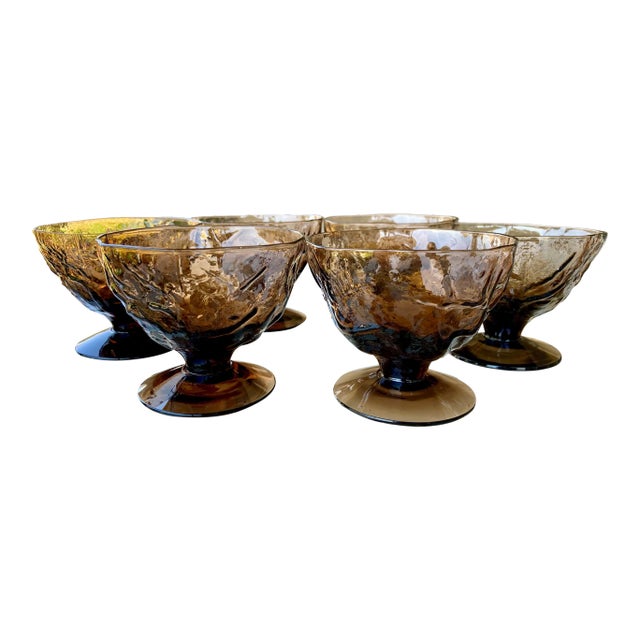
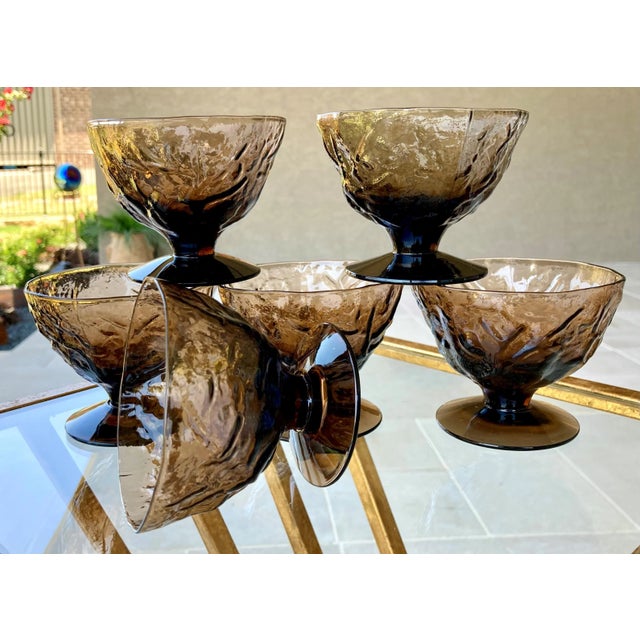
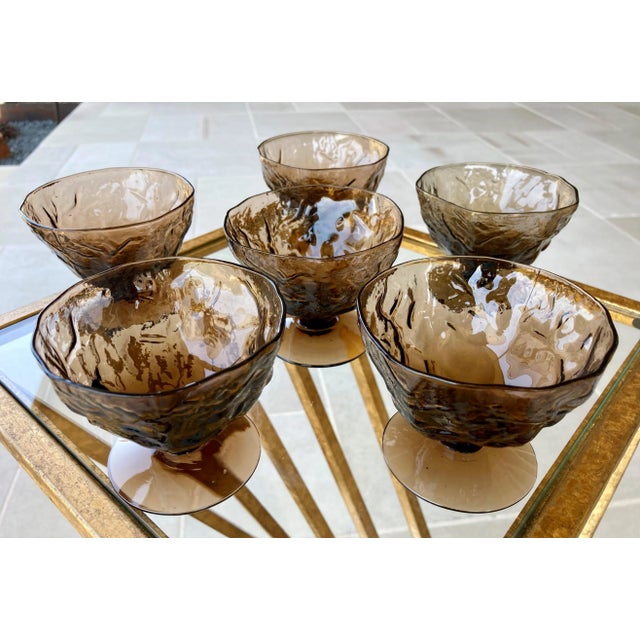
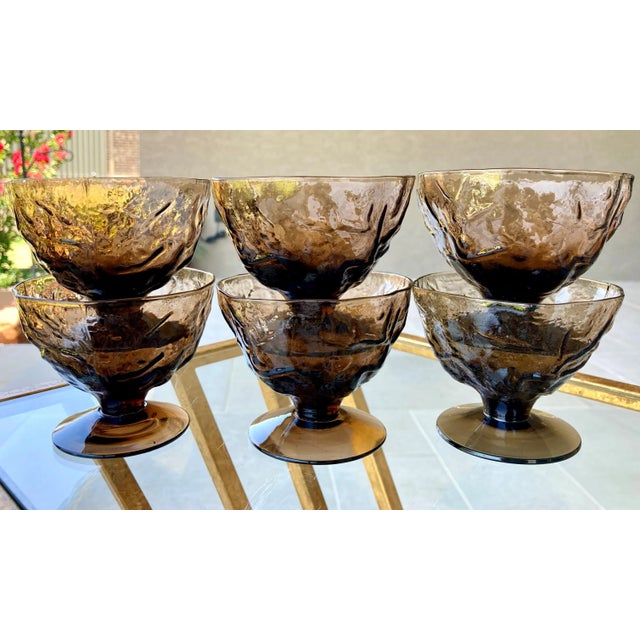
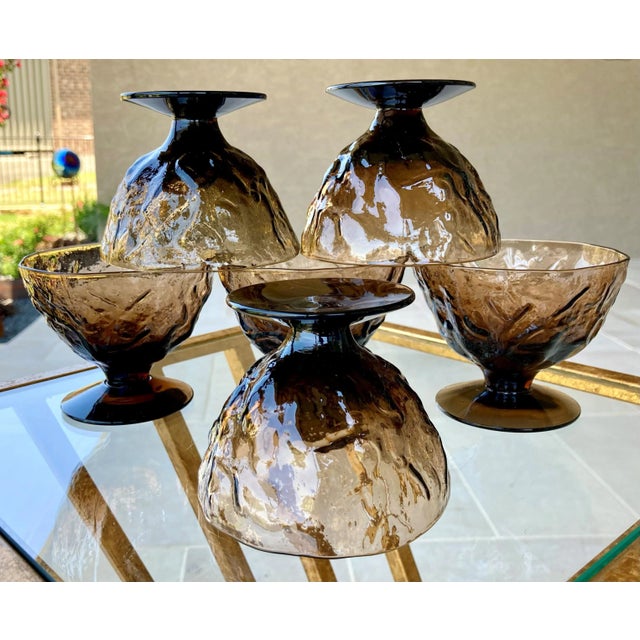
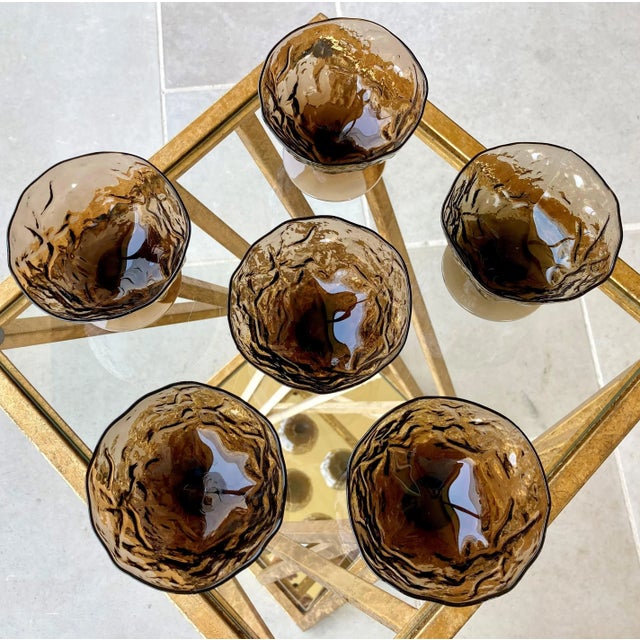
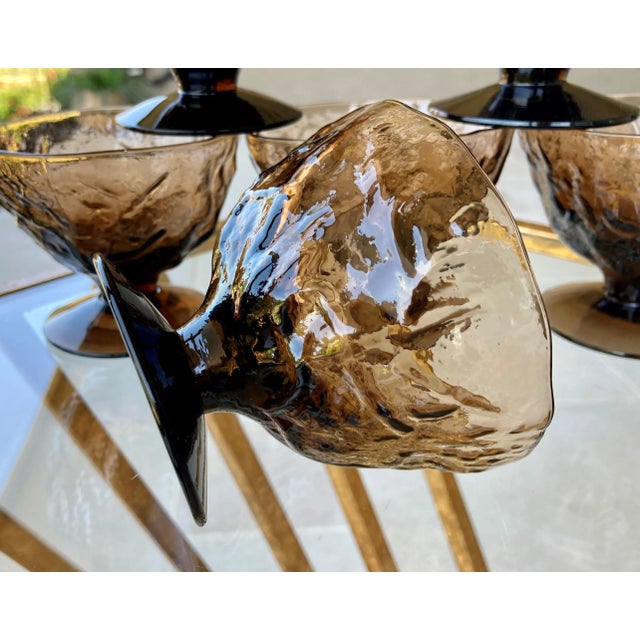
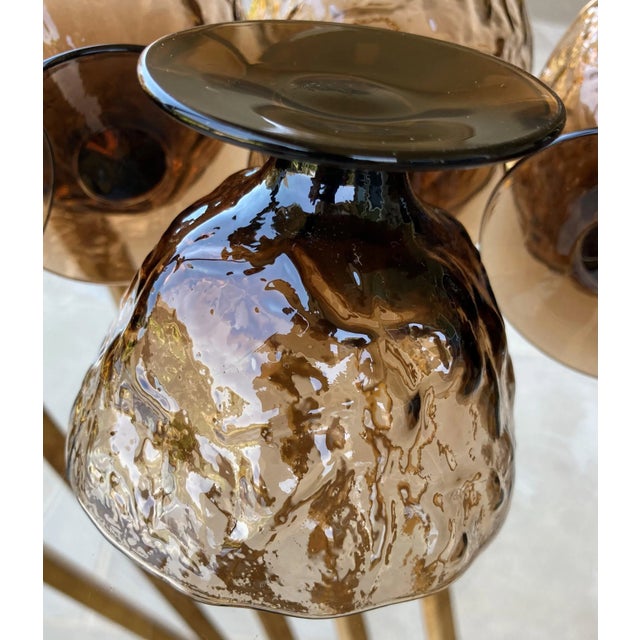
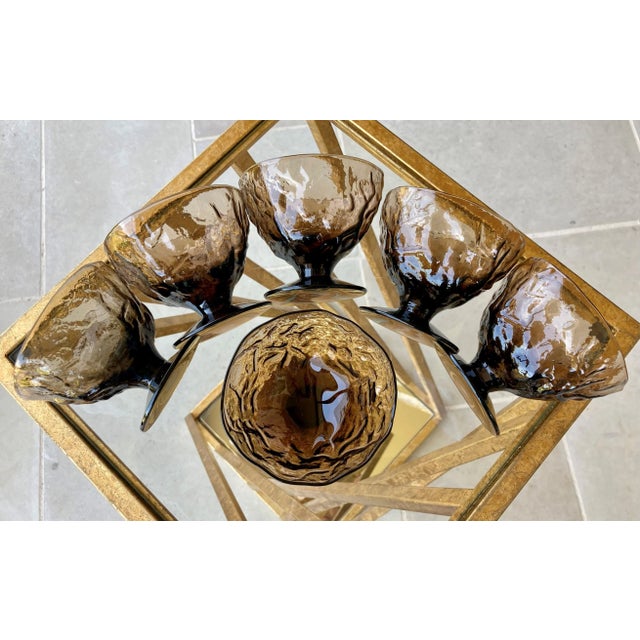
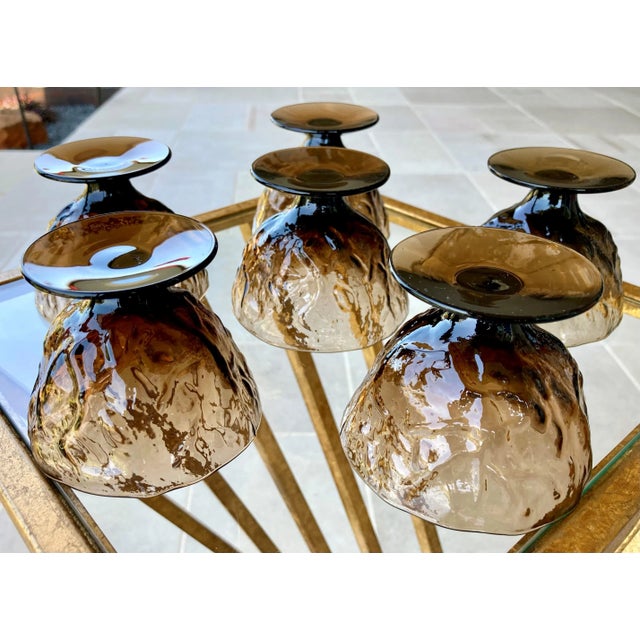
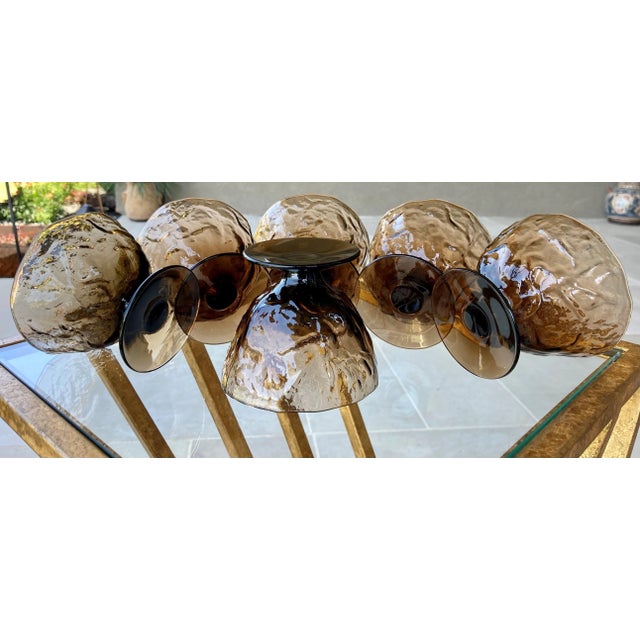
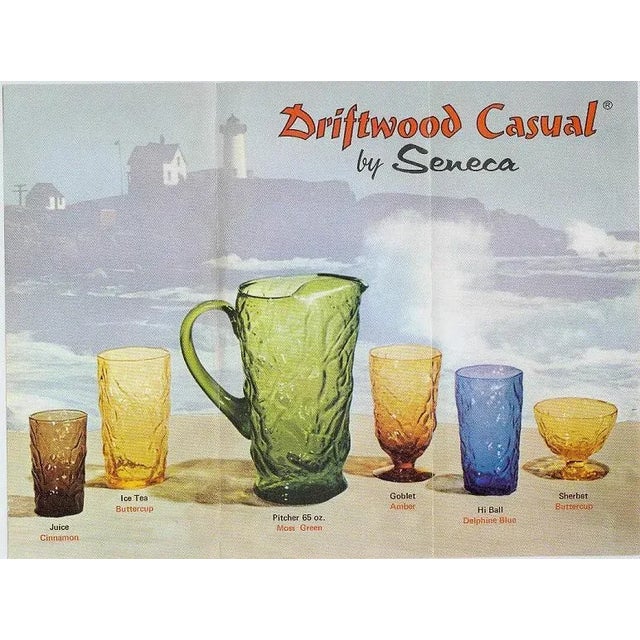
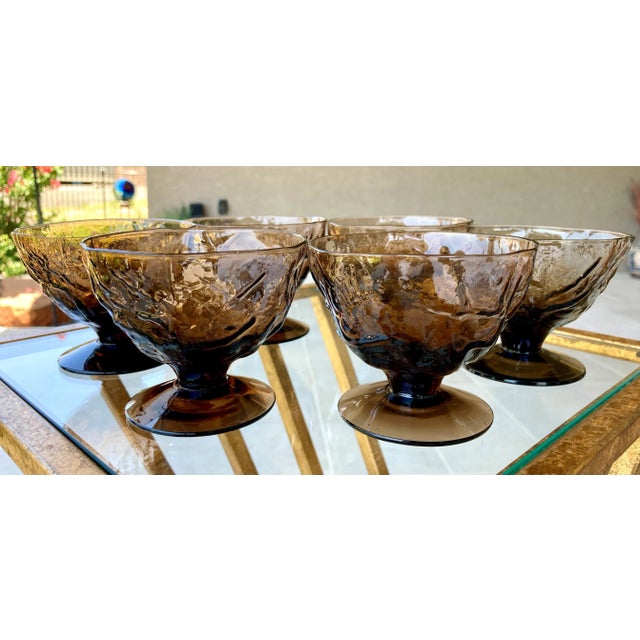
Did you know that Seneca applied for a patent on Driftwood in May of 1953? The patent was granted October 20 of that same year and Driftwood Casual collection (often shortened to Driftwood) made its debut later that year. Driftwood is available in a rainbow of colors, though not all pieces will be found in every color. The color of these cuties was named cinnamon (sometimes called brown) which made its debut in the late 1960s. There is an umber undertone to the color when the cups are in bright light/sunlight. Each one measures 3” x 3¾” x 2½” height/lip diameter/pedestal base diameter; capacity when filled to the brim is 6 oz. apiece; together the set weighs 2 lbs. 4 oz. Crafted from moulded pressed glass, all six are in excellent condition with minimal, if any visible wear. There are random occlusions, not unusual in glass and original to the manufacturing process. For fun, I’ve included a photo of Seneca’s 1970 catalog on Driftwood. For a collector of Driftwood, especially cinnamon, these sweet things should be a must have or a perfect gift for someone who is.
Thanks for looking!
Short History on Seneca Glass Company
In 1891, a group of glassworkers, largely neighbors from the Black Forest area of Germany, opened the Seneca Glass Company in Fostoria, Ohio, in a factory recently vacated by Fostoria Glass Company’s relocation to Moundsville. In 1896, Seneca Glass followed Fostoria to West Virginia. Seneca selected Morgantown, becoming the first of more than 20 glass factories to operate there. By the next year Seneca employed 250 workers. From the beginning Seneca created quality, hand-blown lead glass. Using nearly every decorating technique, glass was sand-blasted, acid-etched, plate-etched, needle-etched, hand-cut and in other ways embellished. The company opened a second factory in nearby Star City in 1911. Following national trends, Seneca added colored lead glass in the 1920s and produced colored glass until its closing. In 1982 the company was sold. The new owners reorganized the company under the name Seneca Crystal Inc. but by August of 1983 the firm had filed for bankruptcy. All remaining inventory and equipment was sold at public auction.
See less
- Dimensions
- 3.75ʺW × 2.5ʺD × 3ʺH
- Period
- 1960s
- Country of Origin
- United States
- Item Type
- Vintage, Antique or Pre-owned
- Materials
- Glass
- Condition
- Good Condition, Original Condition Unaltered, Some Imperfections
- Color
- Brown
- Condition Notes
- All six are in excellent condition with minimal, if any visible wear. There are random occlusions, not unusual in glass … moreAll six are in excellent condition with minimal, if any visible wear. There are random occlusions, not unusual in glass and original to the manufacturing process. less
Questions about the item?
Returns & Cancellations
Return Policy - All sales are final 48 hours after delivery, unless otherwise specified in the description of the product.
Cancellation Policy - Prior to shipping or local pickup, buyers may cancel an order for up to 48 hours, unless otherwise specified.
Related Collections
- Ulla Procope Serving Bowls
- Bing and Grondahl Serving Bowls
- Pumpkin Serving Bowls
- Auburn Serving Bowls
- Mackenzie Childs Serving Bowls
- Serving Bowls in Lexington, KY
- Baccarat Serving Bowls
- Acacia Wood Serving Bowls
- Spanish Colonial Serving Bowls
- Los Castillo Serving Bowls
- Cast Iron Serving Bowls
- Emilia Castillo Serving Bowls
- Cloisonné Serving Bowls
- Ralph Lauren Serving Bowls
- Serving Bowls in Des Moines, IA
- Crystal Serving Bowls
- Pasta Serving Bowls
- Dansk Serving Bowls
- Italian Serving Bowls
- Carnival Glass Bowls
- Glass Serving Bowls
- Wood Serving Bowls
- Silverplate Serving Bowls
- Mid-Century Modern Serving Bowls
- Scandinavian Serving Bowls