

Details
Description
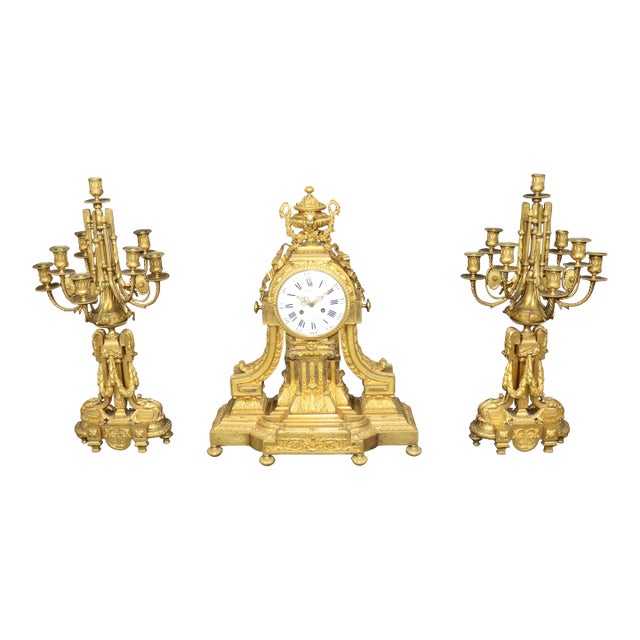
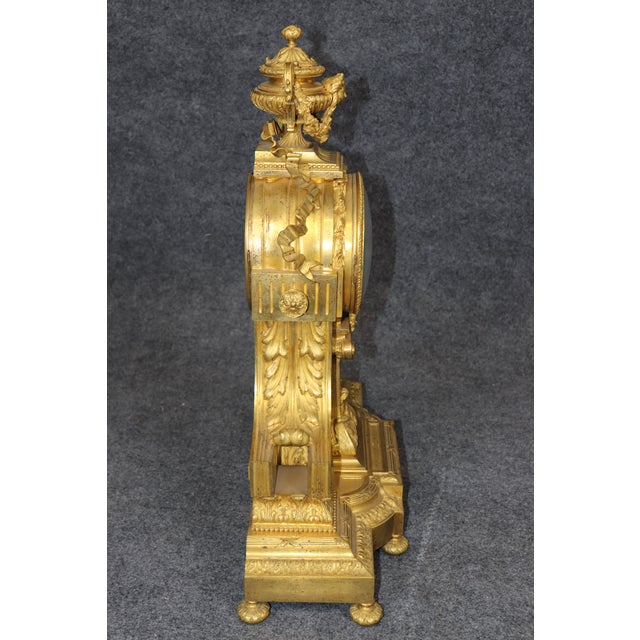
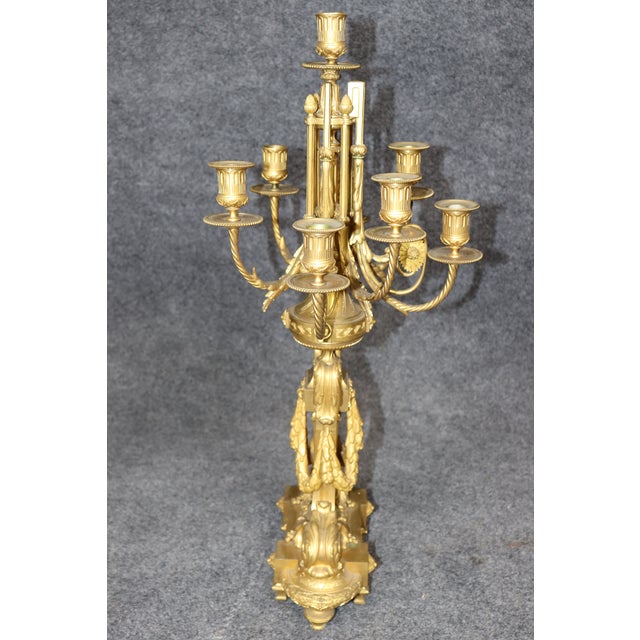
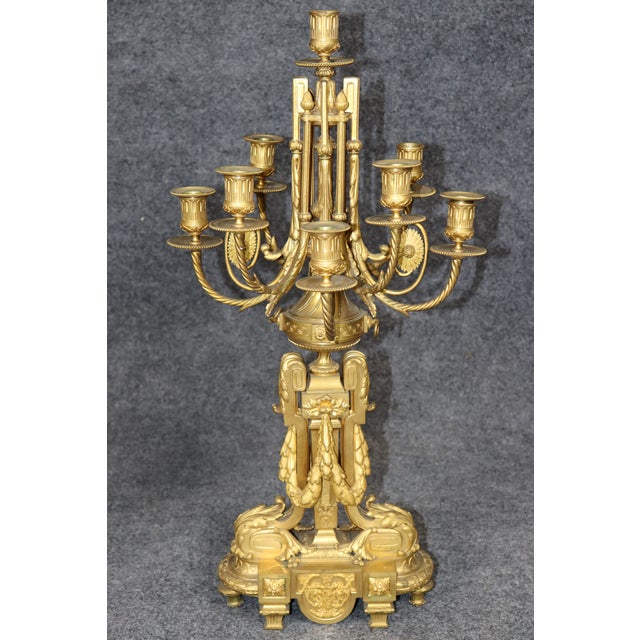
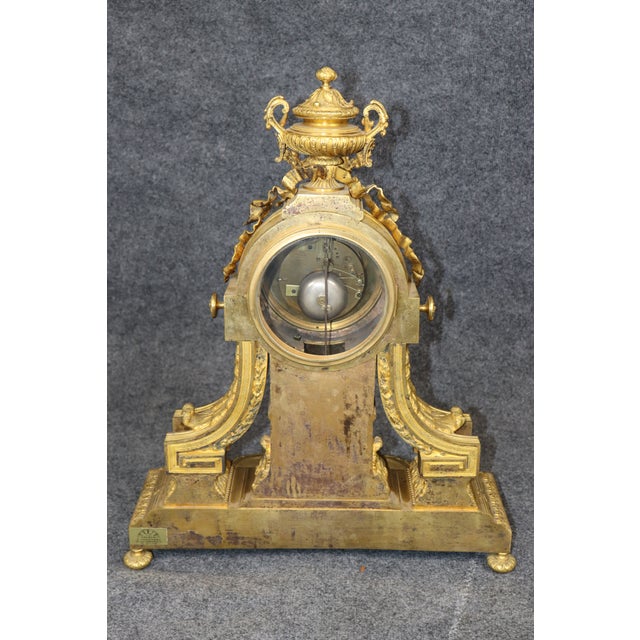
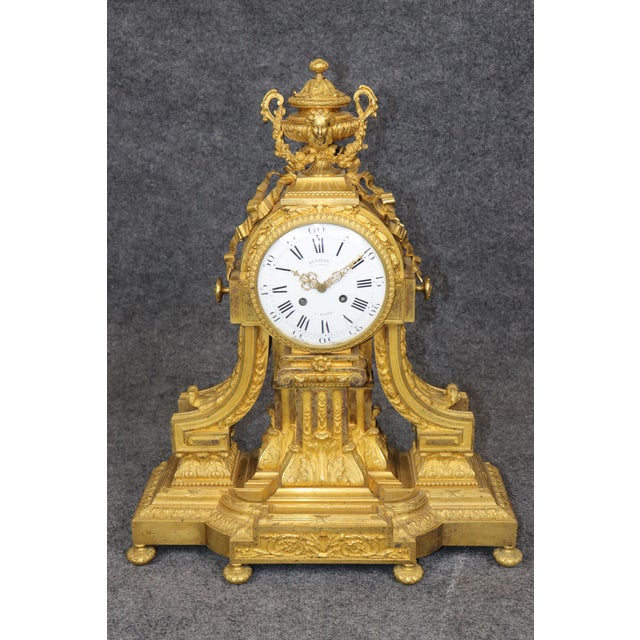
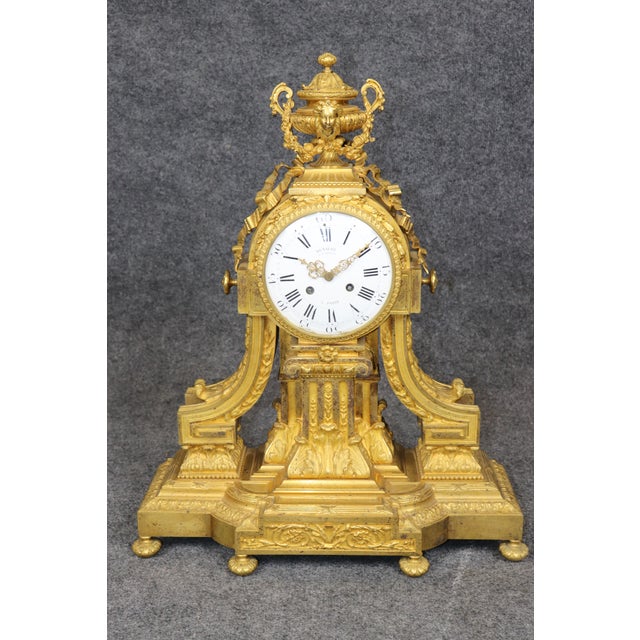
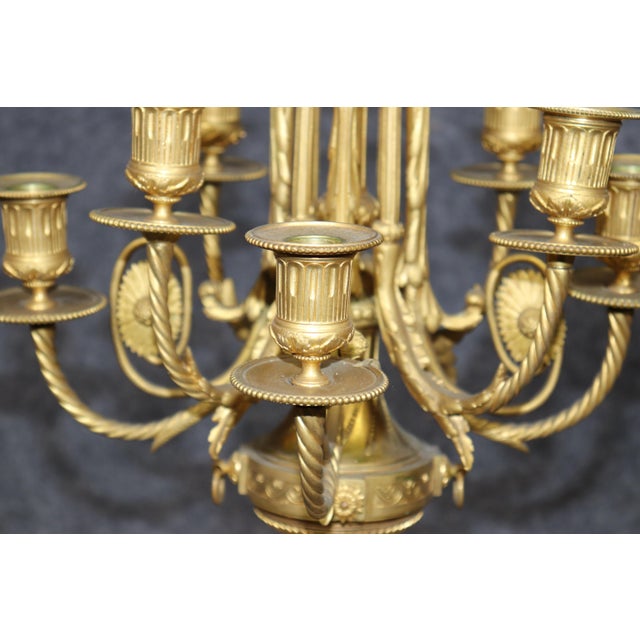
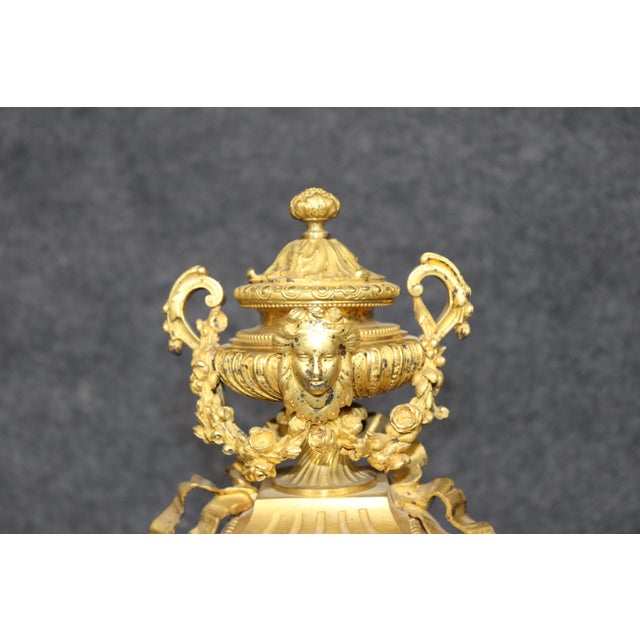
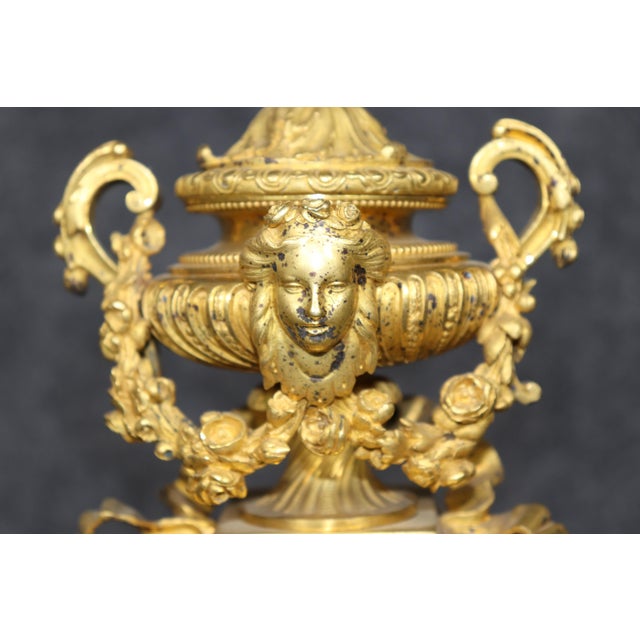
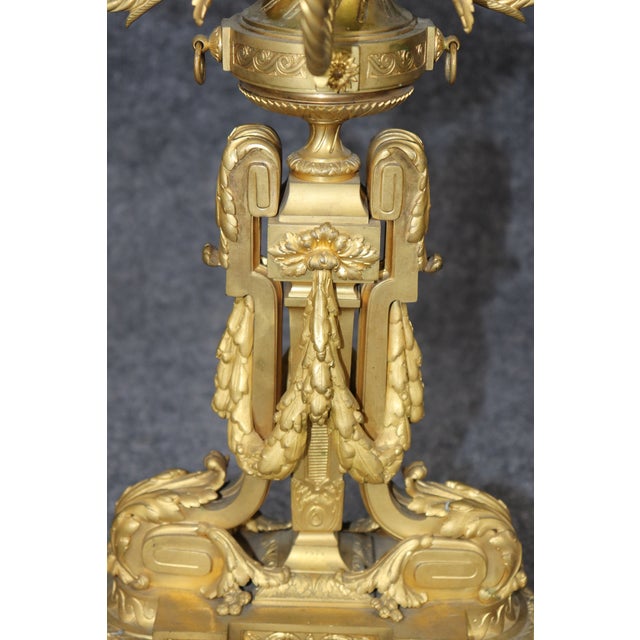
This magnificent French gilt-bronze clock by Denière of Paris represents the exceptionally high standard of bronze casting, chasing, gilding, and …
Read more
This magnificent French gilt-bronze clock by Denière of Paris represents the exceptionally high standard of bronze casting, chasing, gilding, and sculptural design for which the celebrated Maison Denière became renowned during the nineteenth century. Denière clocks were conceived not simply as instruments for measuring time, but as important works of decorative sculpture, combining sophisticated French clockmaking with some of the finest ornamental bronze work produced in Paris.
The house was founded by Jean-François Denière (1774–1866), whose original surname was Deninger. He ranks among the most distinguished Parisian bronziers of the first half of the nineteenth century. Denière initially worked in partnership with François-Thomas Matelin, establishing a prosperous bronze manufactory that produced clocks, candelabra, furniture mounts, torchères, and other luxury objects. Christie's describes Denière as one of the most illustrious bronziers of his generation and records that the Denière-Matelin atelier employed more than 200 workers during the Empire period.
Denière's clientele was extraordinary. The firm supplied the French royal and imperial households, as well as aristocratic and royal patrons throughout Europe. Among its clients were the duchesse de Berry, Louis-Philippe, Ferdinand VII of Spain, William II of Holland, and members of the Russian imperial court. Remarkably, Denière also supplied bronze work for the White House in Washington in 1817–1818.
The Frick Collection notes that Jean-François Denière supplied clocks and candelabra for French royal palaces, including Versailles and the Grand Trianon. His workshop became especially celebrated for combining richly chased and gilded bronze with sculptural figures and luxurious materials such as marble.
In 1844, Jean-François entered into partnership with his son Guillaume Denière, who subsequently continued and expanded the family enterprise. By the middle of the nineteenth century, Denière had become a formidable competitor to the great bronze manufactory of Thomire. The company exhibited prominently at the international exhibitions of 1851 and 1862 and continued producing important decorative bronzes through the latter nineteenth century.
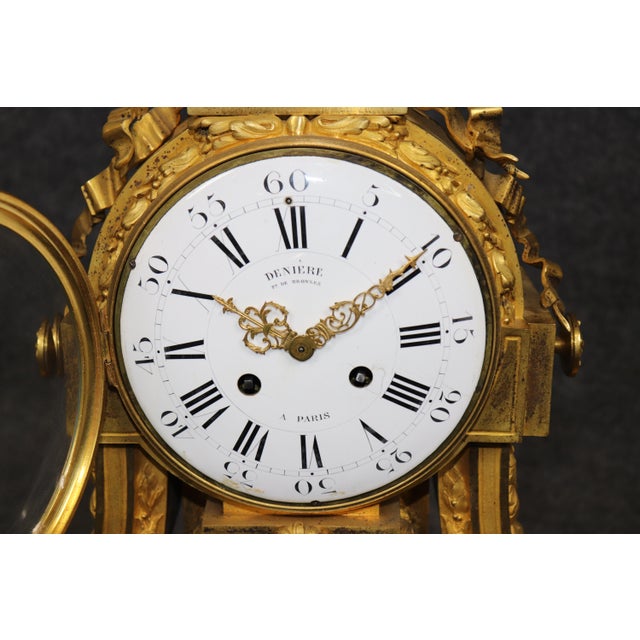
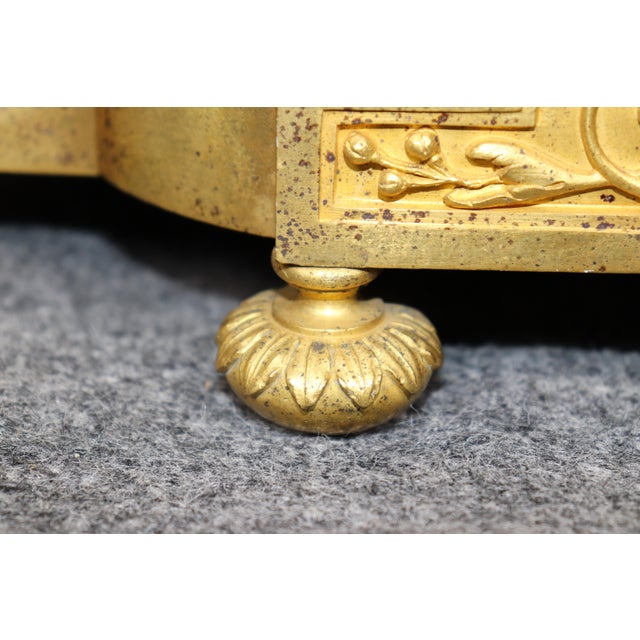
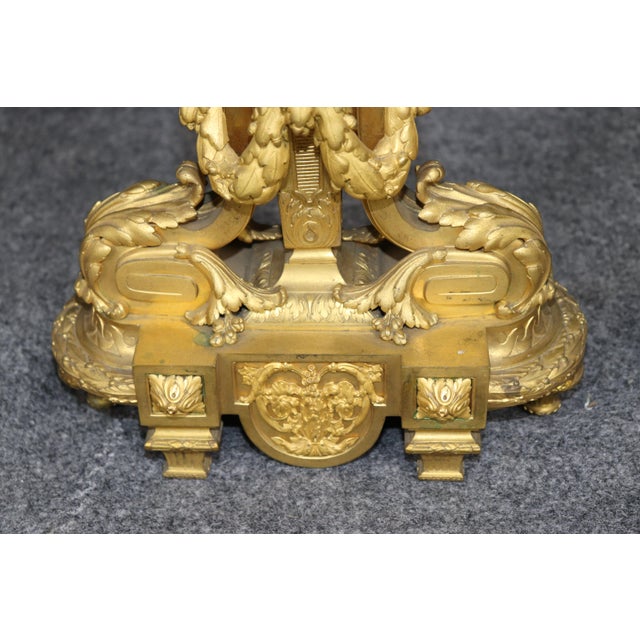
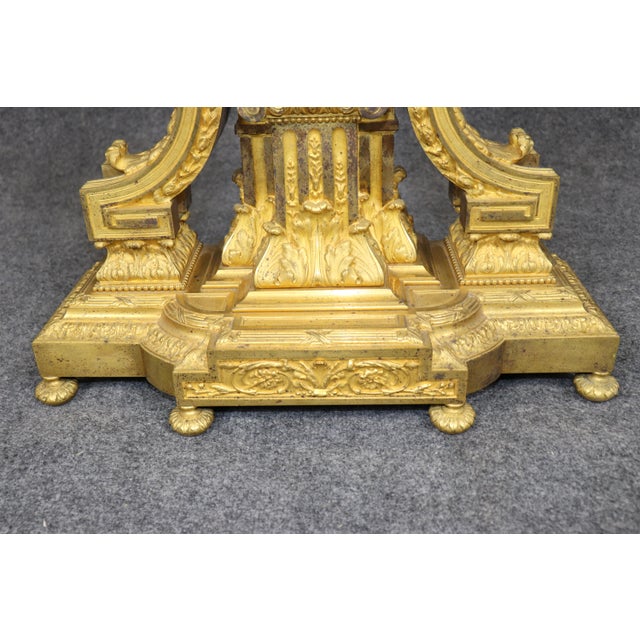
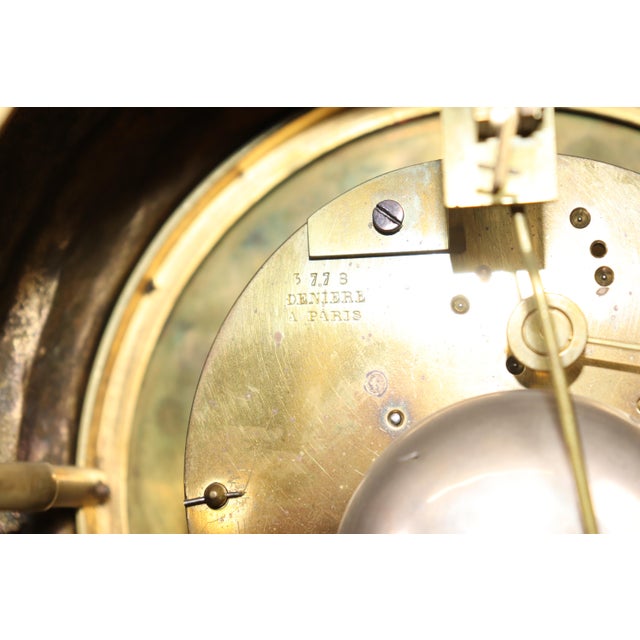
The firm's clocks are particularly admired for their finely modeled figural compositions, deeply chased ornament, architectural bases, classical trophies, scrolling foliage, garlands, urns, masks, and contrasting patinated and gilded bronze surfaces. Surviving signed examples frequently bear the inscription “DENIÈRE / Ft. DE BRONZES / A PARIS,” identifying the house specifically as a manufacturer of bronzes. Christie's has documented signed Denière clocks from the later nineteenth century featuring elaborate figural groups, marble bases, enamel dials, and sophisticated ormolu decoration.
The Maison Denière was also known for reviving distinguished eighteenth-century designs. Christie's records that the firm possessed drawings by the celebrated Louis XVI-period designer Jean-François Forty and produced exceptionally refined nineteenth-century versions of his neoclassical clock models.
Consequently, a substantial Denière bronze clock occupies an important position within nineteenth-century French decorative arts. It represents the intersection of horology, sculpture, architecture, and the specialized Parisian art of the bronzier. The richness of the gilding, precision of the casting, elaborate sculptural ornament, and imposing overall composition are characteristic of the luxurious objects that made Denière one of the foremost names in French ornamental bronze work.
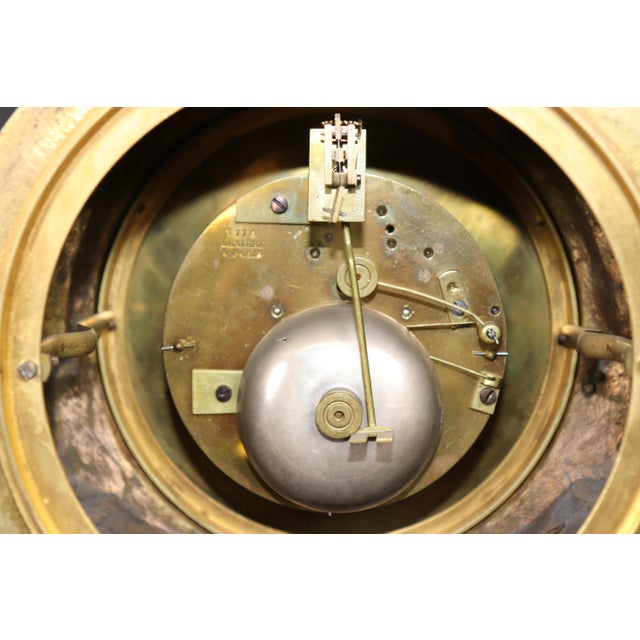
If the clock bears a visible Denière signature or stamped movement, that marking should be included verbatim in a catalog description, as it can help determine whether the piece belongs to the period of Jean-François, Guillaume, or the later Maison Denière.
Dimensions:
Clock: 25.75 inches high x 21 inches wide x 8.25 inches deep
Candelabras: 26.75 inches High x 13.5 inches diameter
See less
- Dimensions
- 21ʺW × 8.25ʺD × 25.75ʺH
- Styles
- Louis XVI
- Period
- Late 19th Century
- Country of Origin
- France
- Item Type
- Vintage, Antique or Pre-owned
- Materials
- Bronze
- Condition
- Good Condition, Original Condition Unaltered, Some Imperfections
- Color
- Gold
- Condition Notes
- The piece is in good antique/vintage condition with the exception of some light surface scratches, Minor finish loss and normal … moreThe piece is in good antique/vintage condition with the exception of some light surface scratches, Minor finish loss and normal age related wear. As to be expected with items of age and use. less
Questions about the item?
Returns & Cancellations
Return Policy - All sales are final 48 hours after delivery, unless otherwise specified in the description of the product.
Cancellation Policy - Prior to shipping or local pickup, buyers may cancel an order for up to 48 hours, unless otherwise specified.
Related Collections
- Lapis Lazuli Clocks
- Driftwood Clocks
- Clocks in Monterey, CA
- Grandfather Clocks
- Howard Miller Clocks
- Antique Pendulum Wall Clocks
- French Clocks
- Art Deco Clocks
- Black Forest Clocks
- Antique Grandfather Clocks
- Seth Thomas Clock Company Clocks
- Sunburst Clocks
- Gustavian (Swedish) Clocks
- Italian Clocks
- Wood Clocks
- Bronze French Clocks
- Victorian Clocks
- Mid-Century Modern Clocks
- Ceramic Clocks
- Brass Clocks
- Marble Clocks
- Industrial Clocks
- Mantel Clocks
- Wind Up Clocks
- Gold Clocks