

Details
Description
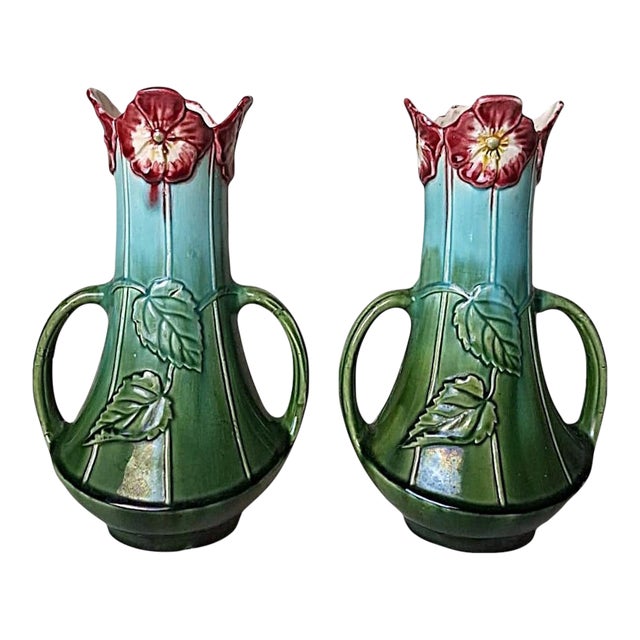
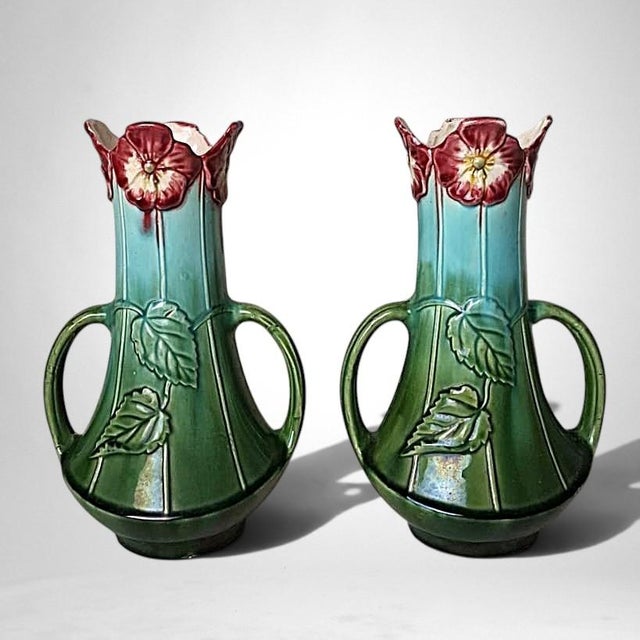
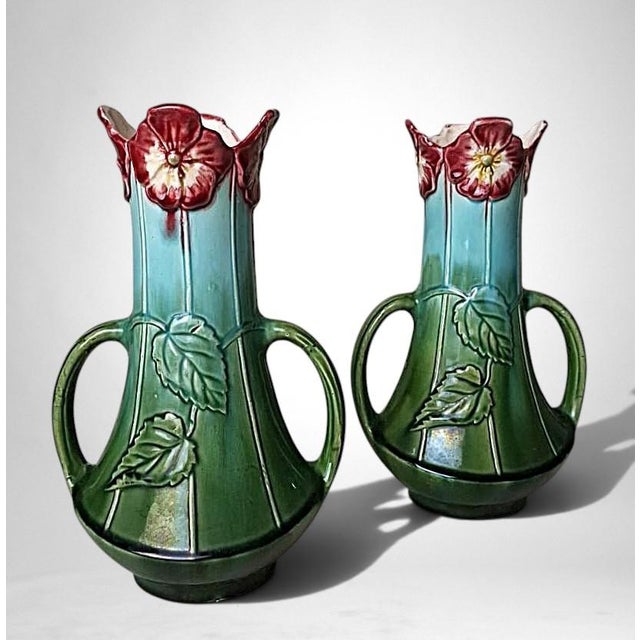
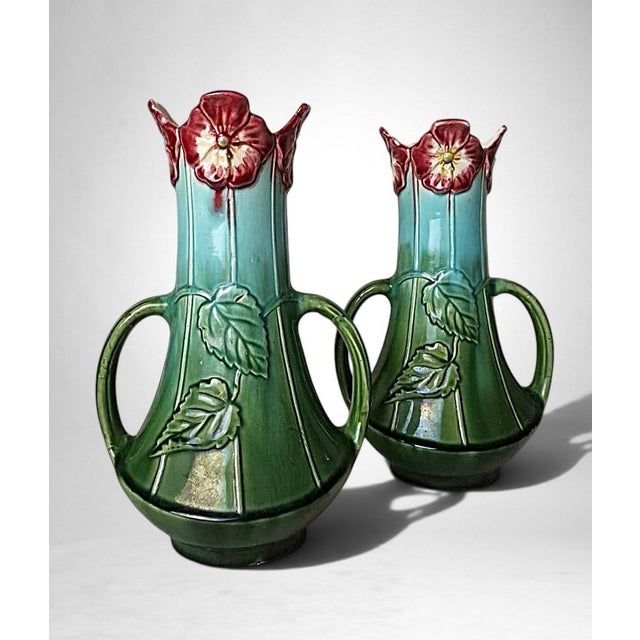
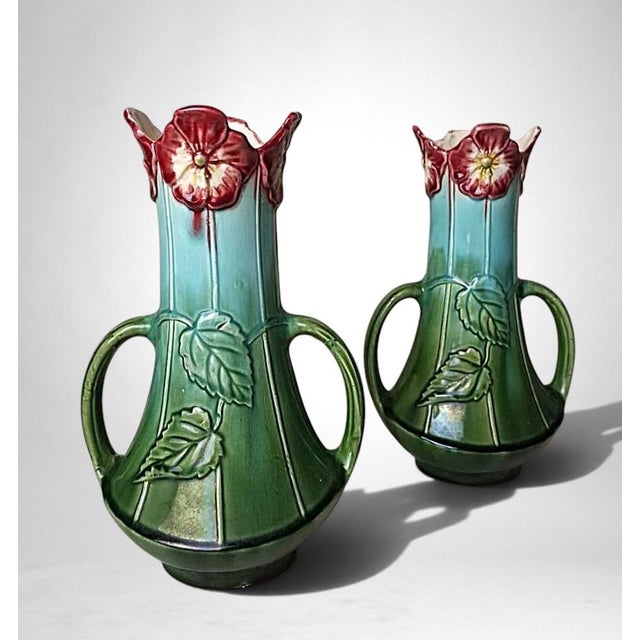
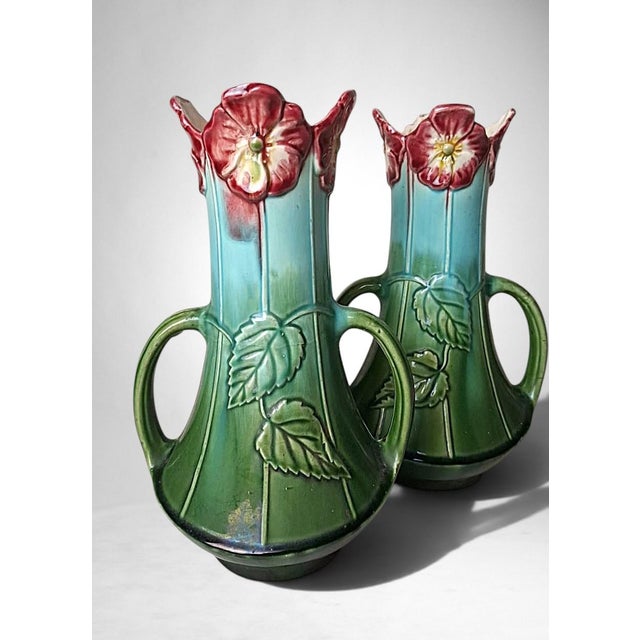
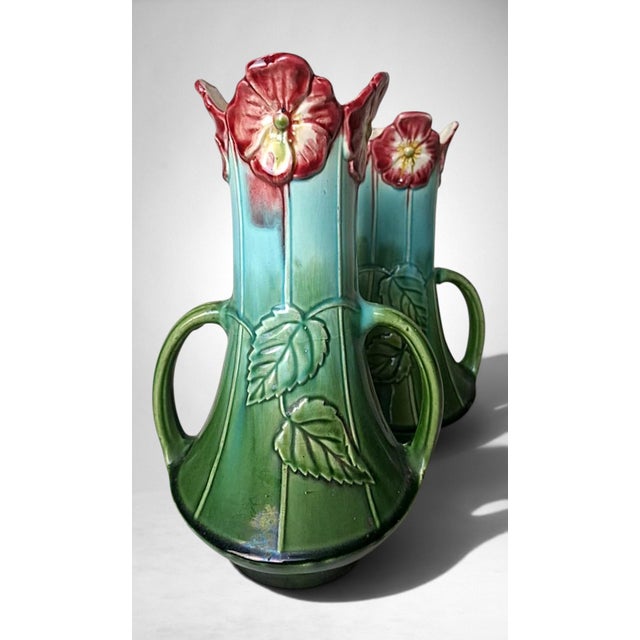
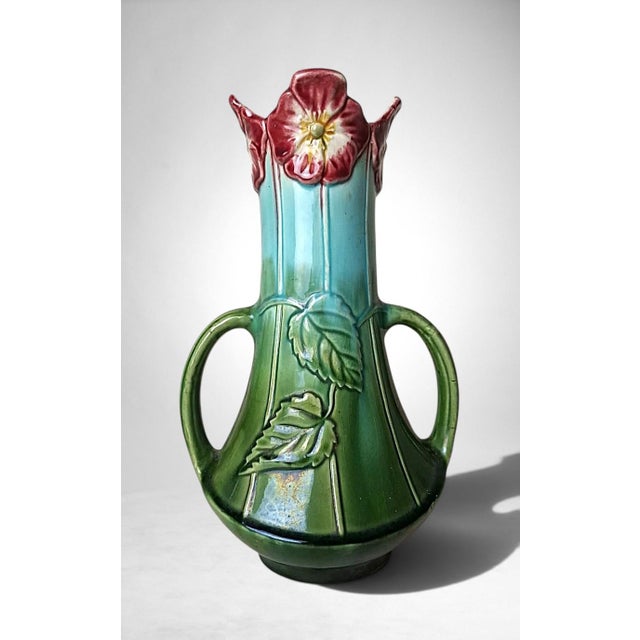
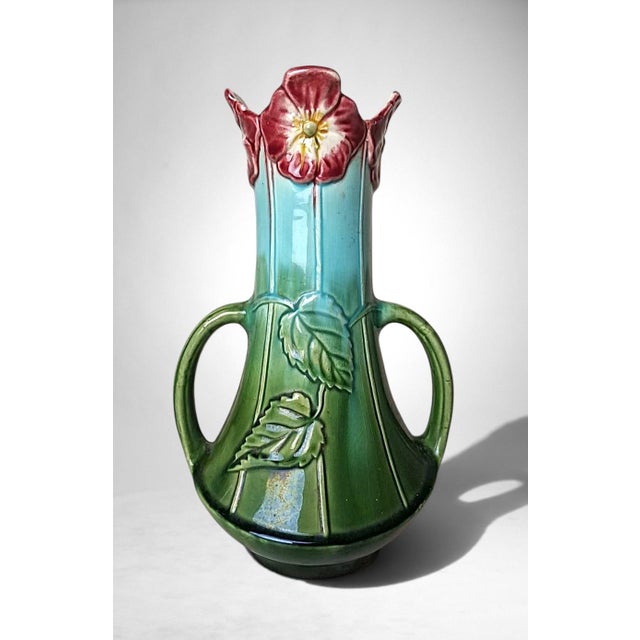
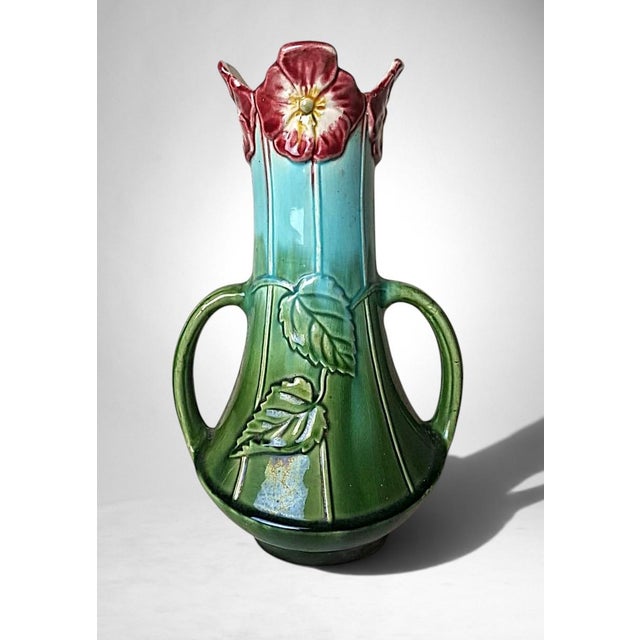
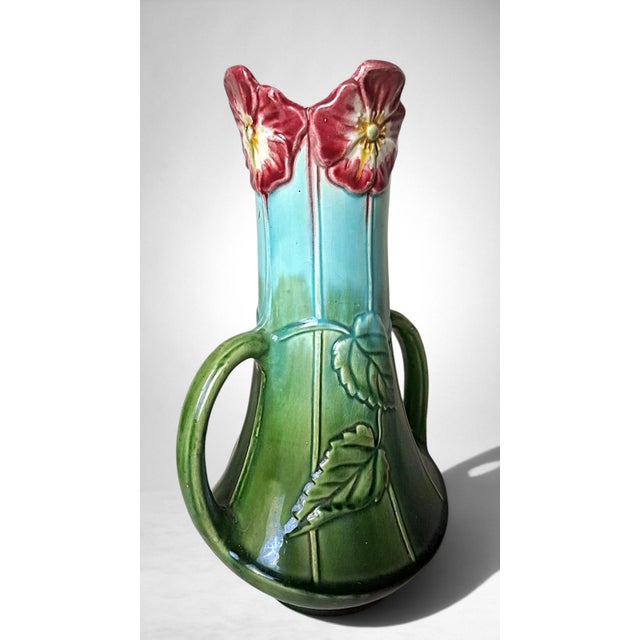
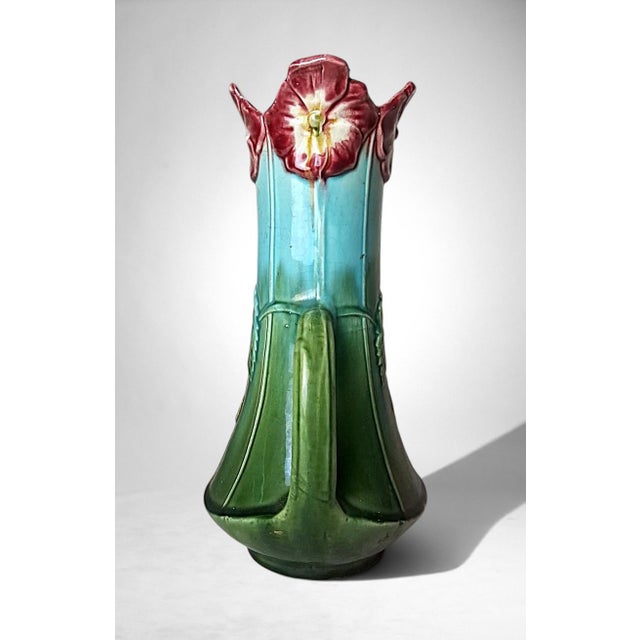
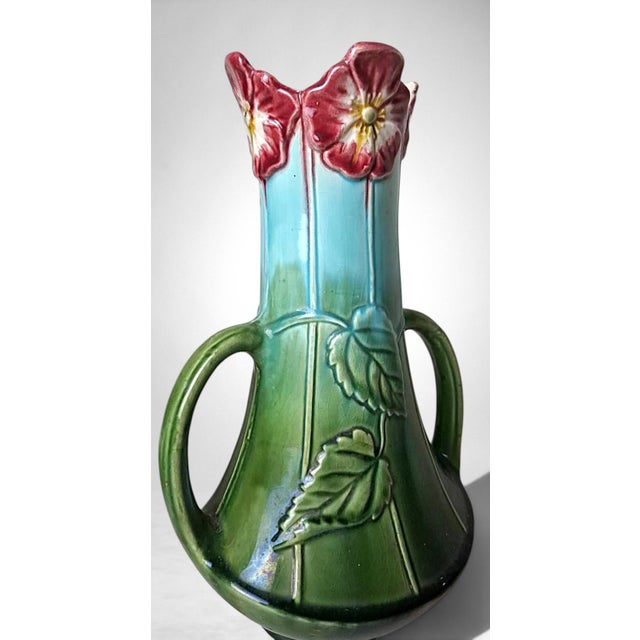
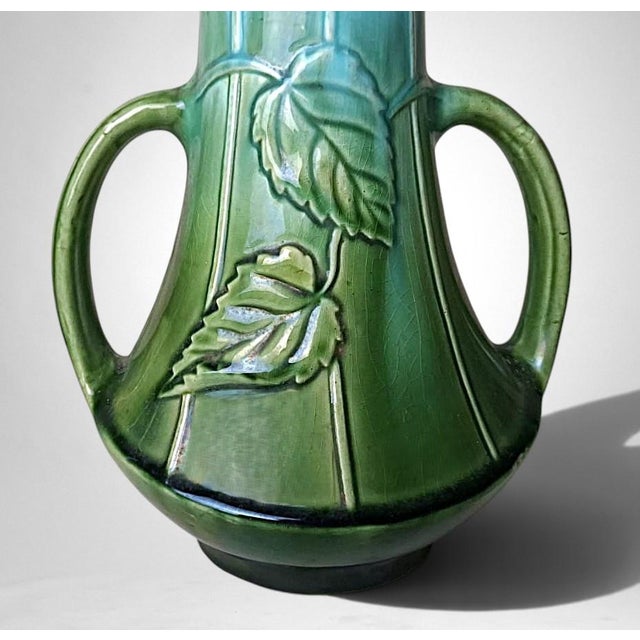
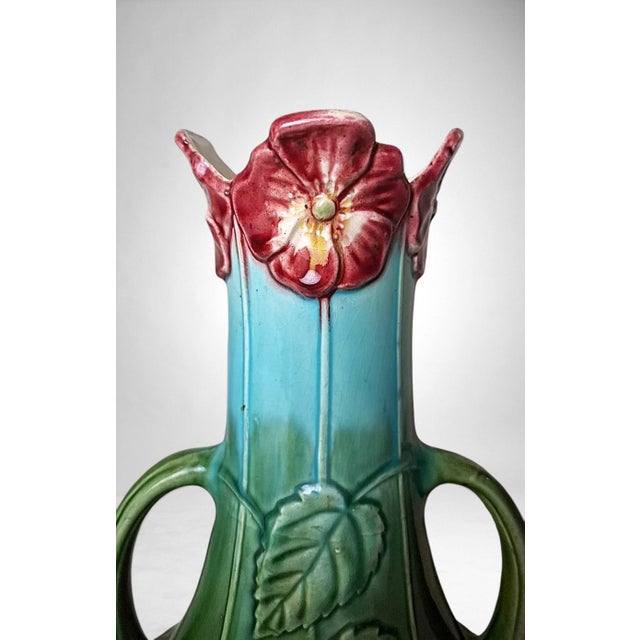
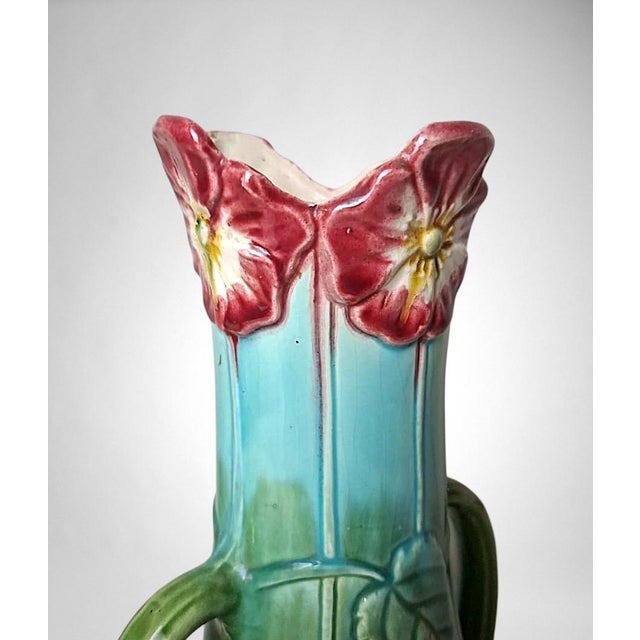
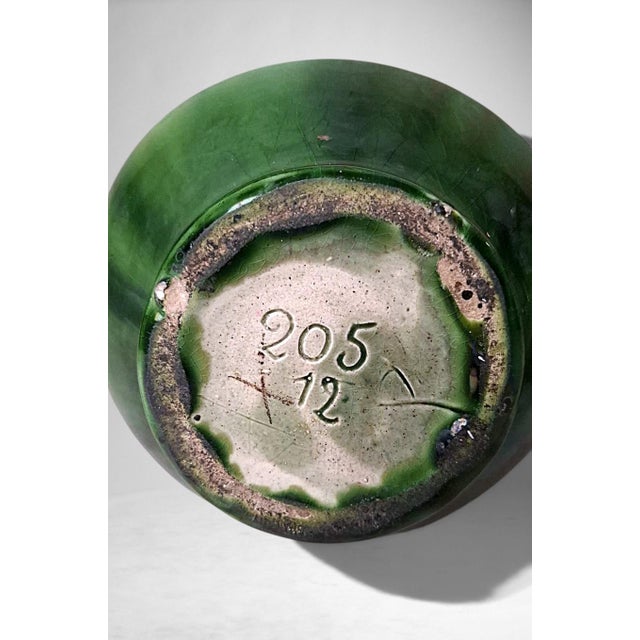
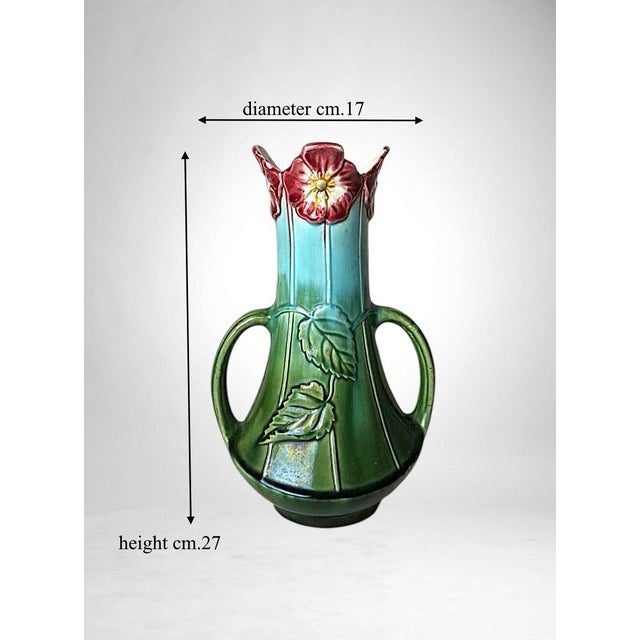
We are pleased to offer this refined pair of French barbotine ceramic vases, produced in the Onnaing area, in the … Read more We are pleased to offer this refined pair of French barbotine ceramic vases, produced in the Onnaing area, in the Nord department of what is now the Hauts-de-France region, between approximately 1890 and 1910. The two vases are distinguished by their unusual and eccentric forms, enhanced by elaborate floral decoration depicting pansies and green leaves, entirely hand-painted. The particularly original and decorative handles contribute to the expressive character of the pieces, while the vivid polychrome palette and glossy surface further enhance their visual appeal. The barbotine technique, particularly popular in France from the second half of the 19th century through the early decades of the 20th century, involved applying semi-liquid clay to the surface of an object while it was still leather-hard or not yet completely dry. Using specialized tools, brushes, or syringes, artisans built up the clay to create raised decorative elements that were subsequently refined, glazed, and painted. The rich colors were achieved through the use of metallic oxides and pigments incorporated into the glazes, producing the intense and distinctive chromatic effects characteristic of this type of ceramic. The Onnaing area played an important role in the development of French decorative ceramics during the late 19th and early 20th centuries. The region was known for its numerous workshops and manufactories specializing in barbotine ceramics, particularly pitchers and vases inspired by anthropomorphic, zoomorphic, and botanical forms. These pieces are part of the extraordinary French barbotine tradition, a technique that, thanks to the possibility of modeling decoration directly onto the ceramic surface, became one of the most expressive artistic languages of the Art Nouveau movement. Among the floral motifs particularly favored by artisans in the region was the pansy, or pensée, a flower traditionally associated in European symbolism with loving thoughts, remembrance, and affection. The motif was often interpreted in highly decorative compositions applied to vases with whimsical profiles and to fanciful pitchers, whose handles could themselves take the form of branches, stems, or intertwined vegetal elements. The remarkable freedom with which these motifs were modeled and integrated into the structure of the vessel is one of the most fascinating characteristics of Art Nouveau ceramics. The bases of the vases are impressed with a three-digit number, presumably corresponding to the model or body form within the manufacturer's production. Next to the model number appears a smaller digit, likely indicating the size of the piece within the same design series. These numbers, impressed directly into the clay before firing, provide an important reference for identifying the models and production, while also offering an interesting documentary detail relating to the original manufacturing process. The fact that these two examples have survived as a matching pair further enhances their collectors' appeal. These were objects characterized by numerous delicate and projecting elements, including modeled petals, raised decoration, and slender handles, all of which were particularly vulnerable to breakage or loss over time. The survival of a coherent pair is therefore of particular interest to collectors of French Art Nouveau ceramics. From an aesthetic standpoint, the two vases are exceptionally appealing. The sophisticated contrast between the various colors, the richness of the floral decoration, the brilliance of the glazes, and, above all, their whimsical and highly original forms give them a striking decorative presence. The occasional slight bleeding and blending of colors visible on parts of the surface are characteristic of the technique and firing process. During firing, the glazes could flow slightly and merge with one another, creating the soft gradations and fluid transitions of color that are an inherent part of the handcrafted character of these ceramics. A highly decorative and distinctive pair, equally suited to period interiors and sophisticated contemporary settings, where the vases can serve as elegant decorative accents and captivating focal points. Dimensions: diameter 6.69 in. (17 cm); height 10.63 in. (27 cm). See less
- Dimensions
- 6.7ʺW × 6.7ʺD × 10.63ʺH
- Styles
- Art Nouveau
- Period
- Late 19th Century
- Country of Origin
- France
- Item Type
- Vintage, Antique or Pre-owned
- Materials
- Ceramic
- Condition
- Good Condition, Original Condition Unaltered, Some Imperfections
- Color
- Green
- Condition Notes
- Wear is consistent with age and use. The occasional slight bleeding and blending of colors visible on parts of the … moreWear is consistent with age and use. The occasional slight bleeding and blending of colors visible on parts of the surface are characteristic of the technique and firing process. less
Questions about the item?
Returns & Cancellations
Return Policy - All sales are final 48 hours after delivery, unless otherwise specified in the description of the product.
Cancellation Policy - Prior to shipping or local pickup, buyers may cancel an order for up to 48 hours, unless otherwise specified.
Related Collections
- St. Louis Crystal Vases
- Franco Bucci Vases
- Dorothy Draper Vases
- Frederick Cooper Vases
- Poltronova Vases
- Surface Ceramics Vases
- Arcore Ceramica Vases
- Raymor Import Vases
- Bimini Glass Vases
- Libbey Glass Co. Vases
- From Vienna Vases
- Green Fenton Art Glass Company Vases
- Ralph Lauren Home Vases
- Vases in Panama City, FL
- Tue Poulsen Vases
- Liz Marsh Vases
- Gambone Vases
- Blenko Vases
- Lenox Vases
- Fenton Art Glass Company Vases
- Swung Vases
- Haeger Vases
- Orrefors Vases
- Italian Vases
- Viking Glass Company Vases