

Details
Description
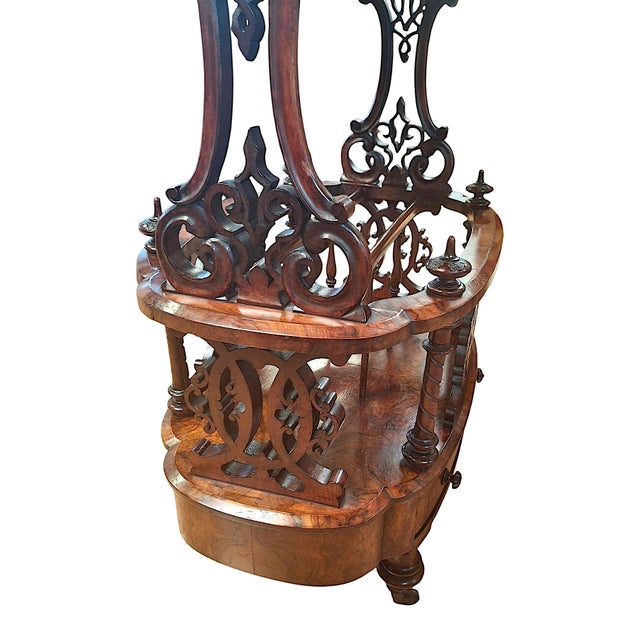
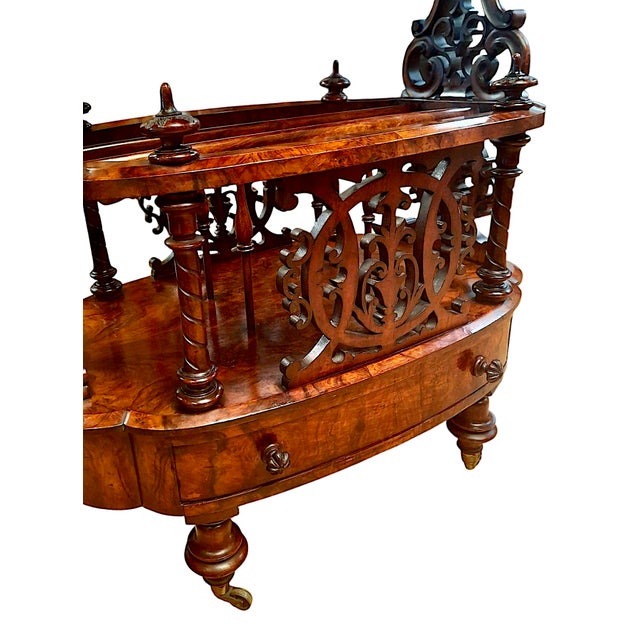
This exceptional Victorian Canterbury whatnot is a classic example of high-end, mid-to-late 19th-century British cabinetry. Created with the rich, highly …
Read more
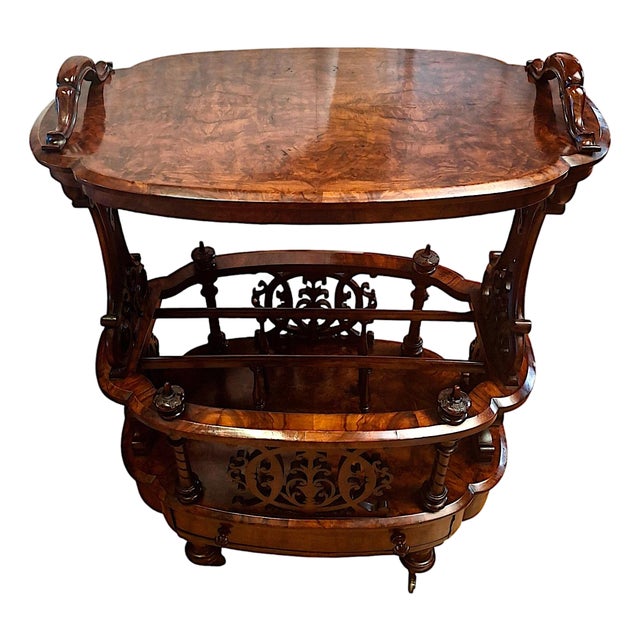
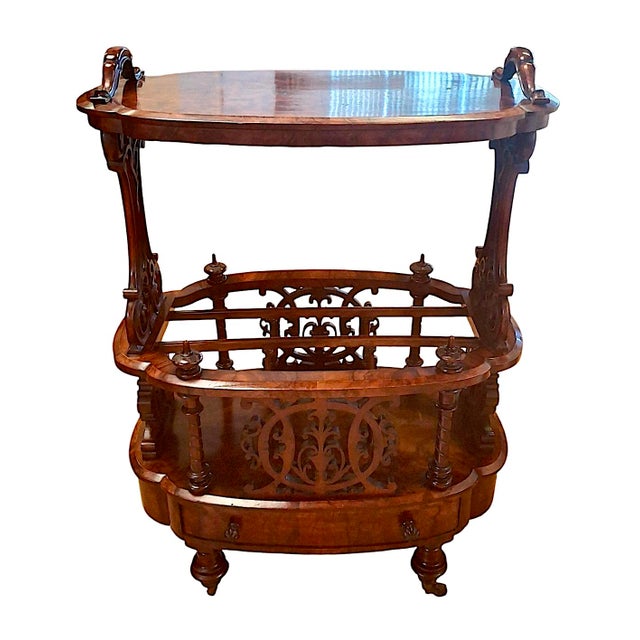
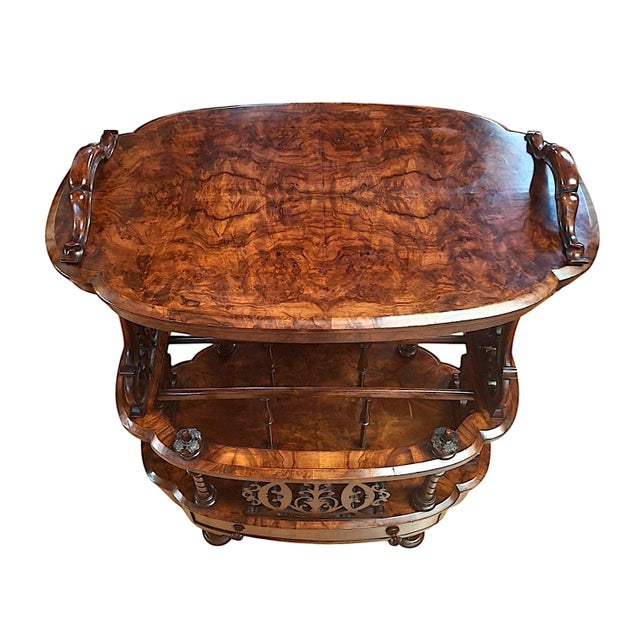
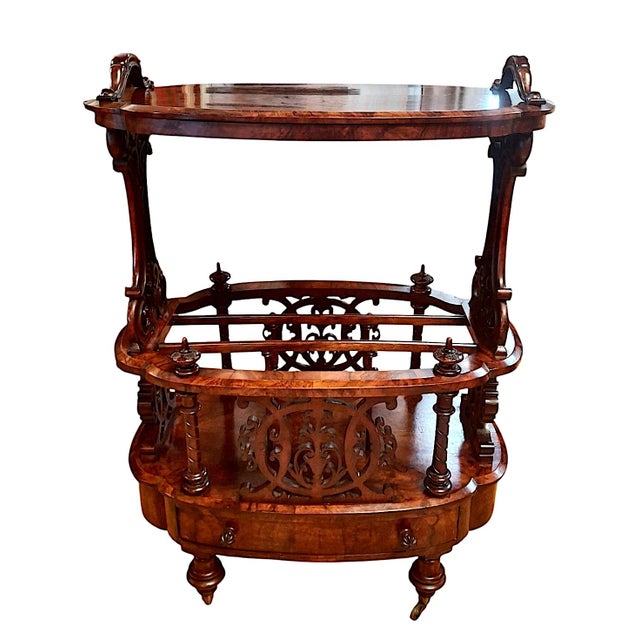
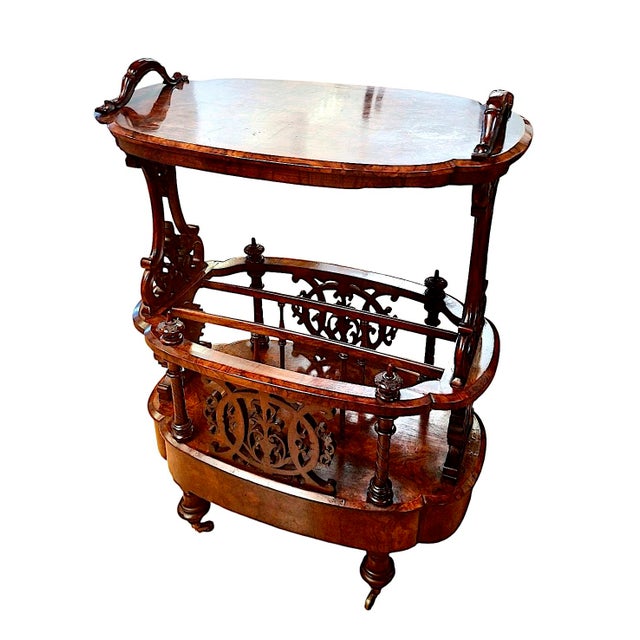
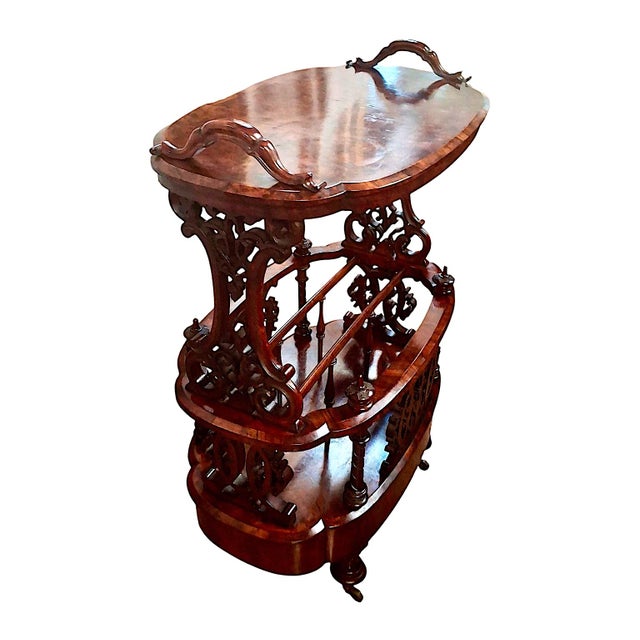
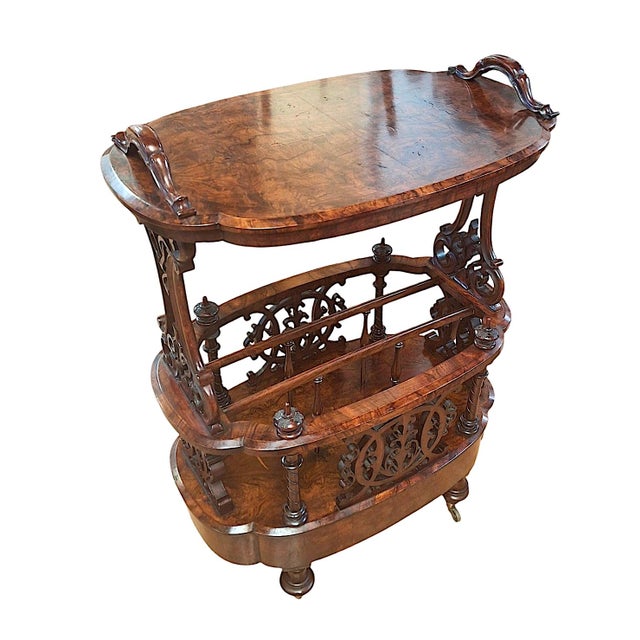
This exceptional Victorian Canterbury whatnot is a classic example of high-end, mid-to-late 19th-century British cabinetry. Created with the rich, highly decorative grain patterns typical of premium rosewood veneers, it seamlessly merged the open display shelving of a traditional whatnot with the segmented storage of a music stand. Legend has it that such a piece was originally commissioned by the Archbishop of Canterbury in the late 18th century.
Today, it’s a peerless side table, place right next to the beckoning lounge chair by the fireplace—a fine whisky on the top and favorite newspapers and magazines tucked in right below. (Hide the remotes in the bottom drawer.)
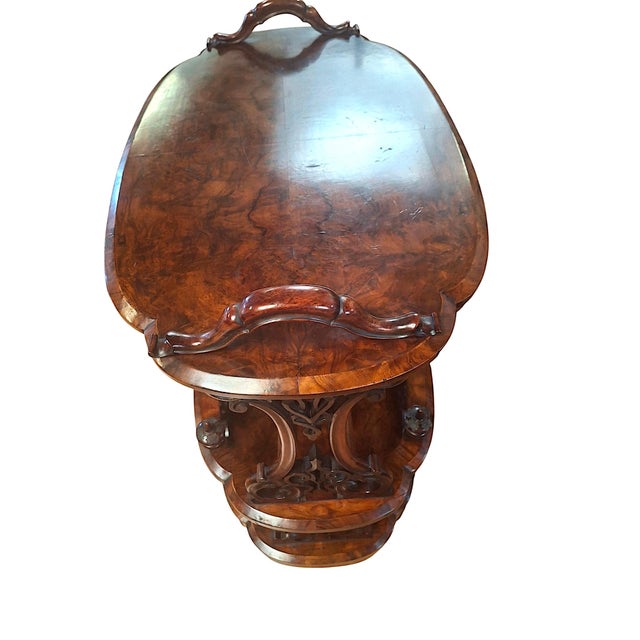
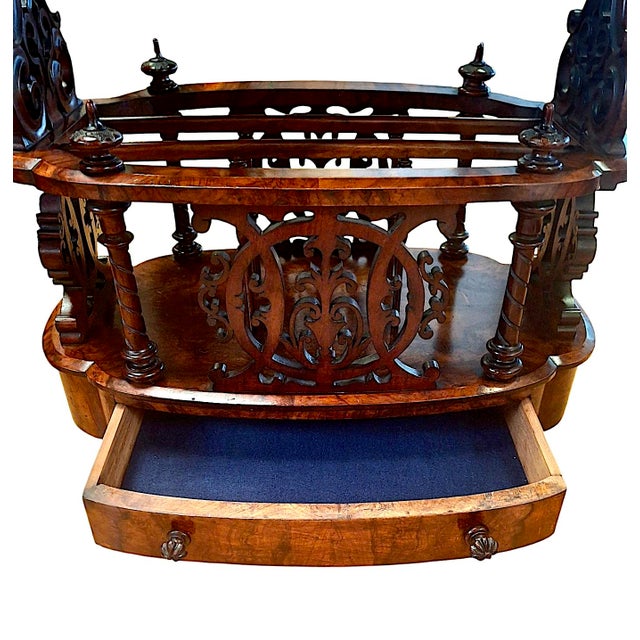
DESIGN: There’s an oval upper tray featuring two robust, scroll-carved wooden carrying handles for mobility. The top is supported by barley-twist columns accented with decorative miniature finials. Below, the mid-tier partitioned sections are styled with ornate open-fretwork carvings and central scrolled medallions. Underneath it all, a hidden lower drawer pulls out smoothly on twin turned knobs, completely lined in deep blue protective fabric. Short, turned legs terminate in metal castors to glide easily across rugs.
FUNCTION: Combining a music caddy base with a solid upper tier table surface was a mid-to-late 19th-century evolution. It catered to wealthier homeowners who wanted multitasking furniture pieces for their formal parlors. For example, it served for holding unbound sheet music, manuscripts, large newspapers and high-society periodicals. While standard Canterburies are open-topped, this hybrid Canterbury Whatnot model incorporates a solid upper table level, frequently utilized to host tea services or a spirit decanter stand.
DATE: Based on its highly decorative style, this piece would have been made during the High Victorian period, specifically as early as 1855 to 1875. Early 19th-century Canterburies featured simple, solid wooden slats or basic X-frame dividers. The complex, pierced fretwork and intricate scrolled medallions seen here didn't gain widespread popularity in British and American furniture manufacturing until the 1860s’ Rococo Revival wave. The choice of barley-twist columns accented with tiny finials aligns directly with the eclectic, highly stylized ornamentation favored by cabinetmakers between 1860 and 1875.
Signature/Maker’s Mark: Nonexistent.
See less
- Dimensions
- 27.25ʺW × 16.5ʺD × 37.25ʺH
- Styles
- Victorian
- Table Shape
- Oval
- Period
- Mid 19th Century
- Country of Origin
- United Kingdom
- Item Type
- Vintage, Antique or Pre-owned
- Materials
- Rosewood
- Condition
- Good Condition, Original Condition Unaltered, Some Imperfections
- Color
- Auburn
- Condition Notes
- Condition commensurate with age and use. Please review all photos. Condition commensurate with age and use. Please review all photos. less
Questions about the item?
Returns & Cancellations
Return Policy - All sales are final 48 hours after delivery, unless otherwise specified in the description of the product.
Cancellation Policy - Prior to shipping or local pickup, buyers may cancel an order for up to 48 hours, unless otherwise specified.
Related Collections
- Mid-Century Modern Walnut Side Tables
- Fine Arts Furniture Co. Side Tables
- Charles Limbert Side Tables
- Hermès Side Tables
- Mid-Century Modern Teak Side Tables
- Fiber Concrete Side Tables
- R. J. Horner and Co. Side Tables
- Palladio Side Tables
- Leighton Hall Furniture Side Tables
- Otto Wagner Side Tables
- Vatne Møbler Side Tables
- Jorge Zalszupin Side Tables
- Polyester Side Tables
- Hemp Side Tables
- Sigurd Ressell Side Tables
- Surya Side Tables
- Minotti Side Tables
- Romweber Side Tables
- Pistachio Side Tables
- Concrete Side Tables in Los Angeles
- Charak Furniture Co. Side Tables
- Black African Side Tables
- Marble Side Tables in Los Angeles
- Guillerme et Chambron Side Tables
- Edmond J. Spence Side Tables