

Details
Description
. While living in Tokyo, Japan due to corporate transfers between 1975-1978 and, again,1985-1988 I collected detailed hand-painted antique Japanese …
Read more
. While living in Tokyo, Japan due to corporate transfers between 1975-1978 and, again,1985-1988 I collected detailed hand-painted antique Japanese porcelains from various antique stores in Japan.
. Currently, I am beginning to list my collection of blue and white antique Imari bowls and plates and other antique blue and white, Imari pieces, antique Japanese colored Japanese Imari rice/soup bowls with lids, other colored Imari and some Chinese antique porcelains.
. I am now a retired professional interior designer and was a member of ASID (American Society of Interior Designers) for many years.
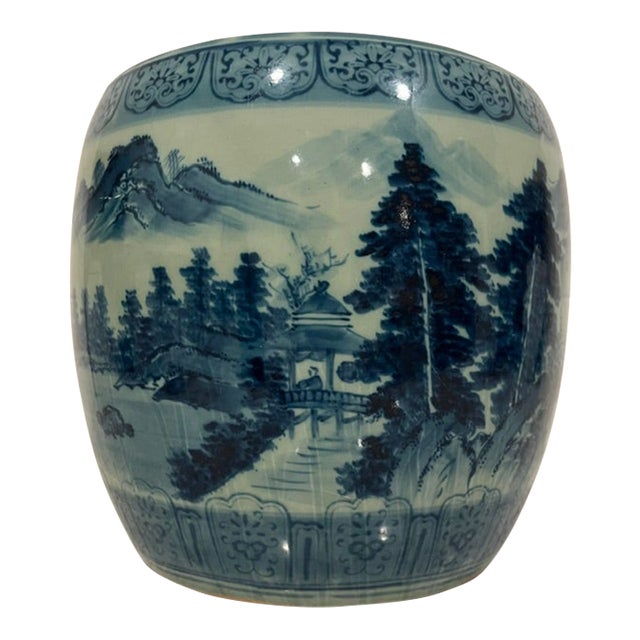
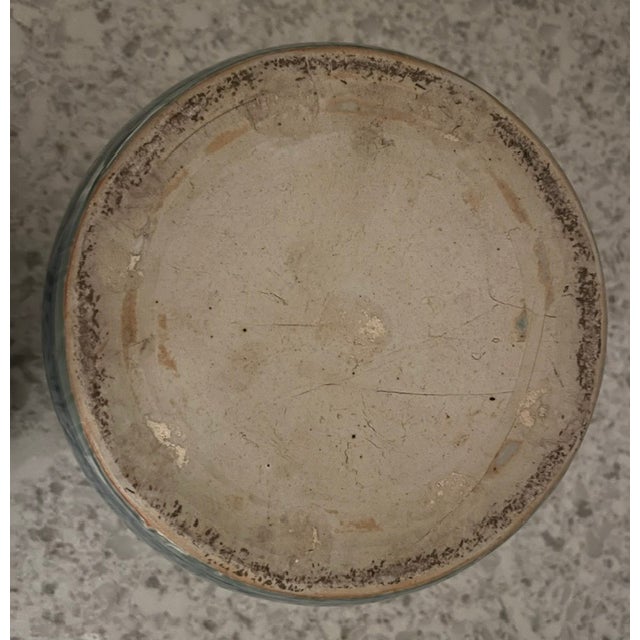
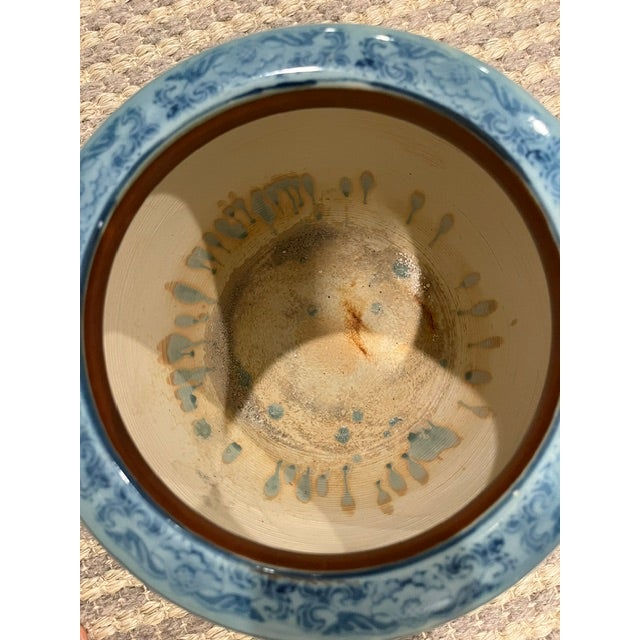
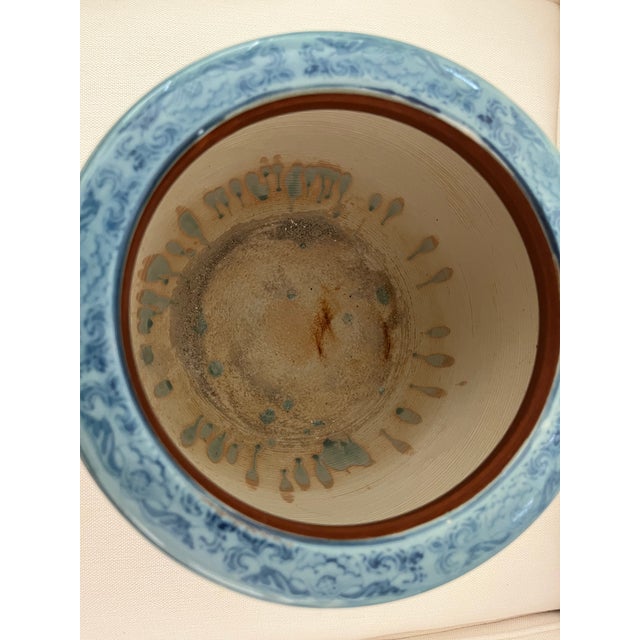
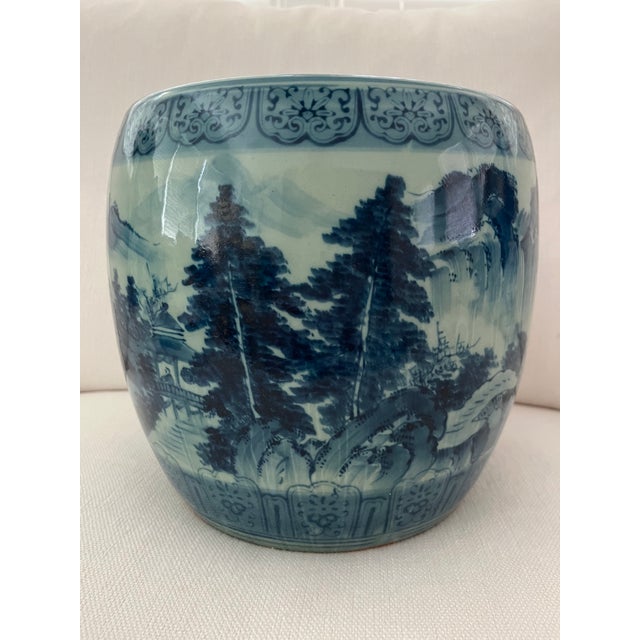
. This antique porcelain hibachi is believed to be from Seto production-late Meiji Seto or 1880.
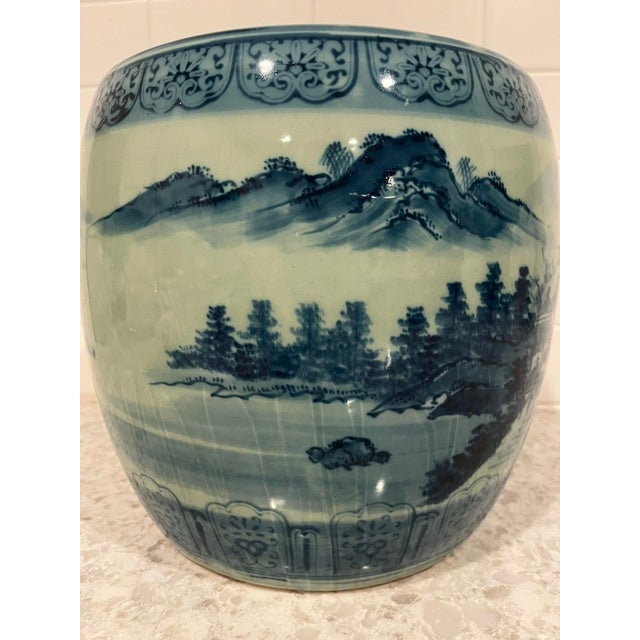
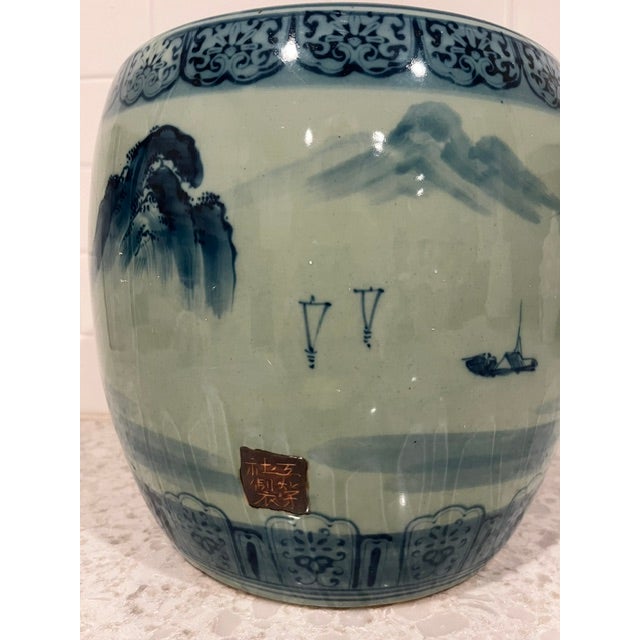
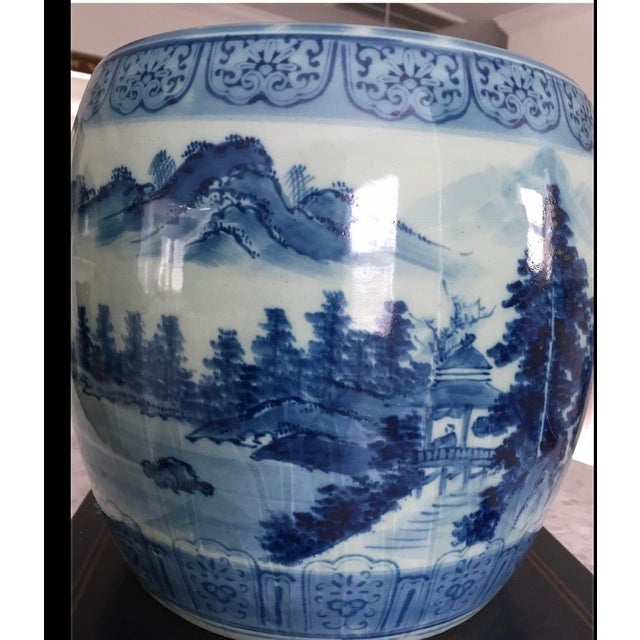
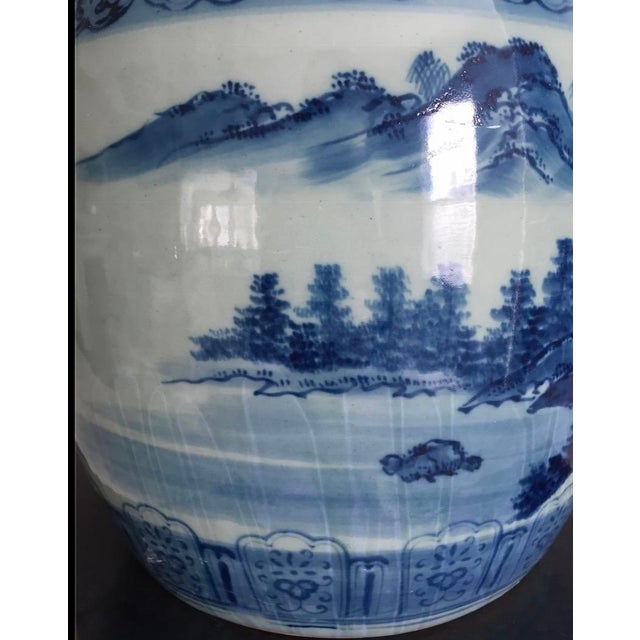
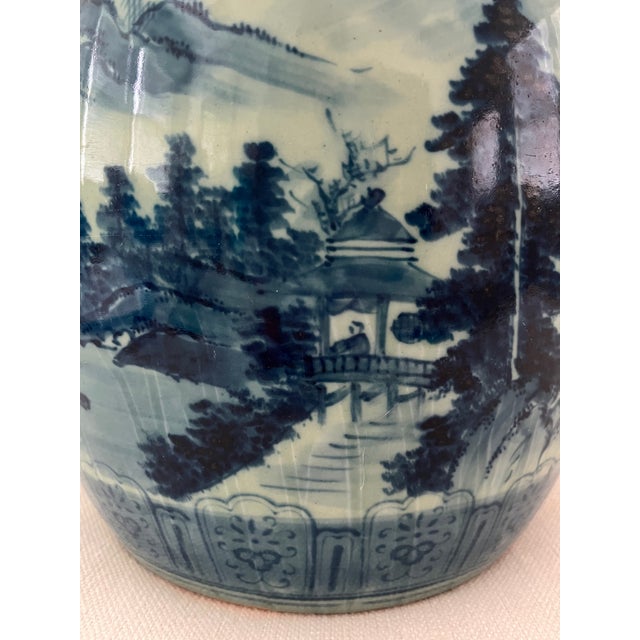
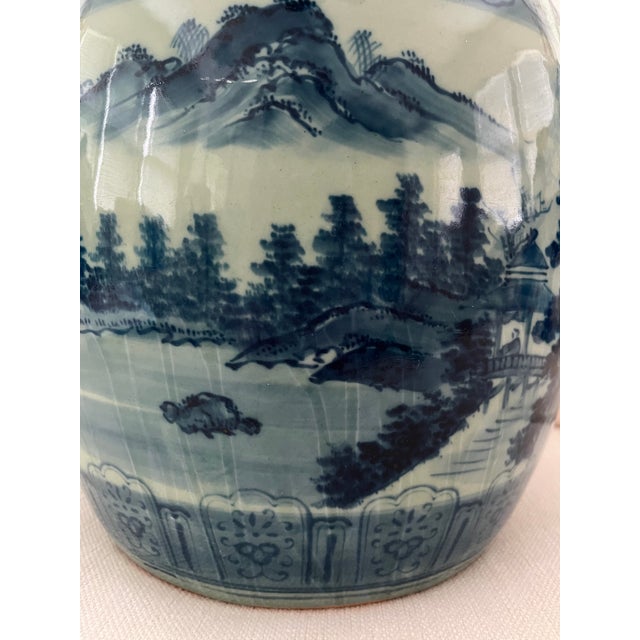
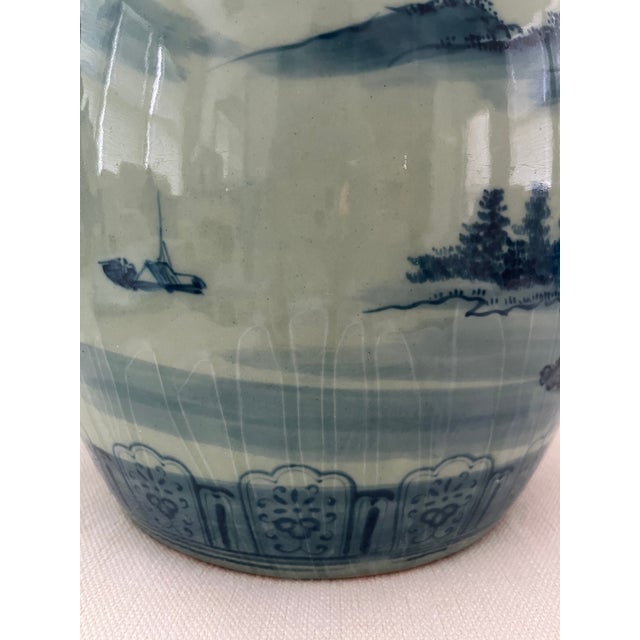
. The decoration is continuous (sansui) mountain and water and landscape with a waterside pavillion/temple, small boat, distant hills and extensive open space suggesting water and mist.
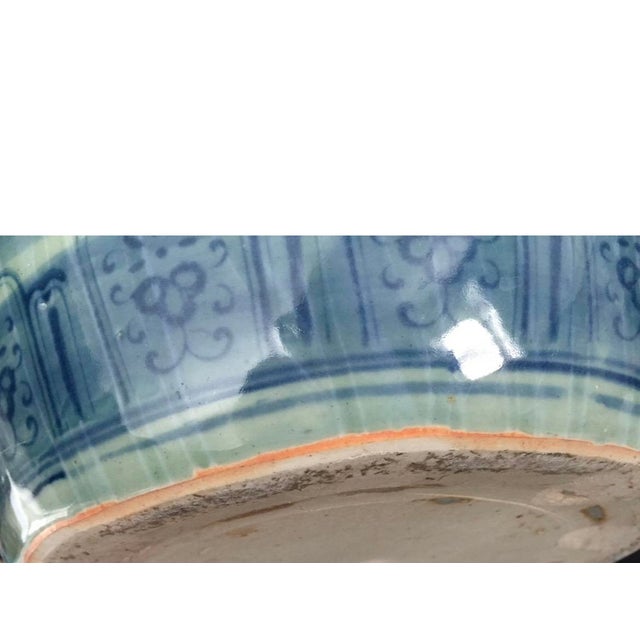
. The lower register is particularly interesting-the repeated shaped panels with stylized floral forms and narrow vertical divisions look deliberately composed as a border, rather than mass production transfer decoration
. Also, there are several characteristics consistent with hand-painted underglaze cobalt. The mountains contain washes of different density; tree foliage is built from individual brush touches; architectural lines vary slightly; and the boat is freely drawn.
. The circa is later Meiji (1868-1912).
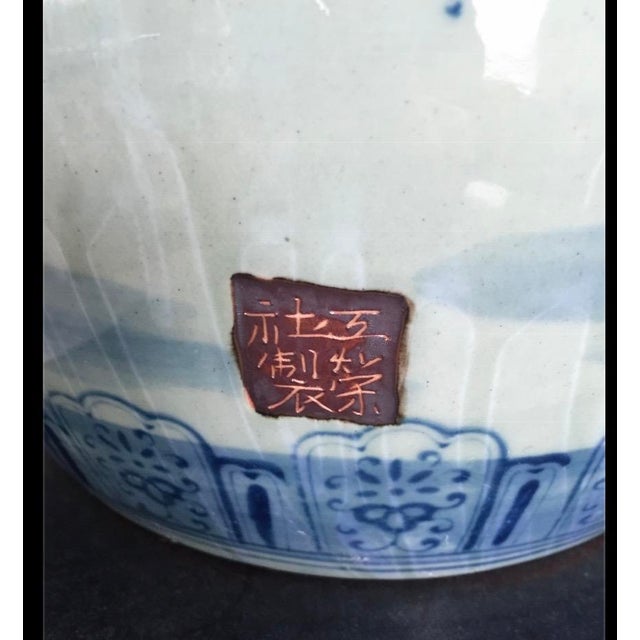
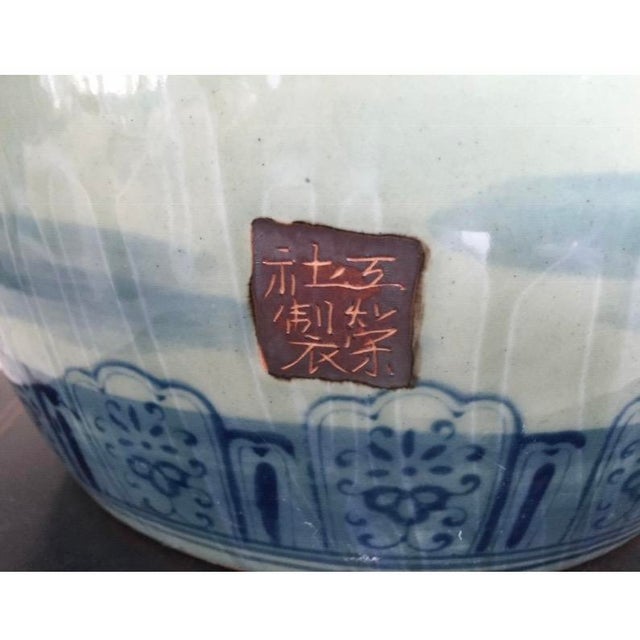
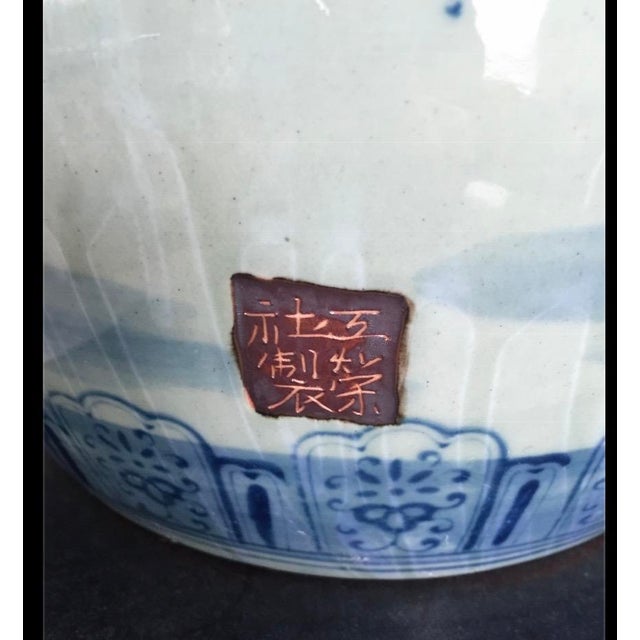
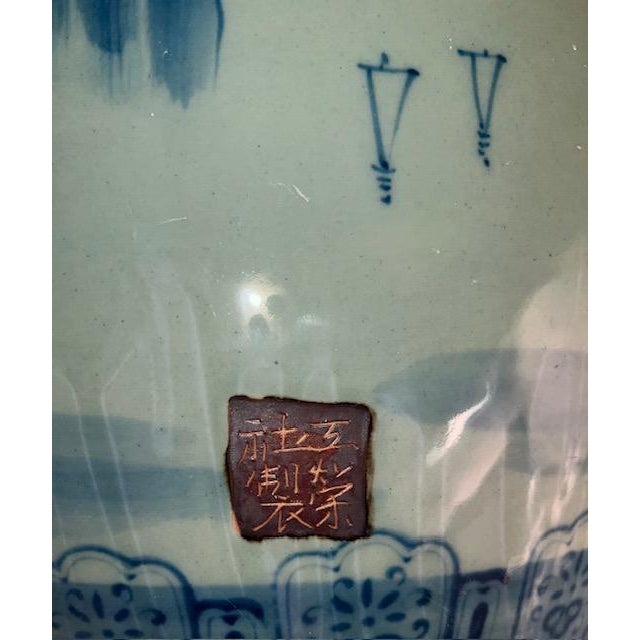
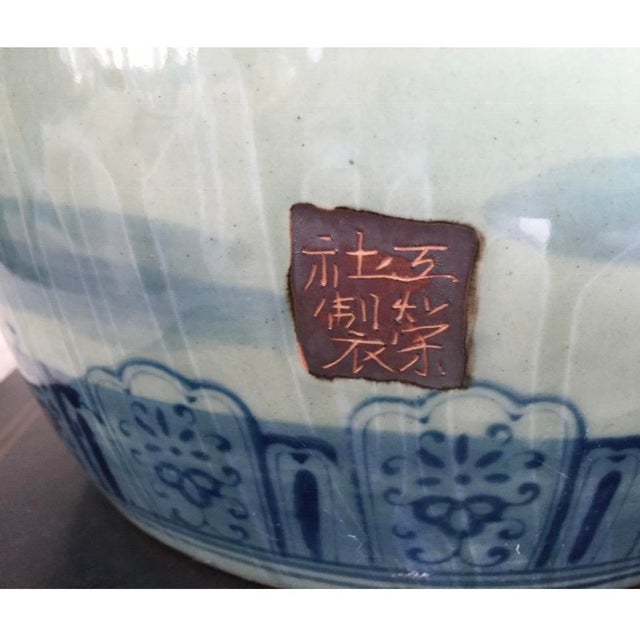
. The brown cartouche applied conspicuously to the exterior, with the characters incised in a litter color indicating the workshop, decorator, kiln and artistic signature make this more valuable.
. The central pine motif symbolizes longevity and resilience in Japanese culture and is a classic element.
. Left-hand vertical column very likely reads "Akazuware" that is significant because Azazu is a historic pottery district with Seto, Aichi prefecture.
. The Seto Folk Art Museum additionally confirms that hibachi were among the household vessels historically made in both the Azazu and Shinano districts of Seto.
. However, it is possible my hibachi dates to the Showa period (1926–1989)and is marked “Goeisha sei” (互榮社製), meaning “Made by Goeisha,” a Japanese porcelain studio.
.
See less
- Dimensions
- 10ʺW × 10ʺD × 10ʺH
- Styles
- Japanese
- Period
- Late 19th Century
- Country of Origin
- Japan
- Item Type
- Vintage, Antique or Pre-owned
- Materials
- Porcelain
- Condition
- Good Condition, Original Condition Unaltered, Some Imperfections
- Color
- Ink Blue
- Condition Notes
- Excellent antique condition. Excellent antique condition. less
Questions about the item?
Returns & Cancellations
Return Policy - All sales are final 48 hours after delivery, unless otherwise specified in the description of the product.
Cancellation Policy - Prior to shipping or local pickup, buyers may cancel an order for up to 48 hours, unless otherwise specified.
Related Collections
- Carlo Moretti Decorative Bowls
- Port 68 Decorative Bowls
- Nymphenburg Porcelain Decorative Bowls
- Sèvres Porcelain Decorative Bowls
- Furstenberg Porcelain Decorative Bowls
- Arzbeg Porcelain Decorative Bowls
- Gucci Decorative Bowls
- Classical Greek Decorative Bowls
- Derby Porcelain Decorative Bowls
- Feather Decorative Bowls
- Hermès Decorative Bowls
- Tiffany and Co. Decorative Bowls
- Brass Chinese Decorative Bowls
- Lalique Decorative Bowls
- Fenton Art Glass Company Decorative Bowls
- Chinoiserie Decorative Bowls
- Brass Decorative Bowls
- Chinese Decorative Bowls
- Maitland - Smith Decorative Bowls
- Japanese Decorative Bowls
- Murano Glass Decorative Bowls
- Mixing Bowls
- Copper Decorative Bowls
- Orrefors Decorative Bowls
- Mid-Century Modern Decorative Bowls