

Details
Description
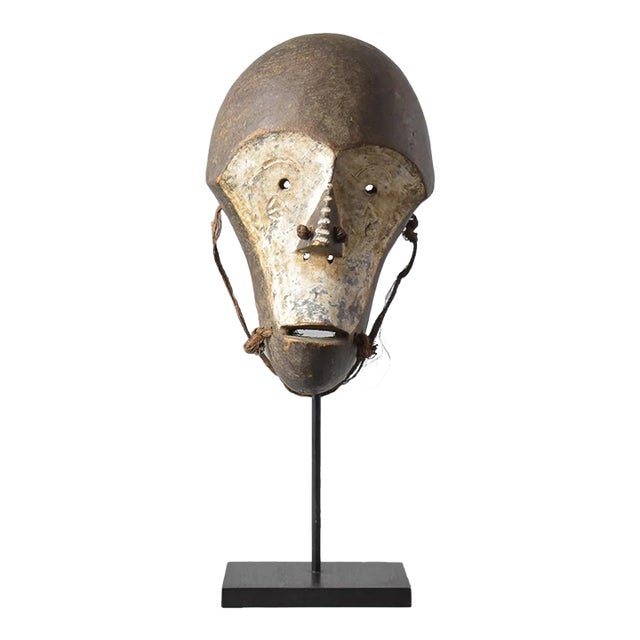
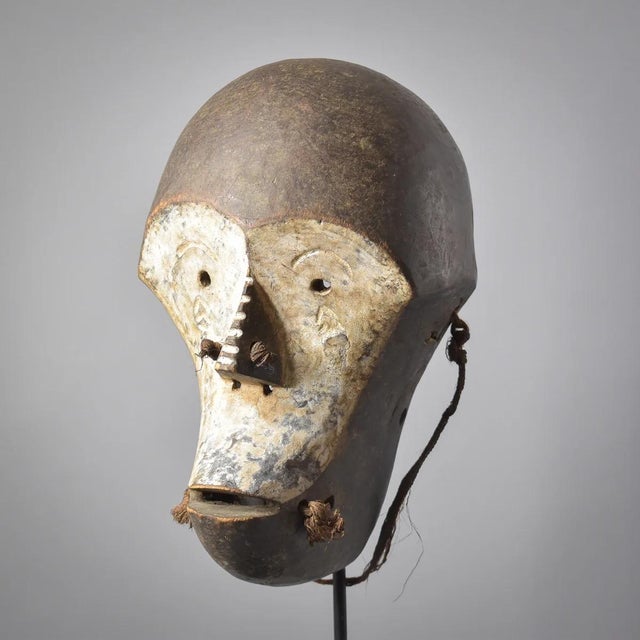
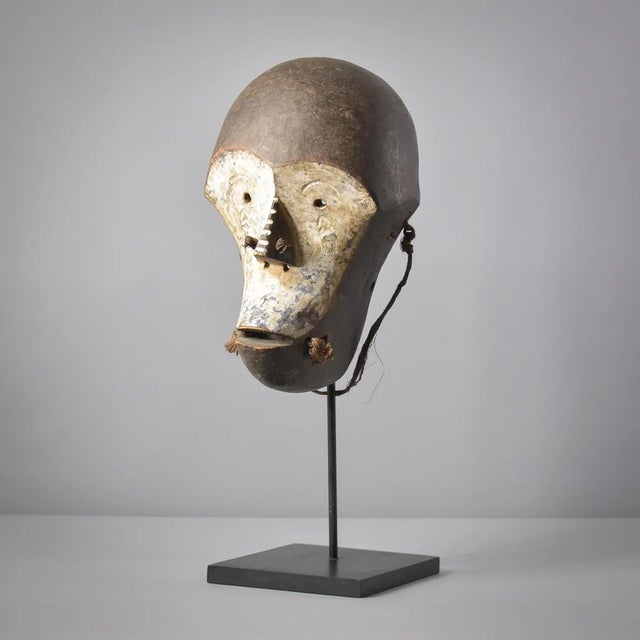
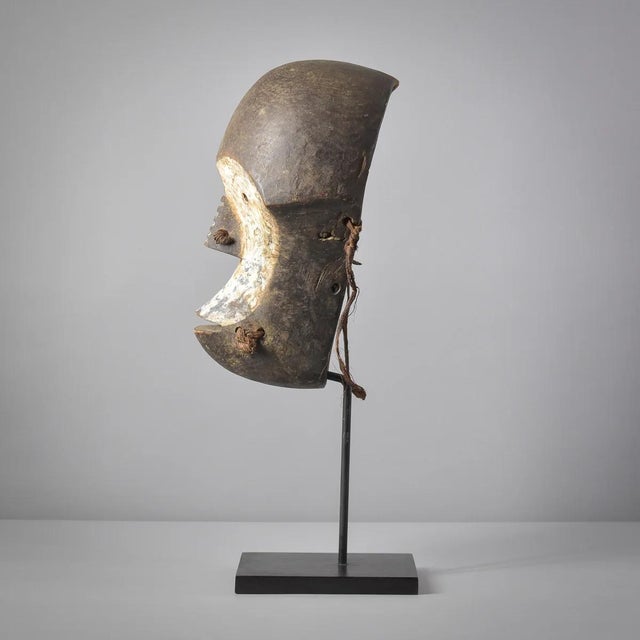
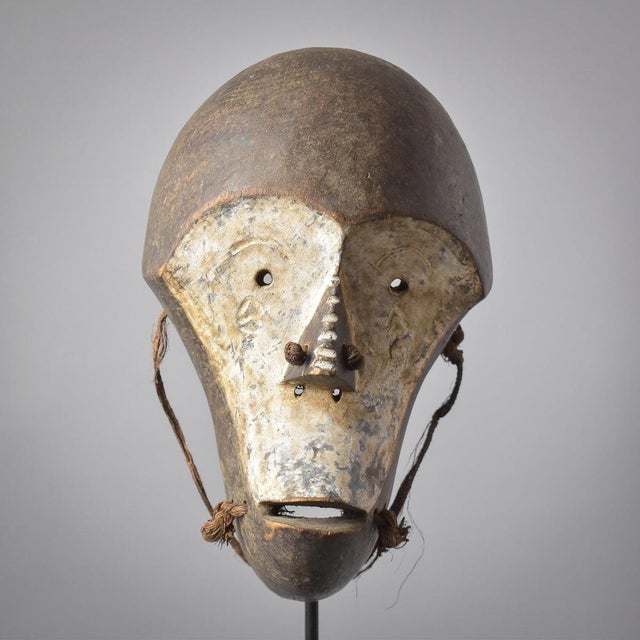
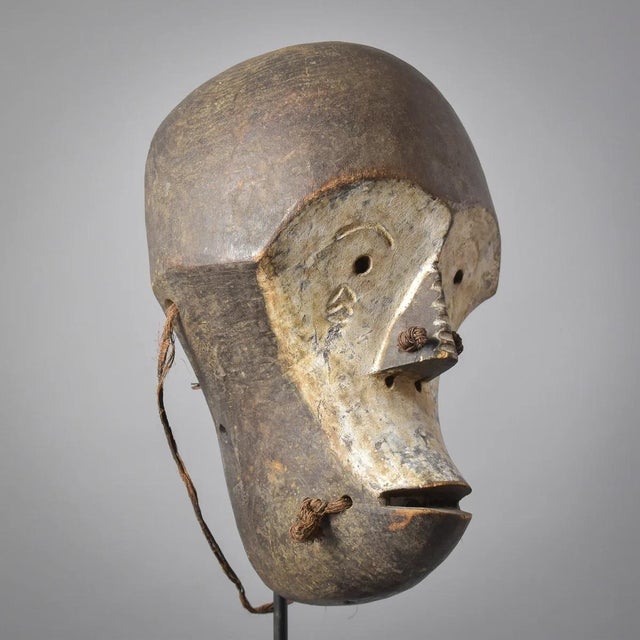
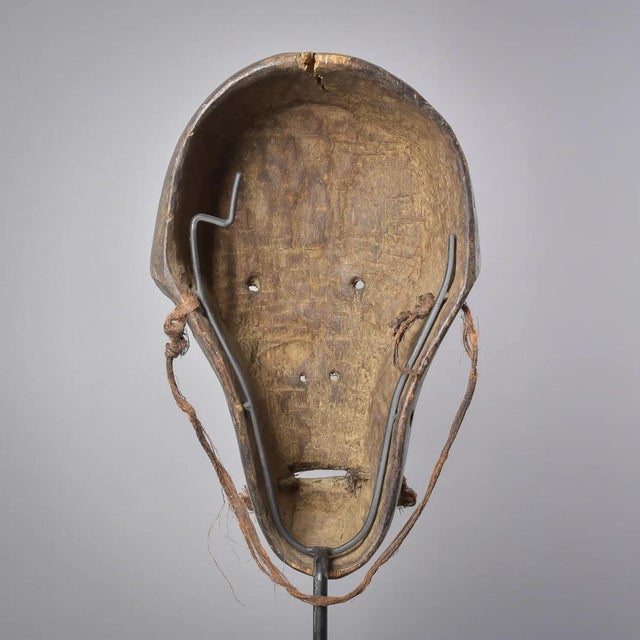
This striking mask, defined by its bold geometric contours and gracefully concave visage painted in a luminous white, is a …
Read more
This striking mask, defined by its bold geometric contours and gracefully concave visage painted in a luminous white, is a commanding example of Central African sculptural expression. Attributed to the Ngbandi people, the mask originates from a culturally rich and diverse region surrounding the Ubangi and Lualaba river systems, where several ethnolinguistic groupsâincluding the Ngbandi, Ngbaka, and Ngombeâmaintain interconnected artistic and ritual traditions.
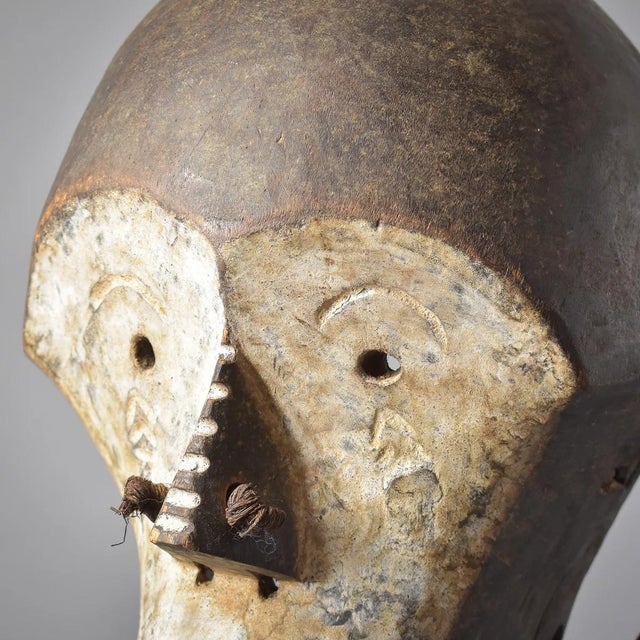
A prominent ridge of scarification extending down the nose serves as a key identifying feature, typical of masks from this area. Such scarification is not only decorative but symbolically charged, marking social identity, status, and group affiliation.
The Ngbandi and their close neighbors, the Ngbaka, have long shared sculptural forms and aesthetic conventions due to centuries of migration, coexistence, and cultural exchange. While both groups employ masks in their ceremonial practices, masks are somewhat less prevalent among the Ngbandi than among the Ngbaka. Among the latter, they are known as Dagara and are used in pivotal male initiation ritesâGanza or Gazaâwhich include circumcision and the formal transition of boys into adulthood. These masks play a didactic and protective role, mediating the transformative journey from childhood to social maturity.
The Ngombe, scattered further along the Lualaba River, also produce initiation masksâmost notably for the Mani ceremoniesâbut their examples tend to be less intricately finished. However, they share a common visual lexicon with their neighbors, particularly the pronounced facial ridges that stretch from the hairline to midway down the nose, a hallmark of regional mask carving.
This particular mask encapsulates the aesthetic and symbolic complexity of the regionâs artistic production. Its refined form and controlled abstraction speak to a sophisticated sculptural tradition that reflects broader cultural valuesâinitiation, identity, and spiritual transitionâwhile its stylistic ambiguity hints at the fluid cultural boundaries that define Central African art.
Height (In) 14.0Width (In)Â 9.0Depth (In) 8.0Mask on stand: 22 x 9 x 8 Inches
151539
See less
- Dimensions
- 9ʺW × 8ʺD × 14ʺH
- Styles
- African
- Period
- Early 20th Century
- Country of Origin
- Congo
- Item Type
- Vintage, Antique or Pre-owned
- Materials
- Wood
- Condition
- Good Condition, Original Condition Unaltered, Some Imperfections
- Color
- Brown
- Condition Notes
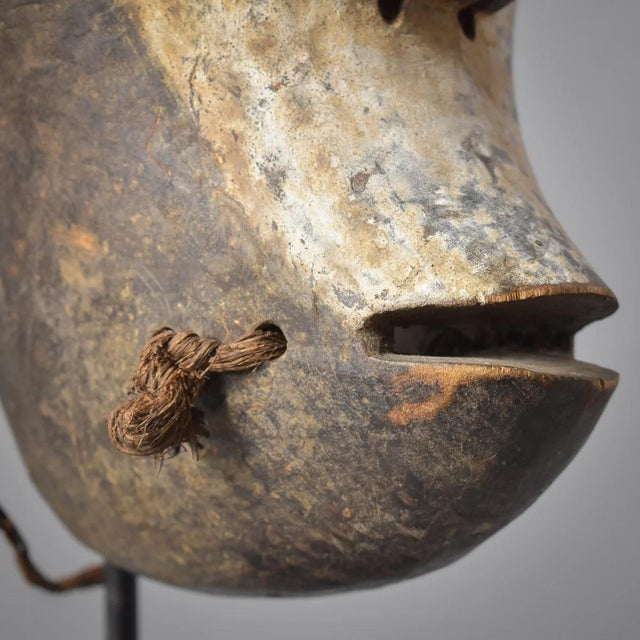
- Good. Most of our pieces have spent decades on at least two continents, and have been treasured by several owners. … moreGood. Most of our pieces have spent decades on at least two continents, and have been treasured by several owners. | Crack on top of the head, general surface wear and patina loss. less
Questions about the item?
Returns & Cancellations
Return Policy - All sales are final 48 hours after delivery, unless otherwise specified in the description of the product.
Cancellation Policy - Prior to shipping or local pickup, buyers may cancel an order for up to 48 hours, unless otherwise specified.
Related Collections
- Virginia Metalcrafters Home Accents
- Frederick Cooper Home Accents
- Moser Glassworks Home Accents
- Piero Fornasetti Home Accents
- Pearl Home Accents
- Carlo Scarpa Home Accents
- Ruby Home Accents
- Viking Glass Company Home Accents
- Design Home Accents
- Gracie Home Accents
- Line Vautrin Home Accents
- 9K Gold Home Accents
- Stickley Home Accents
- Dimitri Omersa Home Accents
- Bijan Home Accents
- Kay Bojesen Home Accents
- Zitan Home Accents
- Unlacquered Brass Finish Home Accents
- Shagreen Home Accents
- Vanilla Home Accents
- Violet Home Accents
- Mario Buatta Home Accents
- Mission Home Accents
- Medium-Density Fibreboard Home Accents
- Home Accents in Des Moines, IA