





Details
Description
The Punu people of Gabon have a rich and complex history, shaped by migration and cultural interaction. Linguistic evidence suggests …
Read more
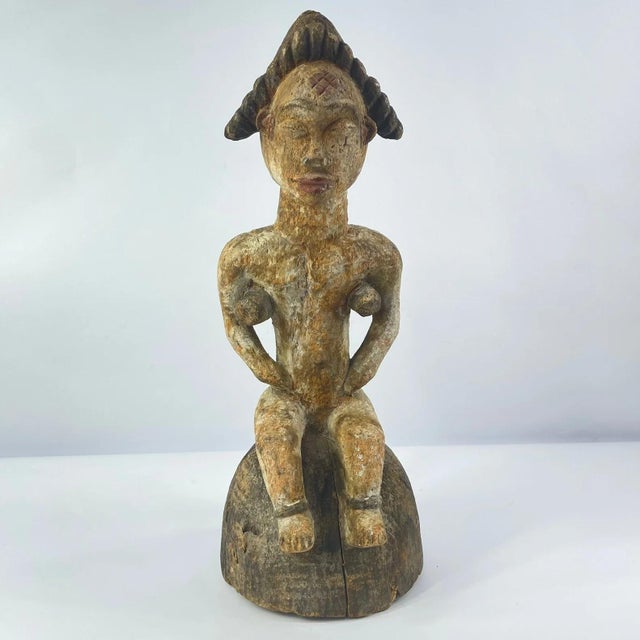
The Punu people of Gabon have a rich and complex history, shaped by migration and cultural interaction. Linguistic evidence suggests they moved southward from the north, possibly influenced by the expansion of neighboring groups such as the Kota and Fang. Before the arrival of the Bantu-speaking peoples, the region had been inhabited by various Pygmy groups, whose artistic traditions may have influenced the development of Punu culture. This migration, coupled with cultural exchanges, helped shape the distinctive art forms that define the Punu today.
Punu art, particularly their masks, is deeply intertwined with spiritual beliefs and social structures. The refined features and elaborate coiffure of Punu masks mirror the appearance of tribal women, symbolizing ideals of femininity, beauty, and social identity. Masks representing female ancestors are used in rituals, particularly within the Mukui (Moukouj, Mukuji) society. These masks are worn during the dance of the full moon, with performers sometimes on stilts, embodying the power and presence of ancestral spirits. The use of white kaolin pigments on the masks alludes to anti-witchcraft powers, reinforcing their connection to the Moukouji society's role in subjugating harmful forest spirits.
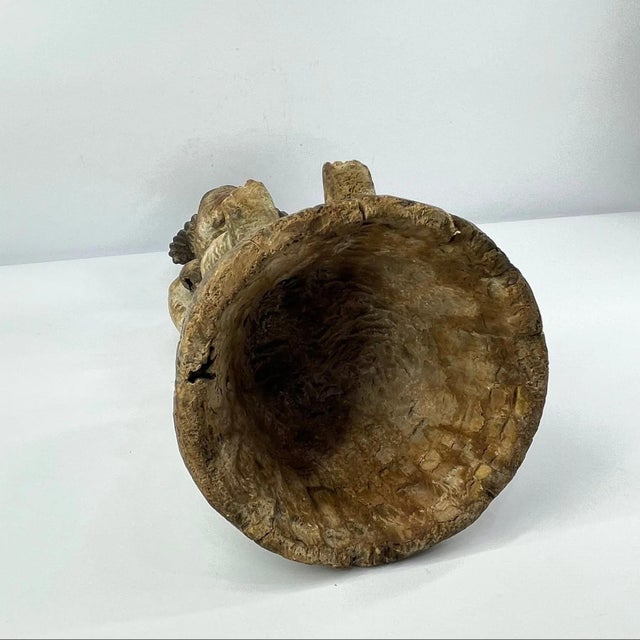
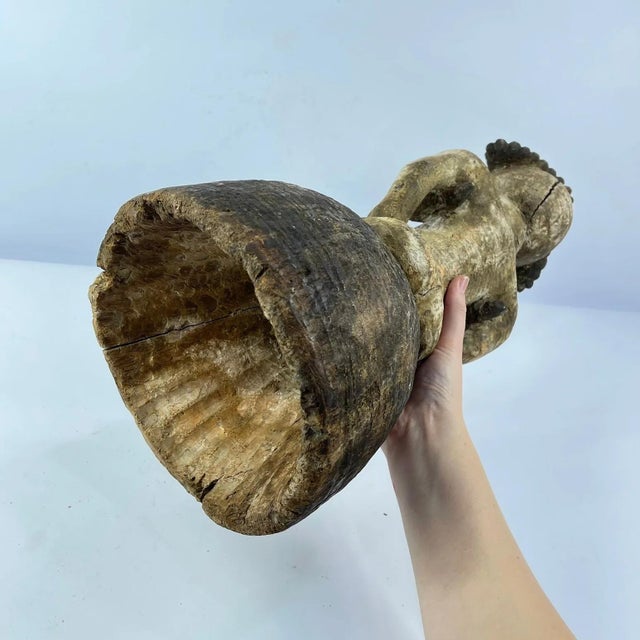
The Punuâs art serves not only as a form of cultural expression but as a vital element in their spiritual practices. The masks, often worn by Moukouji initiates, are thought to represent the faces of ancestors and play a key role in ensuring social cohesion and spiritual protection. These masks are a perfect example of how Punu art both reflects their cultural identity and reinforces their connection to the spiritual realm, while simultaneously incorporating influences from neighboring groups. This dynamic synthesis highlights the Punuâs role within the larger context of African art history.Large chips in base, large crack down middle of legs, large crack in back of the head.Â
Height (In) 21.0Width (In) 8.0Depth (In) 8.0
153128
See less
- Dimensions
- 8ʺW × 8ʺD × 21ʺH
- Styles
- African
- Period
- Early 20th Century
- Country of Origin
- Gabon
- Item Type
- Vintage, Antique or Pre-owned
- Materials
- Wood
- Condition
- Good Condition, Original Condition Unaltered, Some Imperfections
- Color
- Brown
- Condition Notes
- Good. Most of our pieces have spent decades on at least two continents, and have been treasured by several owners. … moreGood. Most of our pieces have spent decades on at least two continents, and have been treasured by several owners. | Scrapes and scuffs throughout; Large chips in base. Large crack down middle of legs. Large crack in back of the head. See photos for details. less
Questions about the item?
Returns & Cancellations
Return Policy - All sales are final 48 hours after delivery, unless otherwise specified in the description of the product.
Cancellation Policy - Prior to shipping or local pickup, buyers may cancel an order for up to 48 hours, unless otherwise specified.
Related Collections
- Virginia Metalcrafters Home Accents
- Frederick Cooper Home Accents
- Moser Glassworks Home Accents
- Piero Fornasetti Home Accents
- Carlo Scarpa Home Accents
- Pearl Home Accents
- Zitan Home Accents
- Line Vautrin Home Accents
- Viking Glass Company Home Accents
- Design Home Accents
- Gracie Home Accents
- Kay Bojesen Home Accents
- Stickley Home Accents
- 9K Gold Home Accents
- Bijan Home Accents
- Dimitri Omersa Home Accents
- Unlacquered Brass Finish Home Accents
- Shagreen Home Accents
- Violet Home Accents
- Vanilla Home Accents
- Medium-Density Fibreboard Home Accents
- Home Accents in Des Moines, IA
- Mission Home Accents
- Mario Buatta Home Accents
- Verdigris Copper Finish Home Accents