

Details
Description
A striking late Qing period Chinese kang daybed or opium couch made of solid Chinese elm and featuring a beautifully …
Read more
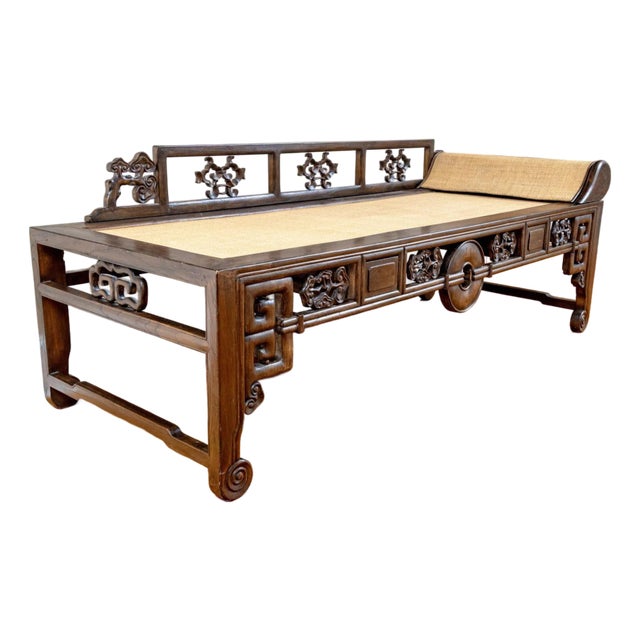
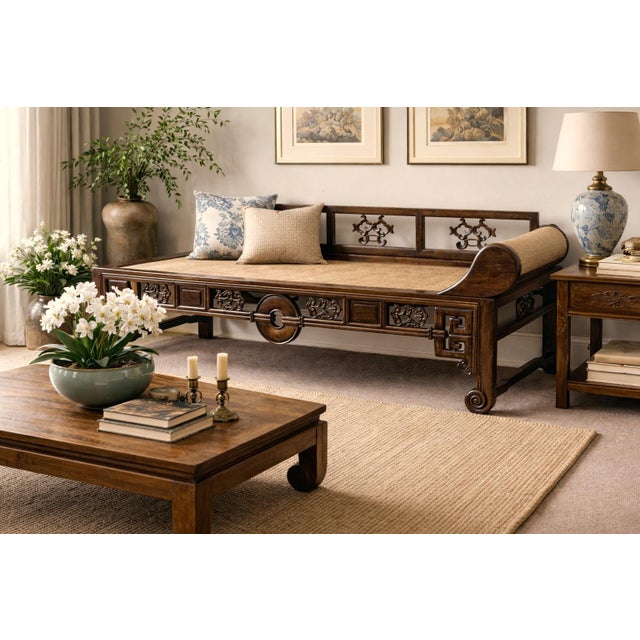
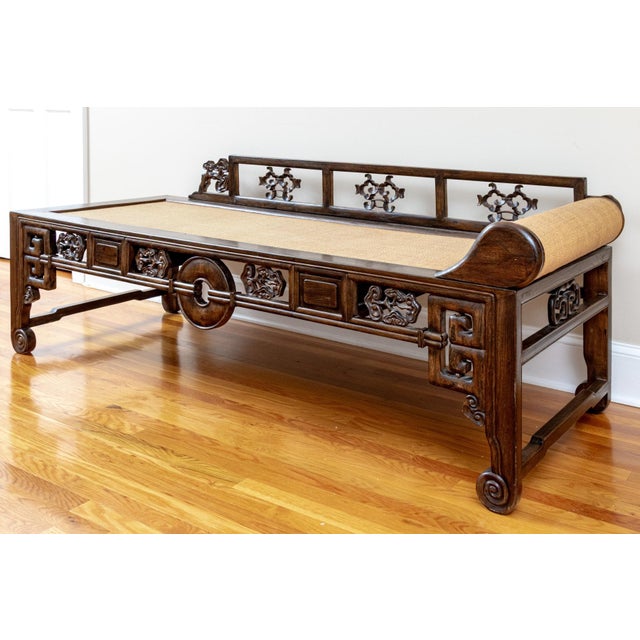
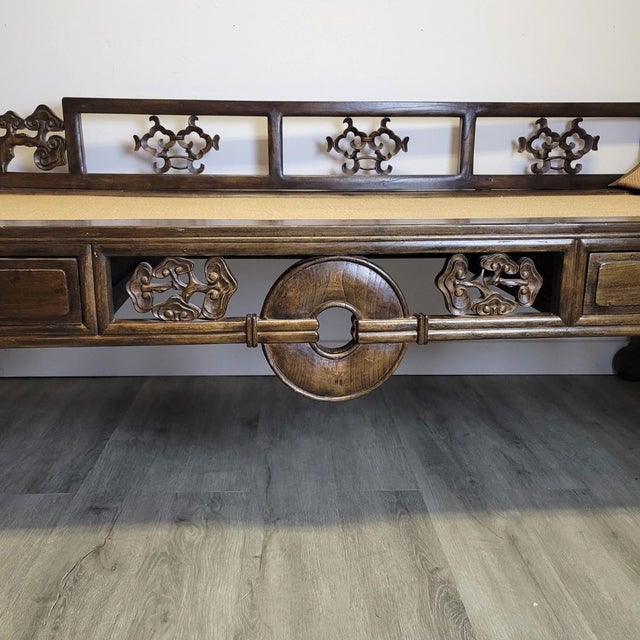
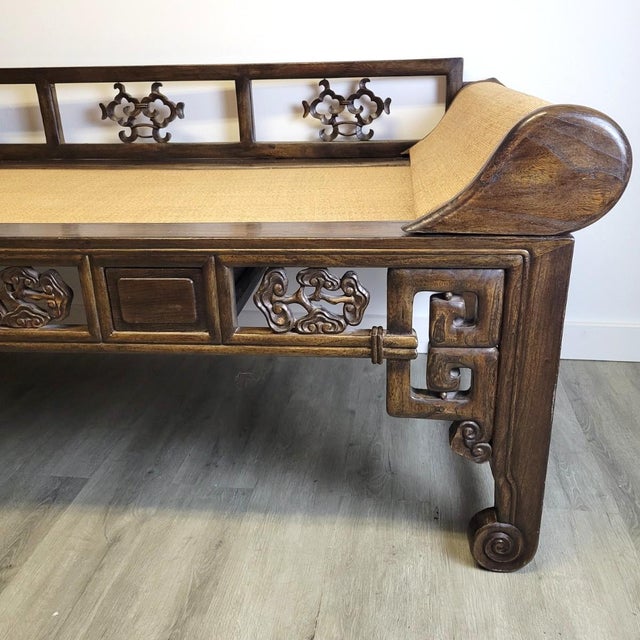
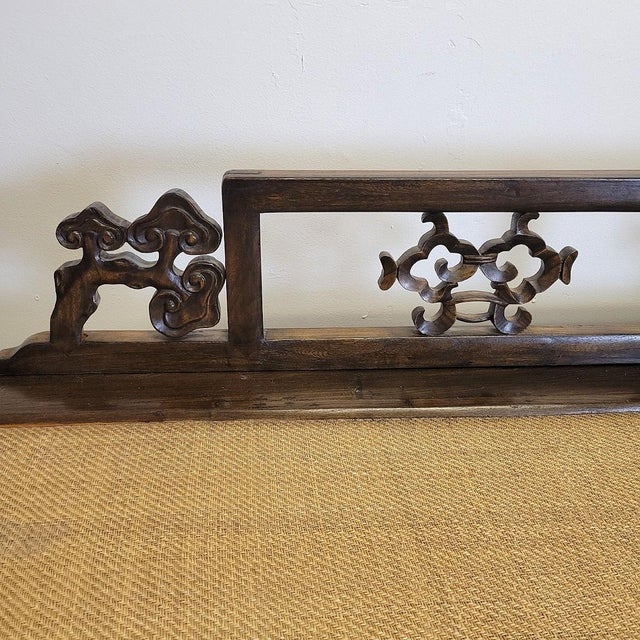
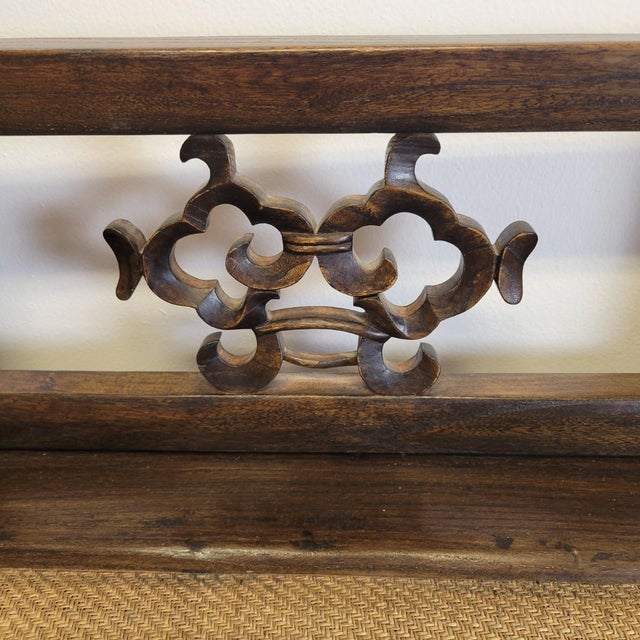
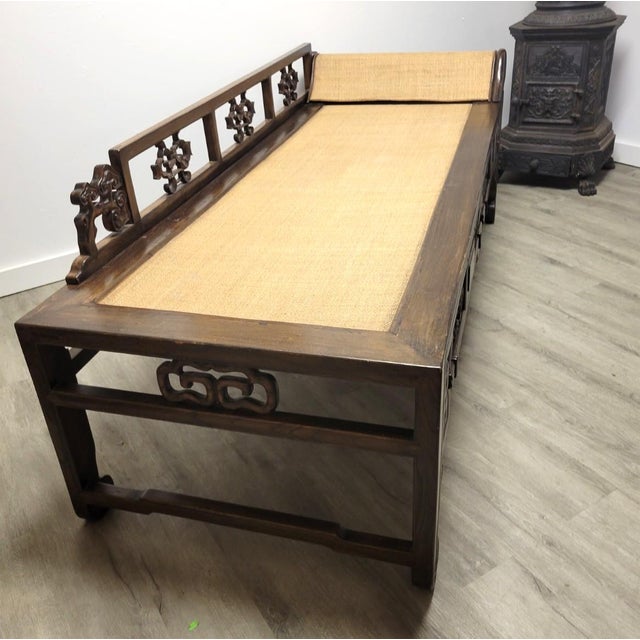
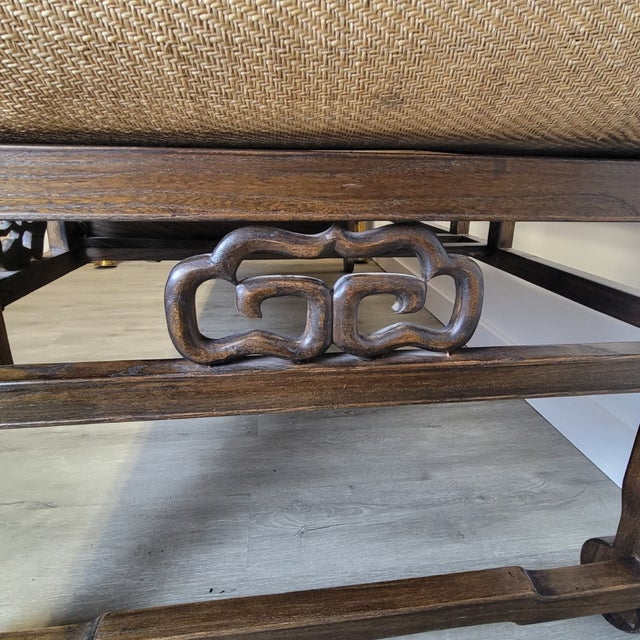
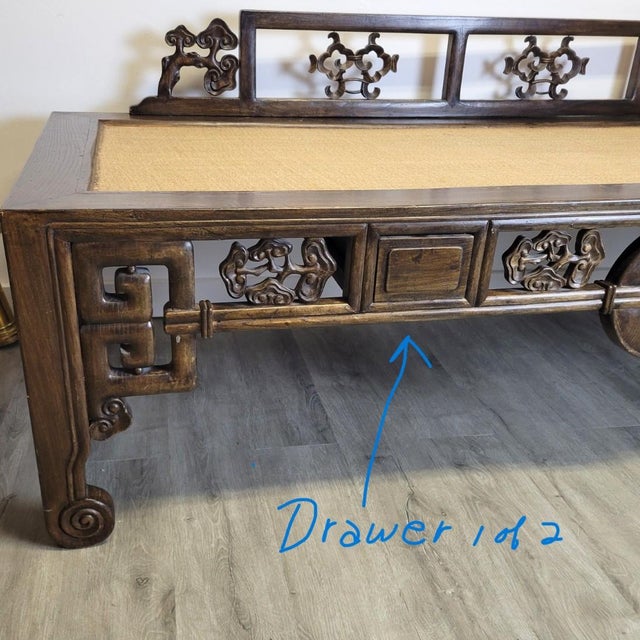
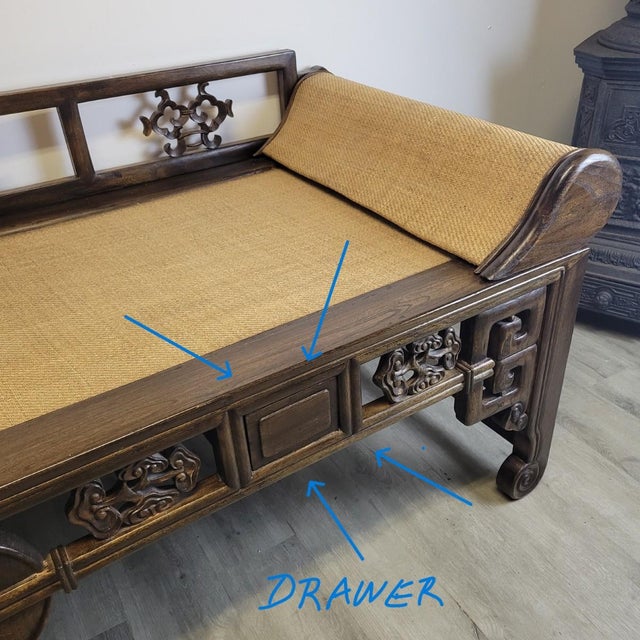
A striking late Qing period Chinese kang daybed or opium couch made of solid Chinese elm and featuring a beautifully carved frame with a lingzhi form caving to one end of the back. The long platform rests above an openwork apron with lingzhi cloud-form carvings centered by a large circular coin medallion, an auspicious motif symbolizing prosperity in Chinese decorative tradition. Two concealed drawers are integrated into the apron, a feature sometimes found on higher-quality northern Chinese kang daybeds and originally used for storing personal or smoking accessories.
The seat is hand-woven split rattan over a structural plank platform, providing both visual texture and sturdy support.
The scale and architectural carving give the piece a presence rarely found in smaller Chinese benches, allowing it to function as both seating and a sculptural focal point within a room.
JUNE’S THOUGHTS
It’s easy to imagine this placed beneath a large painting where the carving can be appreciated from across a room. The carved apron, moon-form medallion, and scroll feet give the bed a strong presence, yet the long open platform keeps the design visually light. It’s the kind of piece that naturally becomes the focal point of a room without ever feeling heavy or overpowering.
COLLECTOR’S NOTE
Chinese carved elm kang daybed, often referred to as an opium couch, originating from northern China, likely Shanxi province, and dating to the late Qing–early Republic period, circa 1890–1920.
Crafted from Chinese elm (yumu), the form reflects Ming-style furniture traditions that remained influential in northern workshops during the late 19th and early 20th centuries. The seat consists of a woven rattan mat laid over a structural plank platform, a traditional construction that provided comfort while maintaining the strength of the wooden base.
The carved openwork apron, circular medallion, and distinctive scrolling feet are characteristic features of northern Chinese furniture associated with Shanxi merchant furniture from the Pingyao region. The inward scroll feet and concealed drawers indicate a more refined workshop design rather than purely vernacular rural construction. The finish appears to have been refreshed at some point, helping preserve the elm while allowing the carved details and form to remain clearly legible.
#03336JWH
See less
- Dimensions
- 73ʺW × 29ʺD × 27ʺH
- Number of Seats
- 1
- Seat Height
- 20.0 in
- Period
- Late 19th Century
- Country of Origin
- China
- Item Type
- Vintage, Antique or Pre-owned
- Materials
- Elm
- Condition
- Good Condition, Restored, Some Imperfections
- Color
- Brown
- Condition Notes
- Good antique condition consistent with age and use. The finish appears to have been refreshed at some point, helping preserve … moreGood antique condition consistent with age and use. The finish appears to have been refreshed at some point, helping preserve the wood while maintaining the character of the carving. Minor surface wear, small marks, and light irregularities typical of antique Chinese furniture. Woven seat remains sturdy and supported by a solid plank platform beneath. less
Questions about the item?
Returns & Cancellations
Return Policy - All sales are final 48 hours after delivery, unless otherwise specified in the description of the product.
Cancellation Policy - Prior to shipping or local pickup, buyers may cancel an order for up to 48 hours, unless otherwise specified.