

Details
Description
Antique 19th Century Japanese Imari Scalloped Bowl Meiji Kinrande Porcelain - 8.5”
This substantial nineteenth-century Japanese Imari bowl is a …
Read more
Antique 19th Century Japanese Imari Scalloped Bowl Meiji Kinrande Porcelain - 8.5”
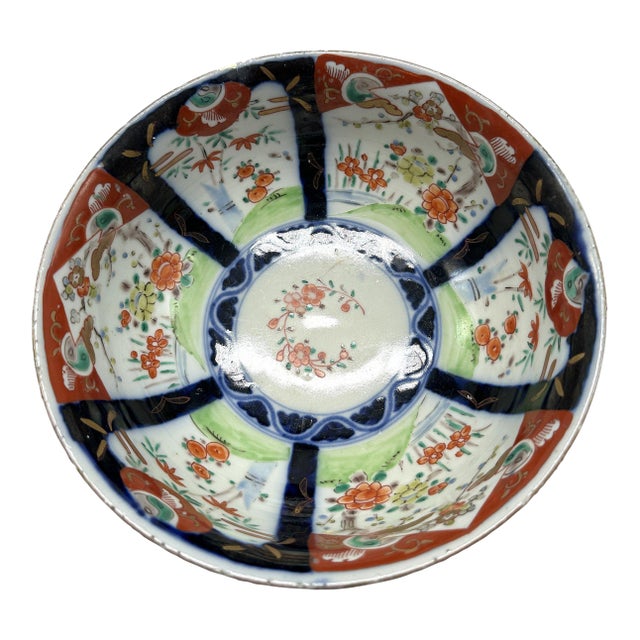
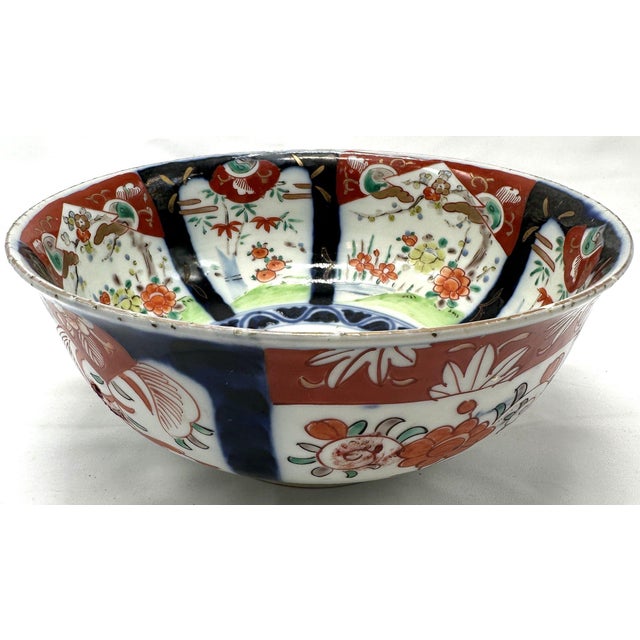
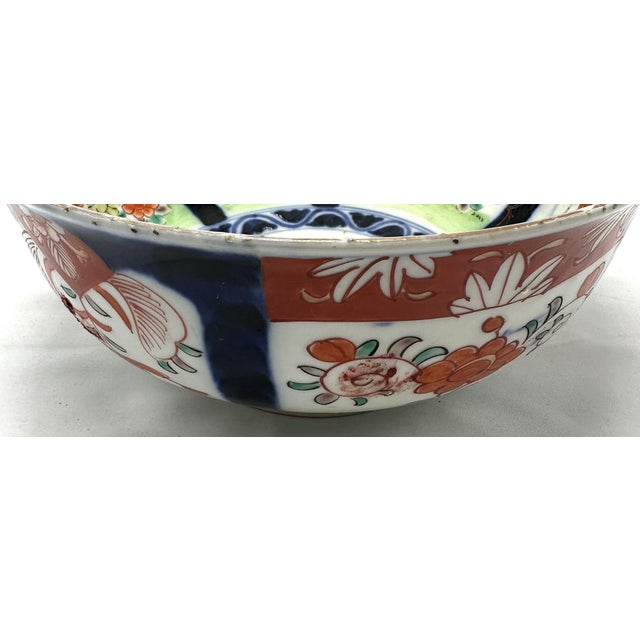
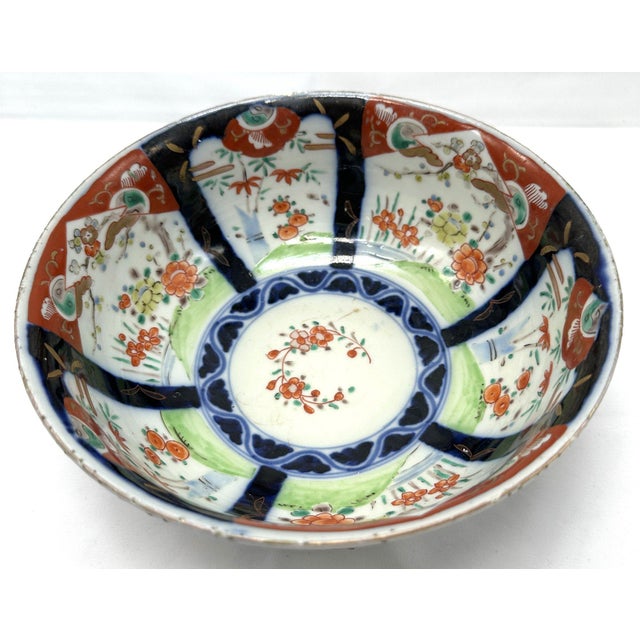
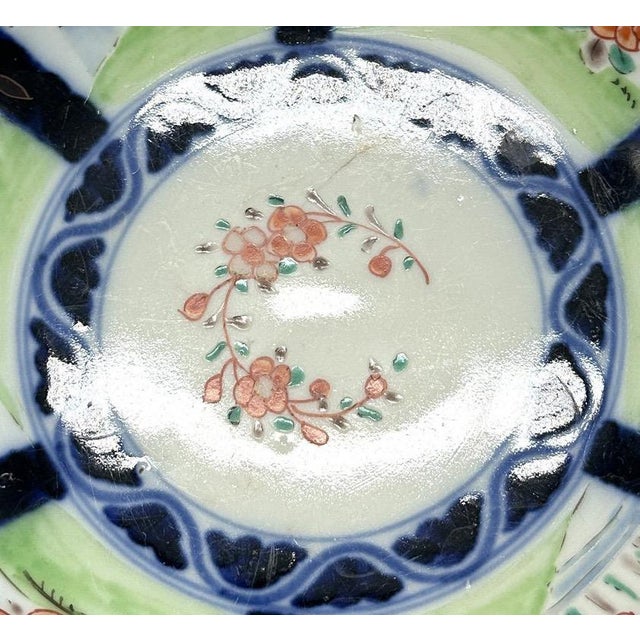
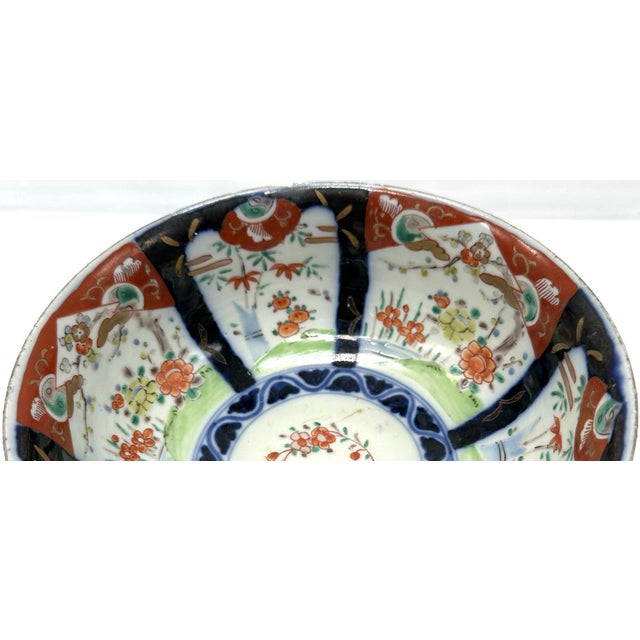
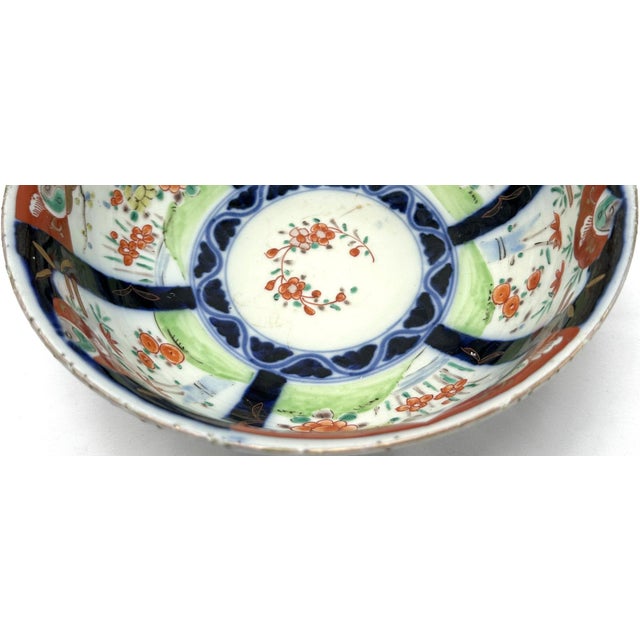
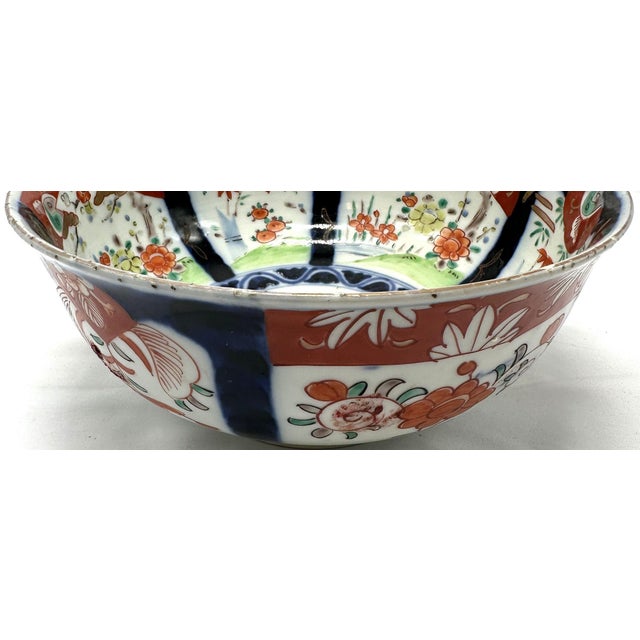
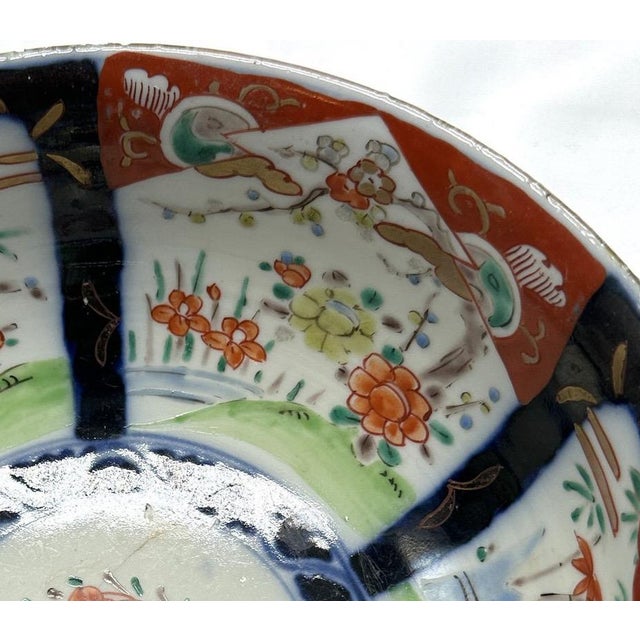
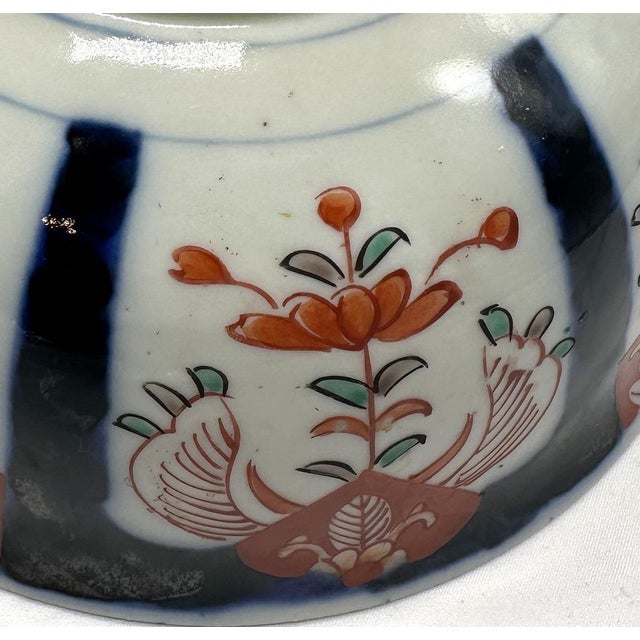
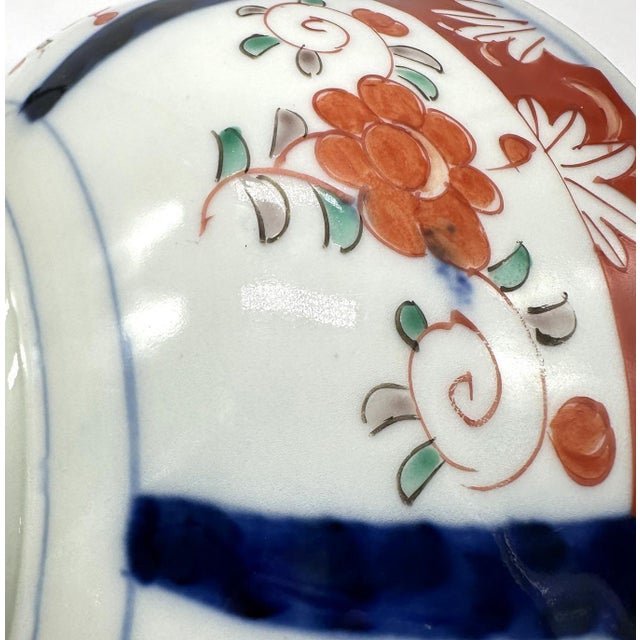
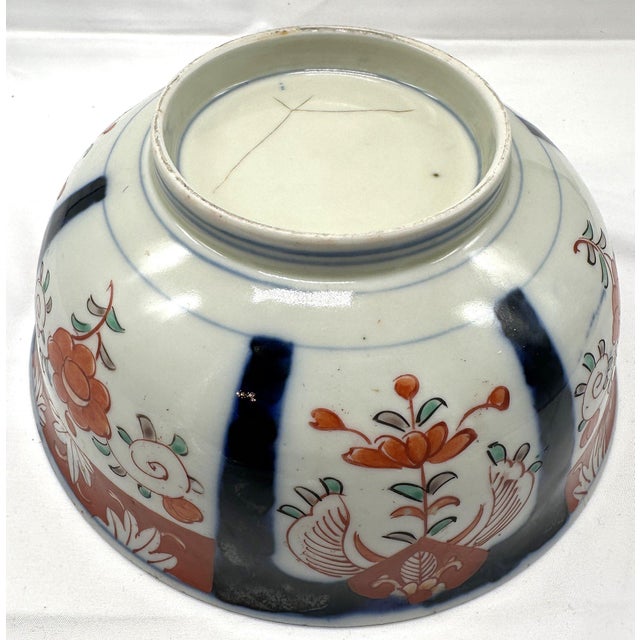
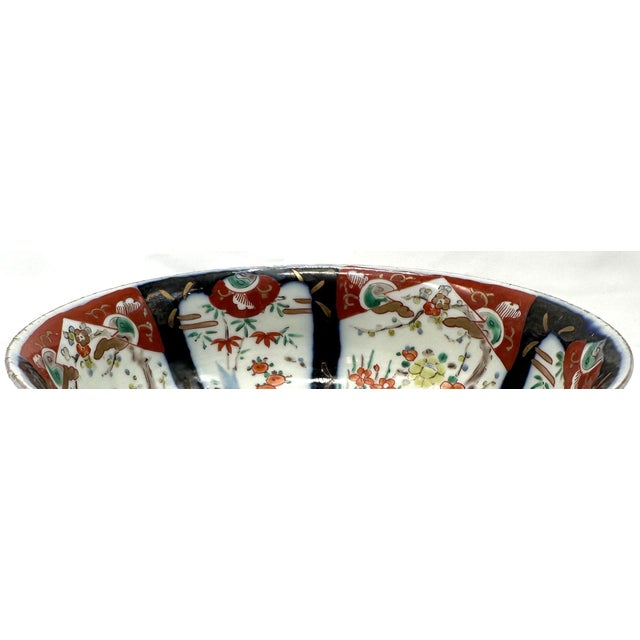
This substantial nineteenth-century Japanese Imari bowl is a masterful example of Kinrande porcelain, a style defined by its lavish use of gold brocade over a rich polychrome palette. The interior composition features a bold radiating panel design that is highly characteristic of the Meiji era, alternating between deep underglaze cobalt blue bands and vibrant floral cartouches. These hand-painted sections are filled with seasonal botanicals including chrysanthemums and plum blossoms, rendered in traditional iron-red and green enamels. The central well is anchored by a delicate floral medallion encircled by a repeating geometric wave border, while the exterior displays large-scale peonies and architectural scrolls. Finished with hand-applied 24k gold leaf gilding that highlights every petal, this scalloped bowl serves as a commanding centerpiece for a high-end Chinoiserie collection or a curated traditional interior.
The Origins of Imari Ware
This bowl traces its lineage to the historic kilns of Arita in the Saga Prefecture of Japan. While the porcelain was fired in the mountain ateliers of Arita, it earned the name Imari from the port town where these treasures were shipped to the West. During the nineteenth century, Japanese artisans refined the underglaze cobalt and overglaze enamel process to create the iconic "triple-color" look that would eventually captivate European royalty and elite American collectors. The Kinrande style seen here was specifically developed to meet the Victorian demand for opulence, utilizing specialized techniques to bond gold leaf to the porcelain surface through multiple kiln firings.
Historical Significance
Produced during the Meiji period (1868–1912), this bowl represents a pivotal era of Japanese artistic expansion and cultural exchange. As Japan opened its borders to the world, the Meiji artisans sought to showcase the technical superiority of their ceramic traditions. This specific bowl, with its complex paneling and scalloped rim, reflects the transition from Edo period motifs to the more intricate and detailed "Export Imari" that defined luxury in the late 1800s. Owning a piece of this scale and decorative density offers a physical link to the legendary Arita craftsmansip that influenced global ceramic design for centuries.
Symbolism in the Motif
In Japanese porcelain, every hand-painted element carries a deeper meaning. The chrysanthemum, or Kiku, is a symbol of longevity and the imperial throne, while the plum blossoms signify resilience and the arrival of spring. The repeating wave pattern, known as Seigaiha, represents surges of good fortune and the vast, eternal sea. By combining these auspicious symbols with the royal colors of gold and cobalt, the original artisan intended this bowl to be more than a household vessel; it was designed as a talisman of prosperity and enduring beauty for the home.
Specifications and Dimensions
Diameter: 8.5 inches
Height: 4 inches
Origin: Arita, Japan
Period: Late 19th Century (Meiji Era)
Materials: Fine Porcelain, Cobalt Blue Underglaze, Polychrome Enamels, 24k Gold Gilding
Style: Kinrande Imari
Condition Report
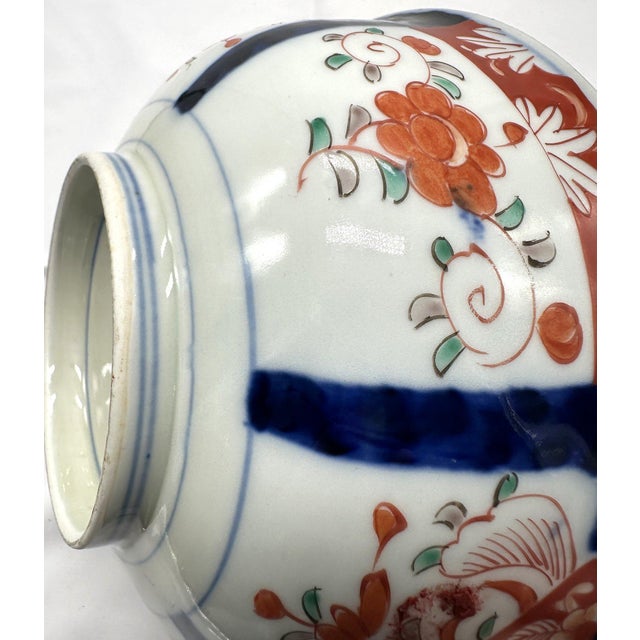
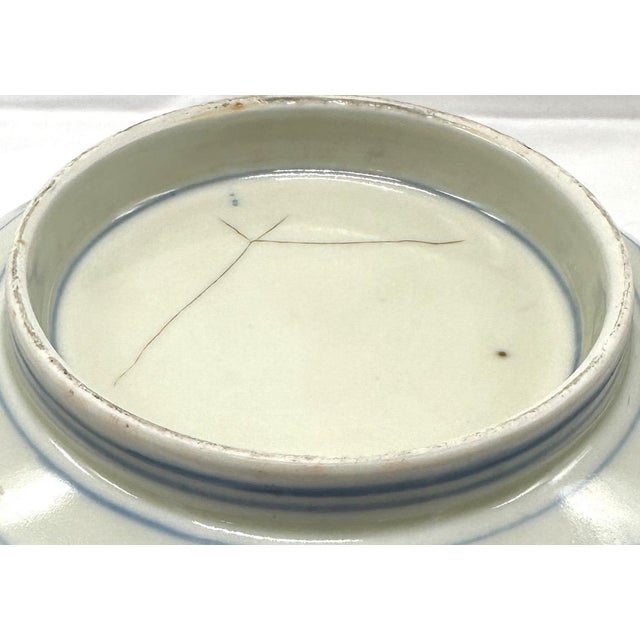
This authentic nineteenth-century bowl is in good antique condition, showcasing the honest character and history of a piece that has been cherished for over a hundred years. The porcelain body remains structurally sound and retains a vibrant, high-gloss finish. Consistent with its age and genuine period production, there are several small chips and minor "nibbles" along the delicate scalloped rim, which are documented in the detailed photographs. The base features authentic kiln crackles and two stable, age-appropriate hairlines within the glaze at the bottom of the well. These features are typical of antique Japanese porcelain and serve as important hallmarks of authenticity, distinguishing this work from modern reproductions.
Designers Note
For the 2026 interior, this large Imari bowl is a quintessential "power piece" for the Grandmillennial or Modern Chinoiserie aesthetic. Its deep 4-inch profile and 8.5-inch diameter make it an ideal centerpiece for a round entry table or a formal dining room buffet. Consider styling this piece with other Blue and White porcelain to highlight the rich cobalt bands, or using it as a vibrant vessel for a low, lush floral arrangement of coral peonies. Interior designers often use these scalloped bowls to add architectural texture and "Old Money" gravitas to a library bookcase or a styled mantle vignette. The warm gold and iron-red tones allow it to pair beautifully with mahogany antiques, brass hardware, or botanical wall-coverings.
A rare fusion of historical narrative and breathtaking artisanal skill, this 19th Century Japanese Imari Scalloped Bowl is a fragment of Meiji luxury. Its vibrant radiating geometry and hand-gilded details ensure it will remain a focal point in any sophisticated collection. Whether you are an avid student of Asian antiquities or simply seeking a distinguished heirloom for your home, this bowl offers an unparalleled opportunity to own an authentic piece of Japanese porcelain history.
See less
- Dimensions
- 8.5ʺW × 8.5ʺD × 4ʺH
- Brand
- Imari Porcelain
- Period
- 19th Century
- Country of Origin
- China
- Item Type
- Vintage, Antique or Pre-owned
- Materials
- Gold Leaf
- Porcelain
- Condition
- Good Condition, Original Condition Unaltered, Some Imperfections
- Color
- Red
- Condition Notes
- This authentic nineteenth-century bowl is in good antique condition, showcasing the honest character and history of a piece that has … moreThis authentic nineteenth-century bowl is in good antique condition, showcasing the honest character and history of a piece that has been cherished for over a hundred years. The porcelain body remains structurally sound and retains a vibrant, high-gloss finish. Consistent with its age and genuine period production, there are several small chips and minor "nibbles" along the delicate scalloped rim, which are documented in the detailed photographs. The base features authentic kiln crackles and two stable, age-appropriate hairlines within the glaze at the bottom of the well. These features are typical of antique Japanese porcelain and serve as important hallmarks of authenticity, distinguishing this work from modern reproductions. less
Questions about the item?
Returns & Cancellations
Return Policy - All sales are final 48 hours after delivery, unless otherwise specified in the description of the product.
Cancellation Policy - Prior to shipping or local pickup, buyers may cancel an order for up to 48 hours, unless otherwise specified.
Related Collections
- Carlo Moretti Decorative Bowls
- Port 68 Decorative Bowls
- Nymphenburg Porcelain Decorative Bowls
- Sèvres Porcelain Decorative Bowls
- Furstenberg Porcelain Decorative Bowls
- Arzbeg Porcelain Decorative Bowls
- Gucci Decorative Bowls
- Classical Greek Decorative Bowls
- Derby Porcelain Decorative Bowls
- Feather Decorative Bowls
- Hermès Decorative Bowls
- Tiffany and Co. Decorative Bowls
- Brass Chinese Decorative Bowls
- Lalique Decorative Bowls
- Fenton Art Glass Company Decorative Bowls
- Chinoiserie Decorative Bowls
- Brass Decorative Bowls
- Chinese Decorative Bowls
- Maitland - Smith Decorative Bowls
- Japanese Decorative Bowls
- Murano Glass Decorative Bowls
- Mixing Bowls
- Copper Decorative Bowls
- Orrefors Decorative Bowls
- Mid-Century Modern Decorative Bowls