

Details
Description
Approximate dimensions: height 19 inch x Width 6 inch x Depth 6 inch
Indian Bronze Alloy Standing Figure. The figure …
Read more
Approximate dimensions: height 19 inch x Width 6 inch x Depth 6 inch
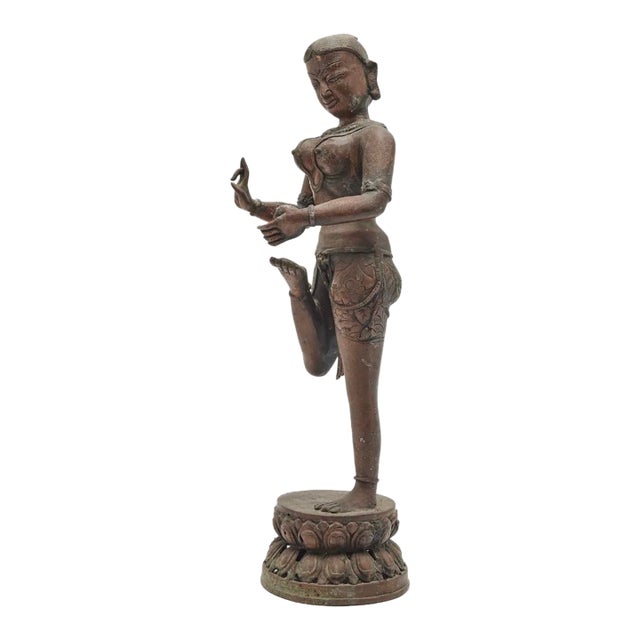
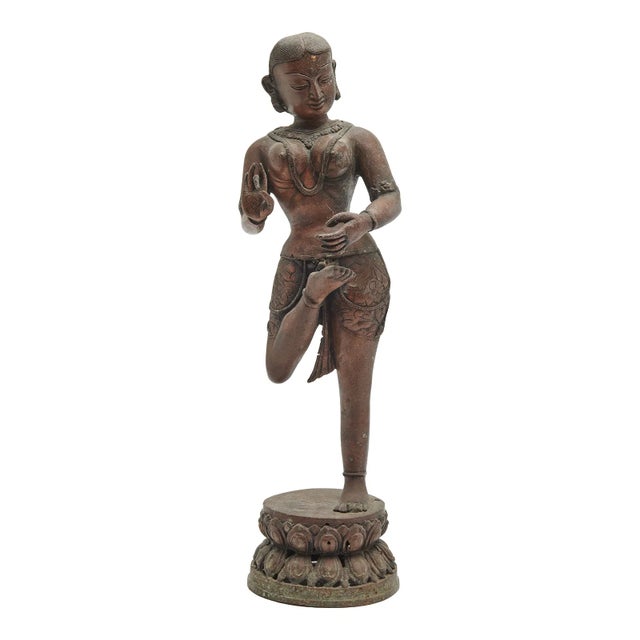
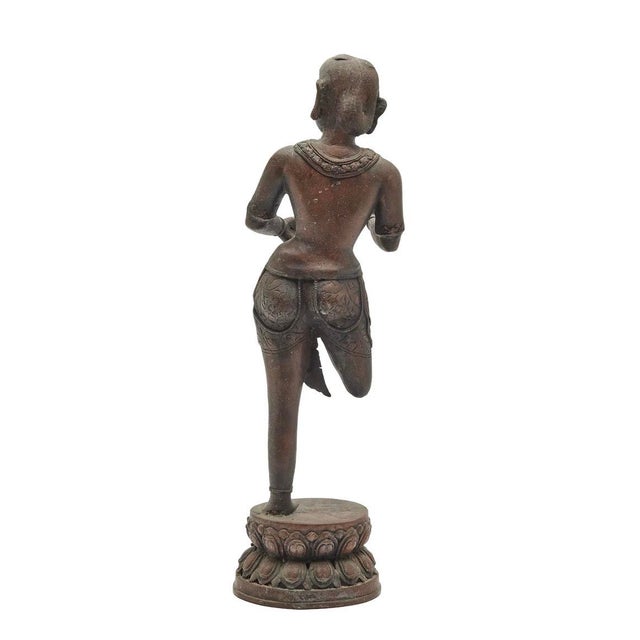
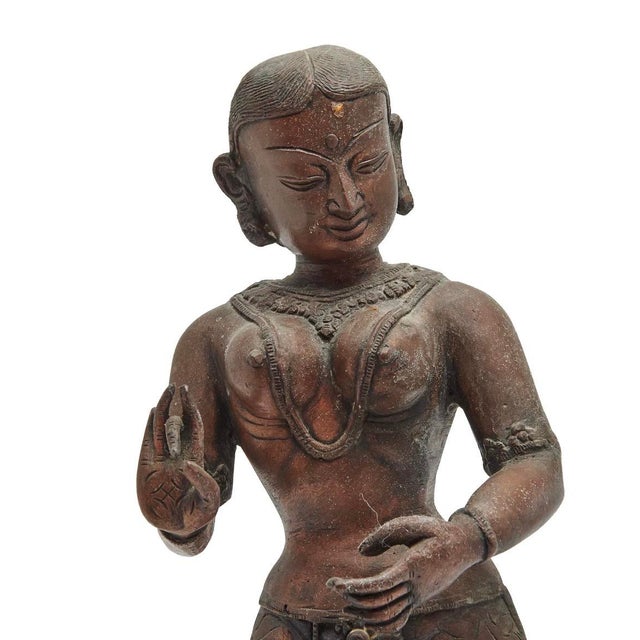
Indian Bronze Alloy Standing Figure. The figure depicts a classic pose shown in a relaxed contrapposto stance with one leg raised, standing on a lotus base. The figure is adorned with jewelry and a patterned lower garment, with one hand raised in a gesture and the other held near the torso.
The "removing a thorn from the foot" pose in Indianclassical art and dance, often referred to as Shubhagamini or a variant of the Shalabhanjika (tree nymph/maiden) motif, is a classic depiction of feminine grace, sensuality, and vulnerability. It is famously sculpted on the walls of the 13th-century Ramappa Temple in Telangana and the Hoysala-era Chennakeshava Temple in Belur.
details regarding this pose in the context of Indian classical dance and iconography:
1. Iconography and Symbolism (Madanika/Surasundari)
The maiden (Madanika or Surasundari) is depicted standing, often in a Tribhanga (three-bend) pose, lifting one leg to reach for her heel to remove a thorn.
Symbolism:
Vulnerability & Love: It represents a Nayika (heroine) who has paused during her journey to meet her lover, symbolizing the struggles or obstacles (thorns) she faces.
Sensuality: It is considered an Alasakanya (lazy or playful maiden) pose, highlighting feminine beauty and, in some cases, sensuality.
2. Connection to Bharatanatyam
While the pose is primarily famous in sculpture, it translates into Bharatanatyam through:
Abhinaya (Expression): Dancers use this pose to portray pain, hesitation, and focus, often in Padamsor Javalis (love poems) where the heroine is on her way to meet her lover.
Margam (Repertoire): It is sometimes incorporated into the choreography of a Varnam or as part of the nritta (pure dance) to showcase flexibility and balance.
Statuesque Poses: In traditional Bharatanatyam, this pose demonstrates the ability to create, in the words of dancer Lakshmi Vishwanathan, a "statuesque" visual—a momentary pause that mimics the perfection of temple sculptures.
3. Key Physical Elements
Leg Lift: The foot is raised towards the hip or back, requiring high flexibility in the hips and hamstrings.
Balance: The weight is shifted entirely onto the standing leg, often in a slight Araimandi (half-sit) or straight-legged position.
Facial Expression: The face shows a mix of pain and concentration.
This pose is part of the broader, rich sculptural tradition of Surasundaris or Nartakis (dancing maidens) that have influenced the postures and aesthetic of South India, Deccan
See less
- Dimensions
- 6ʺW × 6ʺD × 19ʺH
- Styles
- Asian Antique
- Indian
- Period
- 1950s
- Country of Origin
- India
- Item Type
- Vintage, Antique or Pre-owned
- Materials
- Metal
- Condition
- Good Condition, Original Condition Unaltered, Some Imperfections
- Color
- Bronze
Questions about the item?
Returns & Cancellations
Return Policy - All sales are final 48 hours after delivery, unless otherwise specified in the description of the product.
Cancellation Policy - Prior to shipping or local pickup, buyers may cancel an order for up to 48 hours, unless otherwise specified.
Related Collections
- Virginia Metalcrafters Home Accents
- Piero Fornasetti Home Accents
- Frederick Cooper Home Accents
- Moser Glassworks Home Accents
- Pearl Home Accents
- Verdigris Copper Finish Home Accents
- Carlo Scarpa Home Accents
- Ruby Home Accents
- Viking Glass Company Home Accents
- Design Home Accents
- Gracie Home Accents
- Line Vautrin Home Accents
- 9K Gold Home Accents
- Stickley Home Accents
- Dimitri Omersa Home Accents
- Goat skin Home Accents
- Bijan Home Accents
- Kay Bojesen Home Accents
- Sandalwood Home Accents
- Zitan Home Accents
- Unlacquered Brass Finish Home Accents
- Shagreen Home Accents
- Vanilla Home Accents
- Violet Home Accents
- Mario Buatta Home Accents