

Details
Description
Antique 19th Century Thanjavur Tri-Metal Bowl - Hand-Hammered Silver and Copper on Brass - Tanjore South Indian Art
Anchor your …
Read more
Antique 19th Century Thanjavur Tri-Metal Bowl - Hand-Hammered Silver and Copper on Brass - Tanjore South Indian Art
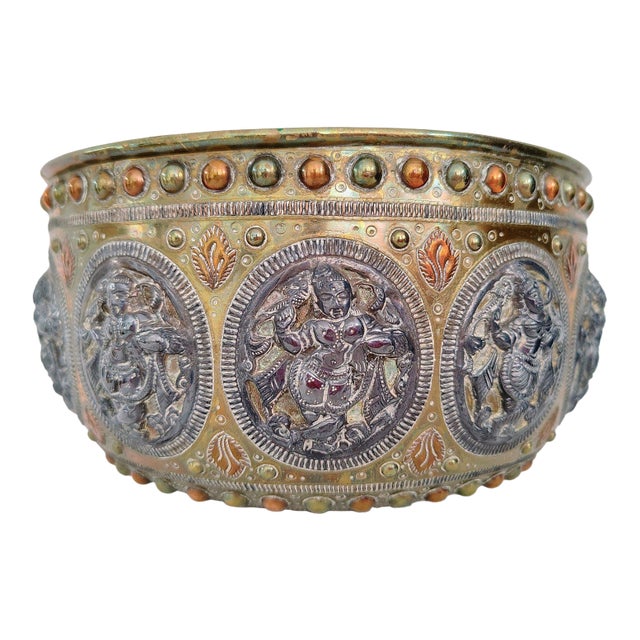
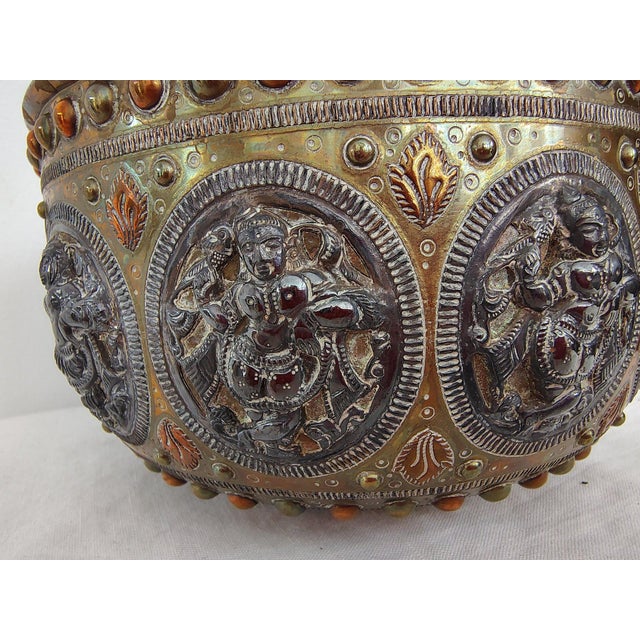
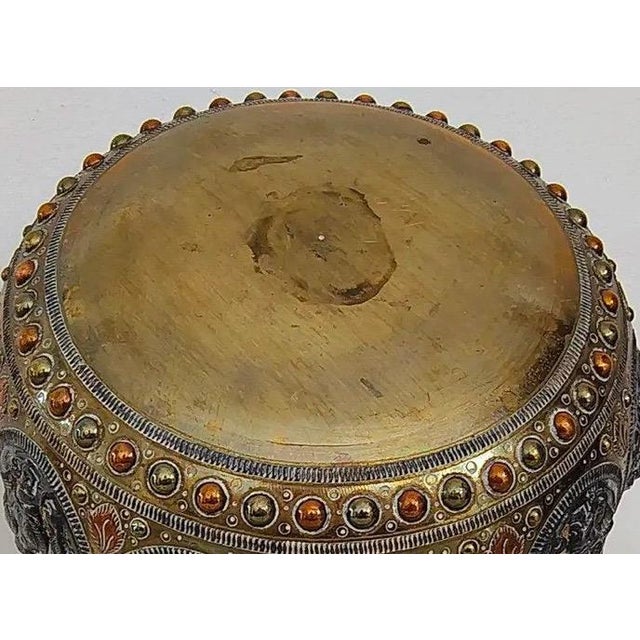
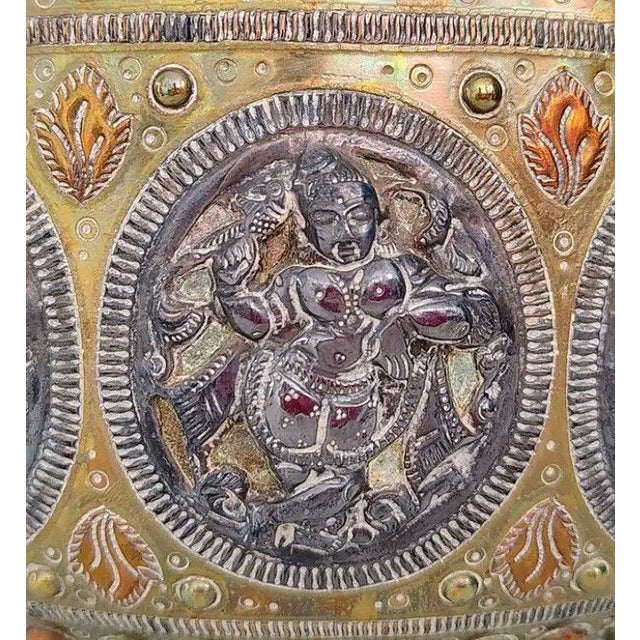
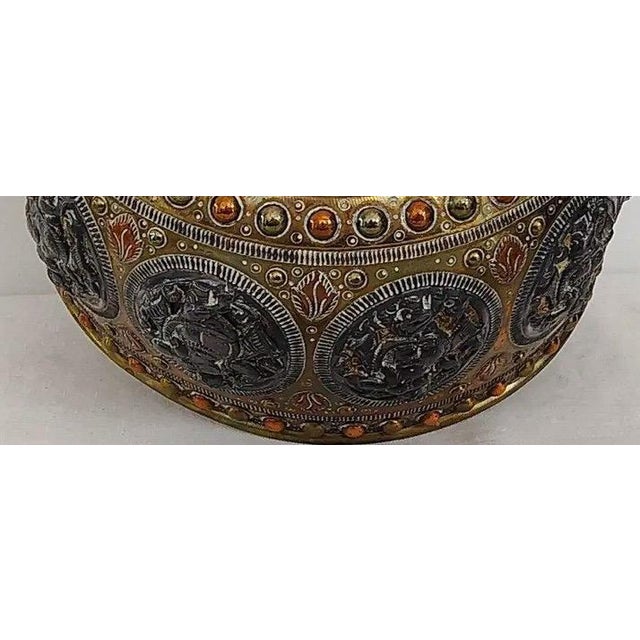
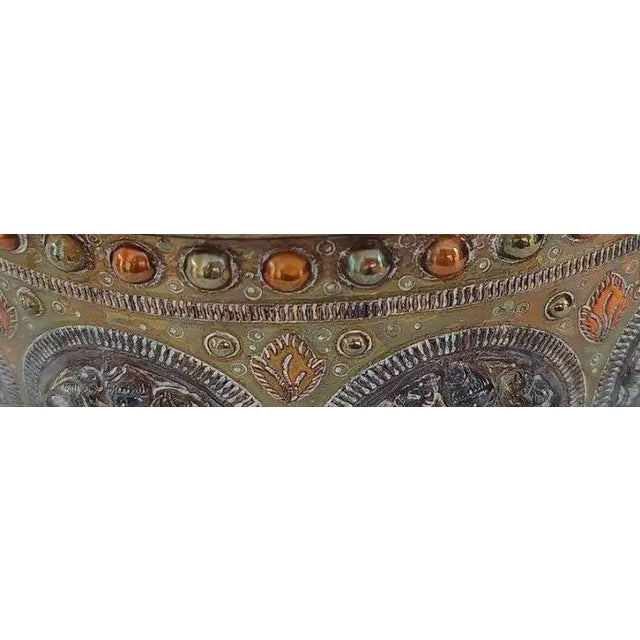
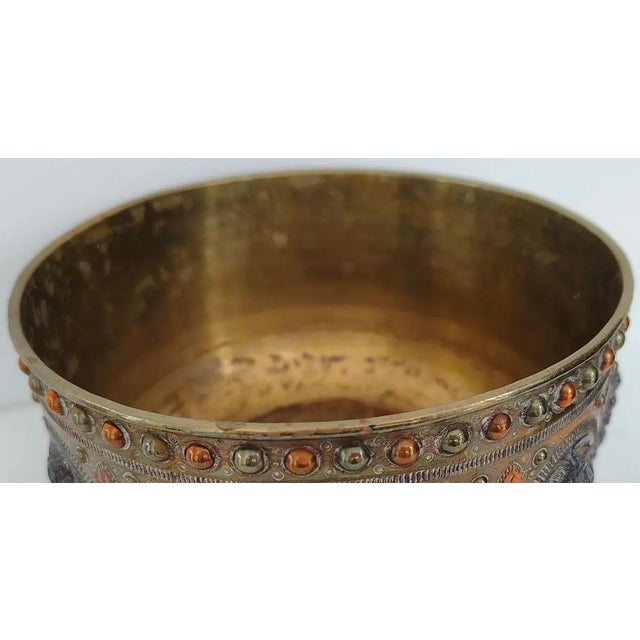
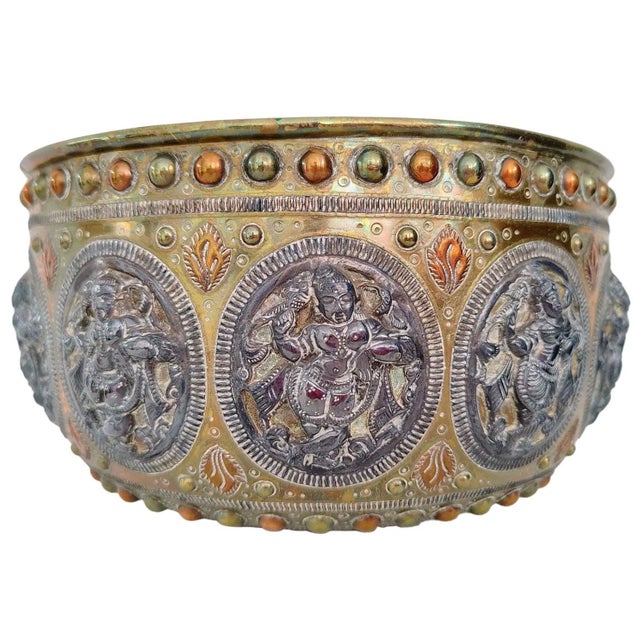
Anchor your collection with a masterwork of South Indian history. This monumental 19th-century Thanjavur, also known as Tanjore, bowl is a tour de force of the rare Tri-Metal technique, a celebrated tradition of Tamil Nadu known for its intricate metallurgical layering and sophisticated craftsmanship. The substantial brass body serves as a deep golden canvas for a series of high-relief repoussé silver medallions, each meticulously hand-hammered to depict distinct Hindu deities in classical, expressive poses. These shimmering silver icons are interspersed with vibrant copper-overlay foliate motifs and lotus petals, creating a rhythmic tricolor palette of silver, copper, and brass. The rim and base are further elevated by an alternating border of silver and copper bosses or beading, a signature architectural detail of the Thanjavur school. This heavy, hand-wrought vessel is not merely a functional bowl but a tabletop sculpture that brings the opulent spirit of the Maratha Empire into a contemporary or traditional interior.
Historical Significance: The Golden Age of Thanjavur Metalwork
The artisans of Thanjavur reached their creative peak during the 19th century under the patronage of the Maratha rulers of South India. This specific school of metalwork is world-renowned for the ability to fuse different metals seamlessly without the use of visible solder. By using the repoussé method—where the design is hammered into high relief from the reverse side—the craftsmen achieved an incredible level of anatomical and decorative detail in the silver deities, making them appear to float off the brass surface. Unlike modern, mass-produced reproductions which often use thin, stamped foils, 19th-century specimens like this one utilized thick gauge metals and deep chasing. This bowl represents the pinnacle of Anglo-Indian and purely Indian traditional metalware, often commissioned by high-ranking noble families as display pieces or for ritual use within the home.
The Rare Tri-Metal Encrustation Technique
The "Trimetal" or encrusted metal process is a sophisticated form of metallurgy where silver and copper are encrusted onto a brass or bronze base. This is achieved through a labor-intensive pressure-fit and chasing method that requires immense precision. The silver medallions aren't just flat plates; they are individually sculpted in 3D relief, giving the deities a lifelike presence that catches ambient light from every angle. The addition of copper provides a warm, earthy contrast to the cool silver and bright brass, making these pieces highly sought after by collectors of South Asian antiquities for their unique tricolor aesthetic and tactile soul.
Specifications and Dimensions
Origin: Thanjavur (Tanjore), Tamil Nadu, South India
Period: Late 19th Century
Medium: Solid Brass with Hand-Hammered Silver and Copper Encrustation
Technique: Tri-Metal Encrustation, Repoussé, and Chasing
Subject: Hindu Deities and Foliate Motifs
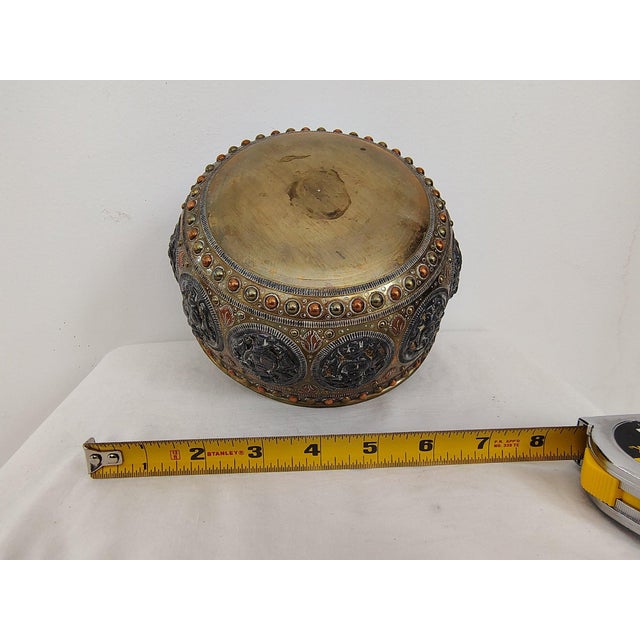
Diameter: 7 inches
Height: 4.5 inches
Condition Report
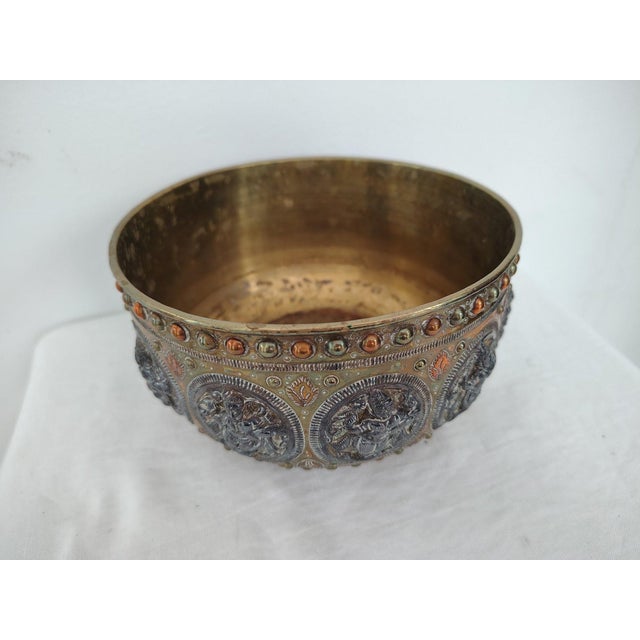
This bowl is in excellent antique condition and serves as a remarkable structural survivor of the late 19th century. It retains a rich, dark estate patina that has developed naturally over 100 years, beautifully highlighting the depth of the chased silver work. All silver and copper overlays are original, intact, and securely seated within the brass substrate. The interior shows minor, age-appropriate oxidation and honest wear to the base, which verifies its authentic provenance. There are no significant dents, modern repairs, or missing decorative elements, preserving the original artistic intent of the piece.
Designer's Note: Incorporating Global Chic and Maximalism
In the world of high-end interior design, authentic Thanjavur metalware is considered a "soulful neutral." It harmonizes effortlessly with the Global Chic and Maximalist movements, pairing beautifully with dark wood cabinetry, marble surfaces, or rich velvet upholstery. Because the bowl incorporates silver, copper, and gold tones, it acts as a perfect bridge between different metal finishes in a room, allowing for a cohesive and curated look. This piece is best styled as a singular centerpiece on a coffee table or as a standout artifact within a tiered shelf display, where its reflective surfaces and intricate details can be appreciated at eye level.
Symbolism and Spiritual Heritage
In Indian tradition, the combination of brass, copper, and silver is often believed to balance the elemental energies within a space. The circular form and repeating medallions of the deities represent the cyclical nature of time and the protective presence of the divine within the household. The use of the lotus and foliate motifs further symbolizes purity and growth. This makes the bowl not just a decorative object, but a spiritual anchor that brings a sense of heritage and protection into the modern home.
A rare and documented acquisition for the connoisseur of Asian Antiquities or collectors of fine Anglo-Indian design. This Thanjavur Tri-Metal bowl offers a level of handcrafted precision and cultural depth that transforms any space into a curated gallery. It stands as a definitive testament to the mastery of South Indian metal smiths, ready to serve as a sophisticated centerpiece in a home of high distinction.
See less
- Dimensions
- 7ʺW × 7ʺD × 4.5ʺH
- Period
- Late 19th Century
- Country of Origin
- India
- Item Type
- Vintage, Antique or Pre-owned
- Materials
- Brass
- Copper
- Sterling Silver
- Condition
- Good Condition, Original Condition Unaltered, Some Imperfections
- Color
- Brass
- Condition Notes
- This bowl is in excellent antique condition and serves as a remarkable structural survivor of the late 19th century. It … moreThis bowl is in excellent antique condition and serves as a remarkable structural survivor of the late 19th century. It retains a rich, dark estate patina that has developed naturally over 100 years, beautifully highlighting the depth of the chased silver work. All silver and copper overlays are original, intact, and securely seated within the brass substrate. The interior shows minor, age-appropriate oxidation and honest wear to the base, which verifies its authentic provenance. There are no significant dents, modern repairs, or missing decorative elements, preserving the original artistic intent of the piece. less
Questions about the item?
Returns & Cancellations
Return Policy - All sales are final 48 hours after delivery, unless otherwise specified in the description of the product.
Cancellation Policy - Prior to shipping or local pickup, buyers may cancel an order for up to 48 hours, unless otherwise specified.
Related Collections
- Carlo Moretti Decorative Bowls
- Port 68 Decorative Bowls
- Nymphenburg Porcelain Decorative Bowls
- Sèvres Porcelain Decorative Bowls
- Furstenberg Porcelain Decorative Bowls
- Arzbeg Porcelain Decorative Bowls
- Gucci Decorative Bowls
- Derby Porcelain Decorative Bowls
- Feather Decorative Bowls
- Hermès Decorative Bowls
- Classical Greek Decorative Bowls
- Tiffany and Co. Decorative Bowls
- Brass Chinese Decorative Bowls
- Lalique Decorative Bowls
- Fenton Art Glass Company Decorative Bowls
- Chinoiserie Decorative Bowls
- Brass Decorative Bowls
- Maitland - Smith Decorative Bowls
- Chinese Decorative Bowls
- Japanese Decorative Bowls
- Murano Glass Decorative Bowls
- Copper Decorative Bowls
- Mixing Bowls
- Dough Bowls
- Blown Glass Decorative Bowls