


Details
Description
The introduction of beautiful cloisonné objects from Japan was greatly affected by the 1854 treaty signed between Commodore Perry and …
Read more
The introduction of beautiful cloisonné objects from Japan was greatly affected by the 1854 treaty signed between Commodore Perry and the Japanese authorities which opened trade between the two countries. The Japanese Emperor welcomed the influence of Western Culture and he ended many of the old established traditions. Samurais were not allowed to carry swords, people were encouraged to wear western clothes, and the society was disrupted. Sword makers and metalsmiths were promptly out of work, making it necessary to turn their skills somewhere. In this background came the art of cloisonné - the art of creating designs using color glass powders around tiny copper wires on copper forms and firing them in the correct temperatures to become beautiful art objects. The art of enameling was not unknown in Japan, there were sword guards and smaller objects made by this method. The full scale production of cloisonné was encouraged by a German who helped the metalsmiths set up shops and factories to produce works of art. The early production turned out wares with a matt finish, quite unlike the glassy finish of modern cloisonne.
At the Meiji Restoration in 1889, there was a mandate for all Japanese to adopt Western culture and abandon the old traditions. When the Samurais were asked to give up their way of life, the sword makers also lost their trade. However, the sword makes soon applied their skills towards making beautiful objects with enamels in a process they learned from the West. They applied their experiences working with metal into new skills which involved executing their designs by using tiny metal wires and filling the spaces between them with color enamels. They were extremely successful, and Meiji period cloisonne objects are greatly admired for the innovative designs and exceptional craftsmanship.
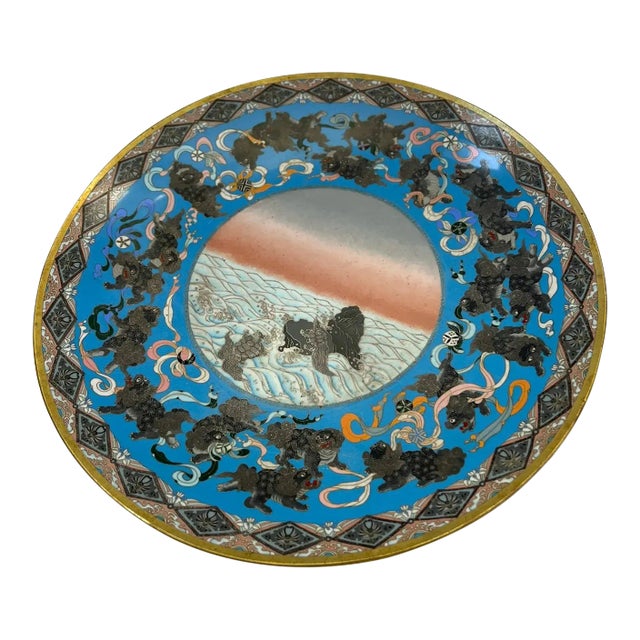
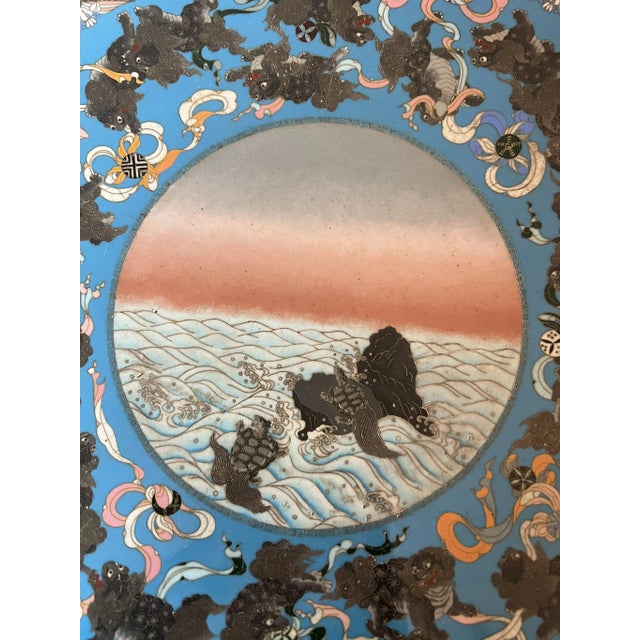
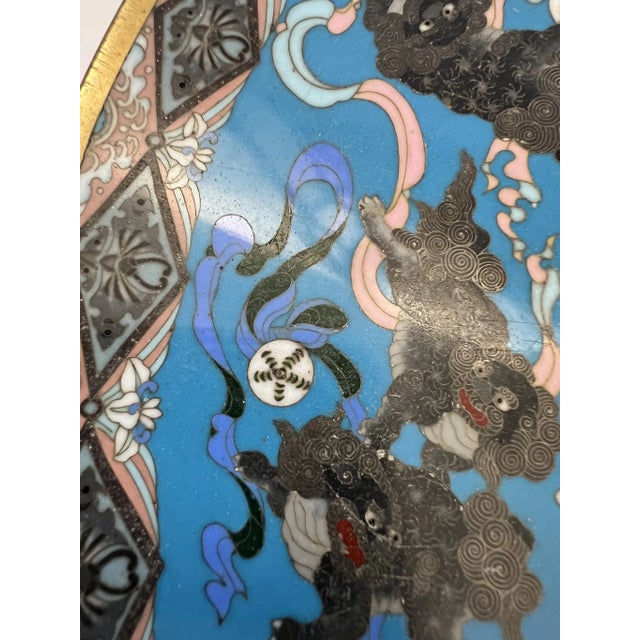
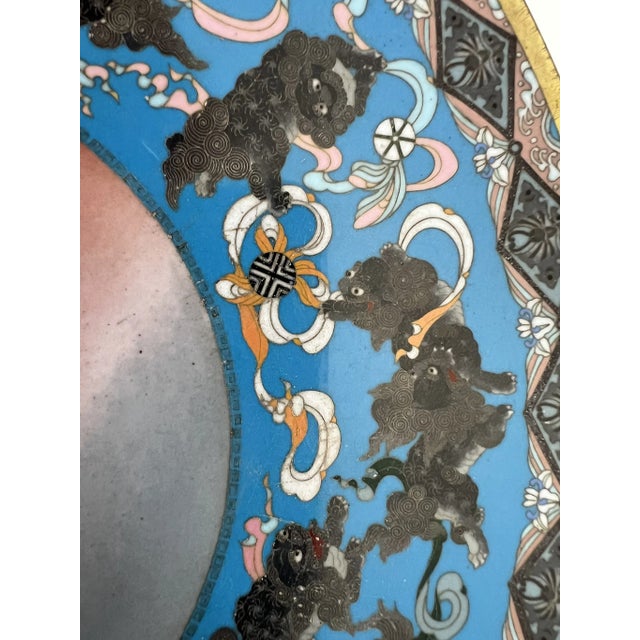
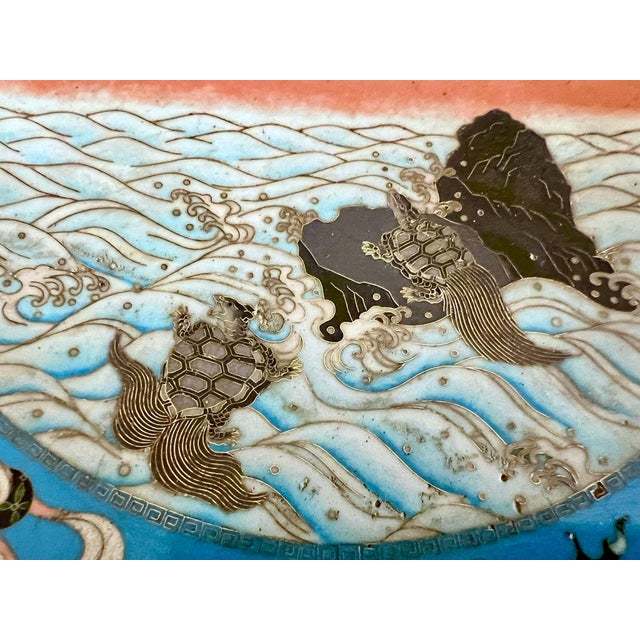
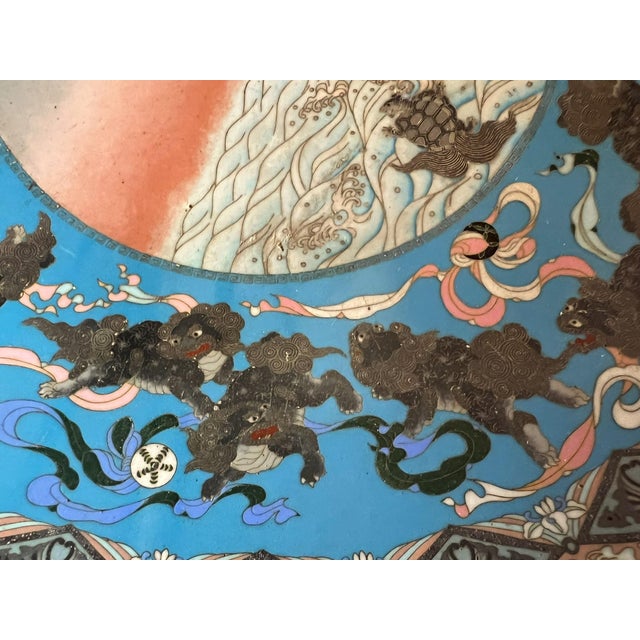
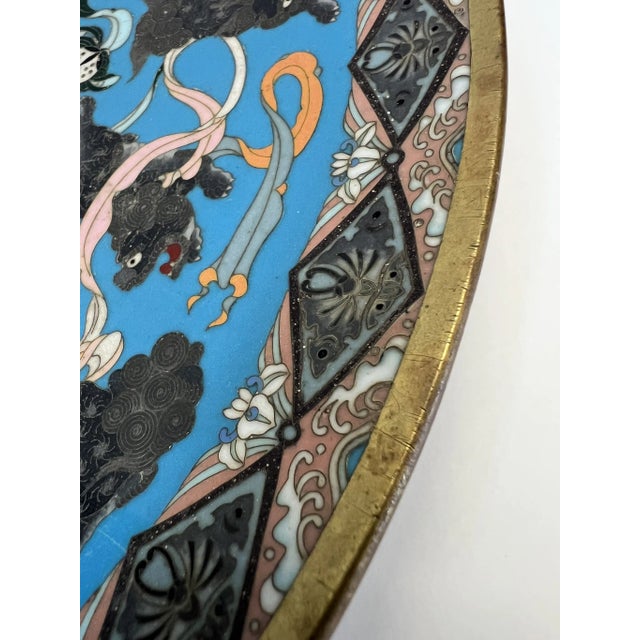
The cloisonne charger with hairy turtles as the center focus and a playful group of lion dogs called Shishi are unusual subject matters for the cloisonne artists. In Japan, turtles with long hairy tails are called Minogame and they are said to live a 1000 years and perhaps much longer. Therefore they are a symbol of longevity. The Shishi or Lion Dogs came to Japan as Protectors of Buddhas. The stone statues guarding temples are very stern. However, the artist using artistic license portrayed them as a group of playful animals, frolicking with ribbons from brocade balls. It is a very playful representation that is so typical of Japanese art and seldom seen in Chinese works of art.
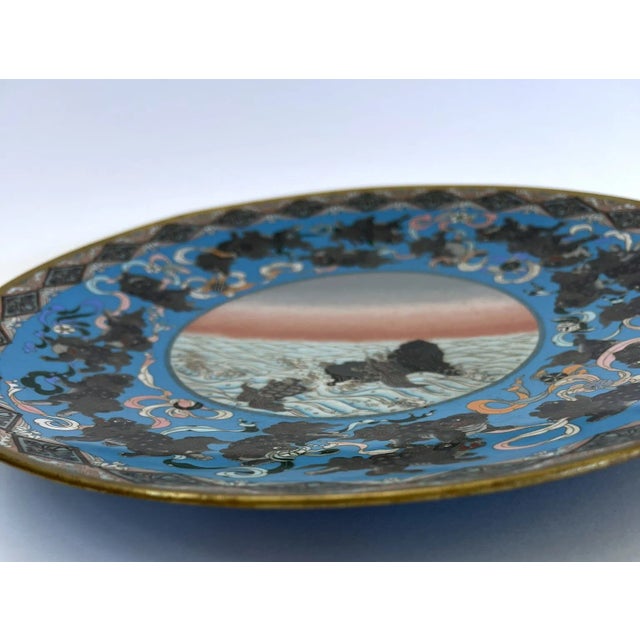
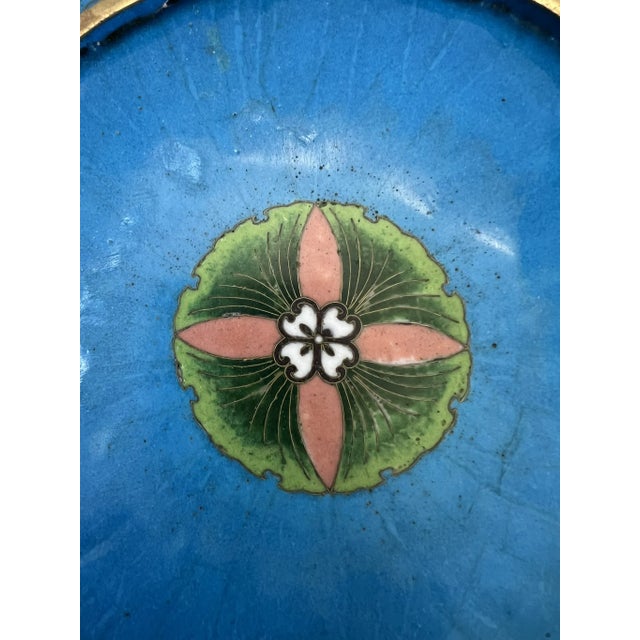
The execution of the artwork is very refined and the portrayals of the playful Shishi dogs are lively and the use of varying shades of grays give a 3 dimensional quality. The charger is not signed bu the center "mon" of symbolic design indicates the workshop.
See less
- Dimensions
- 15.75ʺW × 15.75ʺD × 1.25ʺH
- Styles
- Japanese
- Period
- Late 19th Century
- Country of Origin
- Japan
- Item Type
- Vintage, Antique or Pre-owned
- Materials
- Cloisonné
- Condition
- Good Condition, Original Condition Unaltered, Some Imperfections
- Color
- Blue
- Condition Notes
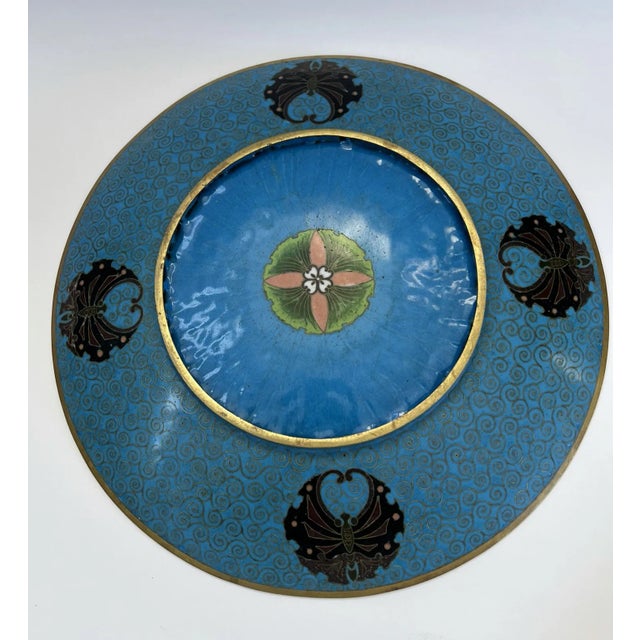
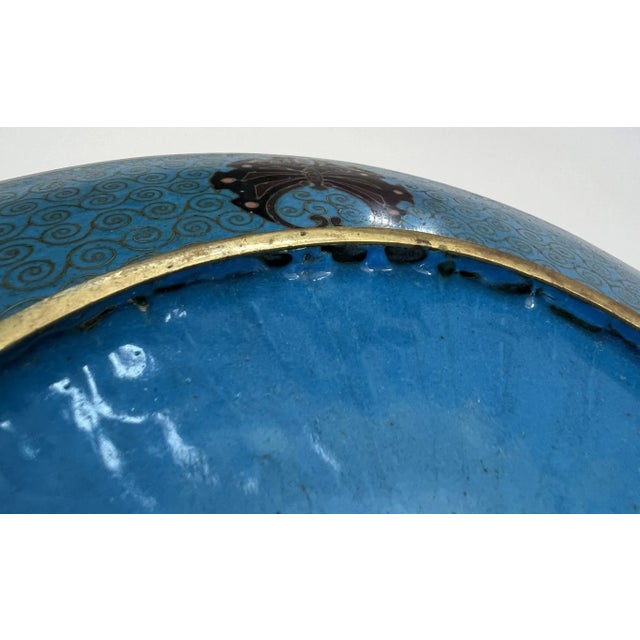
- The front of the charger is almost perfect but there is a small flaw on the underside. I do notice … moreThe front of the charger is almost perfect but there is a small flaw on the underside. I do notice that the less care is given to the back of cloisonne chargers .The charger has not been repolished. It remains in the same condition as it came to my collection 30 years ago. less
Questions about the item?
Returns & Cancellations
Return Policy - All sales are final 48 hours after delivery, unless otherwise specified in the description of the product.
Cancellation Policy - Prior to shipping or local pickup, buyers may cancel an order for up to 48 hours, unless otherwise specified.
Related Collections
- Feather Decorative Bowls
- Tyra Lundgren Decorative Bowls
- Carlo Moretti Decorative Bowls
- Port 68 Decorative Bowls
- Hermès Decorative Bowls
- Gucci Decorative Bowls
- Classical Greek Decorative Bowls
- Nymphenburg Porcelain Decorative Bowls
- Sèvres Porcelain Decorative Bowls
- Furstenberg Porcelain Decorative Bowls
- Arzbeg Porcelain Decorative Bowls
- Derby Porcelain Decorative Bowls
- Tiffany and Co. Decorative Bowls
- Brass Chinese Decorative Bowls
- Lalique Decorative Bowls
- Fenton Art Glass Company Decorative Bowls
- Brass Decorative Bowls
- Chinoiserie Decorative Bowls
- Chinese Decorative Bowls
- Maitland - Smith Decorative Bowls
- Japanese Decorative Bowls
- Murano Glass Decorative Bowls
- Mid-Century Modern Decorative Bowls
- Red Bowls
- Copper Decorative Bowls