
Nadia Jaber (Barcelona, 1986) lives and works in Barcelona. Her work has been featured in “15 Emerging Female Artists To Invest in Before They Blow Up” selected by Saatchi Art Head Curator Rebecca Wilson, and her paintings have been included in interior design projects featured in AD Spain Magazine.
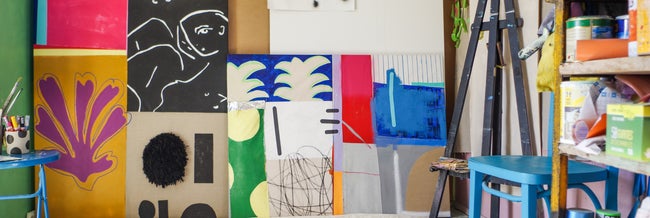
Nadia Jaber’s paintings jump around, scrolling between textures, flipping tabs into new color palettes and stretching materiality. She riffs between styles and ideas, cutting and scratching them like a DJ would, to curate something entirely new. The eyes and mind can keep up of course, because we’re used to this hyperactive image intake - we do it all day, everyday on our phones. “about:blank” is Nadia’s series reflecting not just on our visual ADHD but on what the mysterious machines behind social media are making us want, or think we want, and what that means for art appreciation. How about the artist as a postdigitalist algorithm, an online magpie curating a found line, shape, and color to generate an analogue version of the digital stream of information. Nadia’s work is a full-scale rebellion against the smoke and mirrors of social media - her tactile paintings add new dimensions and demand to be looked at from every angle. The work is generative in that it’s a remix of some other artworks. Its narrative structure is set up to tell a new story every time you see it, depending on where you start. In a time where the online world is a flimsy lonely place, and the real is in fact keeping us company, shouldn’t we start analogue-izing rather than digitizing?
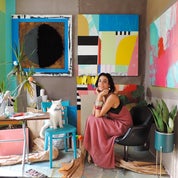
Nadia Jaber
About