








Details
Description
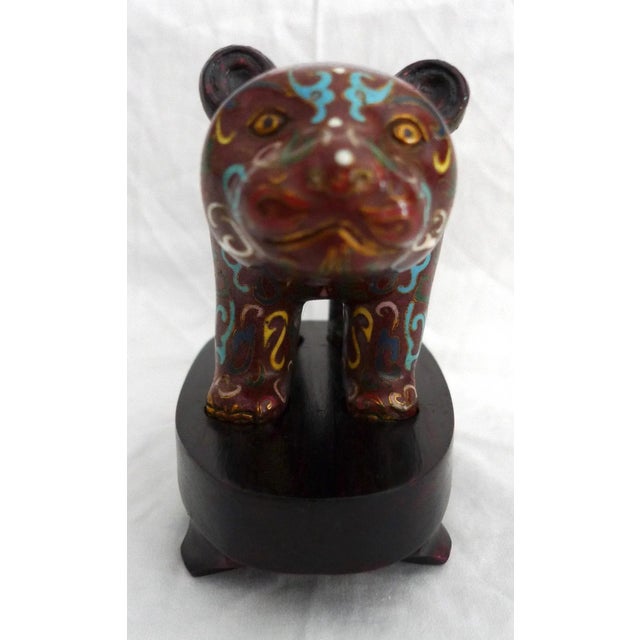
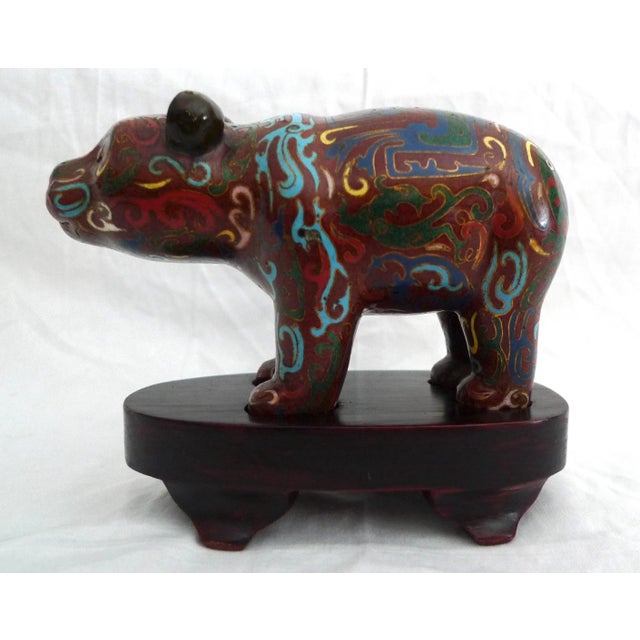
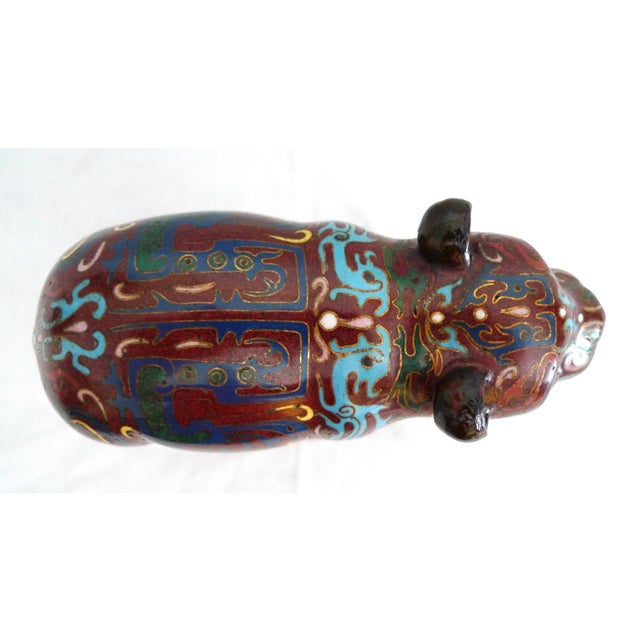
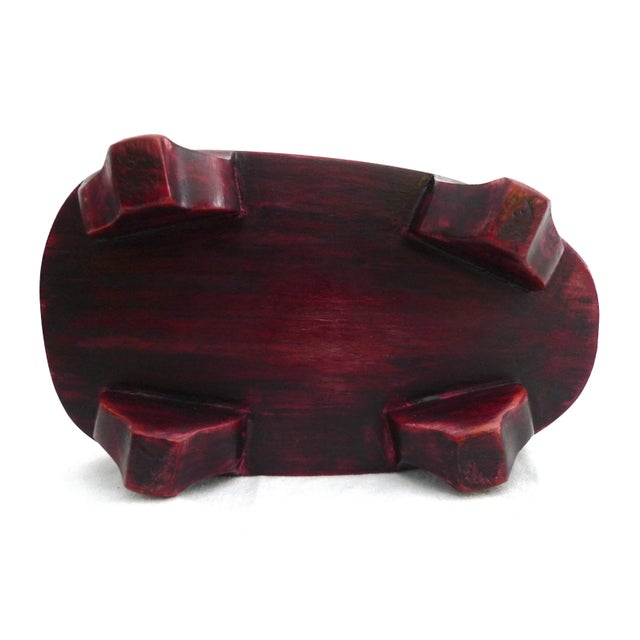
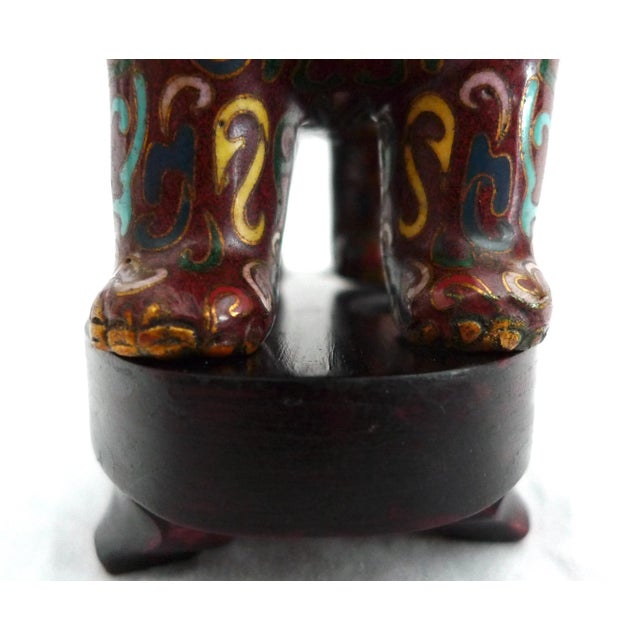
Offered is a Chinese Cloisonne Bear figurine with fitted wood stand. The figurine is ornamented with a multicolor archaic design …
Read more
Offered is a Chinese Cloisonne Bear figurine with fitted wood stand. The figurine is ornamented with a multicolor archaic design over a brown ground.
Date: Early Republic.
Measures: 5.25 W x 2 D x 2.75 H (5.25 H w/stand) inches.
Includes: Figurine, wood stand.
About Cloisonne and its history:
Foreign influence contributed to the development of cloisonné during the early fourteenth to fifteenth century in China. The earliest securely dated Chinese cloisonné is from the reign of the Ming Xuande emperor (1426–35). However, cloisonné is recorded during the previous Yuan dynasty, and it has been suggested that the technique was introduced to China at that time via the western province of Yunnan, which, under Mongol rule, received an influx of Islamic people. A very few cloisonné objects have been dated on stylistic grounds to the Yongle reign (1403–24) of the early Ming dynasty.
Cloisonné is the technique of creating designs on metal vessels with colored-glass paste placed within enclosures made of copper or bronze wires, which have been bent or hammered into the desired pattern. Known as cloisons (French for “partitions”), the enclosures generally are either pasted or soldered onto the metal body. The glass paste, or enamel, is colored with metallic oxide and painted into the contained areas of the design. The vessel is usually fired at a relatively low temperature, about 800°C. Enamels commonly shrink after firing, and the process is repeated several times to fill in the designs. Once this process is complete, the surface of the vessel is rubbed until the edges of the cloisons are visible. They are then gilded, often on the edges, in the interior, and on the base.
Cloisonné objects were intended primarily for the furnishing of temples and palaces, because their flamboyant splendor was considered appropriate to the function of these structures but not well suited to a more restrained atmosphere, such as that of a scholar’s home. This opinion was expressed by Cao Zhao (or Cao Mingzhong) in 1388 in his influential Gegu Yaolun (Guide to the Study of Antiquities), in which cloisonné was dismissed as being suitable only for lady’s chambers. However, by the period of Emperor Xuande, this ware came to be greatly prized at court.
See less
- Dimensions
- 5.25ʺW × 2ʺD × 5.25ʺH
- Styles
- Chinese
- Period
- Early 20th Century
- Country of Origin
- China
- Item Type
- Vintage, Antique or Pre-owned
- Materials
- Bronze
- China
- Copper
- Enamel
- Wood
- Condition
- Good Condition, Original Condition Unaltered, Some Imperfections
- Color
- Brown
- Condition Notes
- Very good; light signs of surface corrosion and enamel pitting/minor losses. A beautiful piece. Very good; light signs of surface corrosion and enamel pitting/minor losses. A beautiful piece. less
Questions about the item?
Returns & Cancellations
Return Policy - All sales are final 48 hours after delivery, unless otherwise specified in the description of the product.
Cancellation Policy - Prior to shipping or local pickup, buyers may cancel an order for up to 48 hours, unless otherwise specified.
Related Collections
- Wildwood Models and Figurines
- Ardalt Models and Figurines
- Rose Quartz Models and Figurines
- Models and Figurines in Lexington, KY
- Villeroy and Boch Models and Figurines
- Unlacquered Brass Finish Models and Figurines
- Jasper Models and Figurines
- Bennington Potters Models and Figurines
- William Kent Models and Figurines
- Maison Jansen Models and Figurines
- Political and Patriotic Models and Figurines
- Spanish Revival Models and Figurines
- Gucci Models and Figurines
- Acrylic Paint Models and Figurines
- Sèvres Porcelain Models and Figurines
- Vinyl Models and Figurines
- Brass Models and Figurines
- Staffordshire Dog Figurines
- Italian Models and Figurines
- Cat Figurines
- Elephant Figurines
- Antique Model Ships
- Ceramic Cats
- Animal Figurines
- Bird Figurines