






Details
Description
Chinese Imari Export: Ducks, Lotus, and the Global Market (Circa 1770)
This is a Chinese Export Porcelain Soup Tureen and …
Read more
Chinese Imari Export: Ducks, Lotus, and the Global Market (Circa 1770)
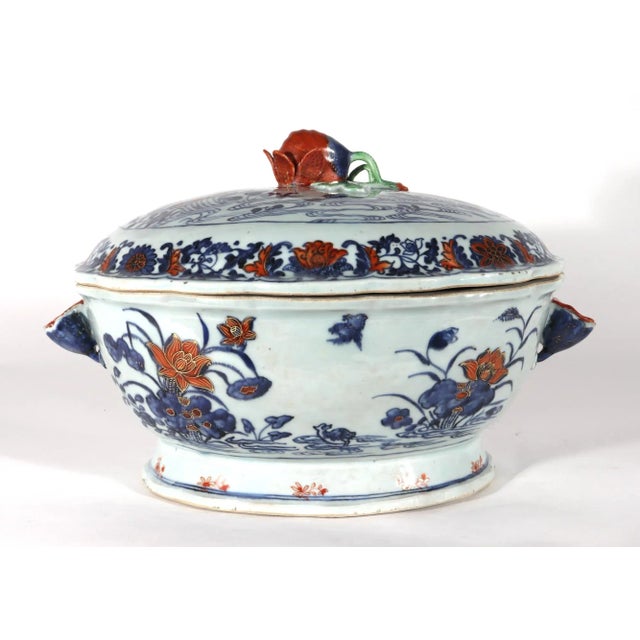
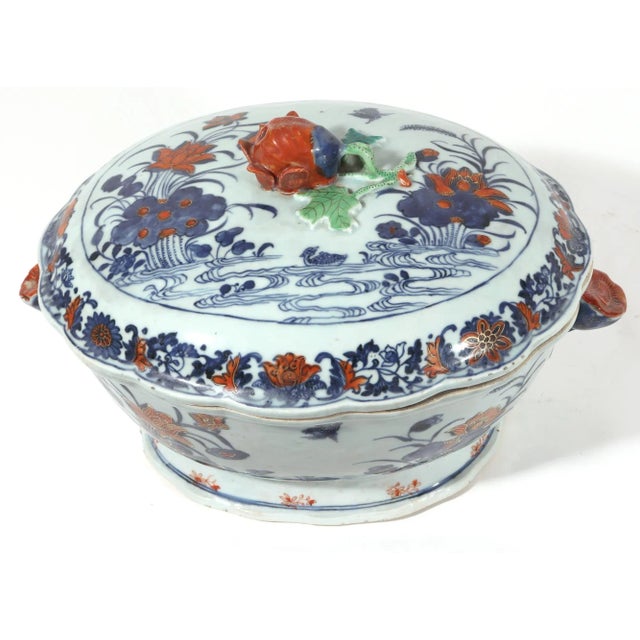
This is a Chinese Export Porcelain Soup Tureen and Cover, dating to approximately 1770 during the Qianlong reign of the Qing Dynasty. The piece is decorated in the Imari palette of underglaze blue and overglaze iron-red (and gilding). The main motif is a classic Chinese scene: Ducks Amongst Lotus on a pond. The tureen features an undulating rim and is fitted with highly distinctive, sculptural upturned lotus-form handles. The cover is surmounted by a lotus bud finial and displays the same aquatic scene.
Dimensions are 9 inches high x 13 1/2 inches wide x 9 3/4 inches deep. Condition notes: Two orange leaves on the cover have been invisibly repaired. A manufacturing smear exists in the orange paint on one handle.
Historical Context: The Chinese Imari Style
The "Chinese Imari" style emerged in the early 18th century as Chinese kilns in Jingdezhen began copying the richly colored porcelain wares previously exported from the Japanese port of Imari. Japan had captured the lucrative European porcelain market during the late 17th-century period of instability in China (the transition from Ming to Qing). Once Chinese production was stabilized under the Kangxi Emperor, the potters quickly replicated the popular Japanese aesthetic—characterized by the combination of underglaze blue with iron-red and gold—to reclaim the trade.
By the time this tureen was made, around 1770, Chinese Export porcelain was at its peak. European merchants, having established a direct trade relationship, commissioned forms specifically for Western dining, such as this soup tureen. While the form caters to European function, the "Ducks Amongst Lotus" motif is a traditional Chinese symbol of marital harmony and purity, demonstrating the blend of cultural influences specific to export wares of the Qing period.
References
• Provenance: Chinese Porcelain Company (Circular paper label).
• Illustrated: The Art of the Qing Potter: Important Chinese Export Porcelain, Page 77, # 52.
• General Context: Chinese Imari wares were popular from approximately 1700–1780. (See Noel Hume 1976: 258-259). This object belongs to a diverse group of Chinese export porcelain produced during the height of the global trade, often referred to as being made during the Qianlong period (1736–1795).
(Ref: NY9996-UUiX)
See less
- Dimensions
- 13.5ʺW × 9.75ʺD × 9ʺH
- Styles
- Chinese
- Period
- Late 18th Century
- Country of Origin
- China
- Item Type
- Vintage, Antique or Pre-owned
- Materials
- Porcelain
- Condition
- Good Condition, Original Condition Unaltered, Some Imperfections
- Color
- Blue
Questions about the item?
Returns & Cancellations
Return Policy - All sales are final 48 hours after delivery, unless otherwise specified in the description of the product.
Cancellation Policy - Prior to shipping or local pickup, buyers may cancel an order for up to 48 hours, unless otherwise specified.
Related Collections
- Soup Tureens in Little Rock
- Edwardian Soup Tureens
- Blue Soup Tureens
- Italian Soup Tureens
- Soup Tureens with Ladles
- Staffordshire Soup Tureens
- Royal Worcester Soup Tureens
- Ornamental and Decorative Materials Soup Tureens
- Belgian Soup Tureens
- Gold Leaf Soup Tureens
- Soup Tureens in Detroit
- Soup Tureens in Orlando