

Details
Description
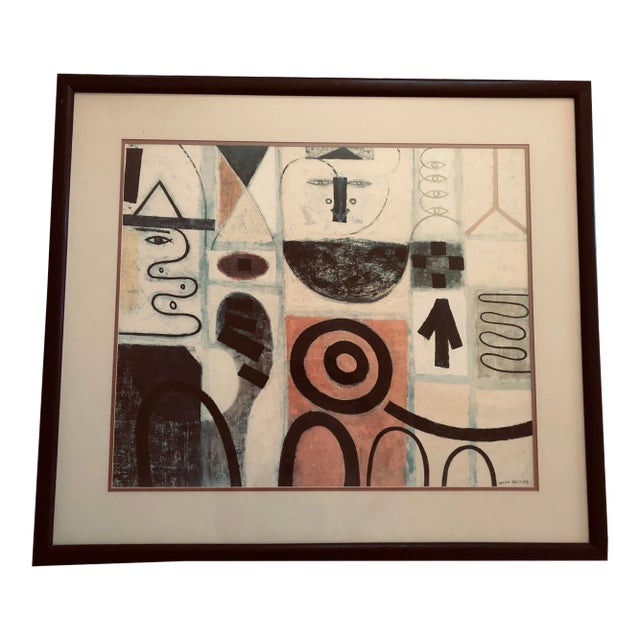
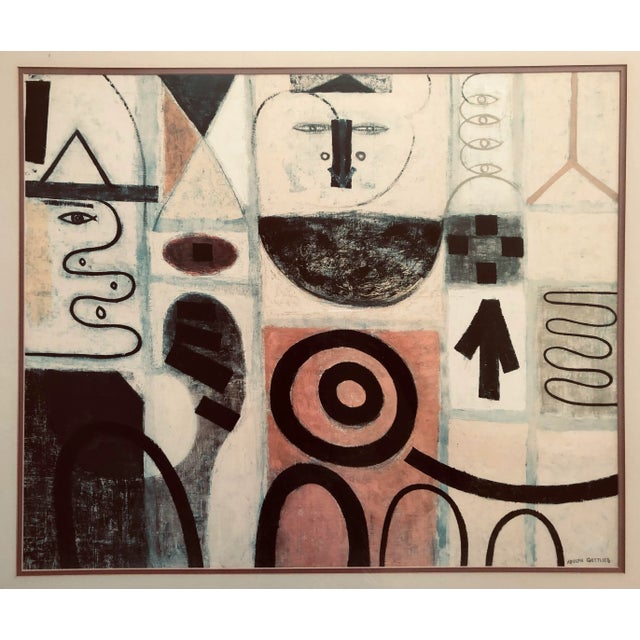
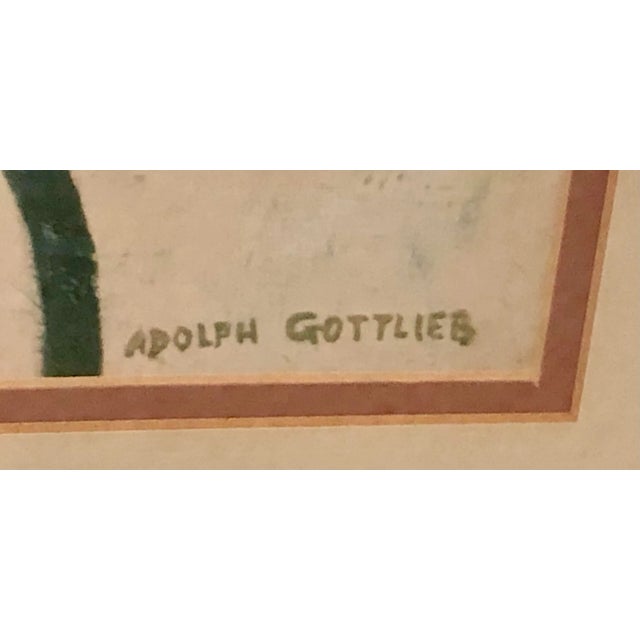
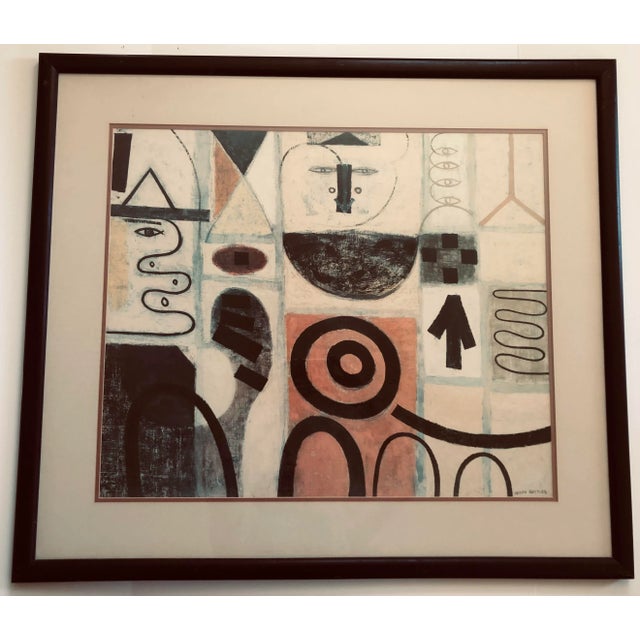
Mid century art piece titled ‘The Seer’, after Adolf Gottlieb Professionally framed print with double matting. Not examined outside of …
Read more
Mid century art piece titled ‘The Seer’, after Adolf Gottlieb Professionally framed print with double matting. Not examined outside of frame.
Over the course of a decade, Gottlieb painted more than 500 pictographs, which refer to the archaic art he saw in the American Southwest and to the art of non-Western cultures. Gottlieb’s paintings, with their loose grids enclosing cryptic symbols, resemble the pictographic writing of ancient cultures—whose meaning is often mysterious to the modern mind. Pictographs also represented Gottlieb’s distinctive solution to the aims of abstract expressionism: to instill paintings with meaning not limited to particular cultures, times, or places. This concern arose from the disillusionment of World War II, as well as dissatisfaction with earlier intellectual artistic approaches of the abstractionists and the insular, conservative style of American regionalist painters.
The pictographs are pervaded by implications of duality and mystery. Gottlieb sought to create tensions evoked by the opposition of enigmatic subjective content within a structured format. While he acknowledged that each symbol was “independent and occupying its own space,” he added that “at the same time [each has] the proper atmosphere in which to function…in harmony” with the others.
Elements of the pictographs are the result of several stimuli to which the artist was exposed during the late 1930s. Because of its geometric elements and flat picture plane, the grid format may have been inspired by the work of other artists: Joaquín Torres-García or by Piet Mondrian. But the wide variation of the symbols derives from Gottlieb’s fascination with the unconscious mind and primitive art. Through fellow artist John Graham, Gottlieb became intrigued with Jung’s psychology, which led him to search for content in recurring images symbolizing “man’s primitive… motivations.” The European surrealists, many of whom immigrated to America during the war years, provided Gottlieb further encouragement to look within his own mind for sources.
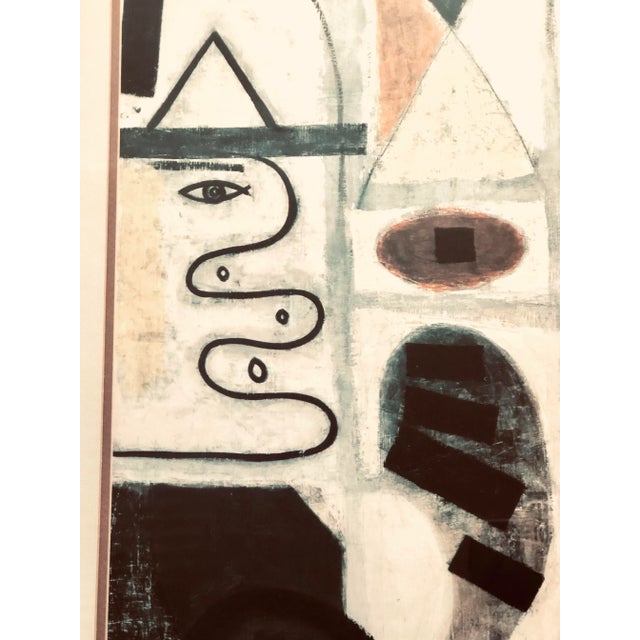
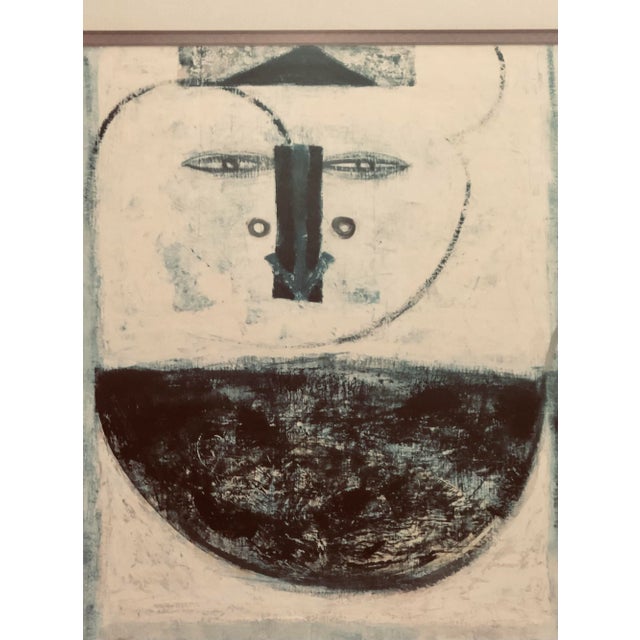
Gottlieb emphasized the primitive content of his pictographs by using colors derived from cave painting and Native American art—slate gray, tan, black, and clay, often applied in layers to suggest archaeological stages. In The Seer, Gottlieb emphasized the archaeological quality of the color by adding sand to the paint. The boldly drawn totemic designs make numerous references to the human body—the stick figure in the upper right corner, the four-finger motifs along the bottom and right side, and the repeated eye motif. The eye, derived from surreal and primitive art, appears frequently in his pictographs and may suggest the artist’s vision.
See less
- Dimensions
- 36.5ʺW × 0.75ʺD × 32ʺH
- Frame Type
- Framed
- Art Subjects
- Abstract
- Period
- 1950s
- Item Type
- Vintage, Antique or Pre-owned
- Materials
- Printmaking Materials
- Wood
- Condition
- Good Condition, Original Condition Unaltered, Some Imperfections
- Color
- Linen
- Condition Notes
- Vintage Vintage less
Questions about the item?
Returns & Cancellations
Return Policy - All sales are final 48 hours after delivery, unless otherwise specified in the description of the product.
Cancellation Policy - Prior to shipping or local pickup, buyers may cancel an order for up to 48 hours, unless otherwise specified.
Related Collections
- Rattan Original Prints
- Medium-Density Fibreboard Original Prints
- Soicher Marin Original Prints
- Sam Francis Original Prints
- Silver Finish Original Prints
- Johannes Kip Original Prints
- Dye Transfer Original Prints
- Original Prints in Lexington, KY
- Original Prints in Panama City, FL
- Original Prints in Salt Lake City
- Damien Hirst Original Prints
- John Kiraly Original Prints
- Donald Sultan Original Prints
- Ralph Lauren Original Prints
- Botanical Prints
- Framed Prints
- Bird Prints
- Woodblock Prints
- Screen Prints
- Japanese Woodblock Prints
- Thomas McKnight Original Prints
- George Barbier Original Prints
- Frank Stella Original Prints
- Gustave Baumann Original Prints
- Teak Original Prints