


Details
Description
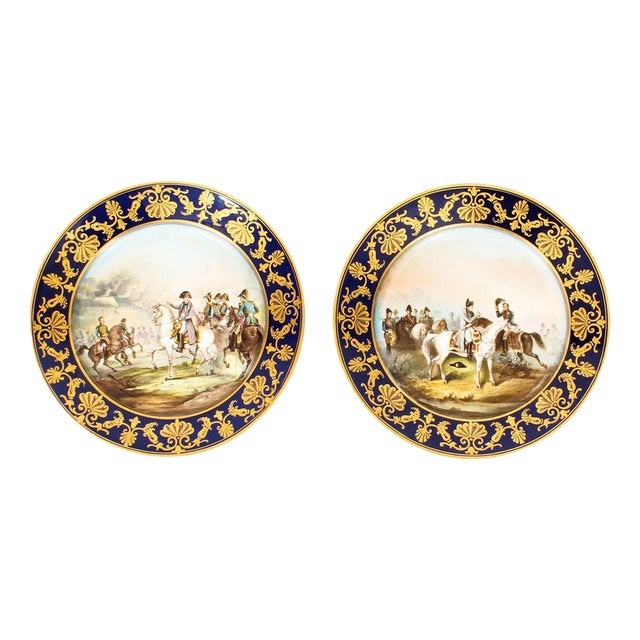
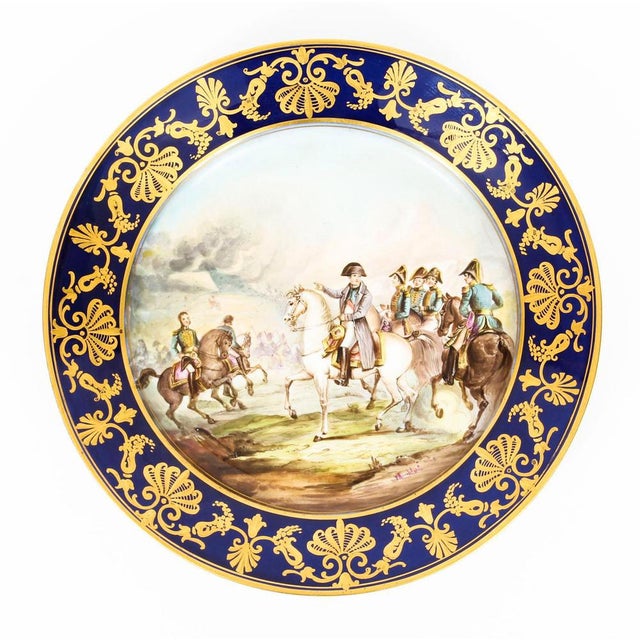
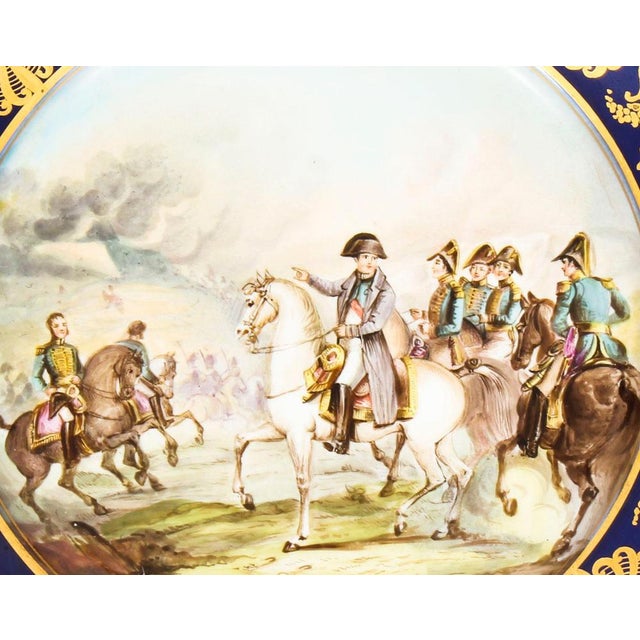
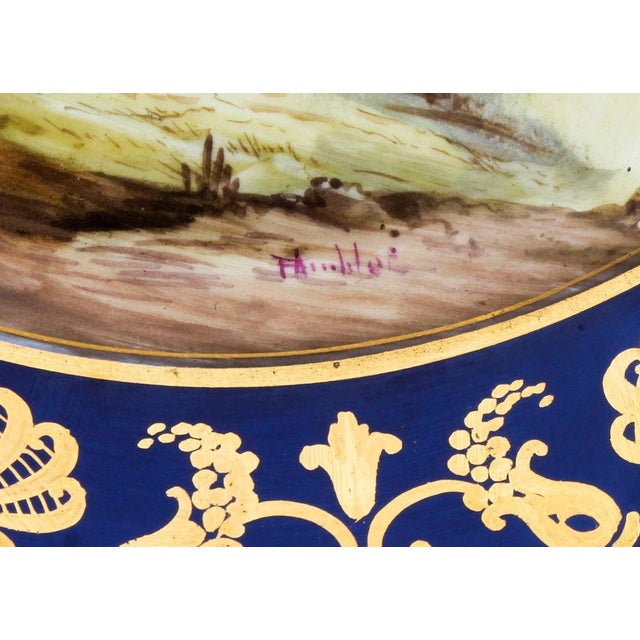
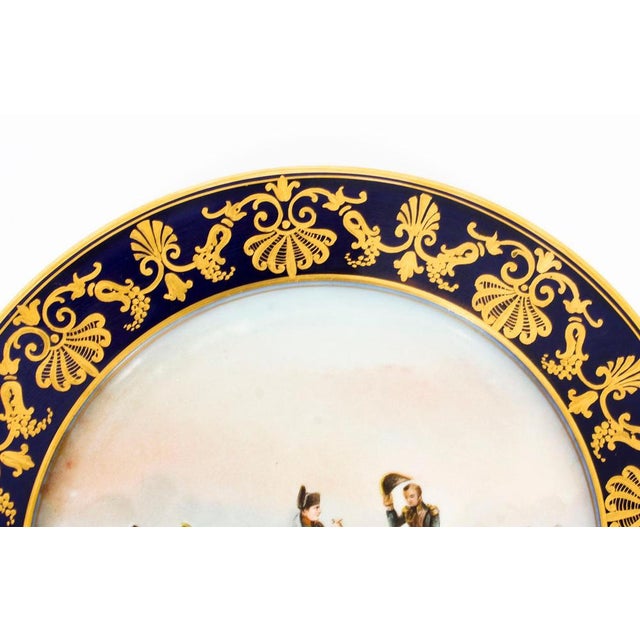
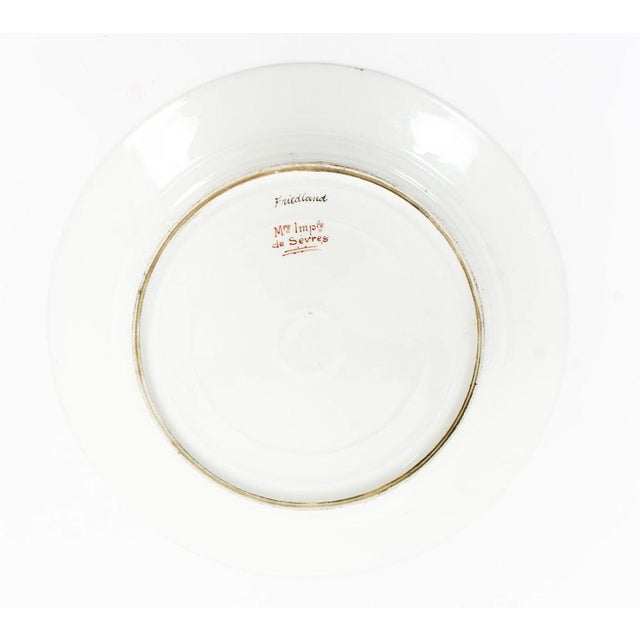
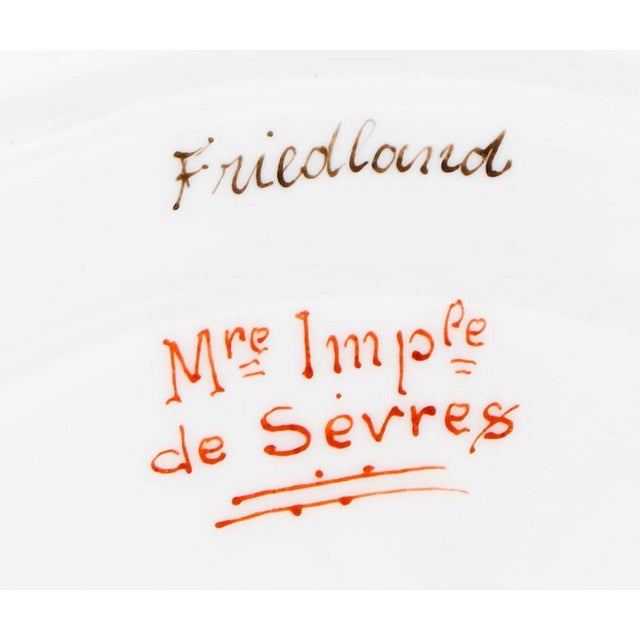
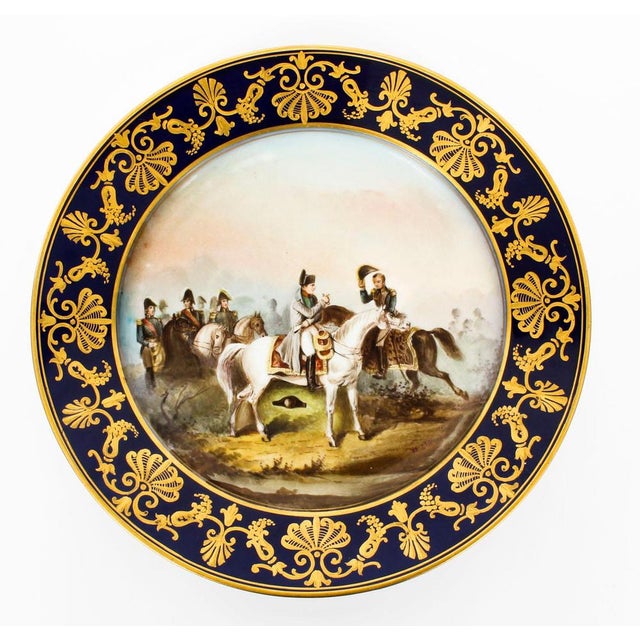
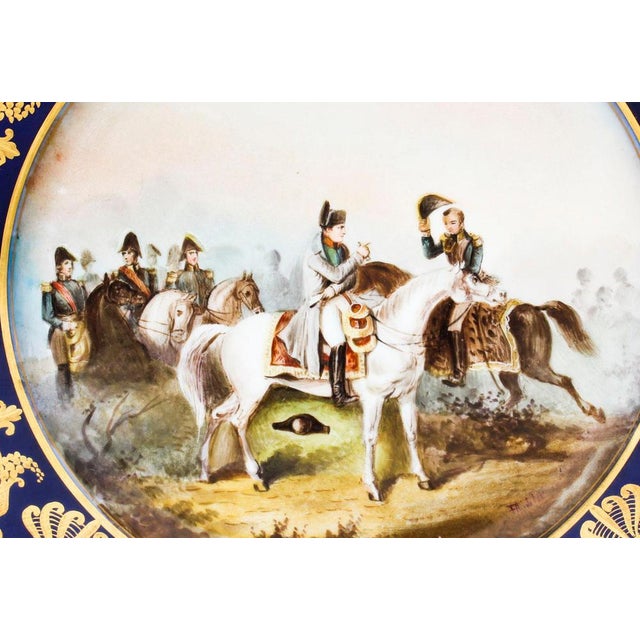
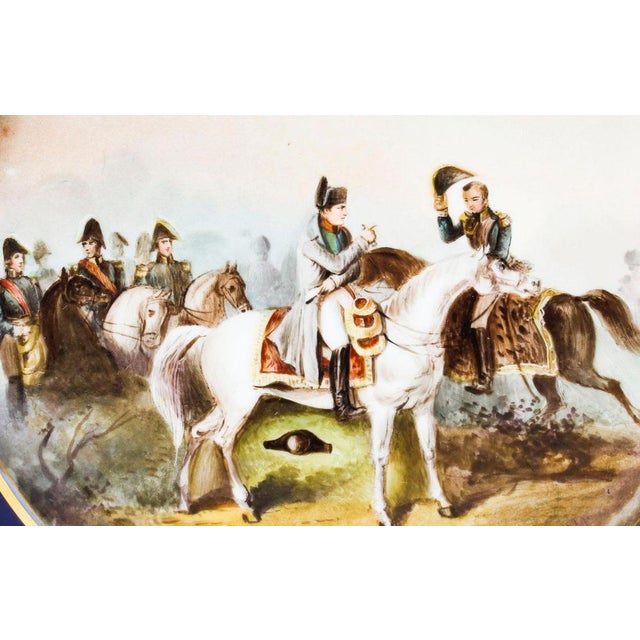
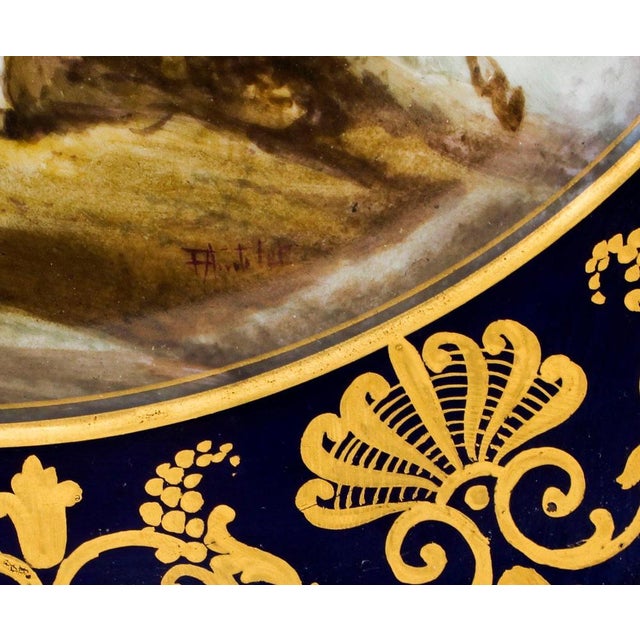
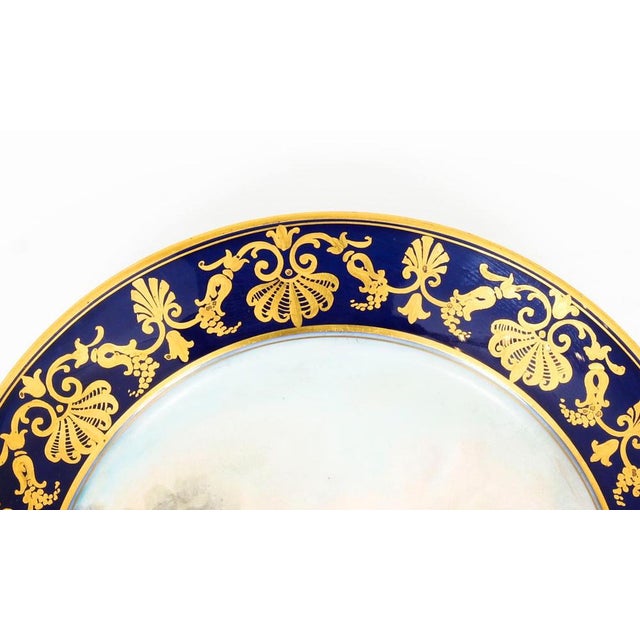
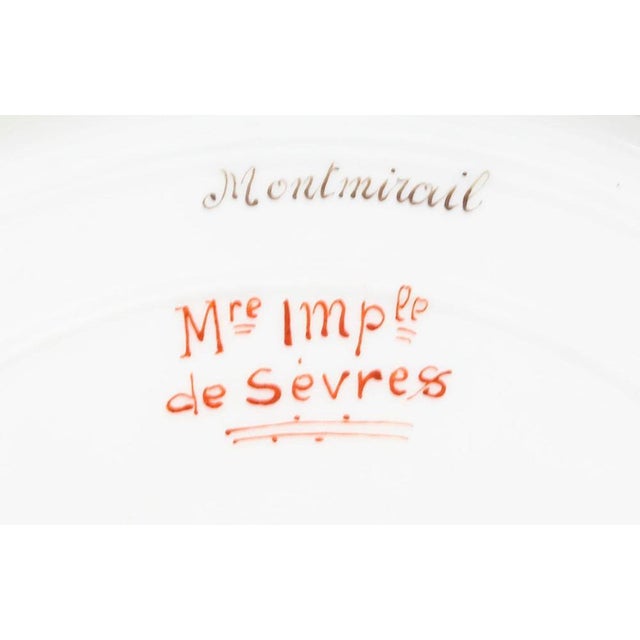
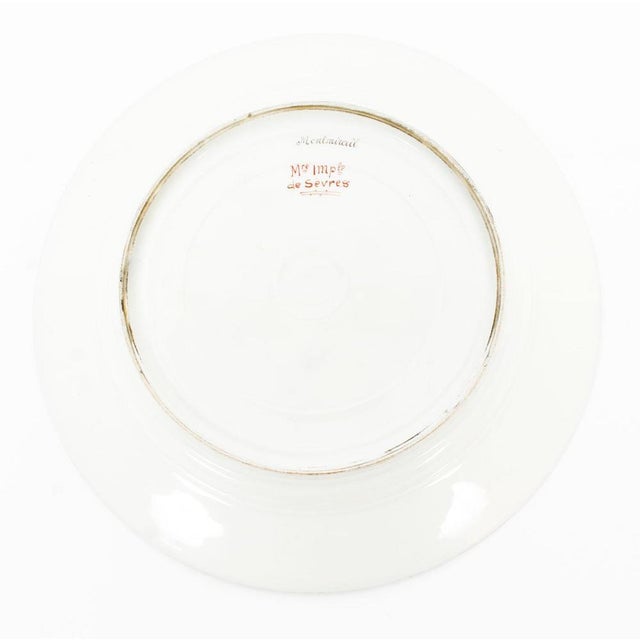
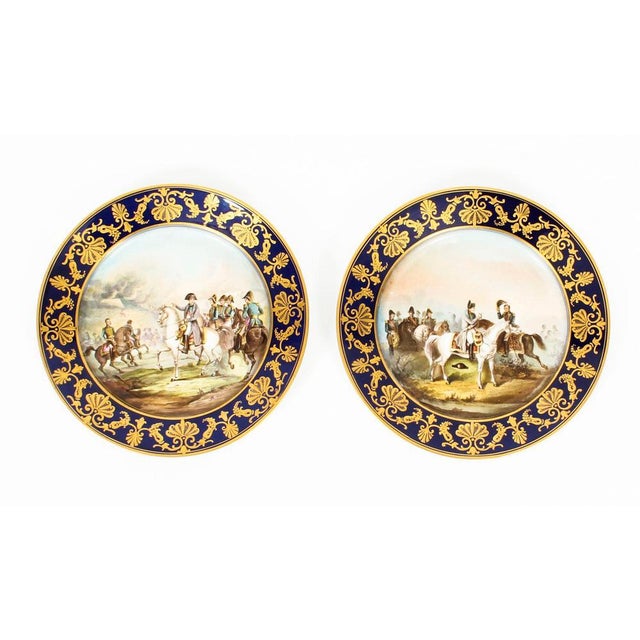
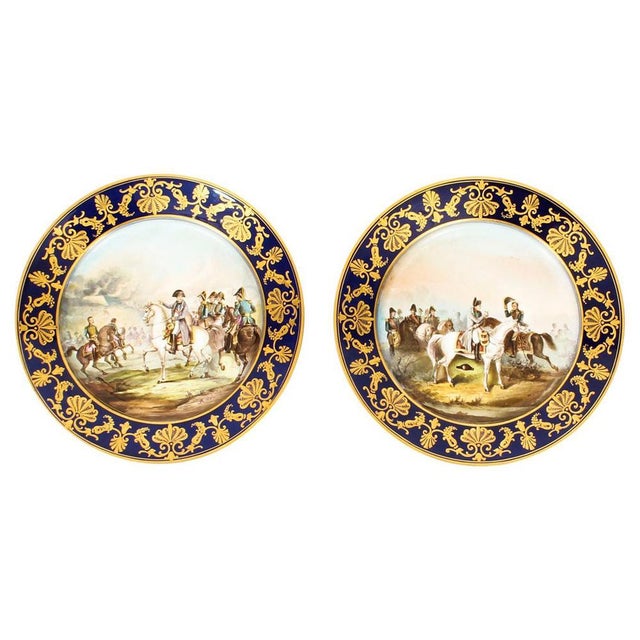
This is an enchanting antique pair of sevres porcelain cabinet plates, late 19th century in date. Both are beautifully painted … Read more This is an enchanting antique pair of sevres porcelain cabinet plates, late 19th century in date. Both are beautifully painted with scenes from the life of napoleon on the battle field with royal blue borders with classical gilt decoration. One is titled "montmirail" on the undersides, for the battle of montmirail (11 february 1814) which was fought between a french force led by emperor napoleon, the other is titled friedland for the battle of friedland (june 14, 1807) which was a major engagement of the napoleonic wars between the armies of the french empire commanded by napoleon i and the armies of the russian empire led by count von bennigsen. Both bear the printed marks in red "mre imp de sevres.", for the imperial manufacture sevres. There is no mistaking the quality and unique design of these plates which are sure to be a treasured addition to your home. Condition: in excellent condition, with no chips, cracks or repairs, please see photos for confirmation. Dimensions in cm: height 2.5 x width 24 x depth 24 dimensions in inches: height 1.0 x width 9.4 x depth 9.4 sevres porcelain traces its roots in france to early craftsmen who had small manufacturing operations in such places as lille, rouen. St. Cloud, and most notably chantilly. It is from chantilly that a cadre of workers migrated to the chateau de vincennes near paris to form a larger porcelain manufactory in 1738. French king louis xv, perhaps inspired by his rumored relationship with mistress madame de pompadour, took an intense interest in porcelain and moved the operation in 1756 to even larger quarters in the paris suburb of sevres. Sevres was also conveniently near the home of madame de pompadour and the king's own palace at versailles. From the outset the king's clear aim was to produce sevres porcelain that surpassed the established saxony works of meissen and dresden. Though the french lacked an ample supply of kaolin, a required ingredient for hard-paste porcelain (pate dure), their soft-paste porcelain (pate tendre) was fired at a lower temperature and was thus compatible with a wider variety of colors and glazes that in many cases were also richer and more vivid. Unglazed white sevres porcelain "biscuit" figurines were also a great success. However, soft-paste sevres porcelain was more easily broken. Therefore, early pieces of sevres porcelain that remain intact have become rare indeed. The sevres porcelain manufactory always seemed to be in dire financial straits despite the incredibly fine works it produced. In fact, the king's insistence that only the finest items be created may have contributed to the difficulties. Only a limited number of european nobility could afford the extravagant prices demanded for such works. King louis xv and eventually his heir, the ill-fated louis xvi, were obliged to invest heavily in the enterprise. Ultimately, the sevres porcelain factory produced items under the name of "royal" and thus the well-known sevres mark was born. King louis xv even mandated laws that severely restricted other porcelain production in france so as to retain a near monopoly for his sevres porcelain. The king even willingly became chief salesman for the finest of his products, hosting an annual new year's day showing for french nobility in his private quarters at versailles. He eagerly circulated among potential buyers, pitching the merits of ownership and policing the occasional light-fingered guest. Sevres porcelain may have indeed given the makers of meissen and dresden a run for their money by the end of the 18th century but for the french revolution. By 1800, the sevres porcelain works were practically out of business due to the economic devastation of the new french republic. About the time when napoleon bonaparte named himself emperor of france (1804), a new director was named for the sevres porcelain manufactory. Alexandre brongniart, highly educated in many fields, resurrected sevres porcelain. Soft-paste porcelain was eliminated altogether thanks to the earlier discovery of kaolin near limoges. For four decades until his death, brongniart presided over monumental progress for sevres porcelain, catering not only to napoleon himself, but at last to include the more financially profitable mid-priced market in the emerging middle class. See less
- Dimensions
- 9.45ʺW × 0.79ʺD × 9.45ʺH
- Country of Origin
- France
- Item Type
- Vintage, Antique or Pre-owned
- Materials
- Porcelain
- Condition
- Unknown, Some Imperfections
- Color
- Condition Notes
- Good — This vintage item remains fully functional, but it shows sign of age through scuffs, dings, faded finishes, minimal … moreGood — This vintage item remains fully functional, but it shows sign of age through scuffs, dings, faded finishes, minimal upholstery defects, or visible repairs. less
Returns & Cancellations
Return Policy - All sales are final 48 hours after delivery, unless otherwise specified in the description of the product.
Cancellation Policy - Prior to shipping or local pickup, buyers may cancel an order for up to 48 hours, unless otherwise specified.
Related Collections
- Christian Dior Decorative Plates
- Canvas Decorative Plates
- Oil Paint Decorative Plates
- Saffron Decorative Plates
- Cast Iron Decorative Plates
- Longwy Decorative Plates
- Louis XVI Decorative Plates
- Sherle Wagner Decorative Plates
- 22K Gold Decorative Plates
- Japanese Decorative Plates
- Brass Decorative Plates
- Chinese Decorative Plates
- Spanish Decorative Plates
- Italian Decorative Plates
- Copper Decorative Plates
- Gold Decorative Plates
- Green Decorative Plates
- Fruit Plates
- Piero Fornasetti Decorative Plates
- Blue Decorative Plates
- Wedgwood Decorative Plates
- Metal Decorative Plates
- Chinoiserie Decorative Plates
- Henriot Quimper Decorative Plates
- Folk Art Decorative Plates