

Details
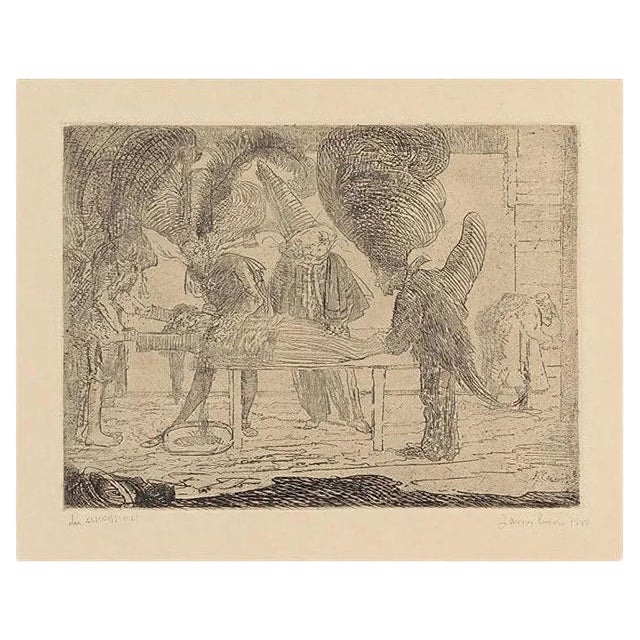
Description
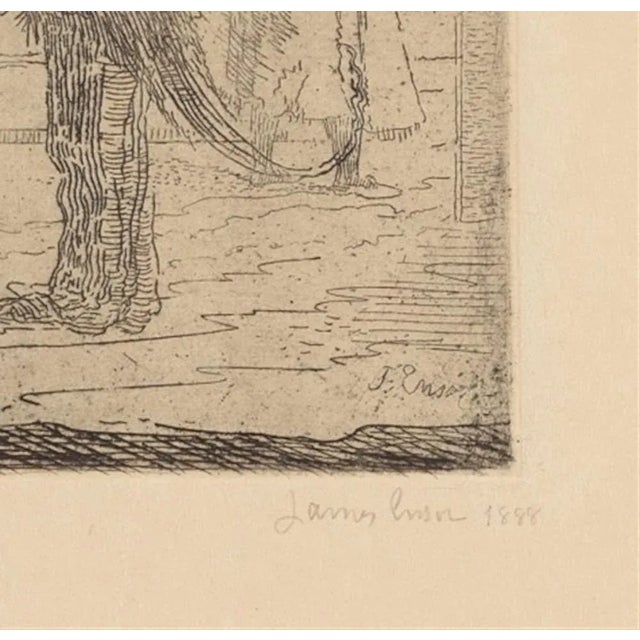
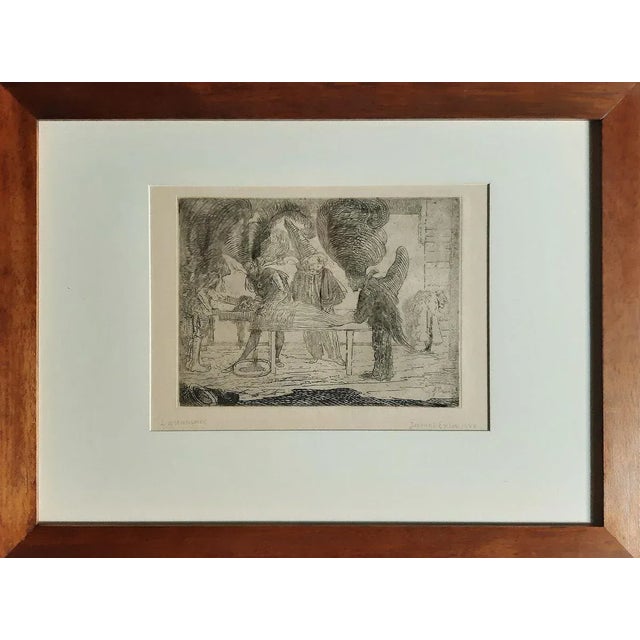
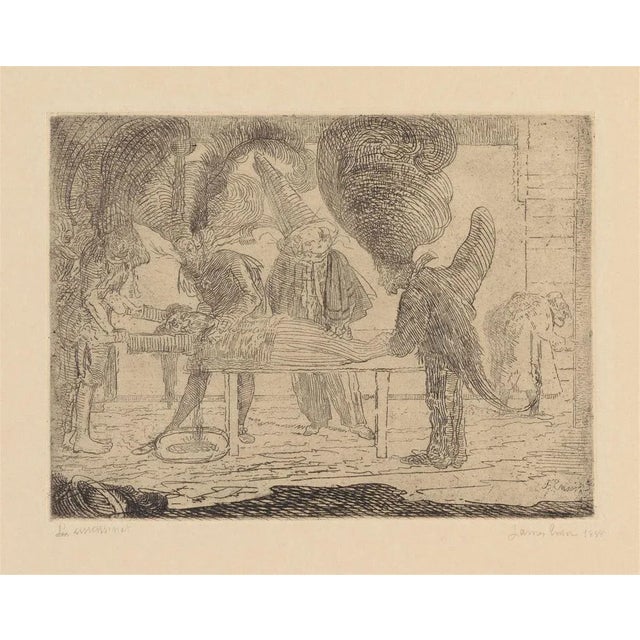
Assassinat is an original etching on the Japanese paper, realized by James Ensor in 1888, signed on the plate and … Read more Assassinat is an original etching on the Japanese paper, realized by James Ensor in 1888, signed on the plate and dated, with the second signature on the reverse. In good conditions. Included a frame. This etching is Representing, a man being tortured laid down on a long table by other cruel figures all around him. the subject of the dead body or dying persons fascinated Ensor and was one showing suffering and pain are of his method of expression. Furthermore, there are Skeleton and mask another important topic of Ensor artworks, he was fascinated by the dark and silenced skeleton and skulls and could express his art through observation of many skeletons in his studio, here this original etching is one of the precious results of this observation and deepening in the mysterious world of the dead. A rare specimen in very good conditions, following Taevernier no states are known to exist. References: Taevernier, Auguste (1999). James Ensor. Belgium: Pandora/Snoeck-Ducaju & Zoon p.103 no.38 James Ensor (1860-1949), is a Belgian painter and printmaker, an important influence on Expressionism and Surrealism. Ensor's early works, such as Russian Music (1881) and The Drunkards (1883), depict realistic scenes in a sombre style, his palette subsequently brightened and he favoured increasingly bizarre subject matter. Such paintings as The Scandalized Masks (1883) and Skeletons Fighting over a Hanged Man (1891) feature figures in grotesque masks inspired by the ones sold in his mother's gift shop for Ostend's annual Carnival. Subjects such as carnivals, masks, puppetry, skeletons, and fantastic allegories are dominant in Ensor's mature work. Ensor dressed skeletons up in his studio and arranged them in colorful, enigmatic tableaux on the canvas, and used masks as a theatrical aspect in his still lifes. Attracted by masks' plastic forms, bright colors, and potential for psychological impact, he created a format in which he could paint with complete freedom. Ensor was a prolific and accomplished printmaker. He created 133 etchings and drypoints over the course of his career, with 86 of them made between 1886 and 1891 during the height of Ensor's most creative period. Ensor himself recognized that the prints were a key part of his artistic legacy, stating in a letter to Albert Croquez in 1934: ''Yes, my intention is to go on working for a long time yet so that generations to come may hear me. My intention is to survive, and I think of the solid copper plate, the unalterable ink, easy reproduction, faithful prints, and I adopt etching as a means of expression See less
- Dimensions
- 9.06ʺW × 0.79ʺD × 6.69ʺH
- Art Subjects
- Figure
- Item Type
- Vintage, Antique or Pre-owned
- Condition
- Unknown, Some Imperfections
- Color
- Condition Notes
- Very Good — This vintage item has no defects, but it may show slight traces of use\. Please note that … moreVery Good — This vintage item has no defects, but it may show slight traces of use\. Please note that an additional handling period of up to 4 weeks may apply to this item less
Returns & Cancellations
Return Policy - All sales are final 48 hours after delivery, unless otherwise specified in the description of the product.
Cancellation Policy - Prior to shipping or local pickup, buyers may cancel an order for up to 48 hours, unless otherwise specified.
Related Collections
- George Barbier Original Prints
- Byzantine Original Prints
- Frank Stella Original Prints
- Toledo Original Prints
- Fornasetti Original Prints
- Abraham Rattner Original Prints
- Silver Finish Original Prints
- Pedro Friedeberg Original Prints
- Gustave Baumann Original Prints
- Louis XIII Original Prints
- Shaun Ellison Original Prints
- Rosenthal Original Prints
- Botanical Prints
- Framed Prints
- Japanese Woodblock Prints
- Screen Prints
- Woodblock Prints
- Bird Prints
- Thomas McKnight Original Prints
- Teak Original Prints
- Spray Paint Original Prints
- Paul Wunderlich Original Prints
- Chaim Gross Original Prints