


Details
Description
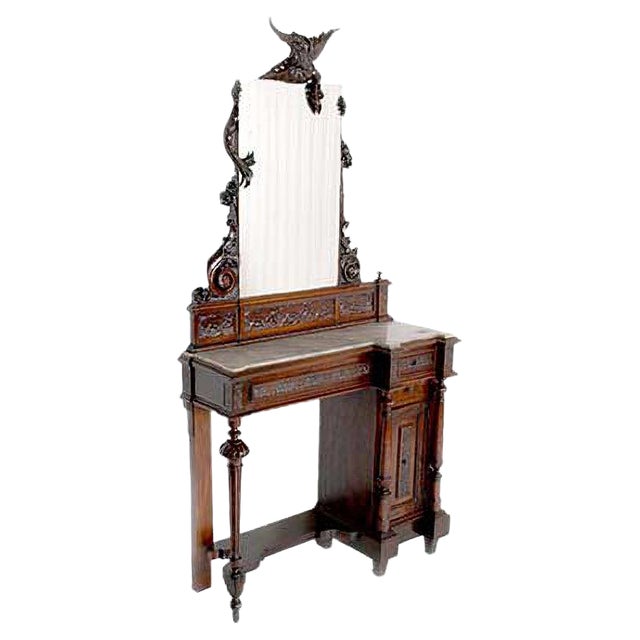
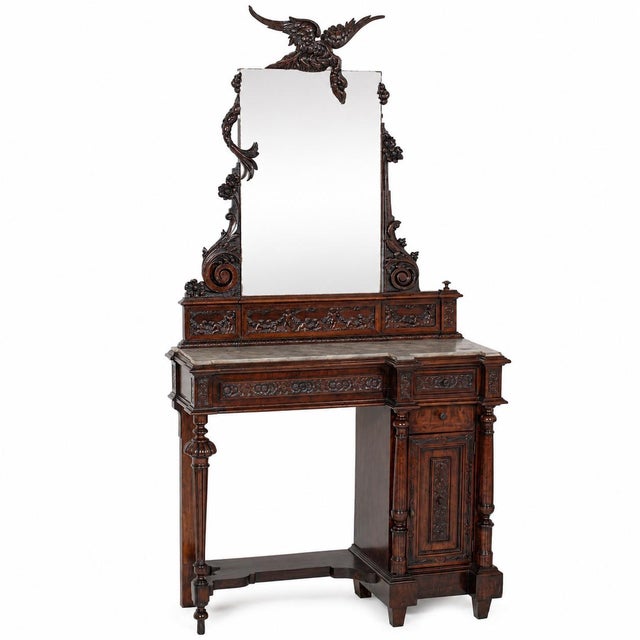
Exceptional and highly sculptural venetian vanity console in carved walnut, dating from the late 19th century, retaining its fratelli testolini …
Read more
Exceptional and highly sculptural venetian vanity console in carved walnut, dating from the late 19th century, retaining its fratelli testolini label and an important original mirror of salviati, venice-murano.
more than a functional dressing table, this remarkable piece should be considered an accomplished work of venetian decorative art, combining cabinetmaking, architectural design, figurative carving and mirror work within a single sophisticated composition.
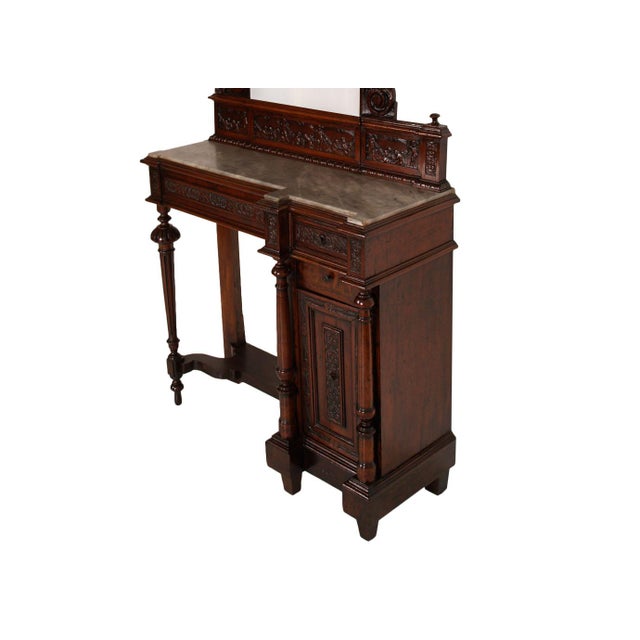
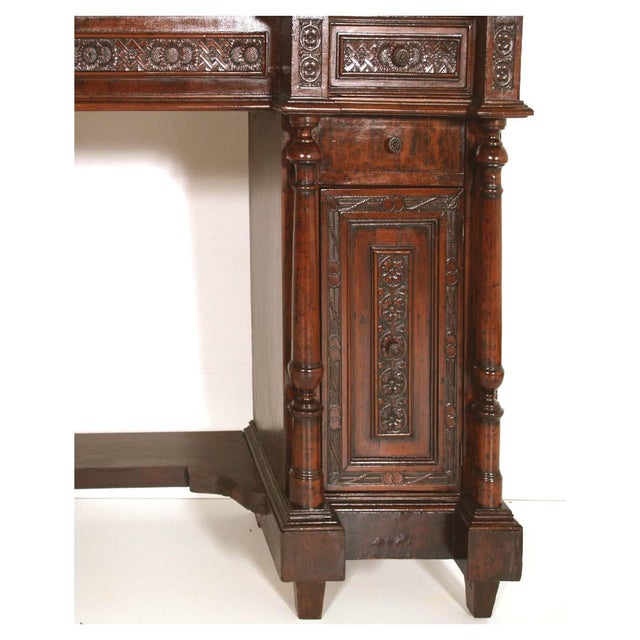
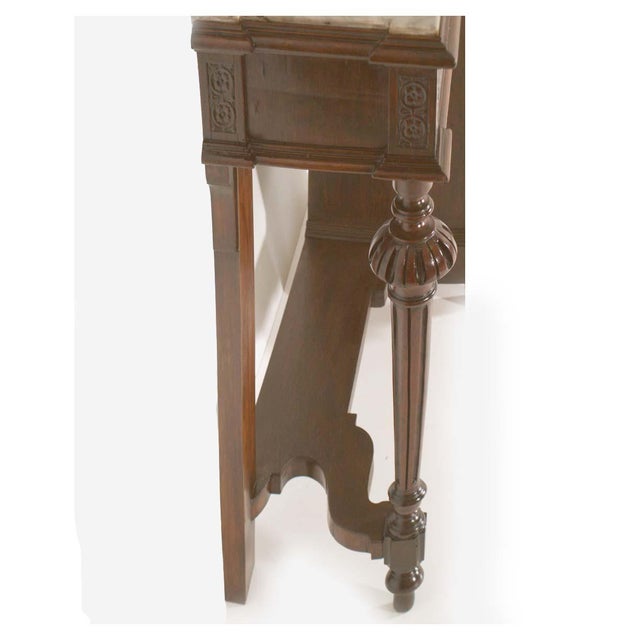
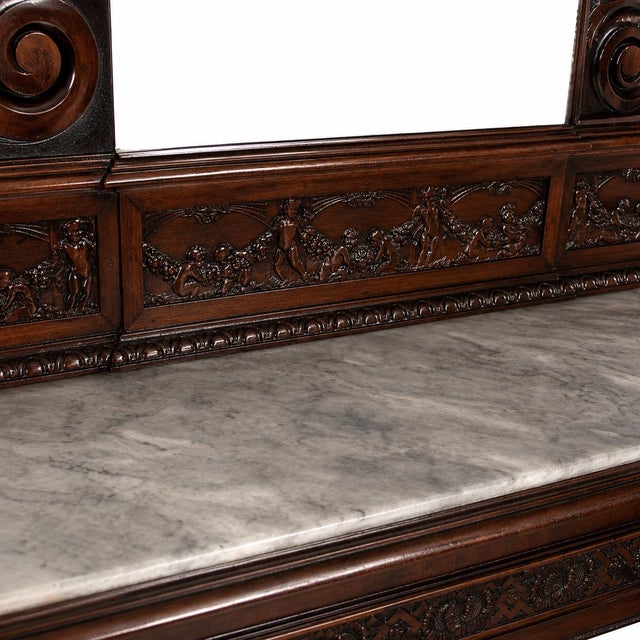
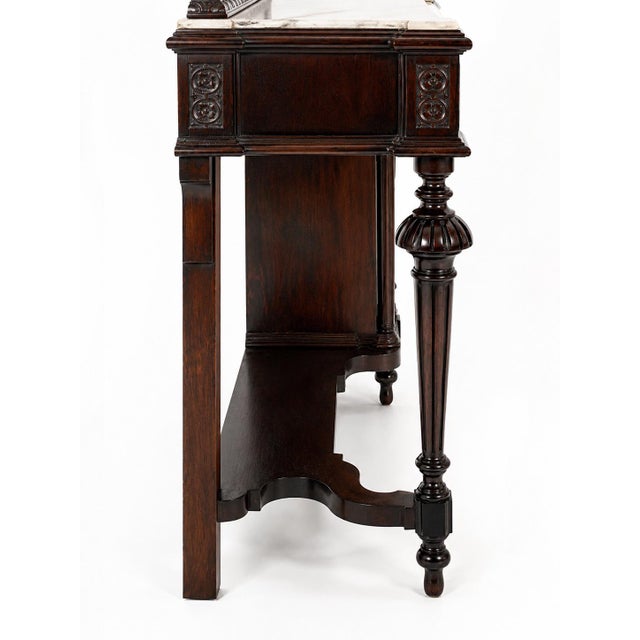
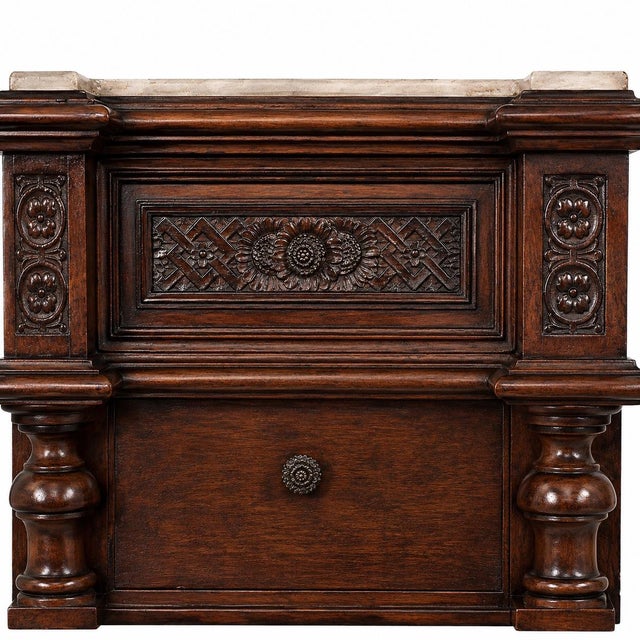
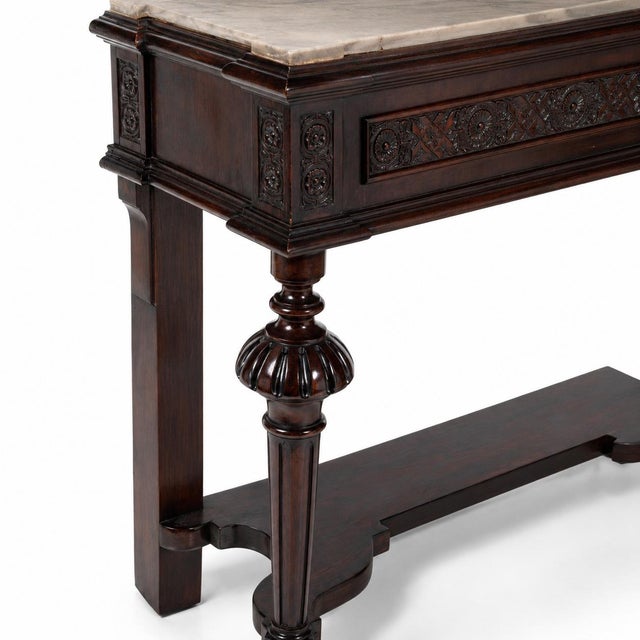
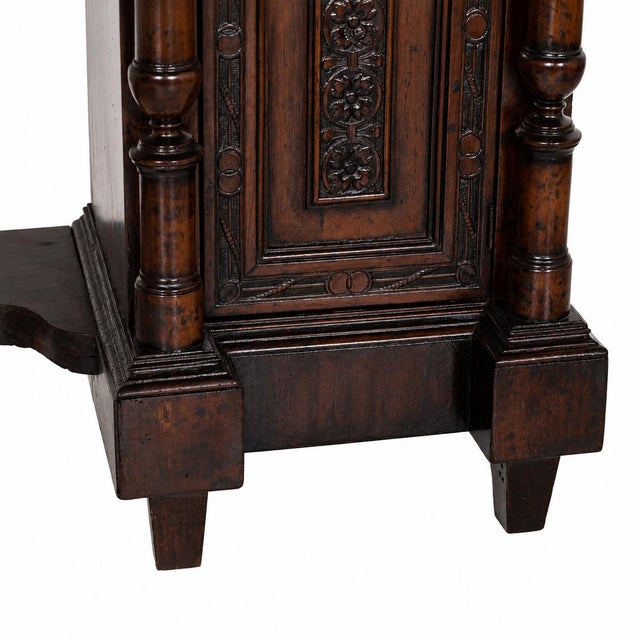
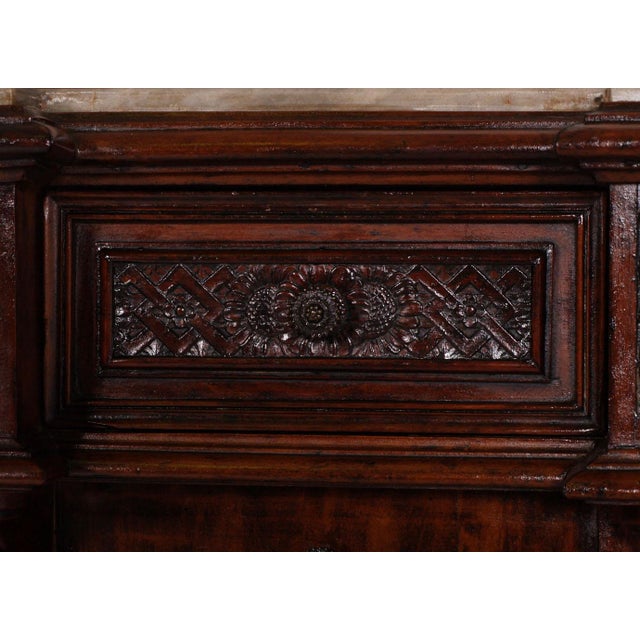
the vanity is constructed in richly patinated walnut and presents an unusually elaborate architectural structure. A shaped grey marble top rests above a long drawer and a lateral cabinet compartment, the latter framed by finely turned and carved columns. The asymmetrical arrangement gives the piece considerable visual movement while preserving a remarkably balanced overall composition.
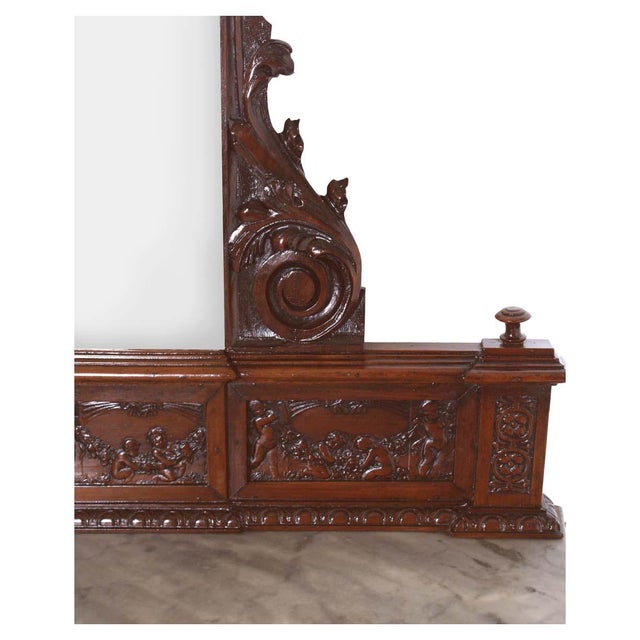
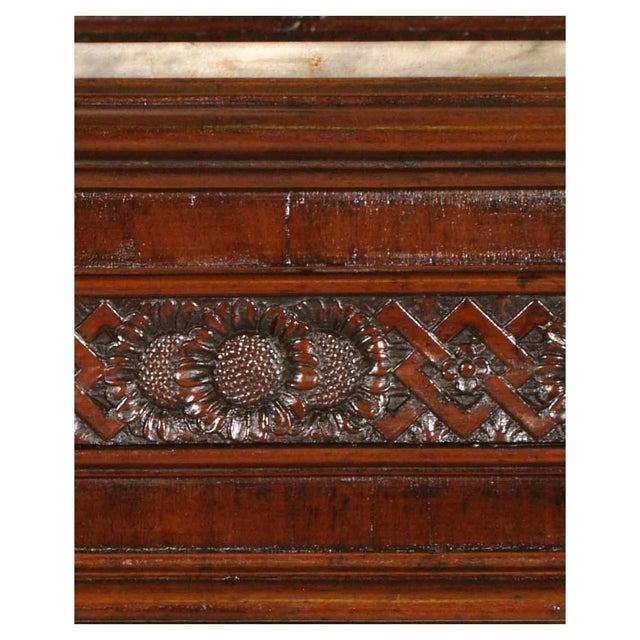
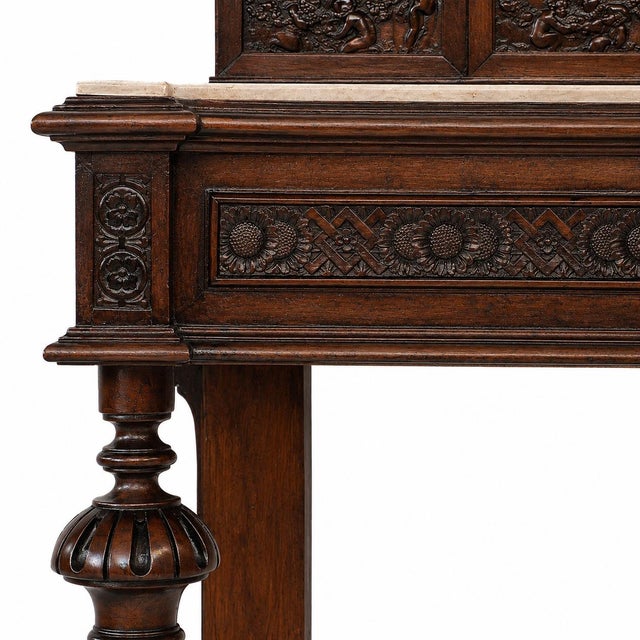
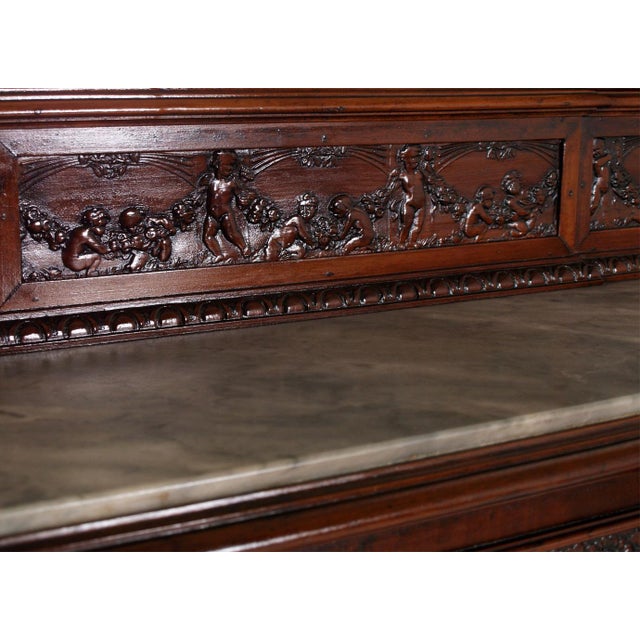
the quality of the carving is exceptional throughout. The front is enriched with deeply carved floral rosettes, geometric ornament and classical motifs, while the raised section immediately beneath the mirror is decorated with a continuous sculptural frieze of putti among flowers and garlands. Turned, fluted and carved supports further emphasize the almost architectural character of the vanity.
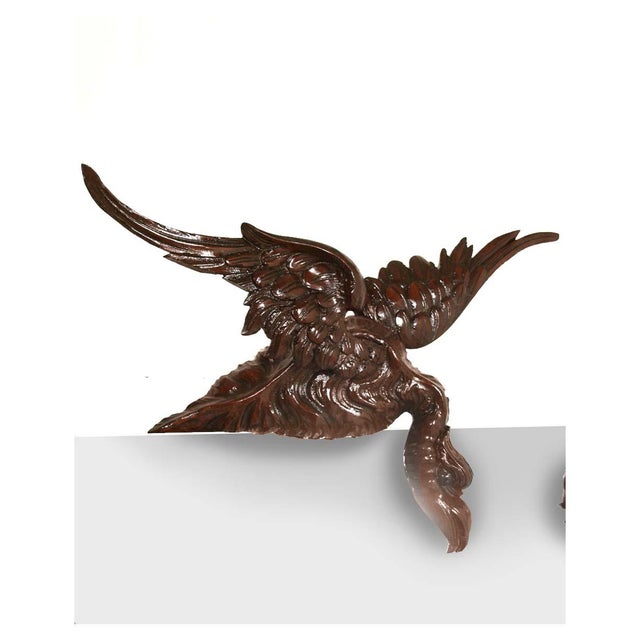
the tall rectangular mirror forms the dramatic focal point of the composition. Its walnut surround develops freely around the glass through vigorous scrolling foliage and floral carving, culminating in an extraordinary winged mythological creature—interpretable as a griffin or fantastic dragon— dramatically poised above the mirror. This sculptural crest transforms the vanity from a piece of furniture into a true statement object.
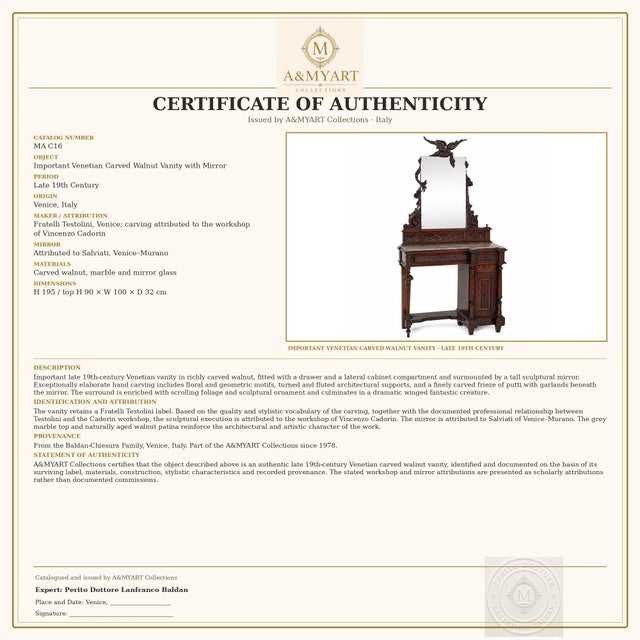
the mirror is associated with salviati of venice-murano, while the cabinet bears the label of fratelli testolini, one of the notable venetian firms active in artistic furniture and decorative furnishings during this period. Historical research documents the close commercial relationship between testolini and the salviati enterprise, particularly in the production and international distribution of venetian decorative arts.
attribution to vincenzo cadorin
on the basis of the exceptionally high sculptural quality, the vocabulary of the carving, the naturalistic and zoomorphic ornament and comparison with other documented or attributed works supplied through testolini, the sculptural execution of this vanity is attributed to the workshop of vincenzo cadorin, venice (1854–1925), for fratelli testolini.
this attribution is further supported by the known existence of other venetian furnishings carrying testolini provenance and attributed to cadorin's workshop, including pieces characterized by similarly ambitious hand-carved zoomorphic and ornamental elements.
the result is a rare synthesis of the venetian historicist tradition, neo-renaissance and neo-baroque influences and the emerging freedom of late-19th-century decorative design, anticipating aspects of the italian stile liberty.
provenance
the vanity comes from the baldan-chiesura family of venice, in whose possession it was preserved before entering the a&myart collection in 1978.
its long venetian provenance is particularly significant in relation to the origins of the piece and reinforces its character as a genuine expression of the city's late-19th-century decorative culture.
a&myart collections – catalog no. Ma c16
dimensions
overall height: 195 cm / 76.8 in
vanity top height: 90 cm / 35.4 in
width: 100 cm / 39.4 in
depth: 32 cm / 12.6 in
contemporary use
despite its historical importance, the relatively shallow 32 cm depth makes this piece surprisingly versatile in a contemporary interior.
it may retain its original function as an exceptional dressing vanity in a master bedroom or dressing room, paired with a refined contemporary stool or chair. It would be equally striking as a statement console in an entrance hall, where the sculptural mirror and carving can be appreciated almost as an installation.
in a large contemporary living room, it could be treated as an independent work of decorative art, juxtaposed with restrained modern furniture and contemporary art. It would also be highly appropriate for a luxury boutique, private dressing suite, grand hotel or collector's interior.
its combination of venetian provenance, testolini label, salviati mirror, cadorin attribution, exceptional hand carving and documented family history makes ma c16 substantially more significant than an ordinary late-19th-century vanity.
catalog number: ma c16
collection: a&myart collections, since 1978
provenance: baldan-chiesura family, venice, italy this piece has an attribution mark,
i am sure that it is completely authentic and take full responsibility for any authenticity
issues arising from misattribution
See less
- Dimensions
- 39.76ʺW × 12.6ʺD × 77.95ʺH
- Period
- 19th Century
- Country of Origin
- Italy
- Item Type
- Vintage, Antique or Pre-owned
- Materials
- Walnut
- Condition
- Good Condition, Unknown, Some Imperfections
- Color
- Brown
- Condition Notes
- Very Good — This vintage item has no defects, but it may show slight traces of use. Very Good — This vintage item has no defects, but it may show slight traces of use. less
Returns & Cancellations
Return Policy - All sales are final 48 hours after delivery, unless otherwise specified in the description of the product.
Cancellation Policy - Prior to shipping or local pickup, buyers may cancel an order for up to 48 hours, unless otherwise specified.