

Details
Description
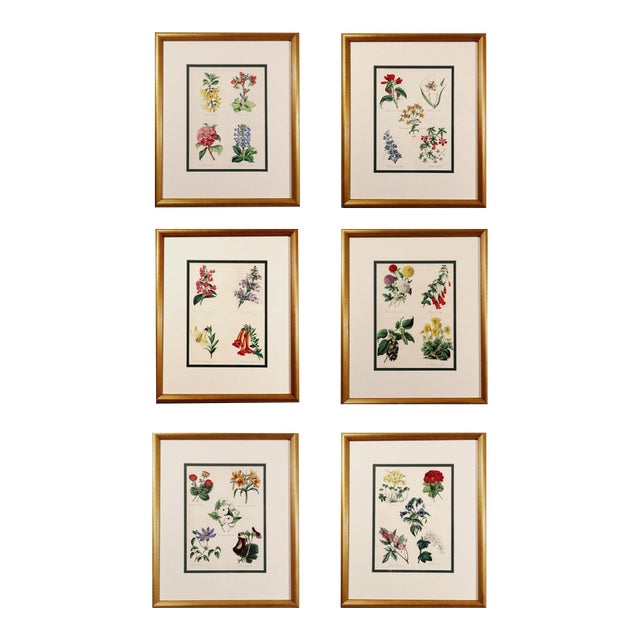
Set of Six Framed Hand-Colored Botanical Prints from W. Thompson's The English Flower Garden
1852–1853
This set of six antique …
Read more
Set of Six Framed Hand-Colored Botanical Prints from W. Thompson's The English Flower Garden
1852–1853
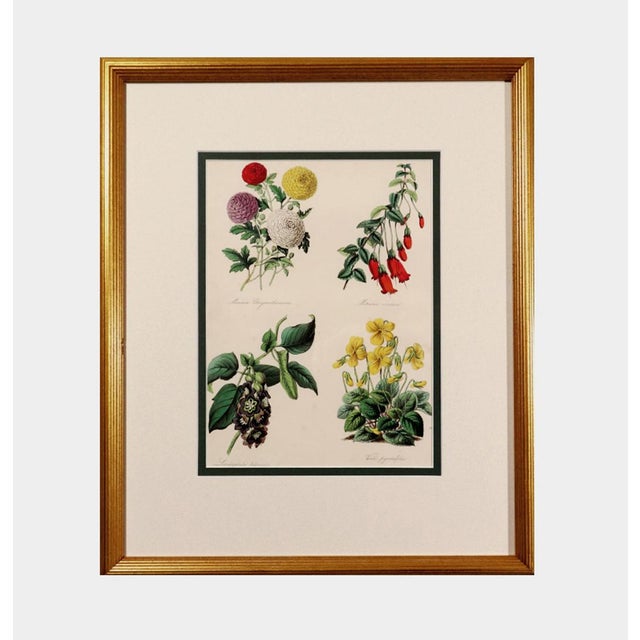
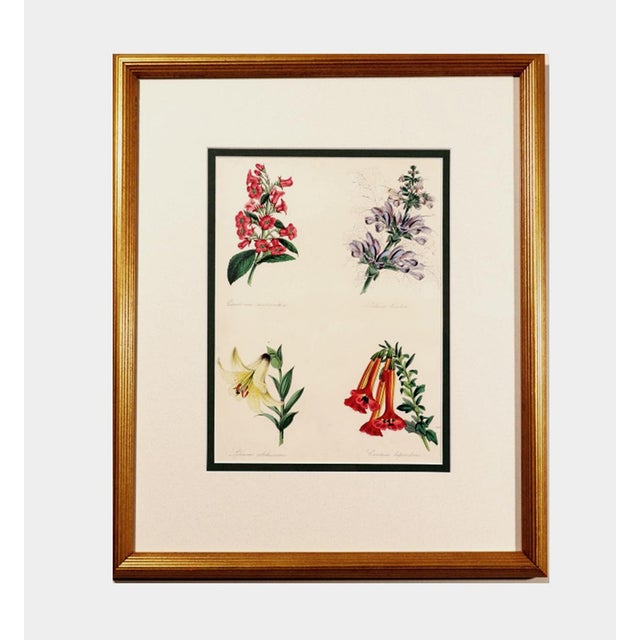
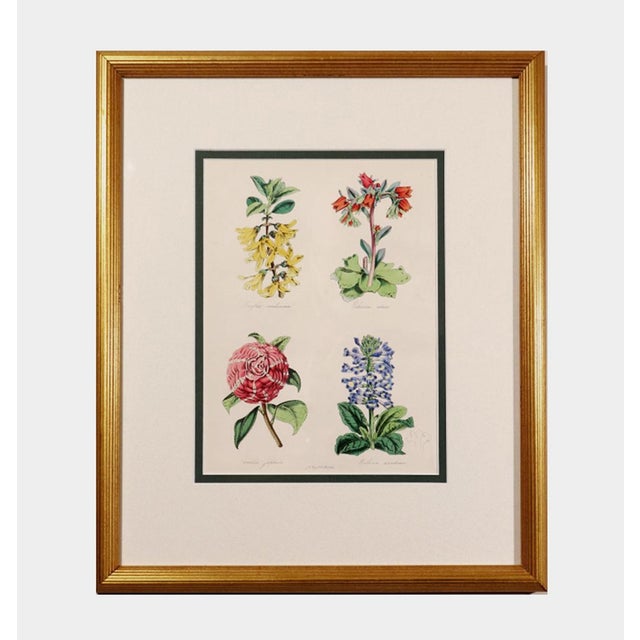
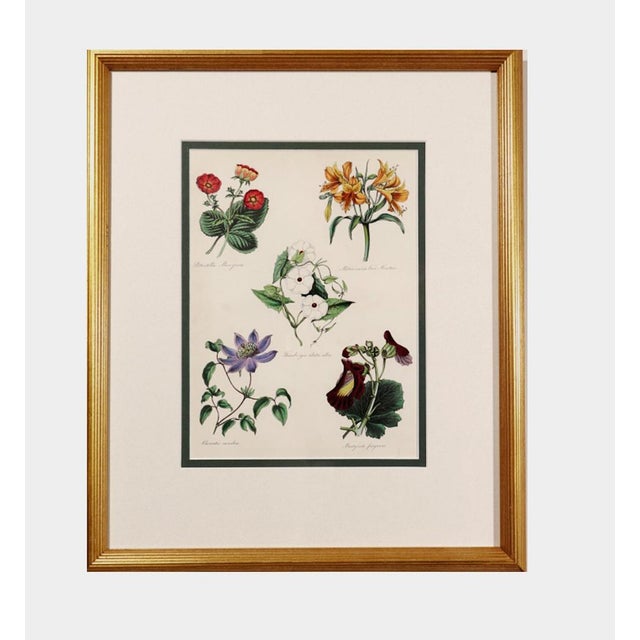
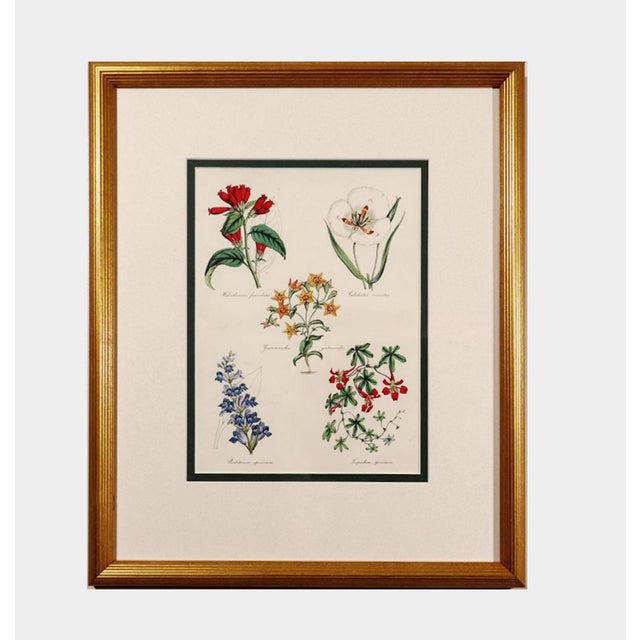
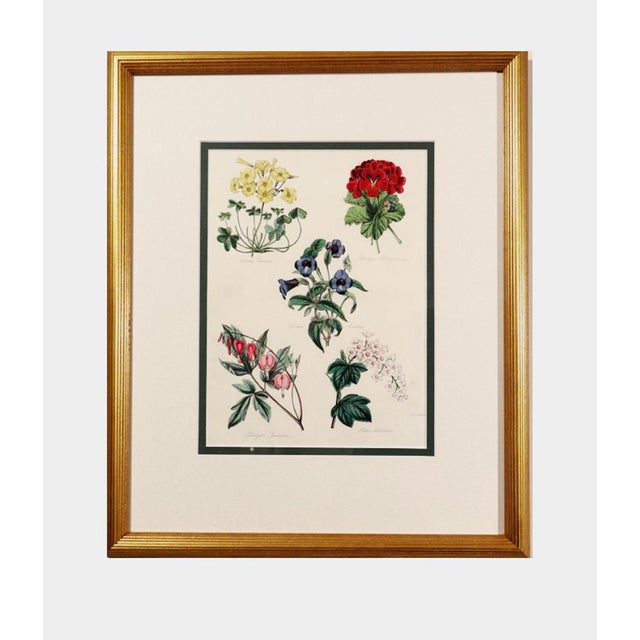
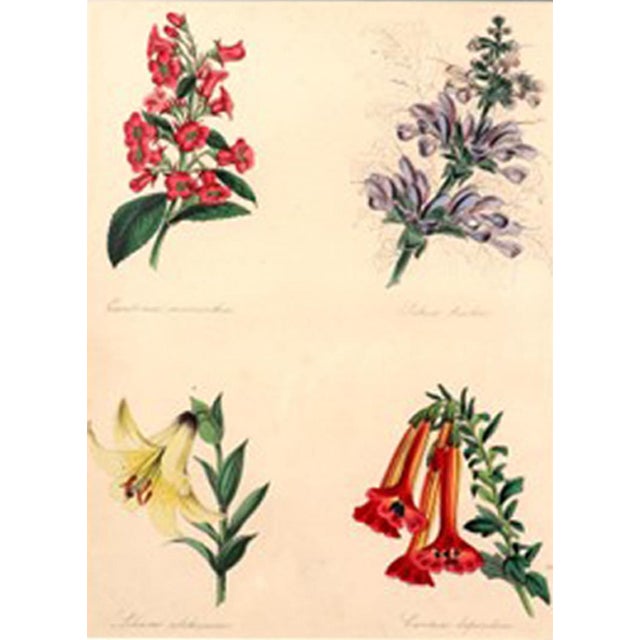
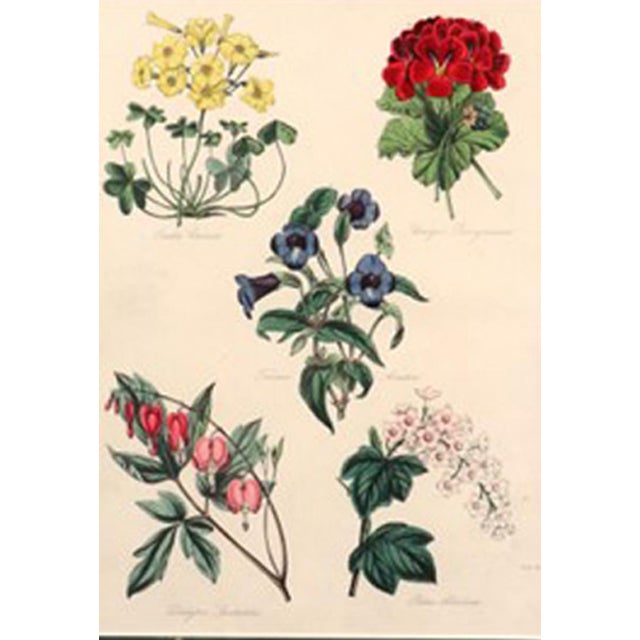
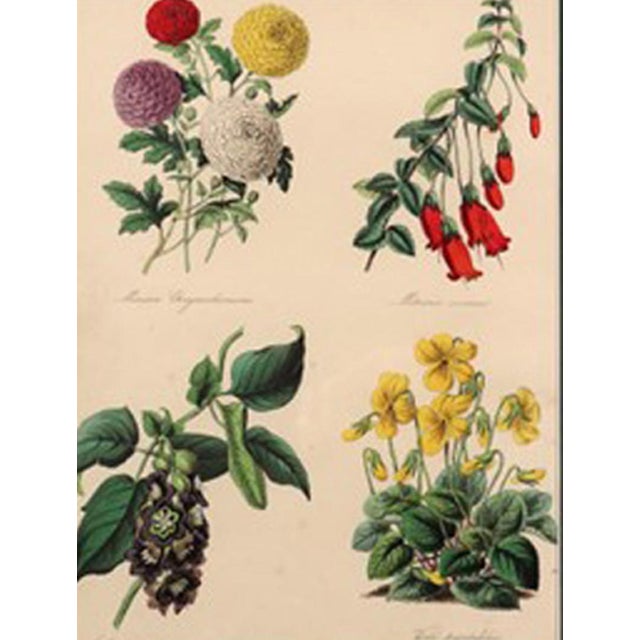
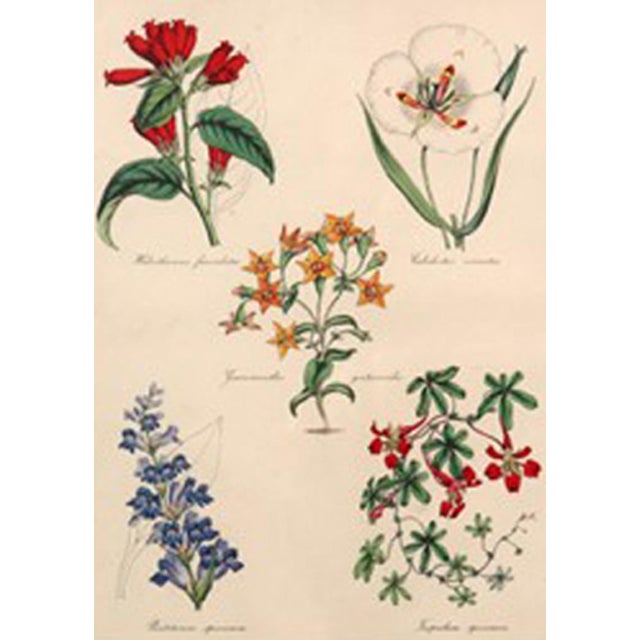
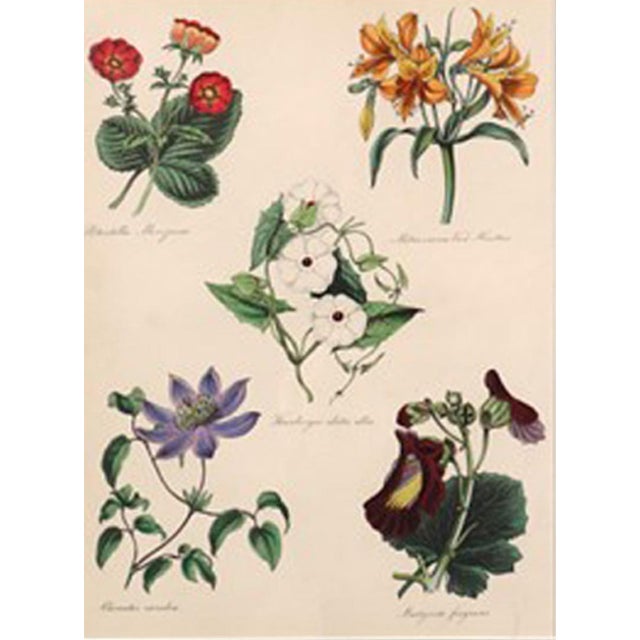
This set of six antique botanical prints comes from the first edition of The English Flower Garden: A Monthly Magazine of Hardy and Half-Hardy Plants, written and edited by William Thompson of Ipswich and published in London by Simpkin, Marshall, and Co. in 1852–1853. Each hand-colored plate brings together four or five flowering plants then new or newly fashionable in British gardens, and each plant is captioned beneath in script with its botanical name. The drawing is fine and exact, recording the structure of stem, leaf, and petal, and the hand-coloring is clean and bright.
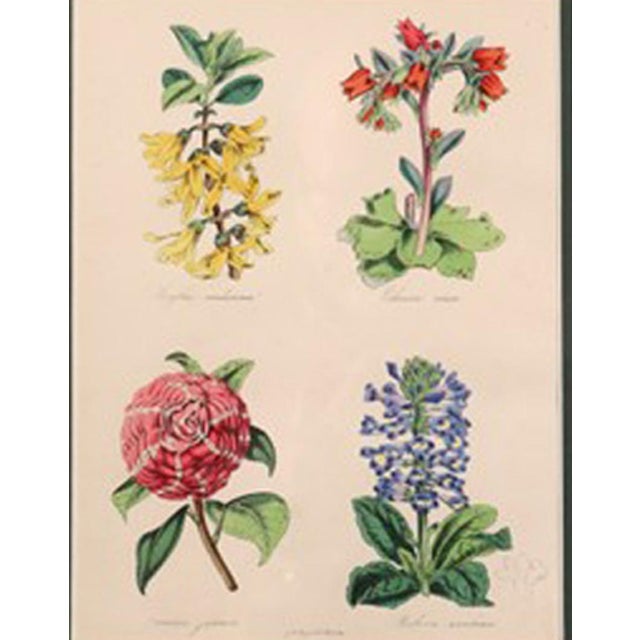
Five of the plates come from the first volume of 1852 and one from the second volume of 1853. The first shows Habrothamnus fasciculatus, the Mariposa Lily Calochortus venustus, Grammanthes gentianoides, Penstemon speciosum, and the Flame Nasturtium Tropaeolum speciosum. The second shows Oxalis cernua, a scarlet Pelargonium, Torenia asiatica, the Bleeding Heart Dielytra spectabilis, and Ribes albidum. The third shows Potentilla Menziesii, Alstroemeria Van Houttei, the white Black-Eyed Susan vine Thunbergia alata alba, Clematis caerulea, and Martynia fragrans. The fourth shows Escallonia macrantha, Salvia bicolor, the lily Lilium colchicum, and Cantua dependens. The fifth shows a group of four pompon chrysanthemums raised from the Chusan Daisy, Mitraria coccinea, Lardizabala biternata, and Viola pyrolaefolia. The sixth, from the 1853 volume, shows Forsythia viridissima, Echeveria retusa, the striped Camellia japonica variety Fra Arnoldo da Brescia, and Wulfenia carinthiaca.
The set is uniformly presented in high-quality custom framing chosen to suit the subject. Each print is double-matted, with a cream top mat over a dark green reveal that draws out the foliage tones, and is housed in a gilt reeded frame.
Hung as a block of six, in two rows of three or three rows of two, the set fills a wall above a sofa, console, or sideboard; it also divides well into two groups of three for a hallway, bedroom, or garden room. The gilt frames and green reveals sit comfortably with both traditional and tailored contemporary interiors.
Dimensions (each, framed):
Height: 15¼ inches (38.7 cm)
Width: 12¾ inches (32.4 cm)
Depth: 1 inch (2.5 cm)
Provenance:
Earle D. Vandekar of Knightsbridge
Condition:
Excellent antique condition. The prints are clean and bright. The frames are in excellent condition.
References:
W. Thompson, The English Flower Garden: A Monthly Magazine of Hardy and Half-Hardy Plants, 2 vols. (London: Simpkin, Marshall, and Co., 1852–1853), the source of the present plates; the index of plants figured and the articles on each plant identify the subjects of all six.
W. Thompson, The English Flower Garden of Hardy and Half-Hardy Plants, “with ninety-three figures, beautifully coloured from nature” (London: Simpkin, Marshall, and Co., 1855), the reissue in book form; a copy is in the Wellcome Collection, London.
Royal Horticultural Society, Lindley Collections, carte de visite portrait of William Thompson (1823–1903) of Ipswich.
Historical Context:
William Thompson (1823–1903), a baker’s son from Ipswich, took up botany as a young man and raised his first plants in a small garden behind his father’s shop. The English Flower Garden was his monthly magazine for the amateur gardener, printed in Ipswich by J. M. Burton and issued through 1852 and 1853. Its twenty-three hand-colored plates, carrying ninety-three figures in all, illustrate hardy and half-hardy plants for the open flower bed rather than the hothouse rarities of the grander folios of the day. Thompson does not name his illustrator, referring in the text only to “our artist.” In 1855 he issued his first seed catalog, the beginning of the firm later known as Thompson & Morgan, and in 1897 the Royal Horticultural Society awarded him the Victoria Medal of Honour.
The plates record the plant introductions of the 1840s as they reached the ordinary garden. Forsythia viridissima, the Bleeding Heart, and the Chusan Daisy from which the pompon chrysanthemums were raised had all been sent from China by Robert Fortune in the mid-1840s, while Escallonia macrantha, Mitraria coccinea, and Cantua dependens had lately come from Chiloé and the Peruvian Andes through the nursery of Messrs. Veitch.
(Ref: NY9185B-NRRR)
See less
- Dimensions
- 12.25ʺW × 1ʺD × 15.25ʺH
- Frame Type
- Framed
- Art Subjects
- Botanic
- Period
- Mid 19th Century
- Country of Origin
- United Kingdom
- Item Type
- Vintage, Antique or Pre-owned
- Materials
- Paper
- Condition
- Good Condition, Original Condition Unaltered, Some Imperfections
- Color
- Cream
- Condition Notes
- Good qwith UV Glass protection Good qwith UV Glass protection less
Questions about the item?
Returns & Cancellations
Return Policy - All sales are final 48 hours after delivery, unless otherwise specified in the description of the product.
Cancellation Policy - Prior to shipping or local pickup, buyers may cancel an order for up to 48 hours, unless otherwise specified.
Related Collections
- Rattan Original Prints
- Ralph Lauren Original Prints
- John Kiraly Original Prints
- Soicher Marin Original Prints
- Medium-Density Fibreboard Original Prints
- Silver Finish Original Prints
- Bunny Williams Home Original Prints
- Original Prints in Panama City, FL
- Original Prints in Salt Lake City
- Original Prints in Lexington, KY
- Dye Transfer Original Prints
- Rosenthal Original Prints
- Johannes Kip Original Prints
- Sam Francis Original Prints
- Framed Prints
- Botanical Prints
- Bird Prints
- Woodblock Prints
- Screen Prints
- Japanese Woodblock Prints
- Thomas McKnight Original Prints
- Frank Stella Original Prints
- Gustave Baumann Original Prints
- George Barbier Original Prints
- Teak Original Prints