

Details
Description
A late 17th-century English William and Mary cabinet on stand, dating to circa 1685–1690. Constructed in walnut, the cabinet is …
Read more
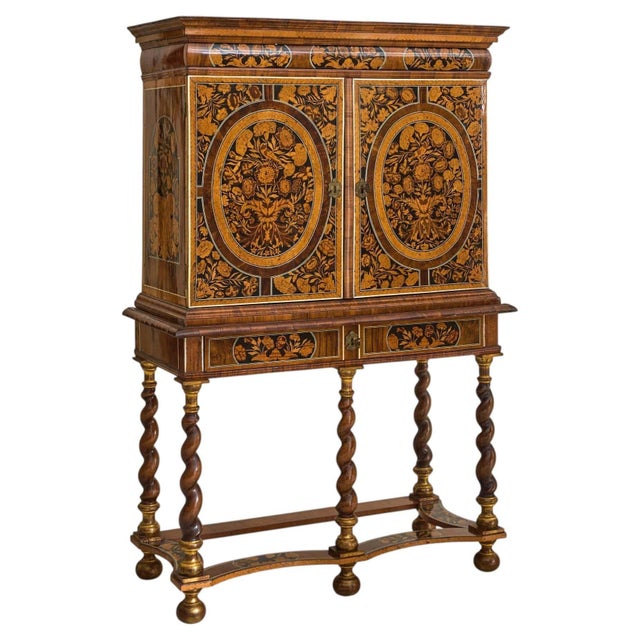
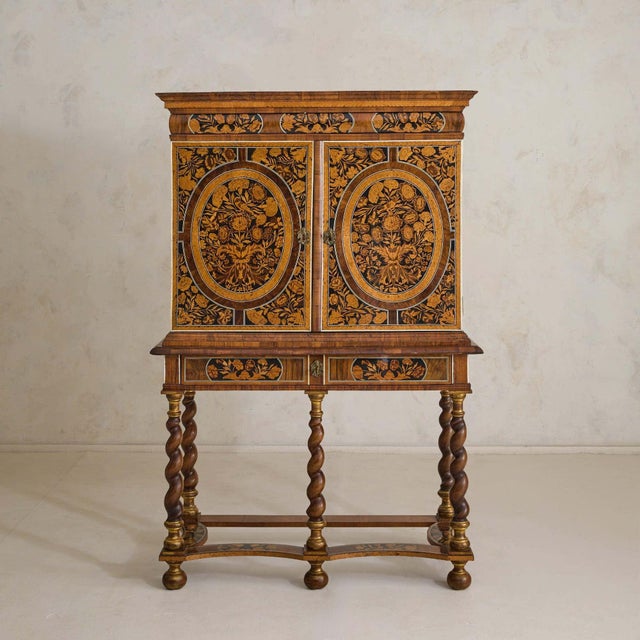
A late 17th-century English William and Mary cabinet on stand, dating to circa 1685–1690. Constructed in walnut, the cabinet is richly inlaid with olivewood, ebony veneer, maplewood, and mixed natural woods, with intricate marquetry compositions unfolding across nearly every visible surface.
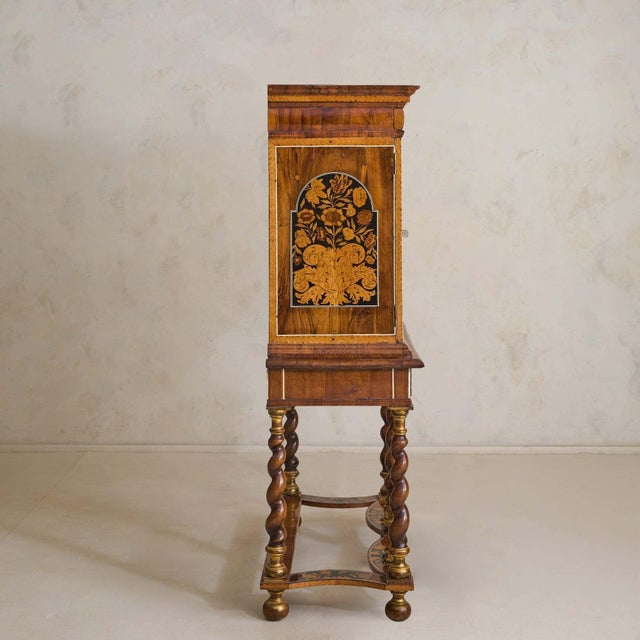
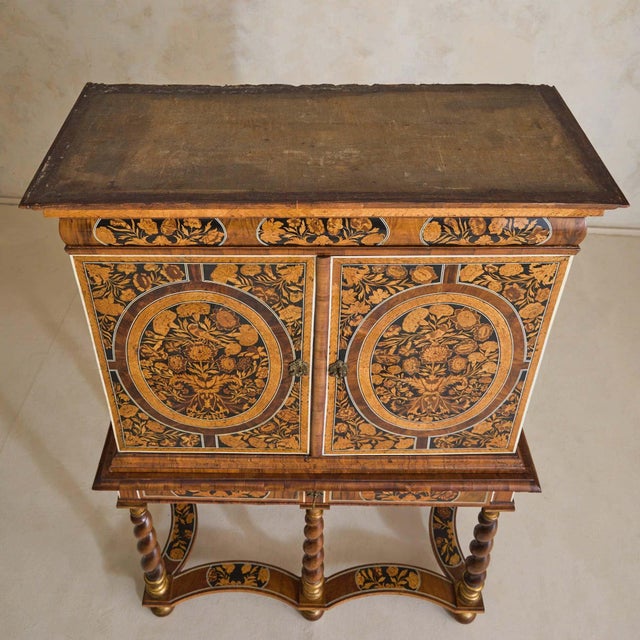
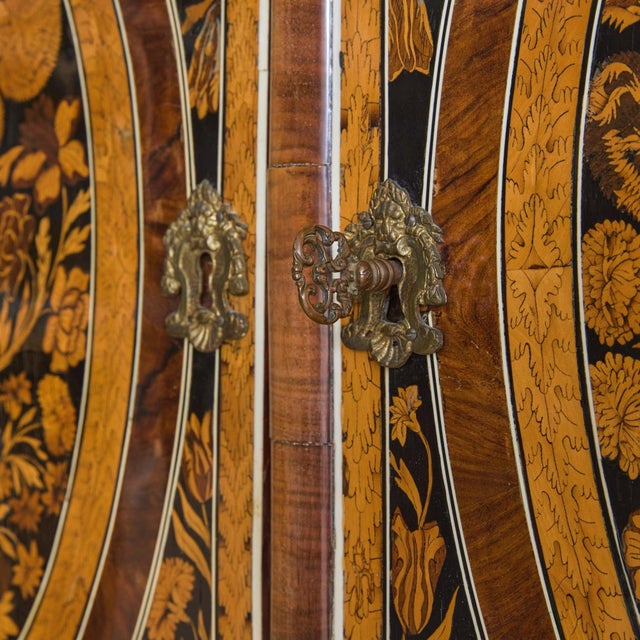
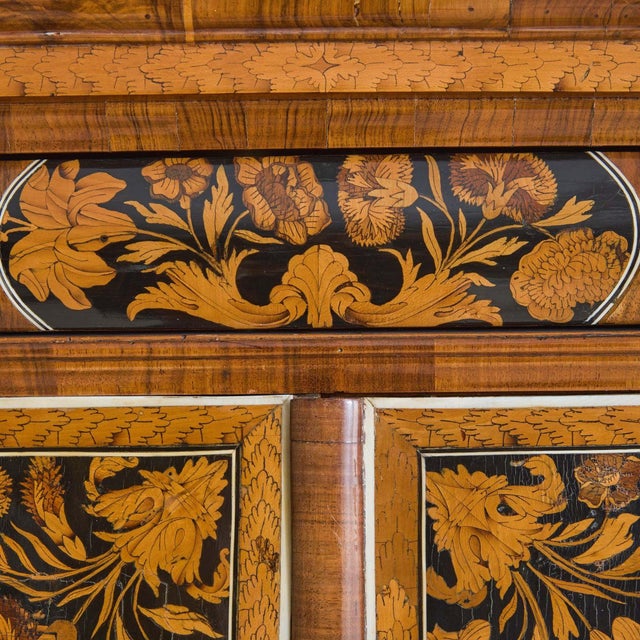
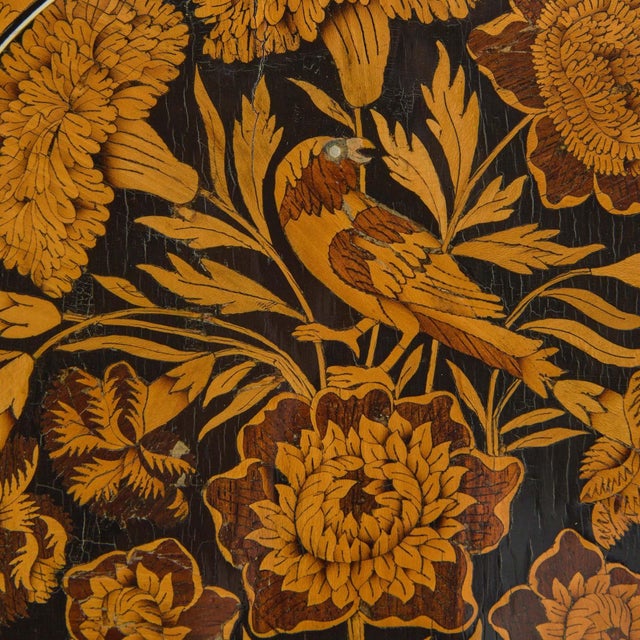
The façade is centered by two doors, each framed by oval medallions densely inlaid with bouquets of flowers, foliage, and birds in contrasting woods, set against dark ebony grounds that heighten the richness of the patternwork. Surrounding reserves continue the floral compositions, while the sides are similarly decorated—a sign of the cabinet’s quality and intended placement within a room rather than against a wall. The projecting cornice is adorned with further marquetry panels, drawing the eye upward and emphasizing the cabinet’s architectural silhouette.
Raised on an elegant cabinet-on-stand base, the lower section features additional marquetry drawers and is supported by finely turned barley twist legs joined by a shaped stretcher and terminating in bun feet. Gilded accents at the leg collars and feet add warmth against the darker woods.
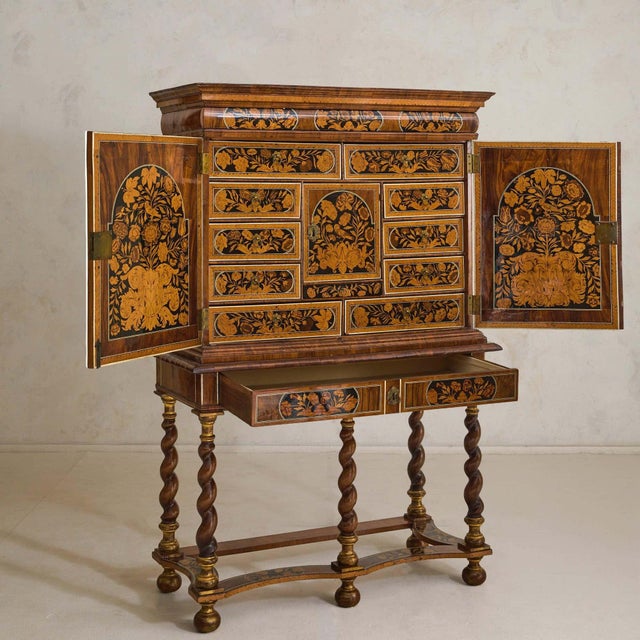
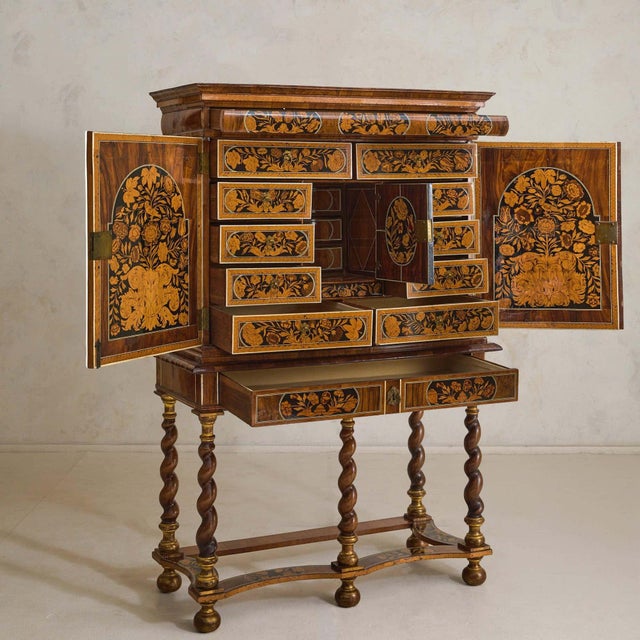
Inside, the cabinet opens to reveal an elaborate fitted interior with an arrangement of small drawers, each decorated with floral marquetry and centered around a small cupboard door—a continuation of the exterior’s remarkable detail. Designed to store documents, valuables, or personal objects, pieces like this were as much demonstrations of artistry and refinement as they were functional furniture.
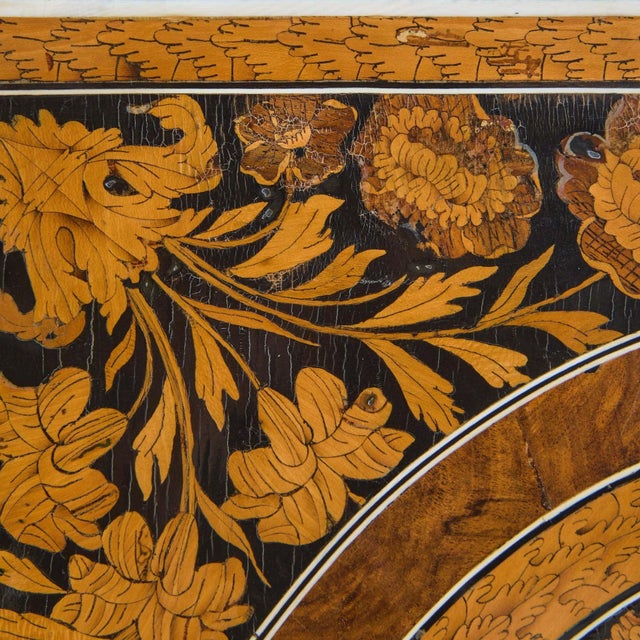
Every flower, bird, and curling vine across the surface was cut and assembled by hand from contrasting woods, then shaded, engraved, and fitted piece by piece into the cabinet’s surface. Marquetry of this complexity was among the most labor-intensive forms of furniture making in late 17th-century England, practiced by a small group of Dutch and Huguenot craftsmen working in London during the reign of William and Mary.
Created during the reign of King William III and Queen Mary II, the cabinet reflects the strong Dutch and Flemish influence that reshaped English decorative arts during the period. William III’s arrival to the English throne brought Dutch artisans and continental design sensibilities into London workshops, marking a shift away from heavier Jacobean forms toward more refined proportions, richly figured veneers, and botanical marquetry of exceptional intricacy.
An expert appraisal attributes the cabinet to England, late 17th century, noting that certain elements have been restored or remade over time, consistent with a piece of this age.
Today, marquetry at this level is considered an endangered craft, with only a small number of professional practitioners continuing the tradition in Britain. Pieces like this preserve not only the furniture itself, but the workshop knowledge and hand skills required to make it.
More than three centuries later, the cabinet still carries the intensity of its making — every surface considered, every reserve filled, every detail cut and placed by hand. Beyond its scale and decoration, what remains most striking is the sheer concentration of labor held within it.
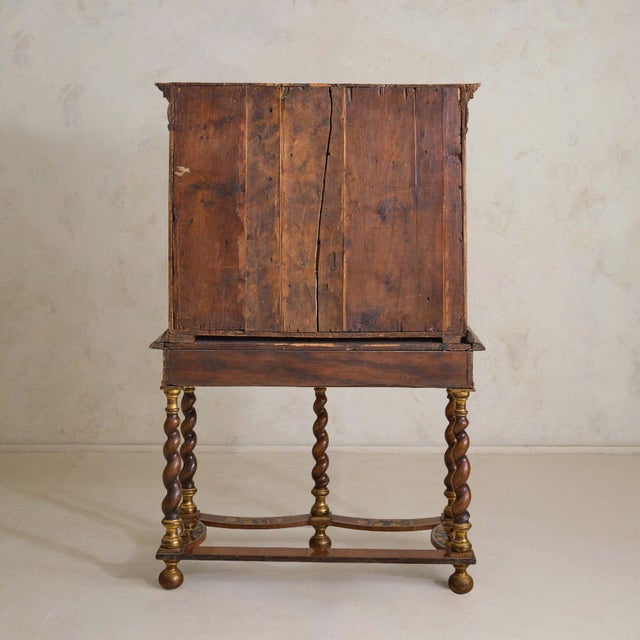
Condition: In very good antique condition overall. The cabinet has undergone restoration and conservation over time, including historical veneer repairs and replacements, some of which remain visible upon close inspection and are not fully color matched. Minor gaps, age-related separations, surface wear, and areas of restoration are present throughout, particularly to the veneer and backing, all consistent with the age and history of the piece.
The cabinet remains structurally sound and stable, with doors and drawers functioning properly. A rich, natural patina has developed across the wood surfaces and gilt accents, contributing to the depth and character only time can create.
See less
- Dimensions
- 43.75ʺW × 19.5ʺD × 65.5ʺH
- Styles
- English
- Period
- 17th Century
- Country of Origin
- United Kingdom
- Item Type
- Vintage, Antique or Pre-owned
- Materials
- Oak
- Walnut
- Condition
- Good Condition, Restored, Some Imperfections
- Color
- Brown
- Condition Notes
- Good. Replacements made. Repaired. In very good antique condition overall. The cabinet has undergone restoration and conservation over time, including … moreGood. Replacements made. Repaired. In very good antique condition overall. The cabinet has undergone restoration and conservation over time, including historical veneer repairs and replacements. less
Questions about the item?
Returns & Cancellations
Return Policy - All sales are final 48 hours after delivery, unless otherwise specified in the description of the product.
Cancellation Policy - Prior to shipping or local pickup, buyers may cancel an order for up to 48 hours, unless otherwise specified.
Related Collections
- Michael Taylor China and Display Cabinets
- Cast Iron China and Display Cabinets
- Restoration Hardware China and Display Cabinets
- Medium-Density Fibreboard China and Display Cabinets
- Drexel China and Display Cabinets
- Antique Hutch Cabinets
- Ethan Allen China and Display Cabinets
- Thomasville China and Display Cabinets
- Mid-Century Modern China and Display Cabinets
- Curio Display Cabinets
- Corner Display Cabinets
- Cherry Wood China and Display Cabinets
- Glass Curio Display Cabinets
- Henredon China and Display Cabinets
- French Provincial China and Display Cabinets
- Art Deco China and Display Cabinets
- Century Furniture China and Display Cabinets
- Green China and Display Cabinets
- Broyhill China and Display Cabinets
- Victorian China and Display Cabinets
- Wall Display Cabinets
- Display Cabinets with Glass Doors
- 1980s China Cabinets
- Bamboo China and Display Cabinets
- China and Display Cabinets in Los Angeles