

Details
Description
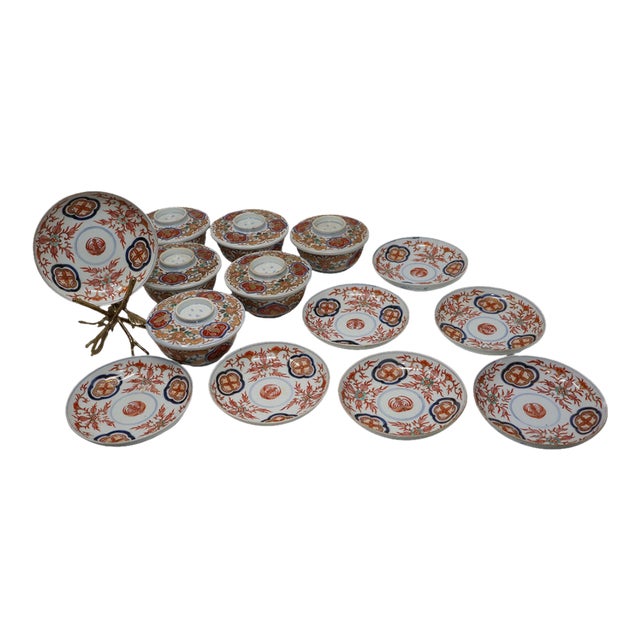
A richly decorated collection of antique Japanese Imari porcelain featuring six Edo-period covered rice bowls and eight complementary antique shallow …
Read more
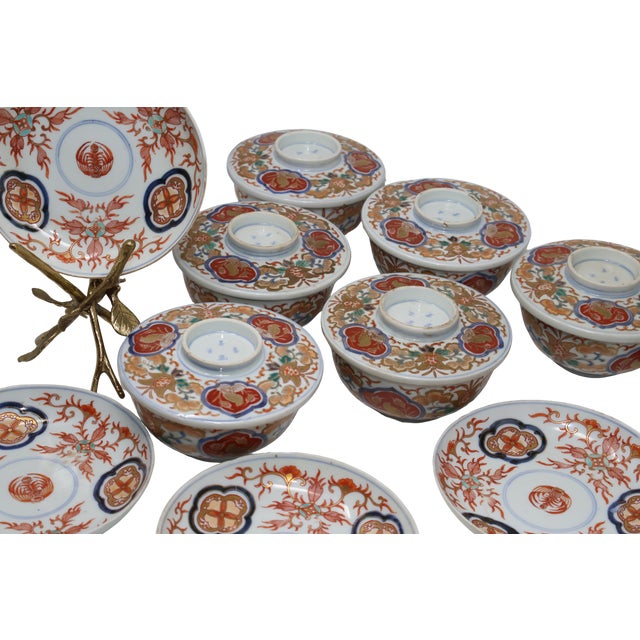
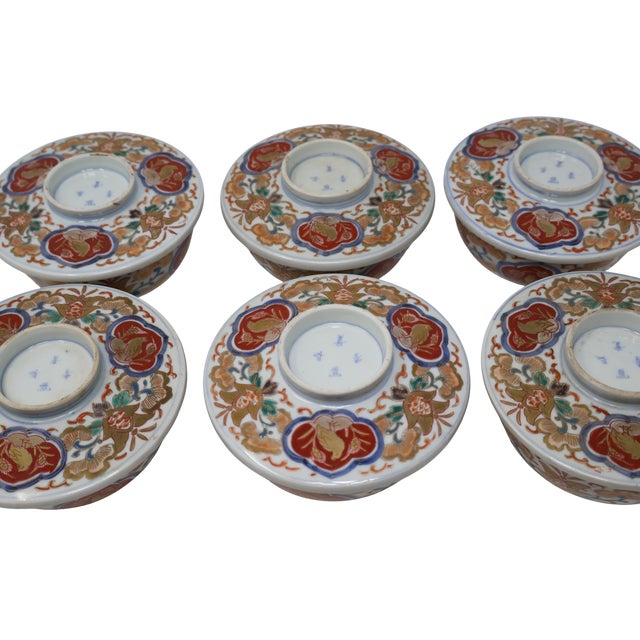
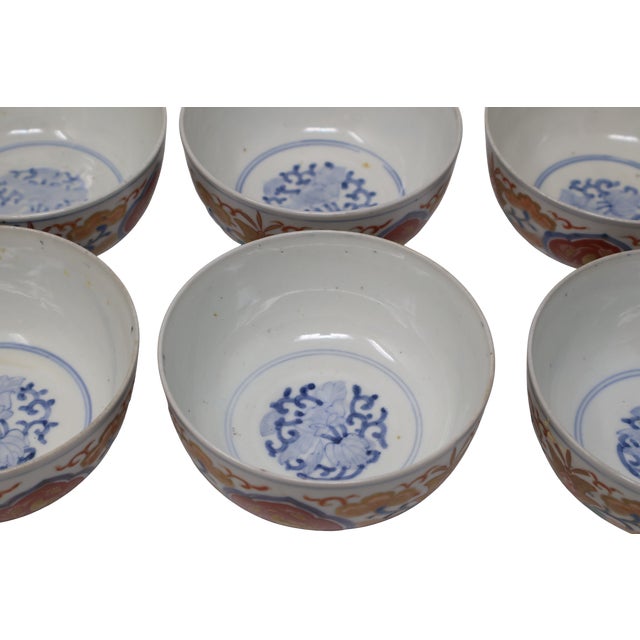
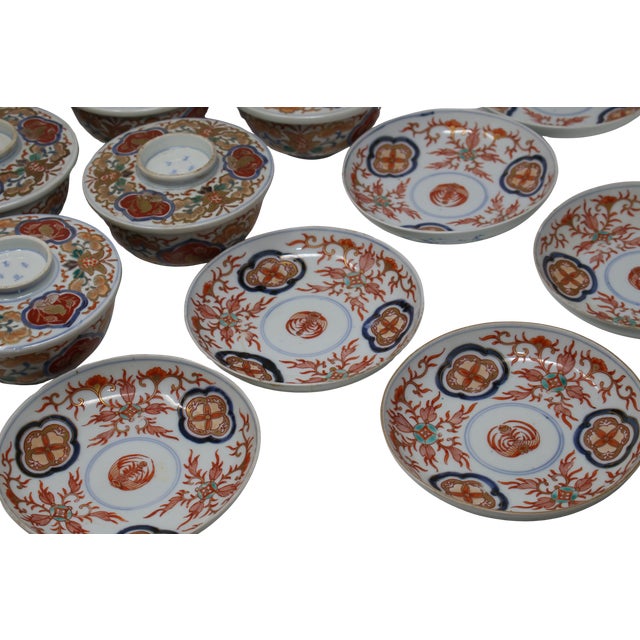
A richly decorated collection of antique Japanese Imari porcelain featuring six Edo-period covered rice bowls and eight complementary antique shallow dishes. Twenty individual pieces bring together intricate hand-painted ornament, cobalt blue, iron red, jewel-toned enamel accents, and luminous gilding.
Acquired from an estate in Northern Virginia, the collection is supported by its original estate catalog documentation, which identifies the covered bowls as “Fine Antique Japanese Edo Imari Covered Rice Bowls” and the accompanying dishes as “Antique Japanese Imari Hand-Painted Bowls.”
The collection offers an engaging interplay of form and pattern: rounded bowls with coordinating lids, open dishes with expansive painted surfaces, and decorative details that continue onto interiors and reverses. Together, they create a substantial display with the warmth, intricacy, and individual character of antique Japanese porcelain.
Six Edo-Period Covered Rice Bowls
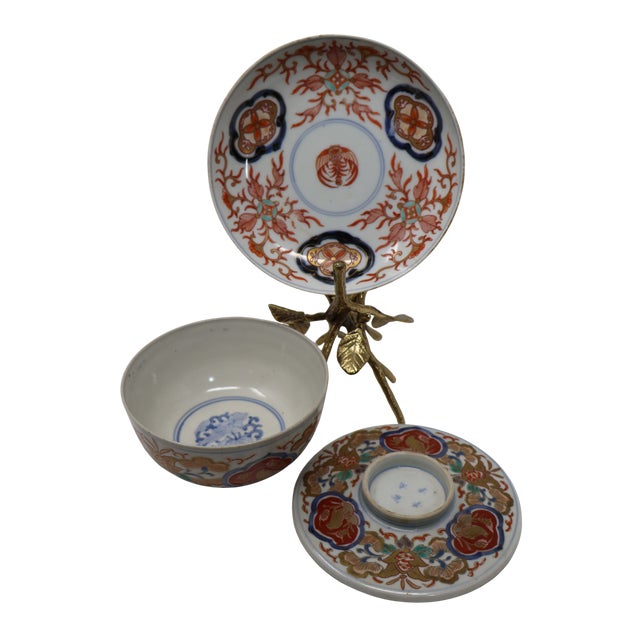
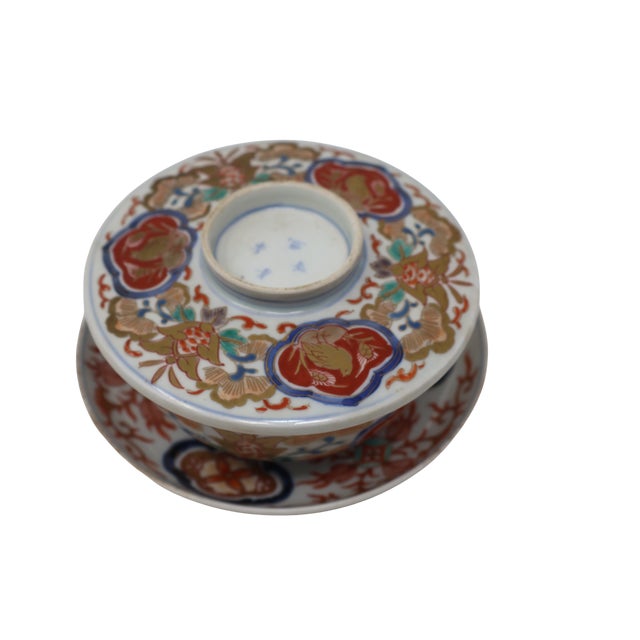
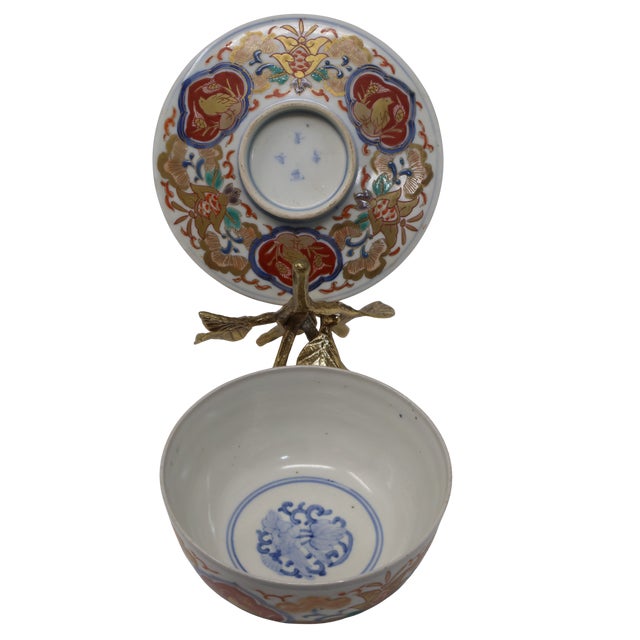
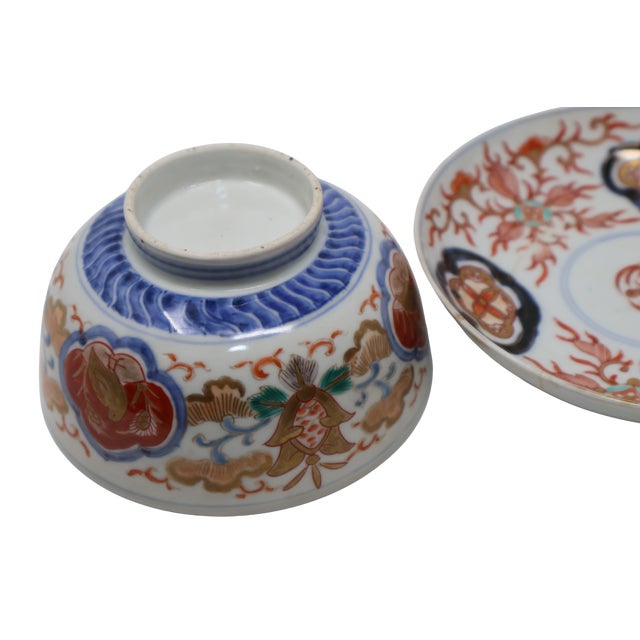
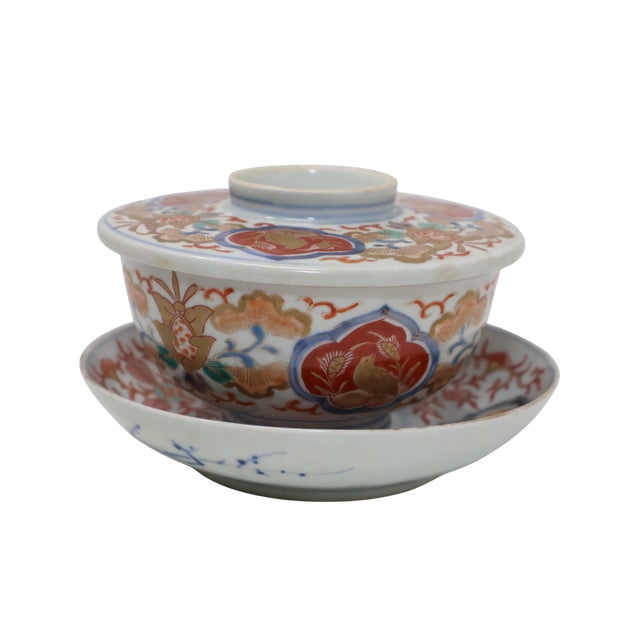
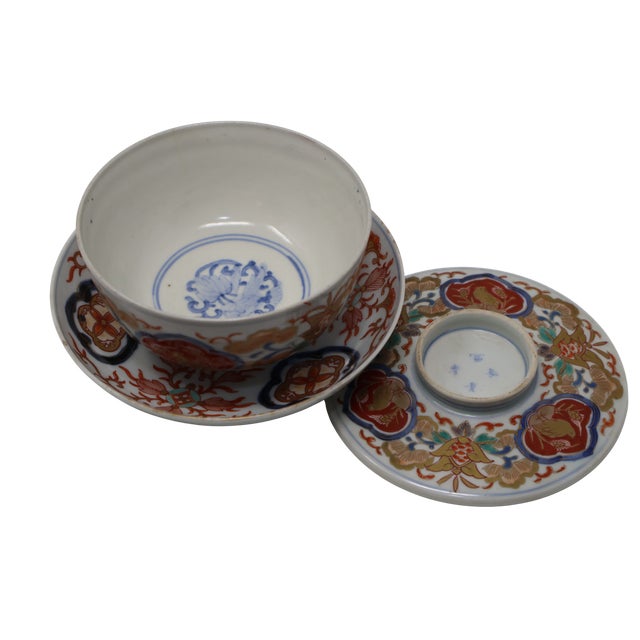
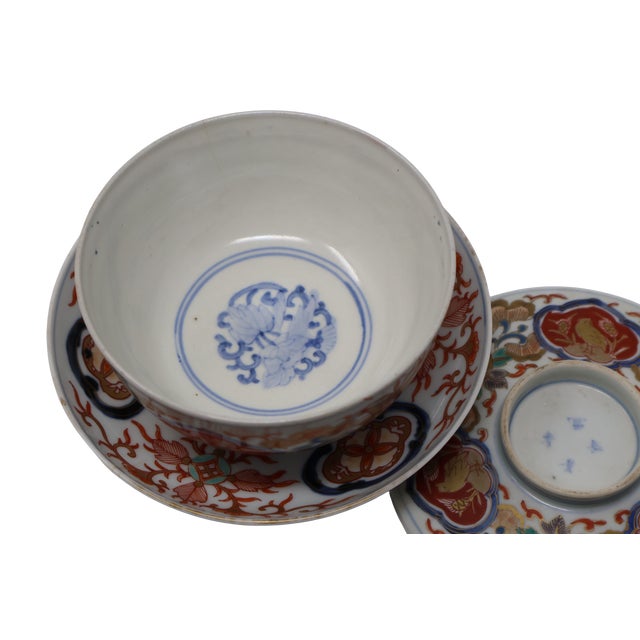
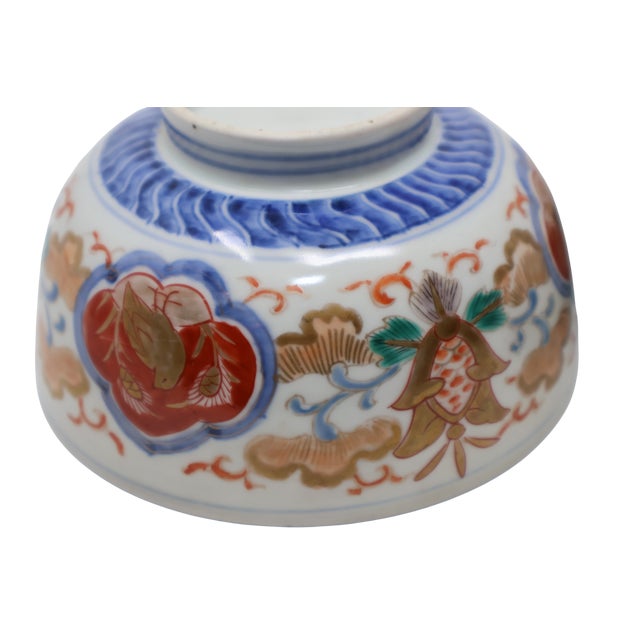
Each bowl stands on a raised circular foot and retains a coordinating lid with a raised ring handle. The exteriors feature lobed reserves outlined in cobalt blue and gilt, enclosing stylized birds against iron-red grounds. Between these reserves, elaborate botanical compositions combine scrolling blue stems, gold-toned blossoms, green and aubergine-toned leaves, and fruit-like forms accented with red seed-shaped details.
The lids echo the bowls’ bird and botanical decoration, creating continuity across each covered form. Variations in brushwork lend individual character to the six coordinating examples.
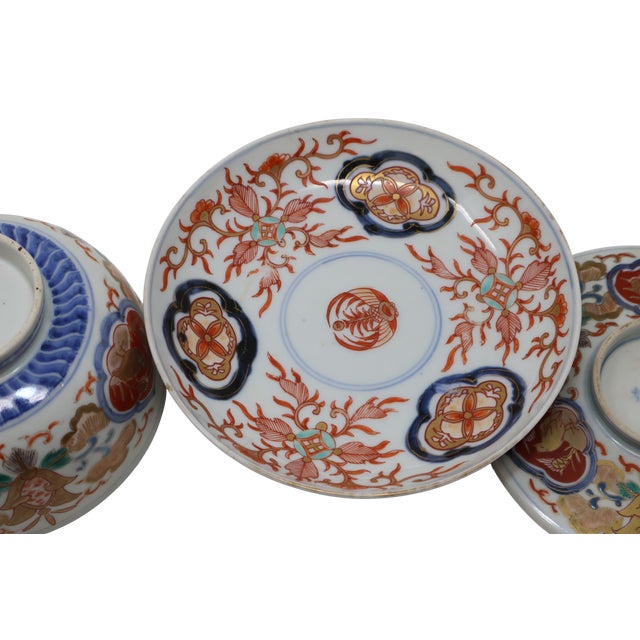
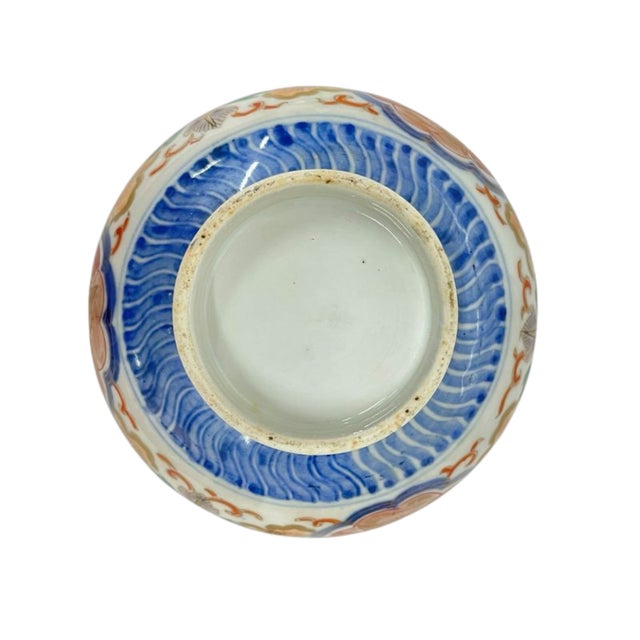
Inside each bowl, a cobalt-blue floral medallion rests within concentric circles. Around the lower exterior, a broad cobalt border with repeating curved white reserves adds another decorative layer. Viewed open, closed, or from below, the bowls reveal different aspects of their workmanship.
Eight Complementary Antique Imari Dishes
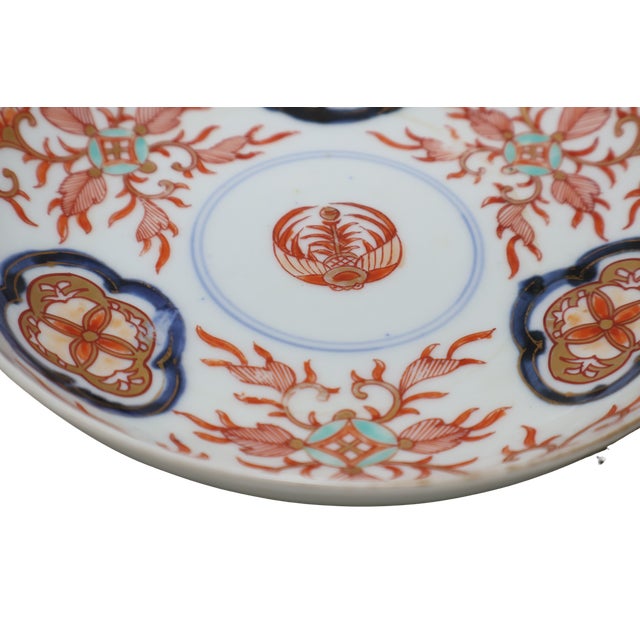
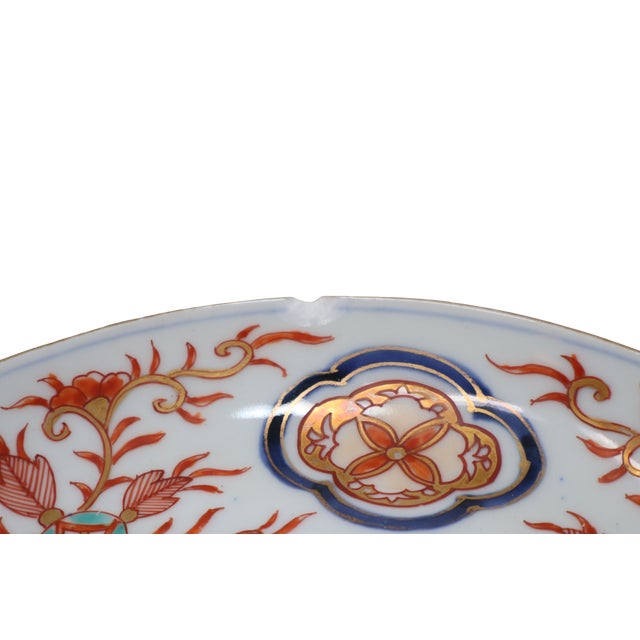
The eight shallow dishes feature a distinct yet harmonious pattern. Three lobed floral reserves, framed in cobalt blue and gilt, alternate with finely drawn iron-red foliage and turquoise-accented geometric centers. A red-and-gold ornamental medallion occupies the center of each dish, enclosed by delicate double blue circles.
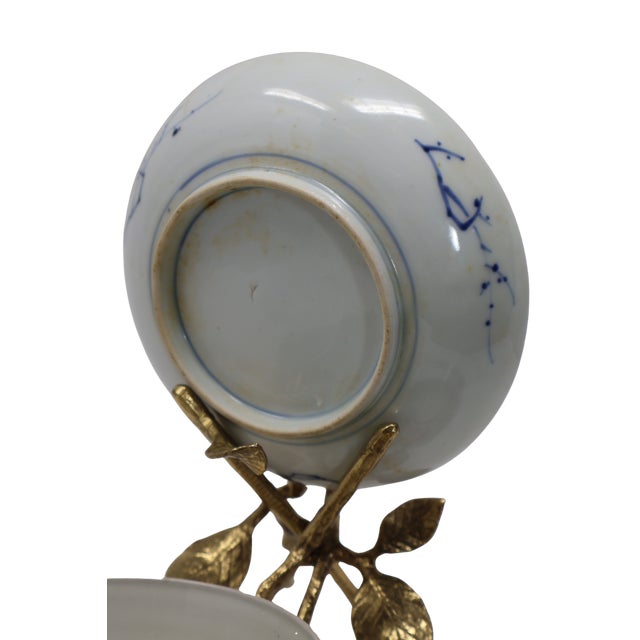
Their gently rising sides frame the painted compositions beautifully. The reverses carry restrained cobalt-blue sprig decoration and circular borders surrounding raised foot rings.
The dishes share the bowls’ rich palette while introducing a more open composition. These two complementary groups are offered together as a coordinated collection; their history as one originally matched service has not been established.
Auspicious Inscriptions
The lids carry the four-character inscription 富貴長春, read in Japanese as Fuki chōshun. This traditional auspicious expression conveys wishes for prosperity, honor, longevity, and enduring youth.
Seattle Art Museum explains the same inscription on an Imari plate in its collection as “wealth, nobility, longevity and youth.” This adds a meaningful cultural dimension to the covered bowls: their ornament incorporates a wish for well-being alongside its decorative beauty.
Fuki chōshun is an auspicious inscription rather than an individual artist’s signature or production date. The specific workshop and decorator have not been identified.
The Imari Tradition
Imari porcelain is associated with the ceramic production of Arita in Japan’s former Hizen province and takes its name from the port through which these wares were shipped. Its combination of blue decoration, colored enamels, and gilding became an enduring expression of Japanese ceramic artistry.
The Metropolitan Museum of Art’s history of Edo-period Japanese porcelain traces the development of porcelain production around Arita in the early seventeenth century and its subsequent importance in international trade.
The Met also holds an enamel-decorated Arita covered bowl of Imari type dated 1840, measuring approximately 5 inches in diameter and 3⅜ inches high. That record provides a useful historical comparison for the form and scale of the covered bowls in this collection.
The museum references explain the porcelain tradition, covered-bowl form, and inscription. They provide historical context rather than authentication of these particular pieces or an exact manufacturing date.
Documented Estate Provenance
Acquired from an estate in Northern Virginia, with identification supported by the original estate catalog:
• Six fine antique Japanese Edo Imari covered rice bowls
• Eight antique Japanese Imari hand-painted bowls
The Edo-period designation applies to the six covered bowls. The eight accompanying pieces were documented as antique Japanese Imari bowls and are described here as shallow dishes to reflect their form.
A Collection for Considered Interiors
The appeal of this collection lies in its combination of quantity, coordinating forms, and detailed decoration. Six covered bowls establish a repeated sculptural rhythm, while eight complementary dishes provide opportunities for upright display and layered arrangements.
Displayed in a glazed cabinet, on a dining-room dresser, or against painted shelving, the red, blue, and gilt palette brings warmth and definition to an interior. The porcelain pairs particularly well with dark wood, brass accents, patterned textiles, and collected traditional furnishings.
For the collector, the bowls offer Edo-period history, auspicious inscriptions, and decoration extending across lids, interiors, and exteriors. For the designer, the collection provides a cohesive group with enough variation to create an individual, thoughtfully assembled display.
Contents
• Six Edo-period porcelain rice bowls
• Six coordinating porcelain lids
• Eight antique porcelain shallow dishes
Total: 20 individual porcelain pieces. Sold together as one collection.
Covered rice bowls: Edo period, ending in 1868, as identified in the original estate catalog.
Eight shallow dishes: Antique Japanese Imari; their precise period remains unconfirmed.
See less
- Dimensions
- 5.25ʺW × 5.25ʺD × 3.25ʺH
- Period
- Mid 19th Century
- Country of Origin
- Japan
- Item Type
- Vintage, Antique or Pre-owned
- Materials
- Porcelain
- Condition
- Good Condition, Unknown, Some Imperfections
- Color
- Ivory
- Condition Notes
- Good antique condition with age-related surface wear, localized rubbing to gilding and painted decoration, glaze crazing, and light discoloration and … moreGood antique condition with age-related surface wear, localized rubbing to gilding and painted decoration, glaze crazing, and light discoloration and speckling, particularly around foot rims and lid handles. A couple of the eight shallow dishes have small chips. Glaze crazing is present; no hairline cracks identified during inspection. All six bowls are accompanied by coordinating lids, the set of covered bowls are in overall great condition for antiques. Please review the detailed photographs for individual condition characteristics. less
Questions about the item?
Returns & Cancellations
Return Policy - All sales are final 48 hours after delivery, unless otherwise specified in the description of the product.
Cancellation Policy - Prior to shipping or local pickup, buyers may cancel an order for up to 48 hours, unless otherwise specified.
Related Collections
- William Morris Dinnerware
- Castleton - USA Dinnerware
- Ashworth Ironstone Dinnerware
- Persian Dinnerware
- Vetri Dinnerware
- Mintons Art Pottery Studio Dinnerware
- Lefton Dinnerware
- China Dinnerware
- Mikasa Dinnerware
- Franciscan China Dinnerware
- China Lenox Dinnerware
- Royal Doulton Dinnerware
- Japanese Dinnerware
- Minton Dinnerware
- Gold Dinnerware
- Russel Wright Dinnerware
- Wedgwood Dinnerware
- Limoges, France Dinnerware
- Porcelain Rosenthal Dinnerware
- Johnson Brothers Dinnerware
- Victorian Dinnerware
- Ironstone Dinnerware
- Mid-Century Modern Dinnerware
- Blue Dinnerware
- Tiffany and Co. Dinnerware