

Details
Description
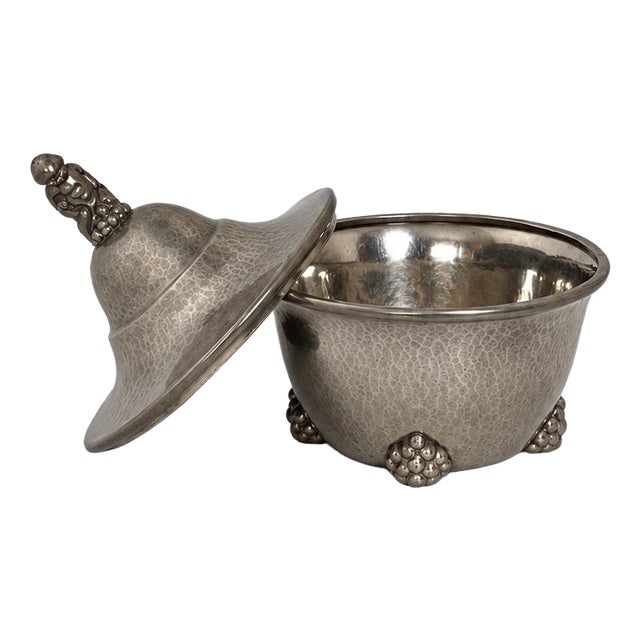
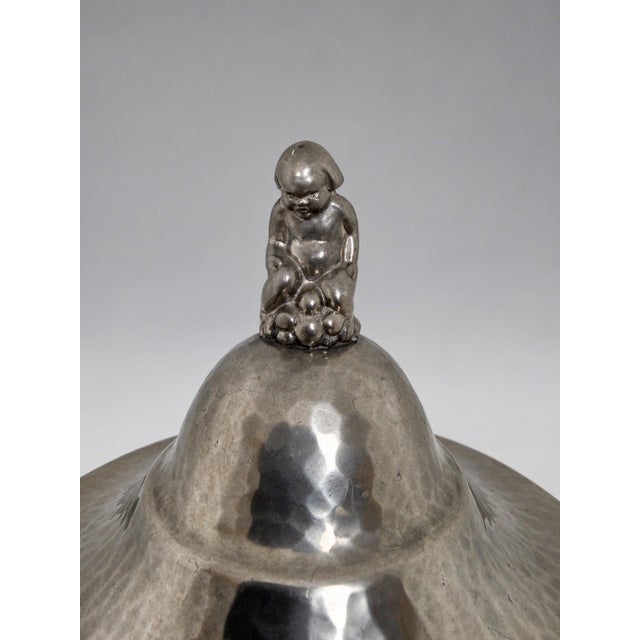
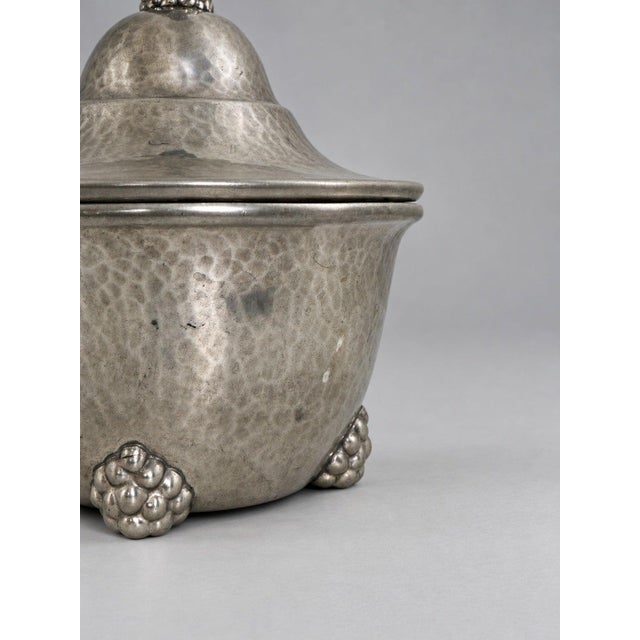
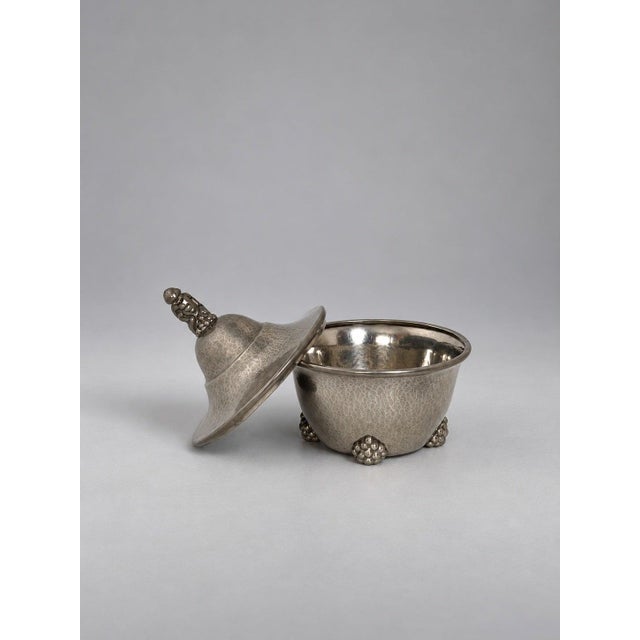
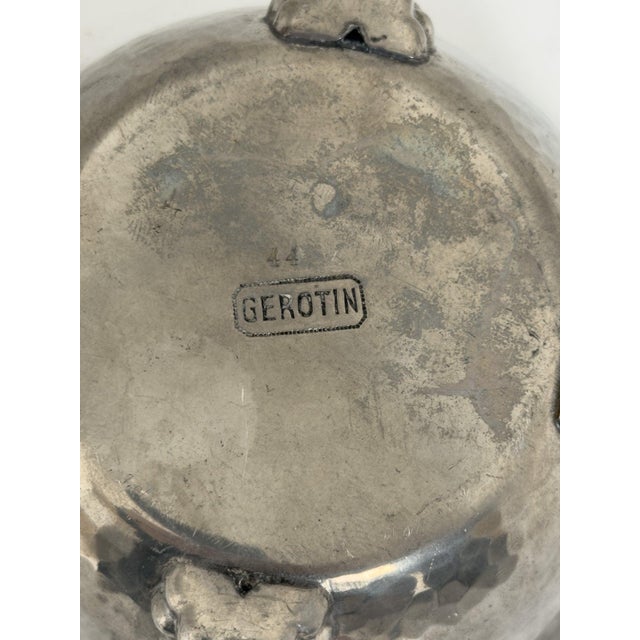
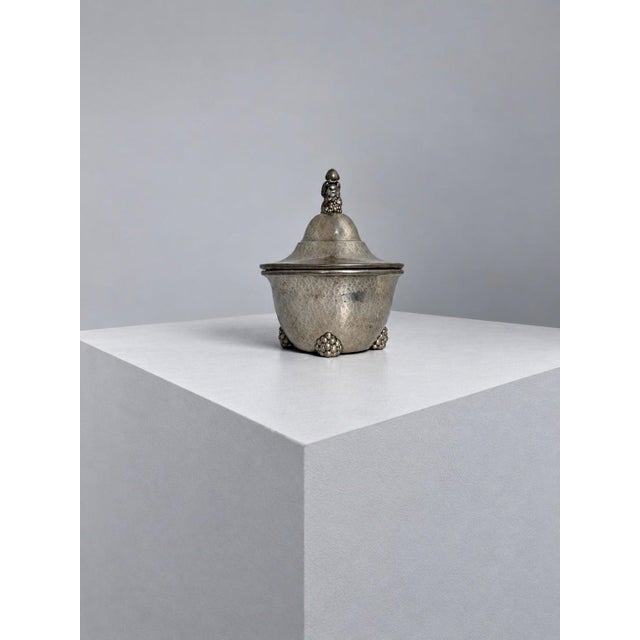
Georg Nilsson Art Deco Pewter for Gero-Tin, Model 44, 1930s
An elegant Art Deco pewter object designed by Danish silversmith …
Read more
Georg Nilsson Art Deco Pewter for Gero-Tin, Model 44, 1930s
An elegant Art Deco pewter object designed by Danish silversmith and industrial designer Georg Nilsson (1888–1975) for Gero-Tin, the celebrated pewter division of the Dutch metalware manufacturer Gero.
The piece represents an important chapter in the development of European decorative arts, when traditional silversmithing techniques were increasingly combined with modern industrial production and the emerging aesthetics of Art Deco.
Georg Nilsson (1888–1975)
Georg Nilsson was a distinguished Danish silversmith and designer whose career bridged the traditions of Danish craftsmanship and the development of modern European industrial design.
He received his early training in Copenhagen, working in the artistic environment surrounding the influential Danish silversmith Georg Jensen. Nilsson developed a strong understanding of metalworking, surface decoration, and the sculptural qualities of silver and pewter.
In the 1920s, Nilsson became closely associated with Gero, the Dutch manufacturer that had established a production facility in Copenhagen to serve the Scandinavian market.
By 1925, he was working at the company’s Danish operation, where he played an important role in both design and production.
His early designs frequently incorporated decorative elements inspired by Danish silversmithing traditions, including hammered surfaces, stylized botanical motifs, and sculptural ornamentation.
As European design evolved during the late 1920s and early 1930s, Nilsson increasingly embraced the geometric forms, simplified decoration, and architectural proportions associated with Art Deco.
His work reflects this transition from traditional craftsmanship toward a more modern and functional design language.
Gero and the Development of Gero-Tin
The Dutch company Gero was established in Zeist, the Netherlands, in 1912 and became an important manufacturer of silver-plated tableware, cutlery, and decorative metal objects.
The company sought to make well-designed metalware accessible to a wider audience through a combination of skilled craftsmanship and efficient industrial production.
In 1922, Gero established a manufacturing operation in Copenhagen, Denmark, where it produced metalware for the Danish market.
Pewter became an important material within the company’s decorative production. Marketed under names including Gero-Tin and Gerotin, these objects offered designers considerable freedom to explore sculptural forms, textured surfaces, and ornamental details.
Gero’s production included decorative bowls, vases, candlesticks, table accessories, and other household objects that reflected changing European tastes during the interwar period.
The company collaborated with several notable designers, including Georg Nilsson, Chris van der Hoef, and Andries Dirk Copier.
from Copenhagen to the Netherlands
The economic difficulties following the financial crisis of 1929 had a significant impact on European manufacturing.
In 1933, Gero closed its Copenhagen operation and transferred production to the Netherlands.
Georg Nilsson relocated to Zeist, where he continued his career as one of the company’s principal designers.
He remained associated with Gero for several decades, developing numerous designs for tableware, cutlery, and decorative objects.
His later work became increasingly streamlined, reflecting the growing influence of functionalism and modern industrial design.
Scandinavian Craftsmanship and European Art Deco
Nilsson’s work for Gero occupies an interesting position between Scandinavian decorative traditions and continental European modernism.
His early training in Danish silversmithing provided a foundation in craftsmanship and ornamental detail, while his industrial work for Gero encouraged experimentation with simplified forms and modern production techniques.
Pewter was particularly well suited to this approach. Its soft, silvery appearance and ability to accommodate both smooth and textured surfaces made it a popular material for decorative objects during the Art Deco period.
Today, surviving examples of Nilsson’s work for Gero are appreciated for their historical significance and their connection to the development of twentieth-century European design.
This piece offers a compelling expression of that design heritage, bringing together Danish craftsmanship, Dutch manufacturing history, and the refined aesthetics of the interwar period.
Details
Designer: Georg Nilsson (1888–1975)
Manufacturer: Gero / Gero-Tin
Model: 44 (subject to hallmark verification)
Period: Circa 1930s
Style: Art Deco
Material: Pewter
Origin: Denmark or the Netherlands, depending on the production mark. This piece has an attribution mark,
I am sure that it is completely authentic and take full responsibility for any authenticity
issues arising from misattribution
See less
- Dimensions
- 4.72ʺW × 4.72ʺD × 6.3ʺH
- Period
- 1930s
- Country of Origin
- Sweden
- Item Type
- Vintage, Antique or Pre-owned
- Materials
- Pewter
- Condition
- Unknown, Needs Restoration
- Color
- Silver
- Condition Notes
- Worn — This vintage item has visible damages, defects, or small missing parts. It may be in need of restoration. Worn — This vintage item has visible damages, defects, or small missing parts. It may be in need of restoration. less
Returns & Cancellations
Return Policy - All sales are final 48 hours after delivery, unless otherwise specified in the description of the product.
Cancellation Policy - Prior to shipping or local pickup, buyers may cancel an order for up to 48 hours, unless otherwise specified.
Related Collections
- Furstenberg Porcelain Decorative Bowls
- Pickard China Decorative Bowls
- Port 68 Decorative Bowls
- Nymphenburg Porcelain Decorative Bowls
- Sèvres Porcelain Decorative Bowls
- Arzbeg Porcelain Decorative Bowls
- Derby Porcelain Decorative Bowls
- Classical Greek Decorative Bowls
- Ralph Lauren Home Decorative Bowls
- Feather Decorative Bowls
- Hermès Decorative Bowls
- Gucci Decorative Bowls
- DeSimone Decorative Bowls
- Luneville Decorative Bowls
- Guzzini Decorative Bowls
- Rookwood Pottery Decorative Bowls
- Lalique Decorative Bowls
- Brass Chinese Decorative Bowls
- Tiffany and Co. Decorative Bowls
- Chinoiserie Decorative Bowls
- Fenton Art Glass Company Decorative Bowls
- Brass Decorative Bowls
- Maitland - Smith Decorative Bowls
- Chinese Decorative Bowls
- Japanese Decorative Bowls