

Details
Description
Measurements:
height: 16.5 cm; diameter: 8.5 cm; weight: 0.463 kg
item :
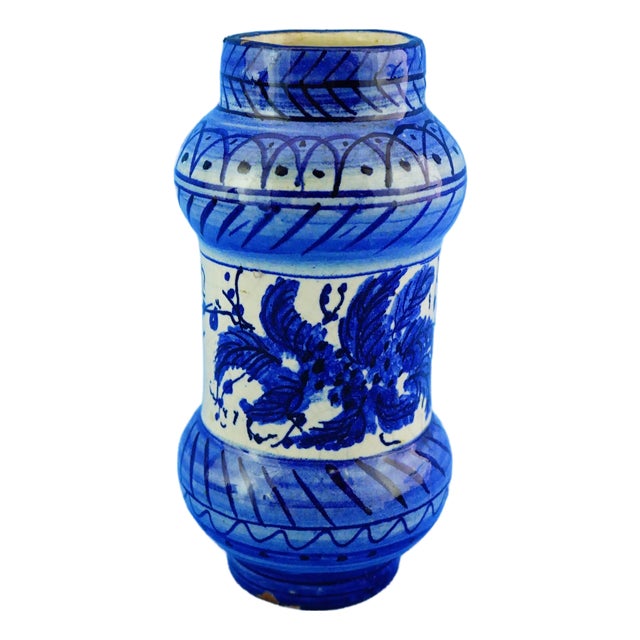
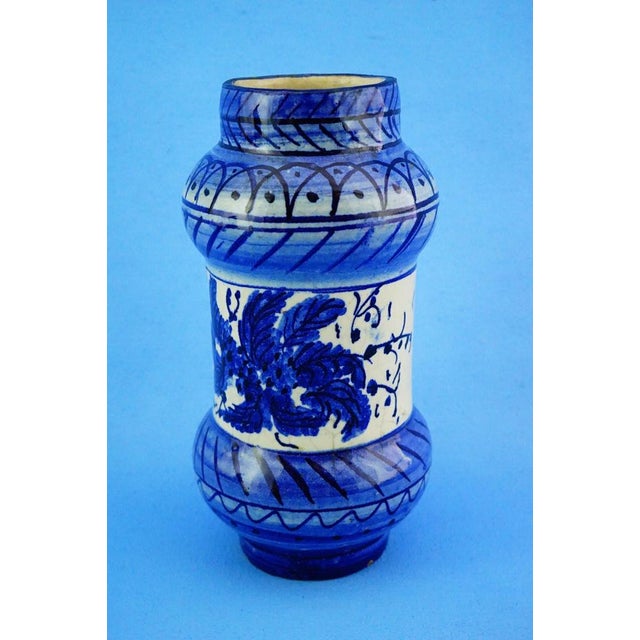
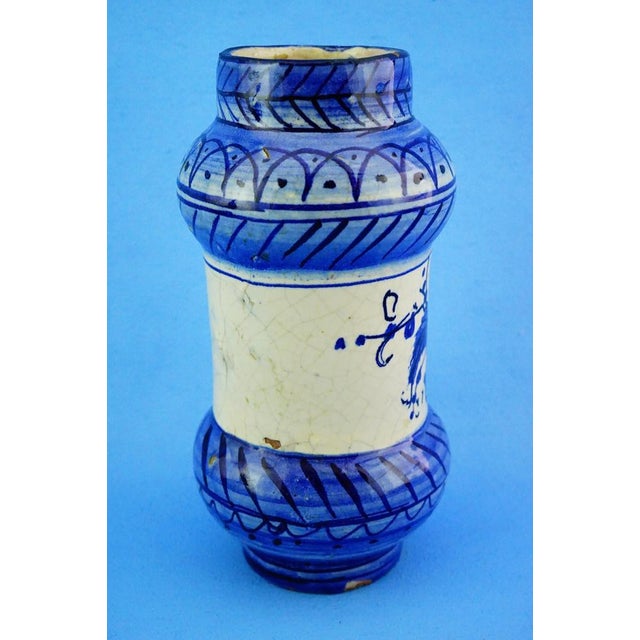
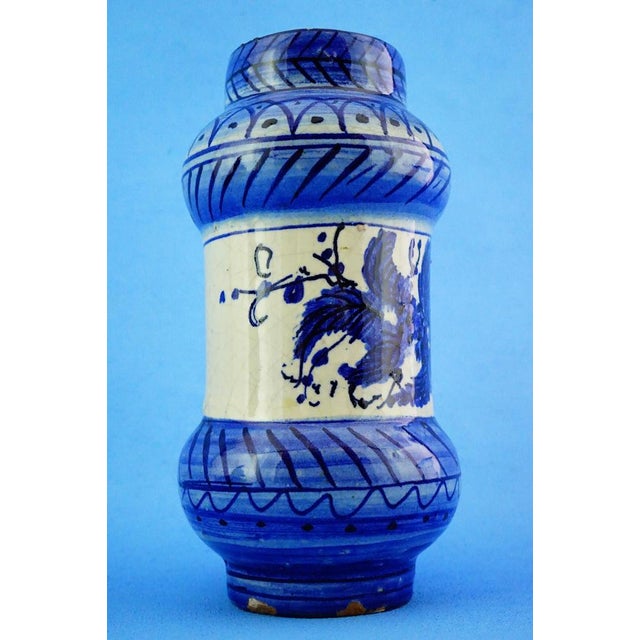
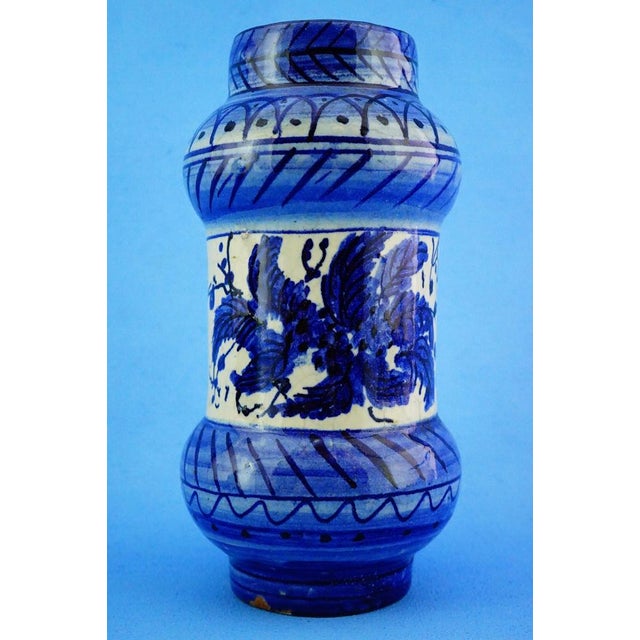
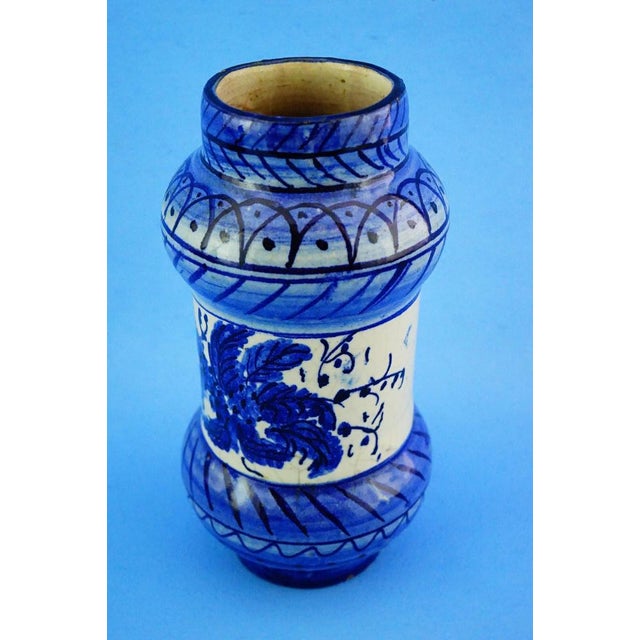
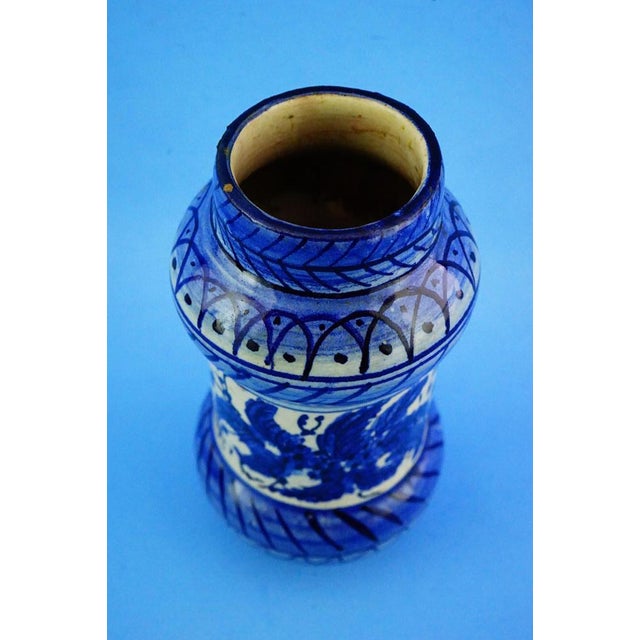
a fine albarello, a majolica apothecary jar with …
Read more
Measurements:
height: 16.5 cm; diameter: 8.5 cm; weight: 0.463 kg
item :
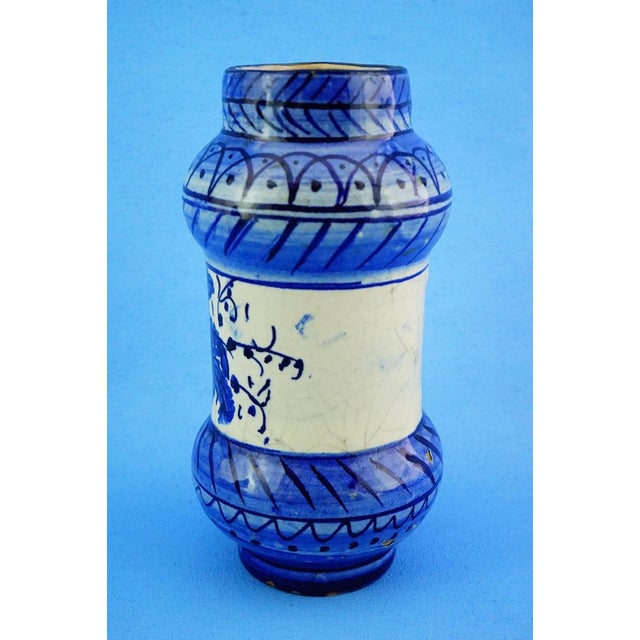
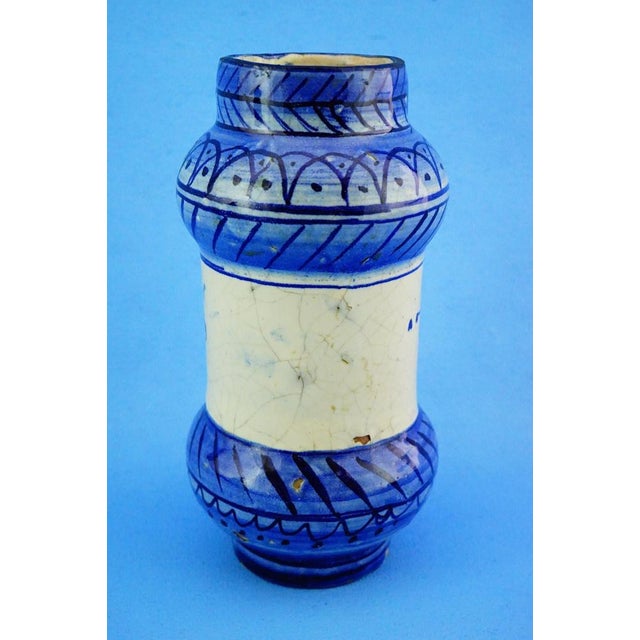
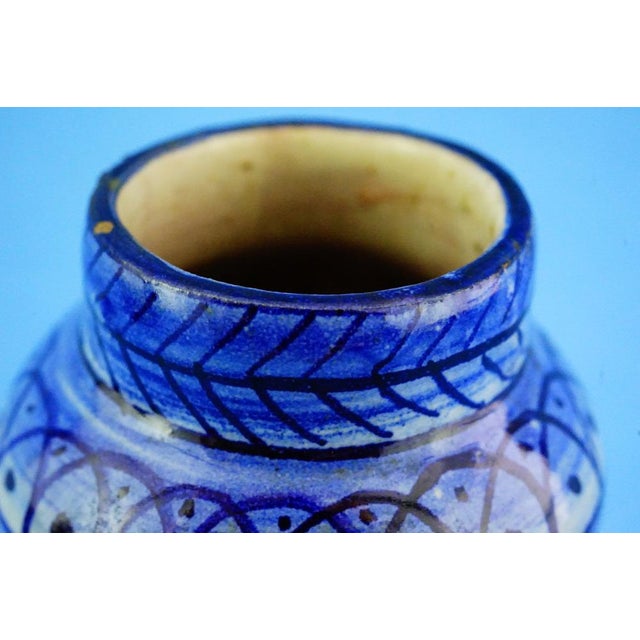
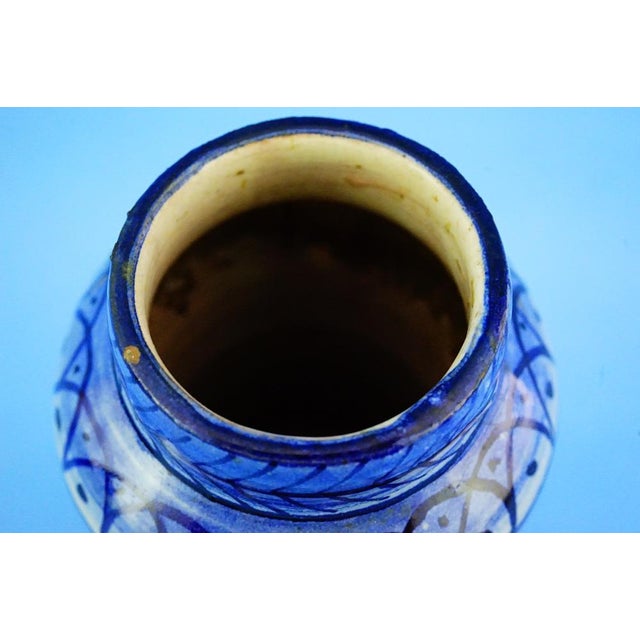
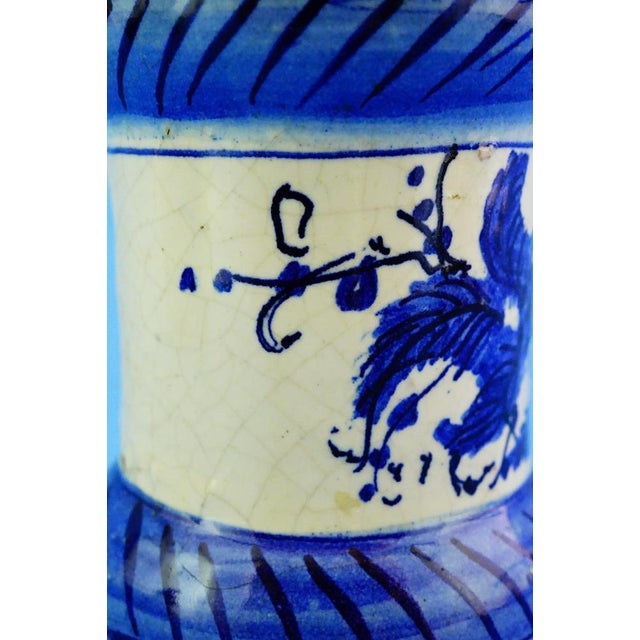
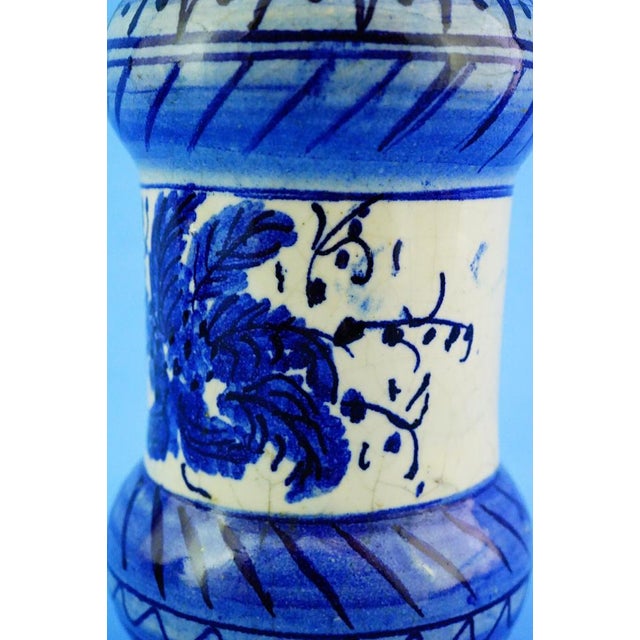
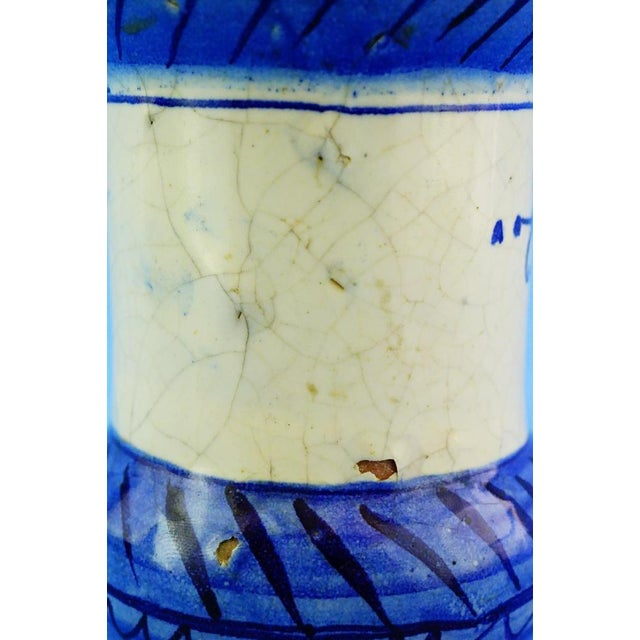
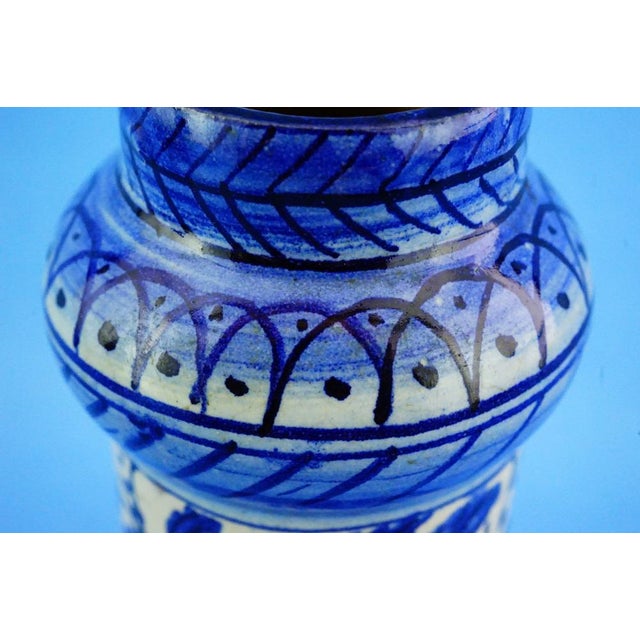
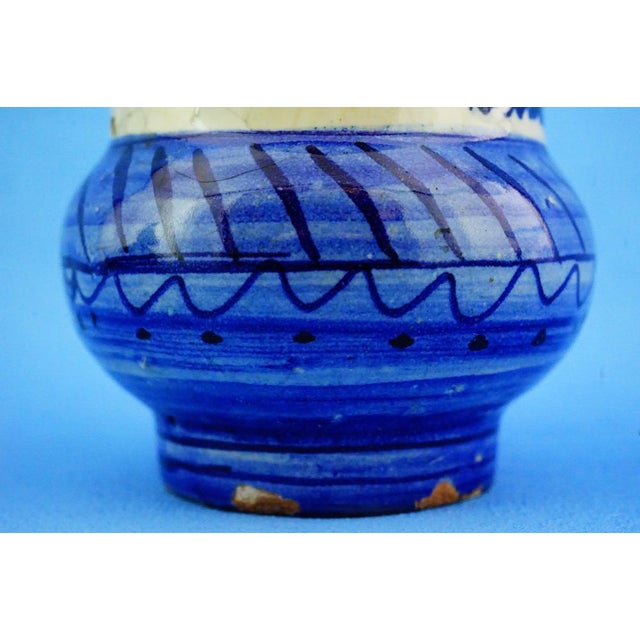
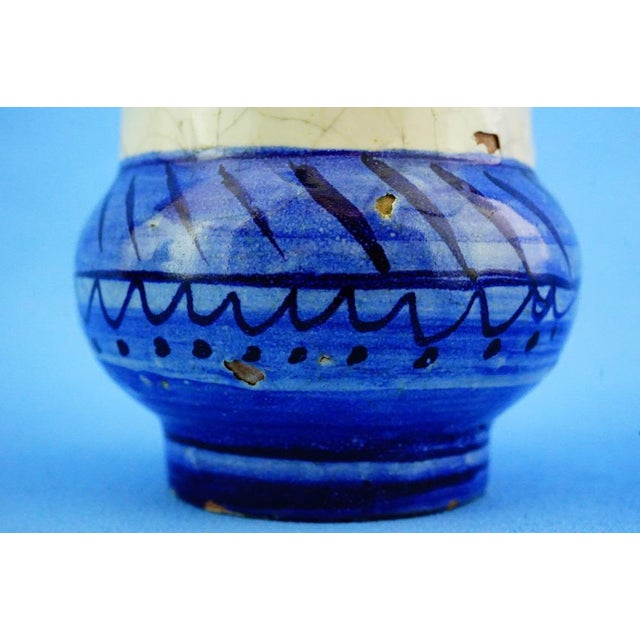
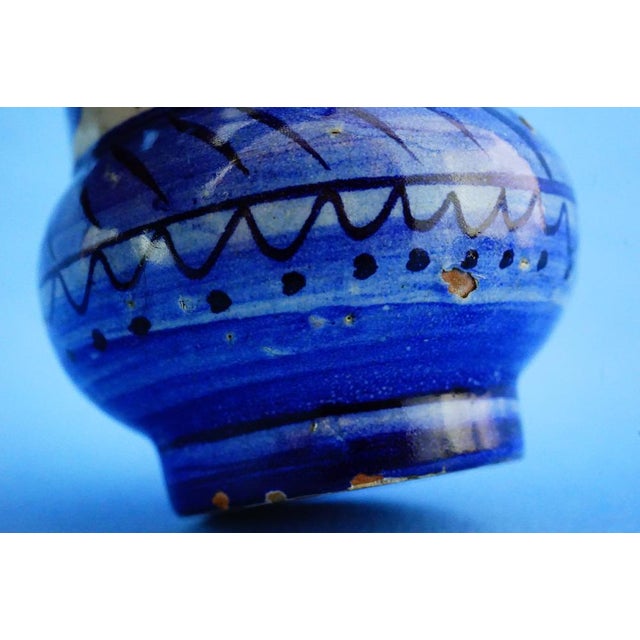
a fine albarello, a majolica apothecary jar with a spool, is an authentic work of art that can be definitively dated between the late 17th and early 18th centuries (the high baroque period). The vase features a slender shape, tapered at the center, crowned by elegant, mirrored curves on the shoulder and foot, originally designed to facilitate picking up from the historic shelves of apothecaries. Its attribution to ligurian manufacture in the savona or albisola area is fully confirmed by unique and historically significant construction details. Among these, the "biscuit" technique stands out, visible in the worn areas, revealing the ancient clay, rich in minerals and rigorously hand-crafted on a lathe. This ceramic mixture, typical of the faenza and ligurian traditions of the time, features a characteristic coarse grain size that, rejecting the geometric perfection of modern fakes, highlights the authentic mineral nature of the high-fired piece. The base and base of the object are completely unglazed and have an irregular finish, demonstrating the absence of industrial processing and displaying a dark patina that has settled over the centuries. Stylistically, the object is decorated with the famous "naturalistic calligraphic" or "tapestry" motif, inspired by ming dynasty oriental porcelains. It features large, curled leaves and plant stems painted with a vibrant cobalt blue brush over a slightly bluish ground glaze, historically known as "berettino." beneath the base, a workshop monogram or period initials inscribed in black manganese oxide, once used by master potters to identify their creations, can be seen. The lower trace of the monogram, partially worn away by centuries of rubbing, evokes the baroque italicized letter 'a' or the stylization of a lantern, a historic distinguishing mark linked to the craftsmen and renowned dynasties of potters active in the savona district. The state of preservation is excellent for a piece from this period, enhanced by a fascinating, widespread "crazing": a dense surface web caused by the natural, centuries-old temperature variations that attest to the piece's historicity. Rare "tapping points" are also evident on the glass surface: small, entirely natural, microscopic holes created by the escape of air bubbles during firing in the wood-fired kilns of the time, a further and unmistakable seal of 18th-century authenticity. Finally, the extremely wrinkled back of the base, worn by centuries of rubbing against the stone or wooden shelves of ancient apothecaries, and the small chips on the base of the albarello, revealing a reddish clay (known in jargon as "biscuit"), typical of the historic local clay quarries, complete the character and authenticity of this splendid ceramic masterpiece.
information on the artist and/or manufacturer:
the ceramics industry of savona and nearby albisola boasts ancient origins, consolidating its international fame starting in the 16th century thanks to the development of tin majolica techniques. Between 1600 and 1700, the ancient ligurian kilns, led by historic dynasties of master potters such as the chiodo, grosso, conrade, and salomone families, became the undisputed leaders in europe in the production of pharmaceutical supplies and noble tableware. The global success of these workshops is due to the introduction of the blue "berettino" glaze and an exceptional stylistic evolution that blended the lines of italian baroque with the exotic and naturalistic taste of the far east. Ligurian ceramic masters achieved such extraordinary artistic results that the kings of france invited artisans from savona to establish important ceramic centers beyond the alps, such as the famous nevers factory. The pharmaceutical jars produced in this district, renowned for their durable materials and elegant cobalt blue decorations, adorned the apothecaries of the most prestigious convents, hospitals, and noble palaces of the time. Today, works of this extraordinary ligurian tradition are exhibited in the world's leading decorative arts museums, including the victoria and albert museum in london and the international ceramics museum in faenza, remaining an indispensable reference point for lovers of fine antique ceramics. This piece is attributed to the mentioned designer/maker. It has no attribution mark and no
official proof of authenticity,
however it is well documented in design history. I take full responsibility for any authenticity
issues arising from misattribution
See less
- Dimensions
- 3.15ʺW × 3.15ʺD × 6.3ʺH
- Styles
- Baroque
- Period
- 17th Century
- Country of Origin
- Italy
- Item Type
- Vintage, Antique or Pre-owned
- Materials
- Ceramic
- Condition
- Good Condition, Original Condition Unaltered, Some Imperfections
- Color
- Blue
Returns & Cancellations
Return Policy - All sales are final 48 hours after delivery, unless otherwise specified in the description of the product.
Cancellation Policy - Prior to shipping or local pickup, buyers may cancel an order for up to 48 hours, unless otherwise specified.
Related Collections
- Bottles and Jars and Jugs in Lexington, KY
- Khaki Bottles and Jars and Jugs
- Port 68 Bottles and Jars and Jugs
- Roger Capron Bottles and Jars and Jugs
- Acrylic Bottles and Jars and Jugs
- Ralph Lauren Bottles and Jars and Jugs
- Gold-Plate Bottles and Jars and Jugs
- Medieval Bottles and Jars and Jugs
- Cherry Wood Bottles and Jars and Jugs
- Borosilicate Glass Bottles and Jars and Jugs
- Crocks
- Wicker Bottles and Jars and Jugs
- Apothecary Jars
- Cookie Jars
- Japanese Bottles and Jars and Jugs
- 1800s Perfume Bottles
- Candy Jars
- Antique Water Jugs
- Murano Glass Bottles and Jars and Jugs
- 1950s Perfume Bottles
- Apothecary Bottles
- Deruta Bottles and Jars and Jugs
- Portieux Vallerysthal Bottles and Jars and Jugs
- Lead Bottles and Jars and Jugs
- Mottahedeh Bottles and Jars and Jugs