

Details
Description
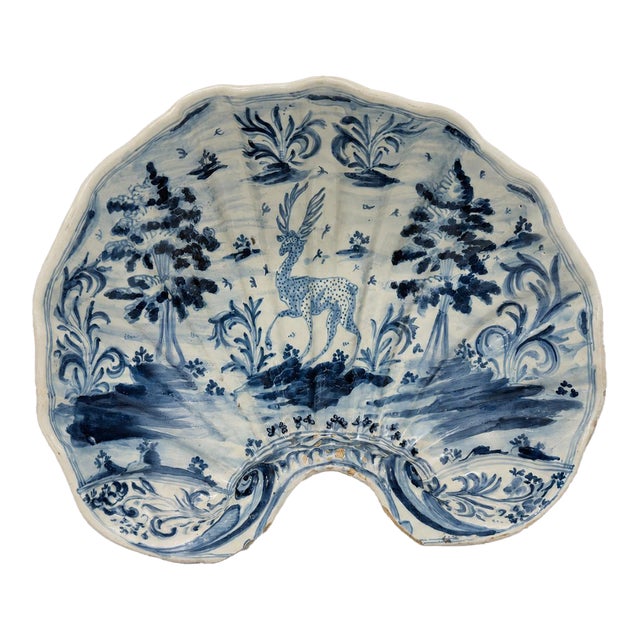
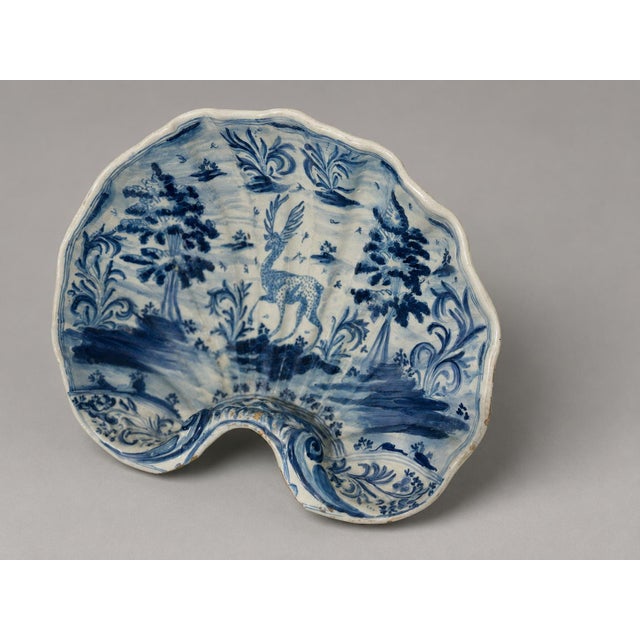
Spanish Blue-and-White Tin-Glazed Earthenware Shell-Form Basin, Attributed to Puente del Arzobispo, Toledo, within the Talavera–Puente Ceramic Tradition, circa 1790–1830
An …
Read more
Spanish Blue-and-White Tin-Glazed Earthenware Shell-Form Basin, Attributed to Puente del Arzobispo, Toledo, within the Talavera–Puente Ceramic Tradition, circa 1790–1830
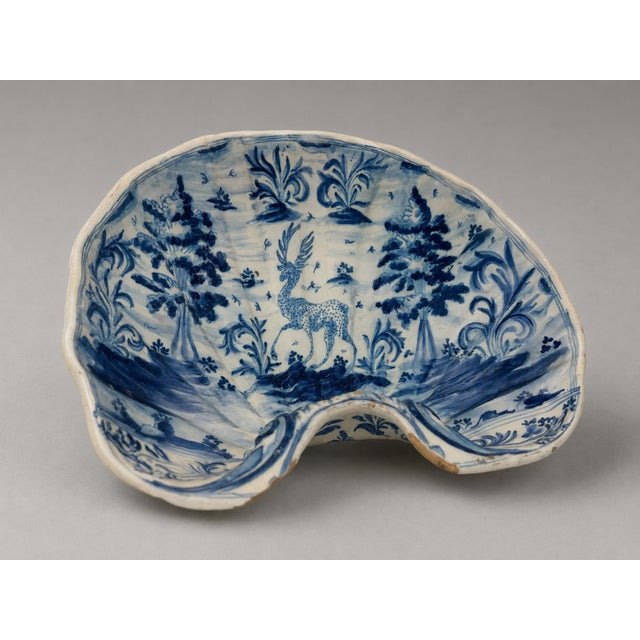
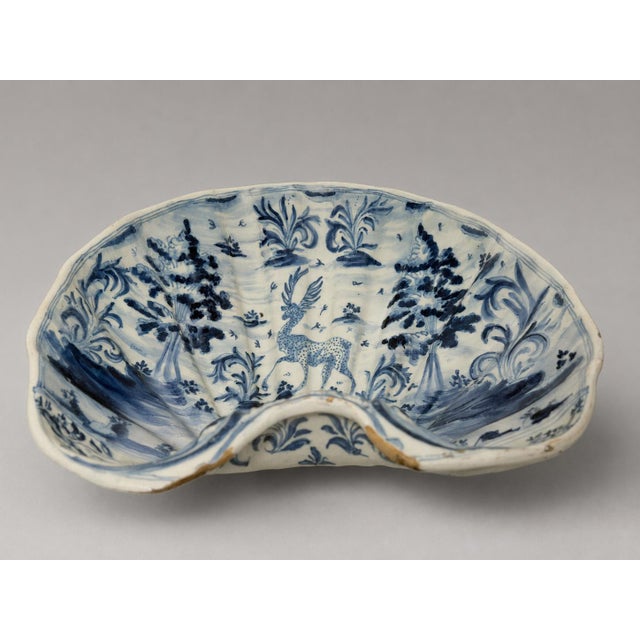
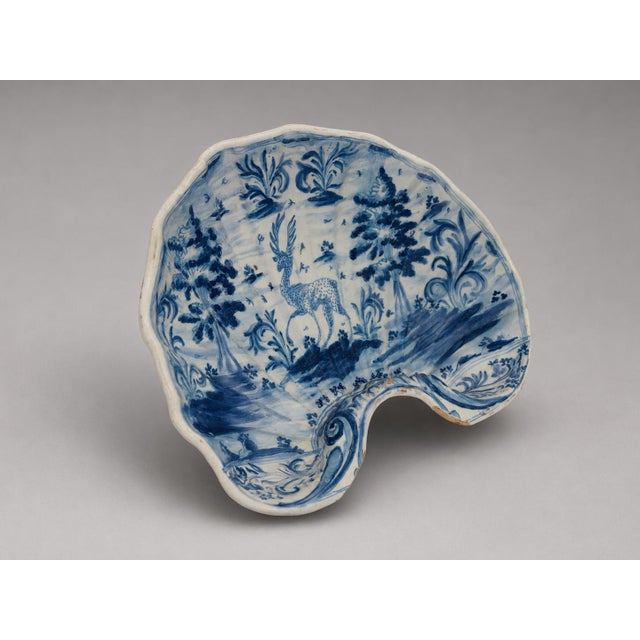
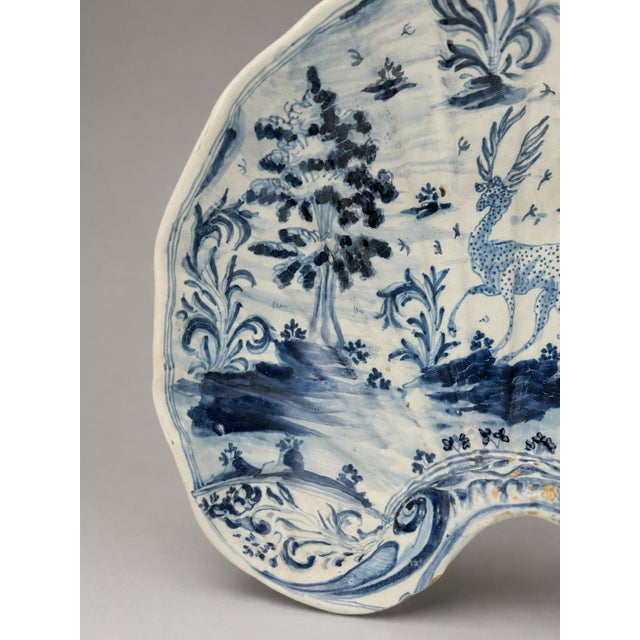
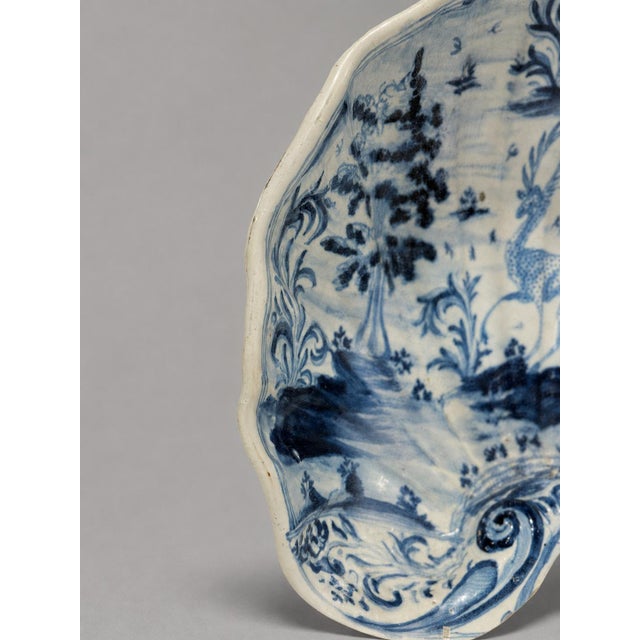
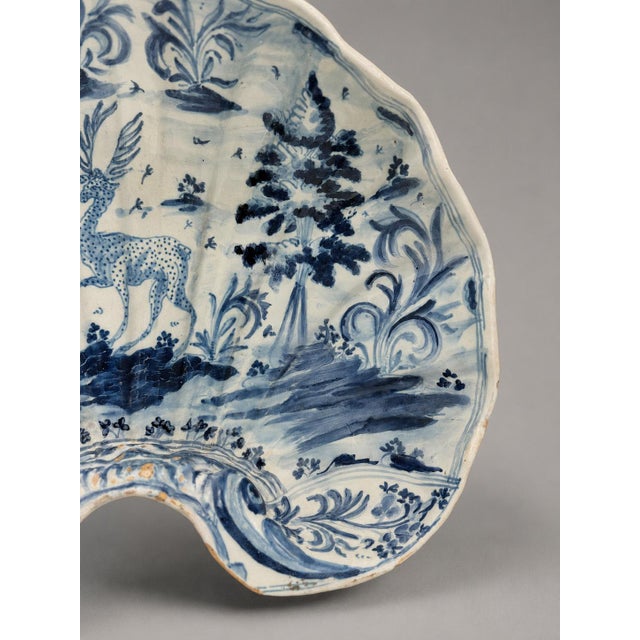
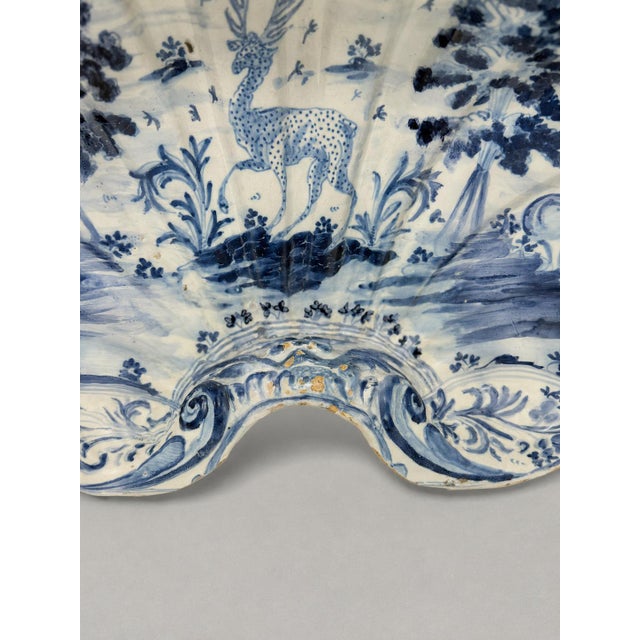
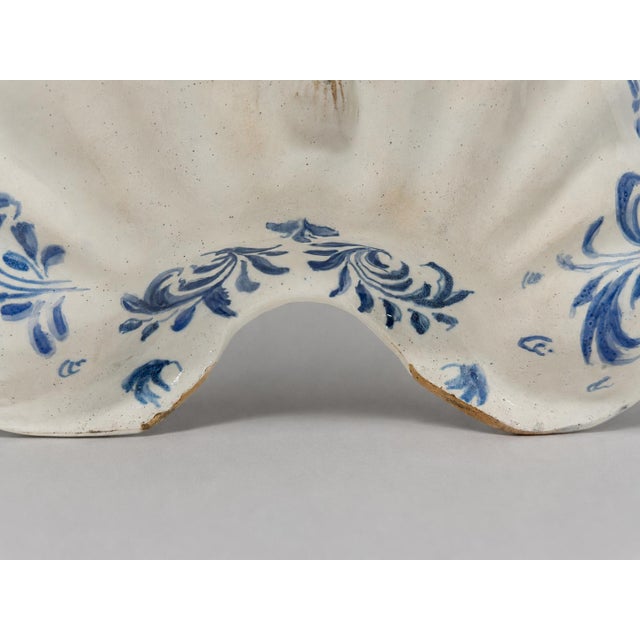
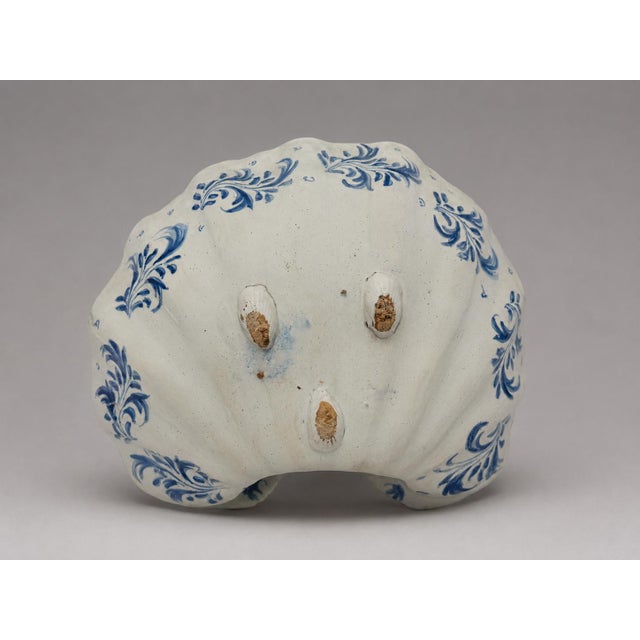
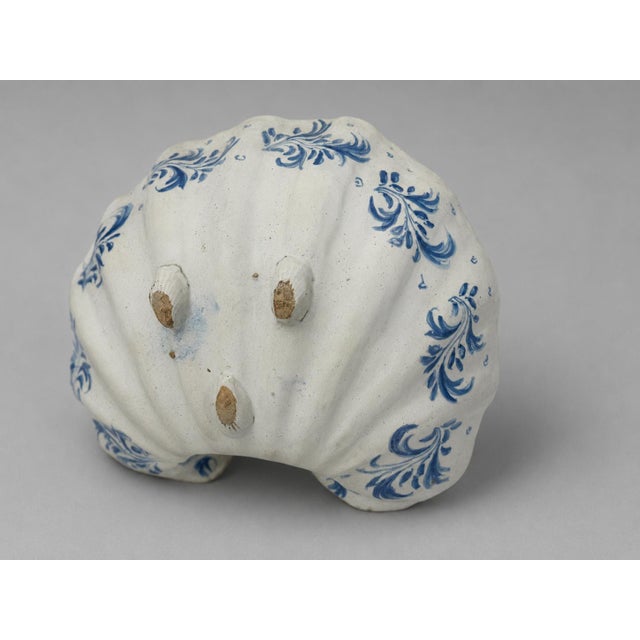
An unusually sculptural Spanish basin, fashioned in tin-glazed earthenware and painted in a restrained cobalt-blue palette. The broad shell-shaped body is articulated with radiating flutes that extend outward from a deep semicircular neck recess, combining the practical requirements of the barber’s trade with the ornamental character of a domestic ceramic object. Three applied pad feet elevate and stabilize the basin, while the modeled contours and rhythmic fluting give the vessel an architectural presence beyond its utilitarian purpose.
The principal decorative reserve centers upon a spotted stag or fanciful antlered animal standing within a stylized wooded landscape. Rendered with lively, economical brushwork, the creature is framed by abbreviated vegetation and freely painted terrain characteristic of provincial Spanish ceramic decoration. The reverse is enriched with additional cobalt foliate sprays, allowing the basin to remain visually resolved when viewed from multiple directions. The contrast between the opaque white tin glaze and saturated blue pigment connects the work to the enduring blue-and-white tradition cultivated throughout the Toledo region.
The basin is attributed to Puente del Arzobispo, an important center of Spanish earthenware production closely associated with nearby Talavera de la Reina. Although the two centers shared materials, techniques, forms, and decorative vocabularies, the rustic expressiveness of the painted animal, the spontaneous handling of the landscape, and the functional shell-form construction are particularly compatible with documented Puente production of the late eighteenth and early nineteenth centuries. In the absence of a workshop mark, the most responsible classification places the object within the broader Talavera–Puente ceramic tradition while favoring Puente del Arzobispo as its probable place of manufacture.
Measurements: 14.125 in. wide × 12 in. deep × 4.25 in. high.
See less
- Dimensions
- 14.12ʺW × 12ʺD × 4.25ʺH
- Styles
- Spanish
- Period
- 18th Century
- Country of Origin
- Spain
- Item Type
- Vintage, Antique or Pre-owned
- Materials
- Earthenware
- Condition
- Good Condition, Original Condition Unaltered, Some Imperfections
- Color
- Blue
- Condition Notes
- In overall fair-good condition for age. No obvious signs of restoration or breaks to surface, some edge losses which are … moreIn overall fair-good condition for age. No obvious signs of restoration or breaks to surface, some edge losses which are very common with this type of earthenware. less
Questions about the item?
Returns & Cancellations
Return Policy - All sales are final 48 hours after delivery, unless otherwise specified in the description of the product.
Cancellation Policy - Prior to shipping or local pickup, buyers may cancel an order for up to 48 hours, unless otherwise specified.
Related Collections
- Straw Sculpture
- Louis XIV Sculpture
- Roman Bronze Works Sculpture
- Fernando Botero Sculpture
- Constantin Brancusi Sculpture
- Georgian Sculpture
- Bakelite Sculpture
- Medium-Density Fibreboard Sculpture
- Gold-Plate Sculpture
- Antique Iron Finish Sculpture
- Sculpture in Columbus
- Polished Brass Finish Sculpture
- Recycled/Repurposed Sculpture
- Gourd Sculpture
- Geode Sculpture
- Photography Sculpture
- Sculpture in Panama City, FL
- René Lalique Sculpture
- Albert Ernest Carrier-Belleuse Sculpture
- Barovier and Toso Sculpture
- Worlds Away Sculpture
- Far Pavilions Sculpture
- Maison Jansen Sculpture
- Flavio Poli Sculpture
- Austin Productions Sculpture