


Details
Description
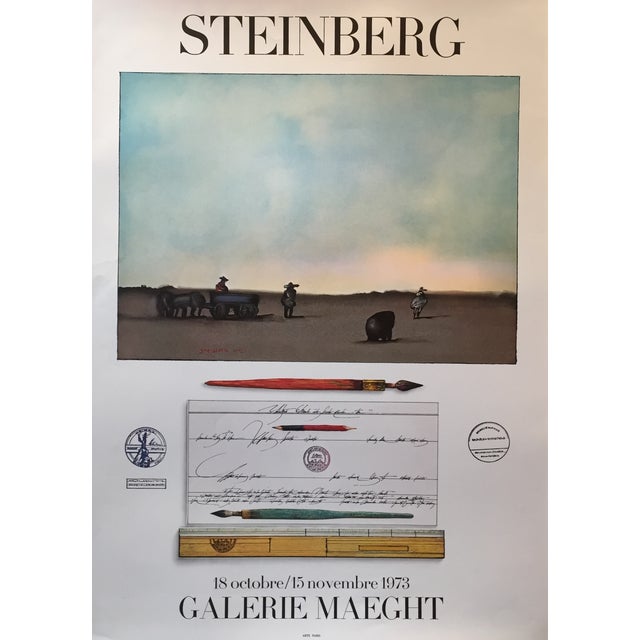
Saul Steinberg (1914-1999) was one of America’s most beloved artists, renowned for the covers and drawings that appeared in The …
Read more
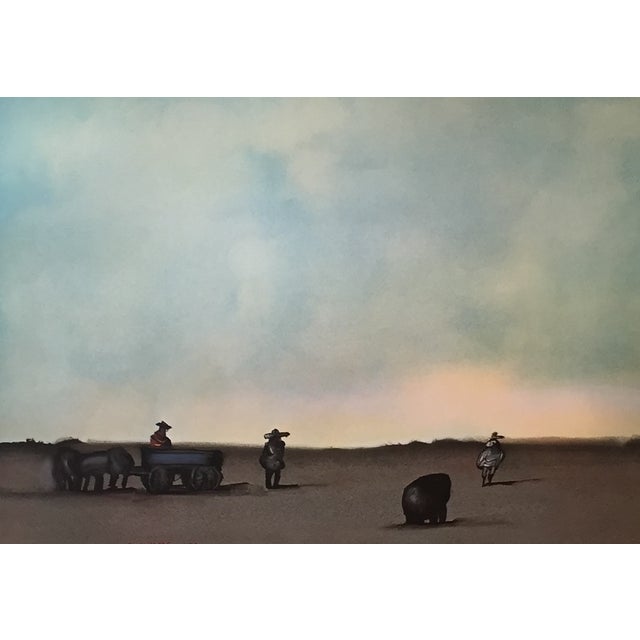
Saul Steinberg (1914-1999) was one of America’s most beloved artists, renowned for the covers and drawings that appeared in The New Yorker for nearly six decades and for the drawings, paintings, prints, collages, and sculptures exhibited internationally in galleries and museums. Steinberg’s art, equally at home on magazine pages and gallery walls, cannot be confined to a single category or movement. He was a modernist without portfolio, constantly crossing boundaries into uncharted visual territory. In View of the World from 9th Avenue, his famous 1976 New Yorker cover, a map delineates not real space but the mental geography of Manhattanites. In other Steinbergian transitions, fingerprints become mug shots or landscapes; graph or ledger paper doubles as the facade of an office building; words, numbers, and punctuation marks come to life as messengers of doubt, fear, or exuberance; sheet music lines glide into violin strings, record grooves, the grain of a wood table, and the smile of a cat.
Through such shifts of meaning from one passage to the next, Steinberg's line comments on its own transformative nature. In a deceptively simple 1948 drawing, an artist (Steinberg himself) traces a large spiral. But as the spiral moves downward, it metamorphoses into a left foot, then a right foot, then the profile of a body, until finally reaching the hand holding the pen that draws the line.
This emblem of a draftsman in the act of generating himself and his line epitomizes a fundamental principle of Saul Steinberg’s work: his art is about the ways artists make art. Steinberg did not represent what he saw; rather, he depicted people, places, and even numbers or words in styles borrowed from other art, high and low, past and present. In his pictorial imagination, the very artifice of style, of images already processed through art, became the means to explore social and political systems, human foibles, geography, architecture, language and, of course, art itself.
Poster was printed by Maeght, one of the foremost Parisian printers of the time. Piece is in excellent condition, unlined, and recently purchased from a private collection in Europe.
See less
- Dimensions
- 23.25ʺW × 0.1ʺD × 31.5ʺH
- Styles
- French
- Illustration
- Modern
- Frame Type
- Unframed
- Art Subjects
- Landscape
- Text
- Still Life
- Period
- 1970s
- Country of Origin
- France
- Item Type
- Vintage, Antique or Pre-owned
- Materials
- Paper
- Condition
- Good Condition, Original Condition Unaltered, Some Imperfections
- Color
- Blue
- Condition Notes
- Excellent - Minor wear consistent with age and history Excellent - Minor wear consistent with age and history less
Questions about the item?
Returns & Cancellations
Return Policy - All sales are final 48 hours after delivery, unless otherwise specified in the description of the product.
Cancellation Policy - Prior to shipping or local pickup, buyers may cancel an order for up to 48 hours, unless otherwise specified.
Related Collections
- Art Deco Posters
- Posters in Los Angeles
- French Posters
- Mark Rothko Posters
- Mid-Century Modern Posters
- Pablo Picasso Posters
- Marc Chagall Posters
- Screen Print Posters
- Peter Max Posters
- Polish Posters
- Keith Haring Posters
- Milton Avery Posters
- Japanese Posters
- Museum Posters
- Lee Krasner Posters
- Danish Modern Posters
- Framed Posters
- Beaux-Arts Posters