





Details
Description
Woodland Wonders: A Fine Pair of Ralph Wood-Type Stag and Hind Figures
Late 18th Century
This charming pair of late …
Read more
Woodland Wonders: A Fine Pair of Ralph Wood-Type Stag and Hind Figures
Late 18th Century
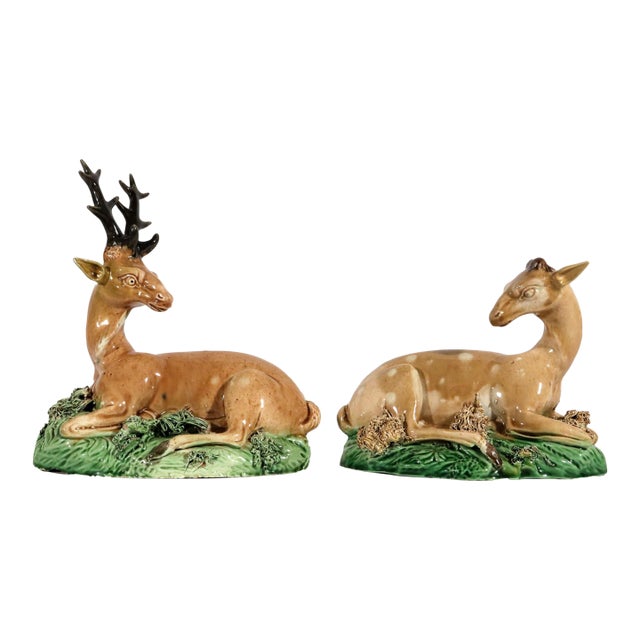
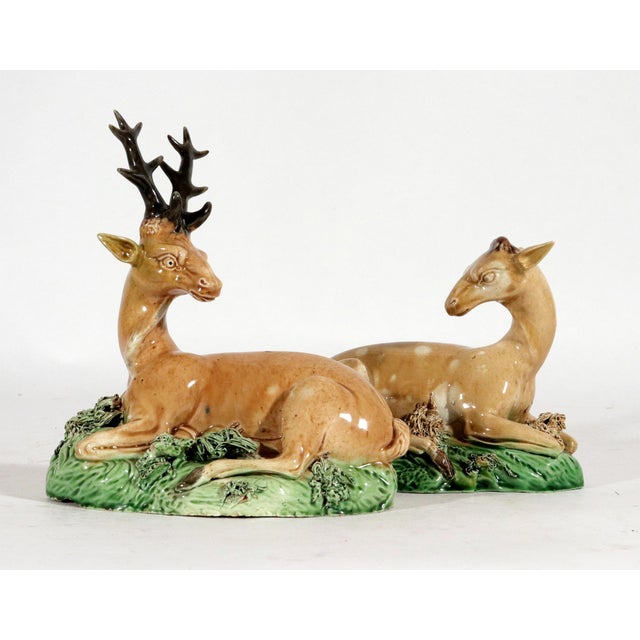
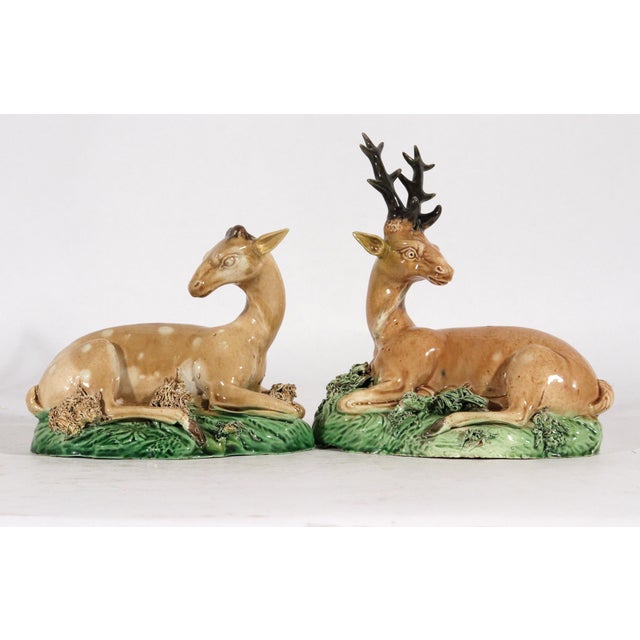
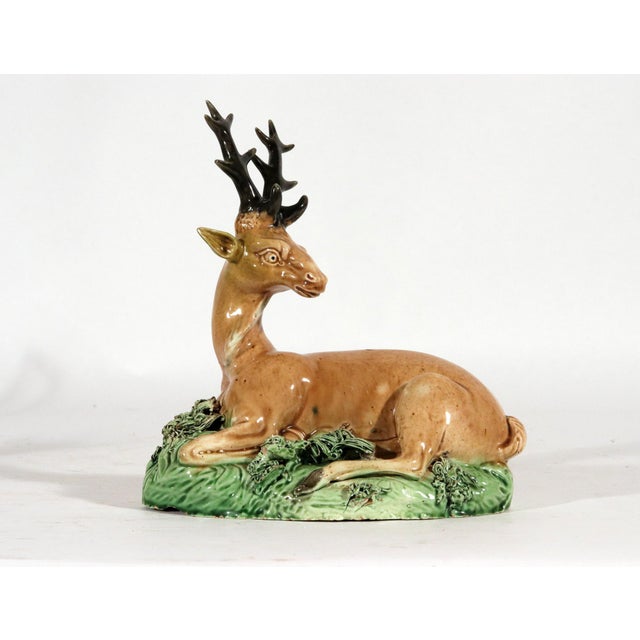
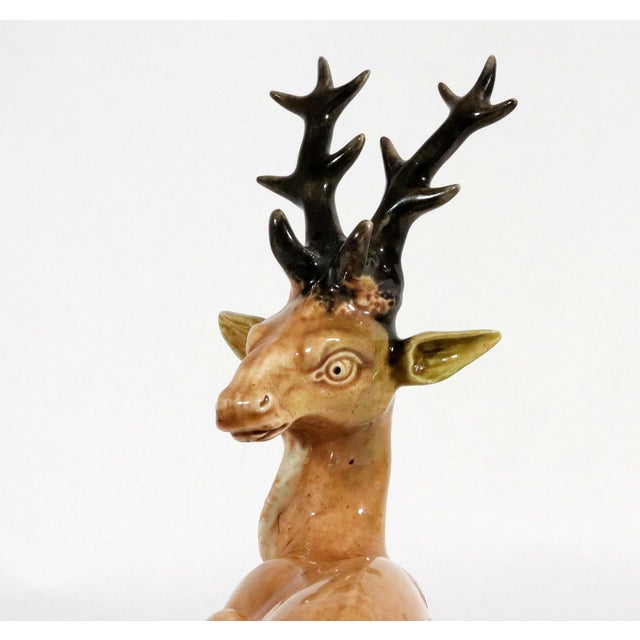
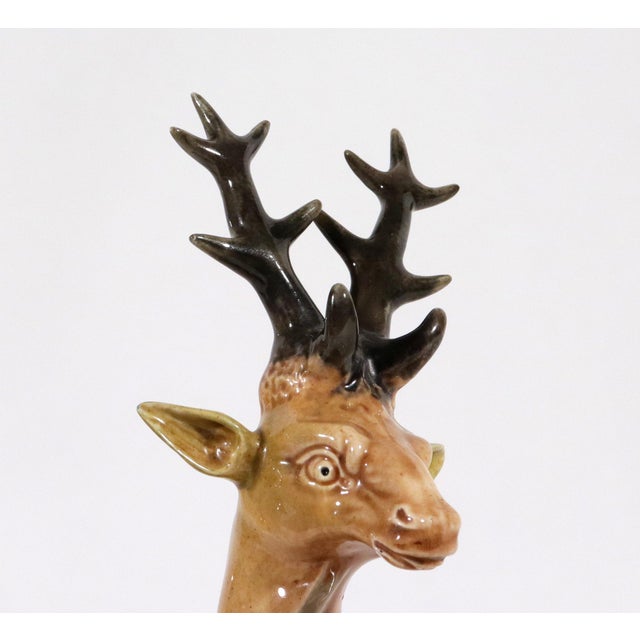
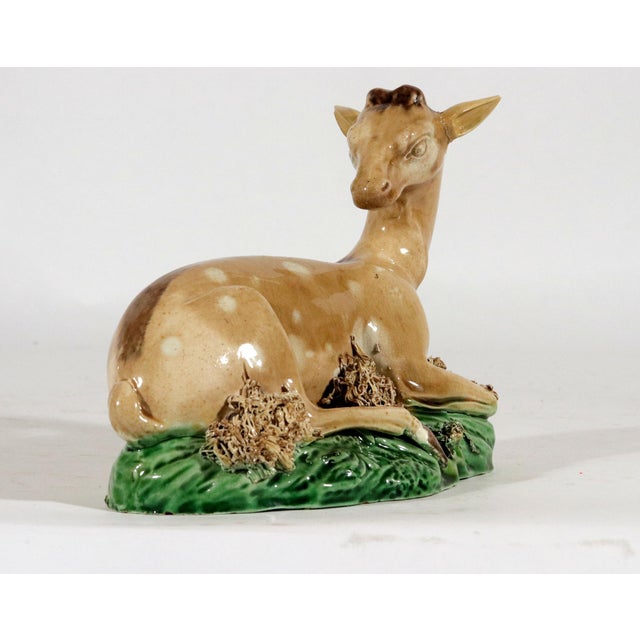
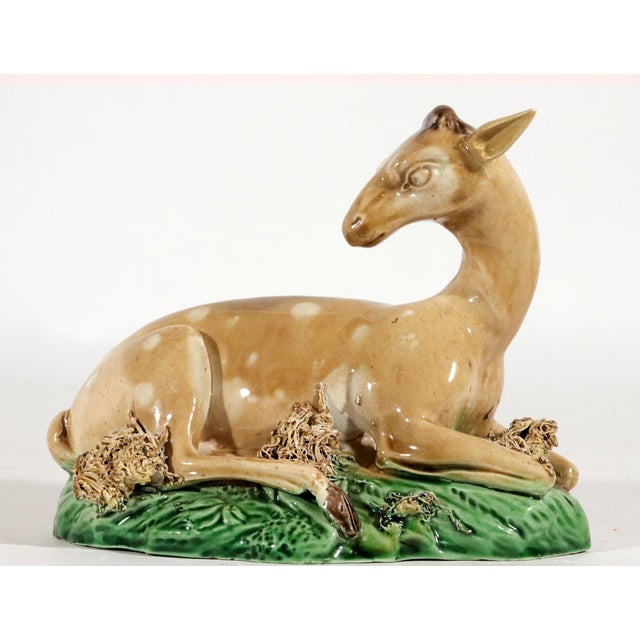
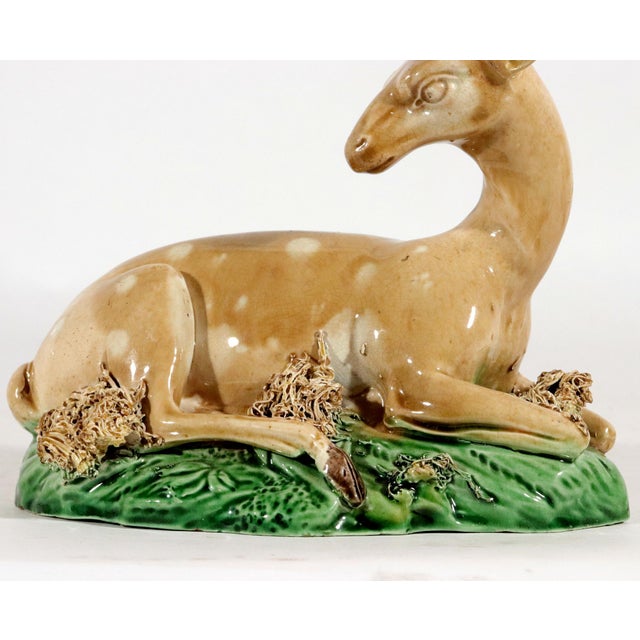
This charming pair of late 18th-century pearlware pottery figures represents a classic example of the Staffordshire animal models that became highly fashionable during the reign of George III. The set features a stag and a doe, both depicted in recumbent, naturalistic poses atop verdant, rocky mounds after a model by John Voyez. The bases are meticulously decorated with applied shredded clay to simulate the texture of moss or undergrowth, a technique that adds a tactile dimension to the artisanal quality of the pieces. Both figures are finished with the soft, translucent colored glazes characteristic of the Ralph Wood family, with warm ochre and manganese tones highlighting the form of the animals against the vibrant green of the grass.
The stag is particularly striking with his dark, multi-pointed antlers and alert expression, while the doe is modeled with a gentle, turned head that suggests a moment of quiet repose in the English countryside. The use of lead glazes in this manner allows the earthenware body to shine through, creating a luminous and sophisticated aesthetic that was a significant advancement in pottery decoration during this period. These figures were likely intended for display on a mantlepiece or in a dining room cabinet, bringing a touch of the picturesque landscape into the Georgian home.
Dimensions
Stag: 6 1/2 inches (16.51 cm) high, 6 1/4 inches (15.88 cm) wide, 3 inches (7.62 cm) deep
Hind: 5 1/4 inches (13.34 cm) high, 6 1/10 inches (15.49 cm) wide, 3 inches (7.62 cm) deep
Condition Report
The figures are in good antique condition, with the glazes remaining notably clear and vibrant. There is a pinhead sized frit to the back of the each ear of the hind.
Provenance
Maryland Private Collection
Reference:
See pair of very similar form at the MFA (Museum of Fine Arts, Houston), The Bayou Bend Collection, gift of Miss Ima Hogg, Object number B.56.21.1,.2 and another pair in The Met, Object Number: 44.39.60.
A similar pair can be found in the Metropolitan Museum of Art, from the Marion E. and Leonard A. Cohn Collection, Bequest of Marion E. Cohn, 1966, Object Number: 66.64.24 (https://www.metmuseum.org/art/collection/search/204663).
Literature
F. Partridge, Ralph Wood Pottery: Mr. Frank Partridge's Collection, London, 1923, pp. 67 and 73, nos. 41 and 195.
D. Fennimore et al., The David and Peggy Rockefeller Collection: Decorative Arts, New York, 1992, vol. IV, pp. 109-110, no. 115.
Historical Context
The Wood family of Burslem, led by Ralph Wood Senior and his son Ralph Wood Junior, were the preeminent modelers and potters of 18th-century Staffordshire. Their work marked a departure from the earlier salt-glaze and slipware traditions, moving toward a more refined creamware and pearlware body.
The technique of applying translucent glazes in localized areas—rather than dipping the entire piece in a single color—was a hallmark of their innovation, allowing for greater detail and a more lifelike appearance. During the period between circa 1775 and 1785, there was a significant cultural shift toward the appreciation of the natural world, influenced by the Romantic movement and the landscape designs of figures like "Capability" Brown.
The intersection of 18th-century European sculpture and Staffordshire ceramic production reveals a complex exchange of design intelligence. The mysterious modeller John Voyez, whose training and aesthetic sensibilities were rooted in Continental traditions, provided a critical link between the sophisticated porcelain models of France and the earthenware production of Ralph Wood.
Voyez’s influence is frequently identified by distinct anatomical characteristics—specifically "thick-lidded eyes, somewhat flattened noses, and a general roundness of contour". His work for Ralph Wood adapted high-art classical subjects and contemporary European models into the localized, lead-glazed earthenware medium, creating a uniquely British interpretation of neoclassical themes.
(Ref: NY1111-purr)
See less
- Dimensions
- 6.25ʺW × 3ʺD × 6.5ʺH
- Styles
- Georgian
- Period
- Late 18th Century
- Country of Origin
- United Kingdom
- Item Type
- Vintage, Antique or Pre-owned
- Materials
- Pottery
- Condition
- Good Condition, Original Condition Unaltered, Some Imperfections
- Color
- Gray
- Condition Notes
- Good condition Good condition less
Questions about the item?
Returns & Cancellations
Return Policy - All sales are final 48 hours after delivery, unless otherwise specified in the description of the product.
Cancellation Policy - Prior to shipping or local pickup, buyers may cancel an order for up to 48 hours, unless otherwise specified.
Related Collections
- Wildwood Models and Figurines
- Kjell Engman Models and Figurines
- Mario Buatta Models and Figurines
- Vienna Secession Models and Figurines
- 22K Gold Models and Figurines
- Deruta Models and Figurines
- Acrylic Paint Models and Figurines
- Bright Pink Models and Figurines
- Villeroy and Boch Models and Figurines
- Jasper Models and Figurines
- Ralph Lauren Models and Figurines
- Tony Duquette Models and Figurines
- Otagiri Company Models and Figurines
- Enesco, Apparence Models and Figurines
- Maison Jansen Models and Figurines
- Ardalt Models and Figurines
- Serpentine Models and Figurines
- Rose Quartz Models and Figurines
- Lava Models and Figurines
- Brass Models and Figurines
- Ceramic Cats
- Bird Figurines
- Dog Figurines
- Staffordshire Dog Figurines
- Antique Model Ships