

Details
Description
There is a Japanese phrase — bakushū, "the autumn of wheat" — that describes those fleeting days in early summer …
Read more
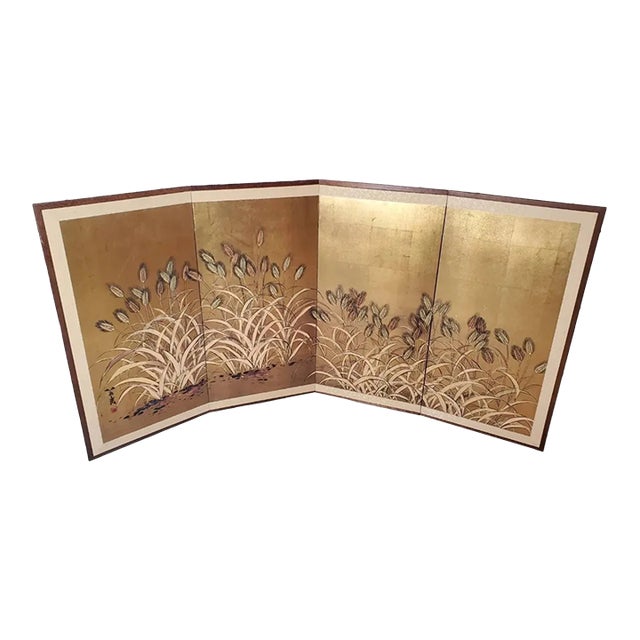
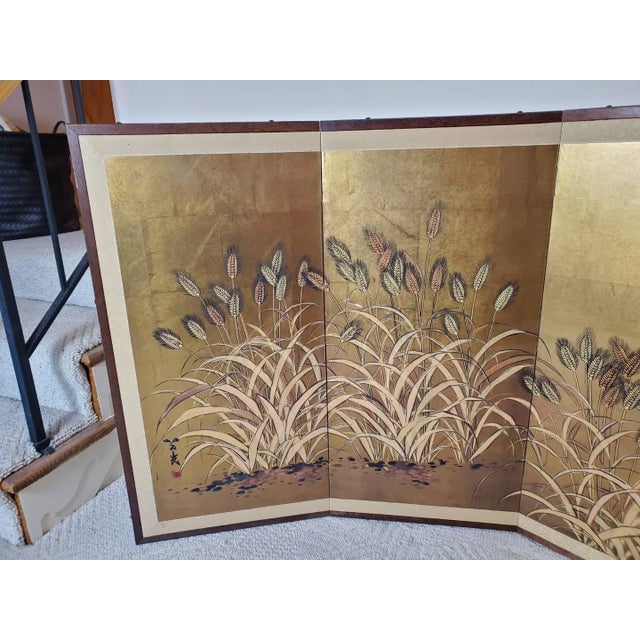
There is a Japanese phrase — bakushū, "the autumn of wheat" — that describes those fleeting days in early summer when golden barley ripens under the last dry skies before the rains arrive. It is a moment suspended between abundance and impermanence, and it is precisely the mood captured in this remarkable mid-century Japanese byobu.
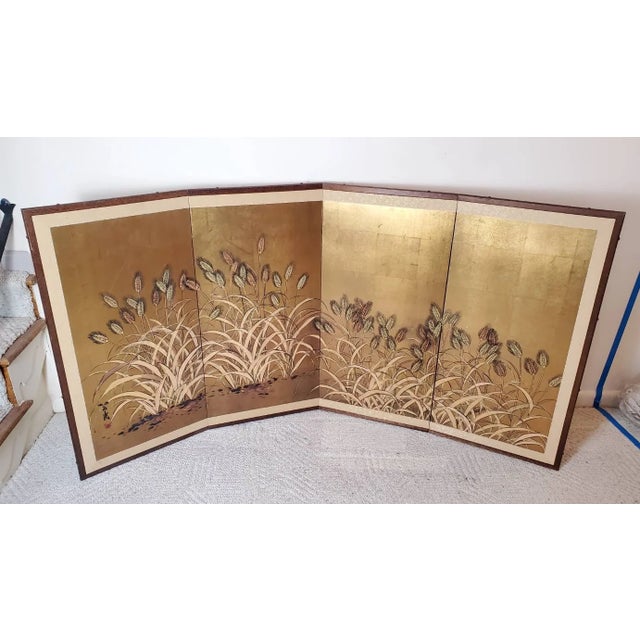
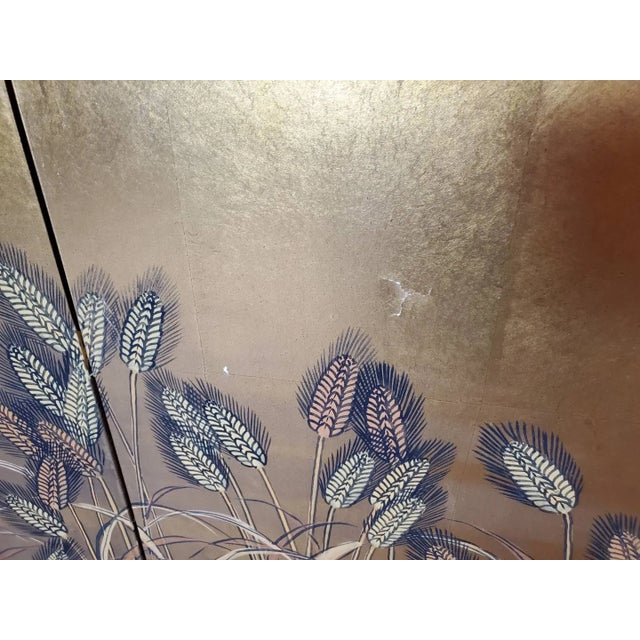
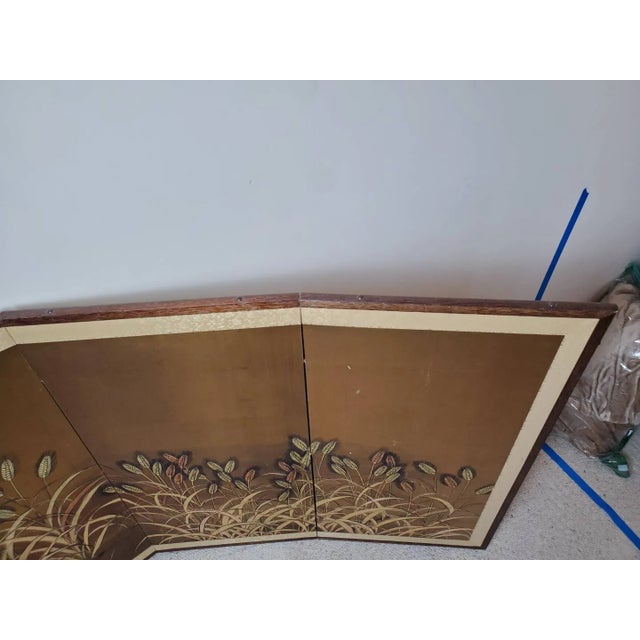
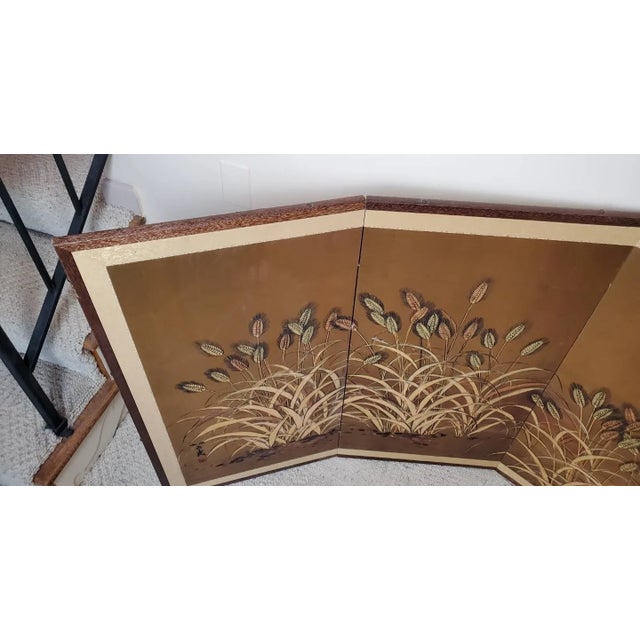
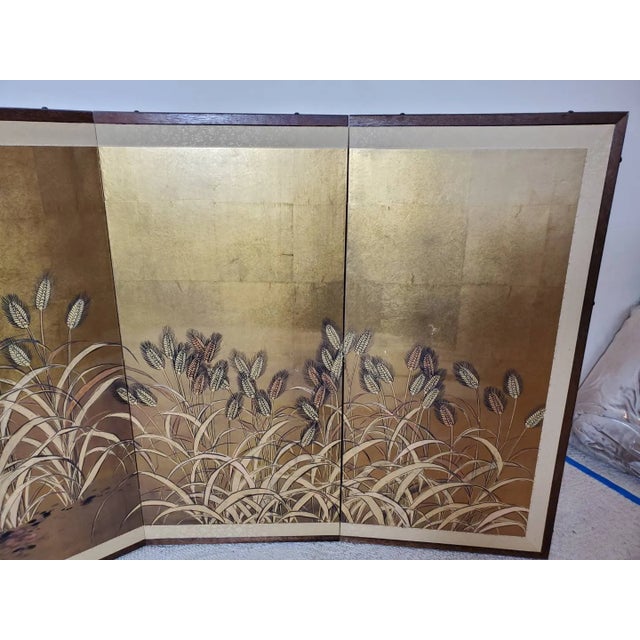
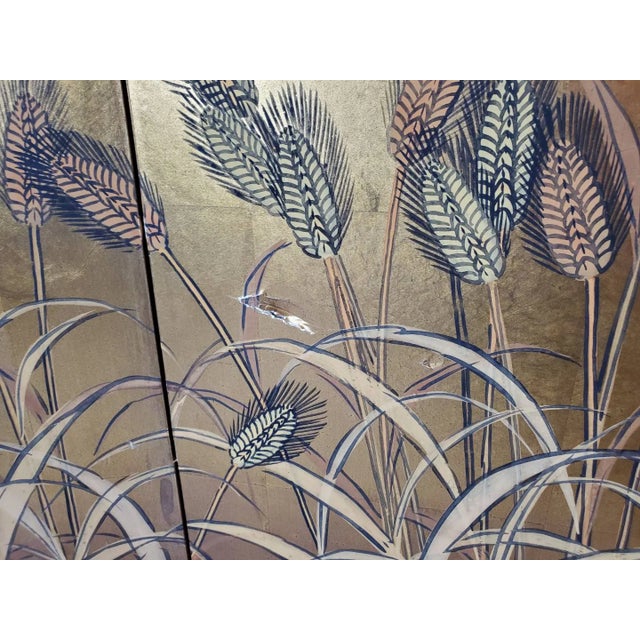
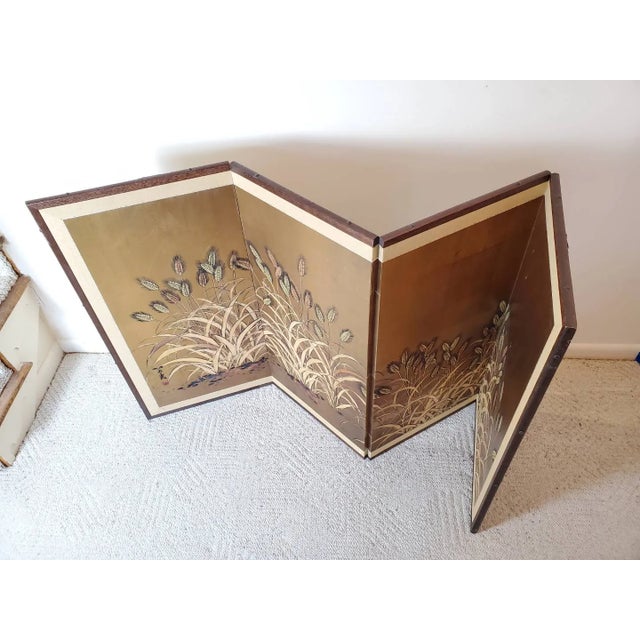
Across four hand-painted panels, heavy-headed stalks of mugi (wheat/barley) bow and sway against a luminous field of hand-applied gold leaf. The composition is unhurried and assured — ink outlines in deep indigo define each kernel and awn with botanical precision, while washes of soft pink, cream, and sage give the grain a lifelike warmth. Slender grasses weave through the lower register, their curving blades creating a rhythmic counterpoint to the upright stalks above. A single wildflower — a quiet accent of rose — punctuates the golden expanse.
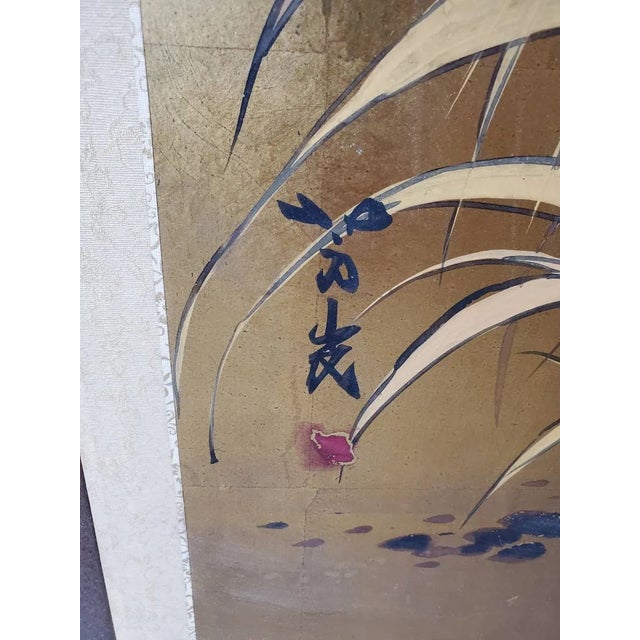
The artist's hand is confident and trained. The screen bears a signature in kanji calligraphy accompanied by a vermillion-red hanko seal, the traditional mark of a practiced Japanese painter. The brushwork follows the Nihonga tradition of painting with natural mineral pigments on gold leaf over layered washi paper — a technique perfected over centuries in the studios of Kyoto and refined during the Showa era.
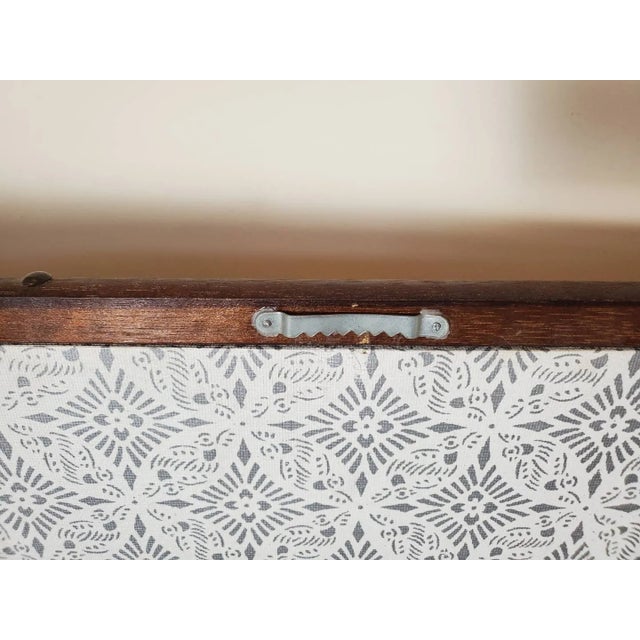
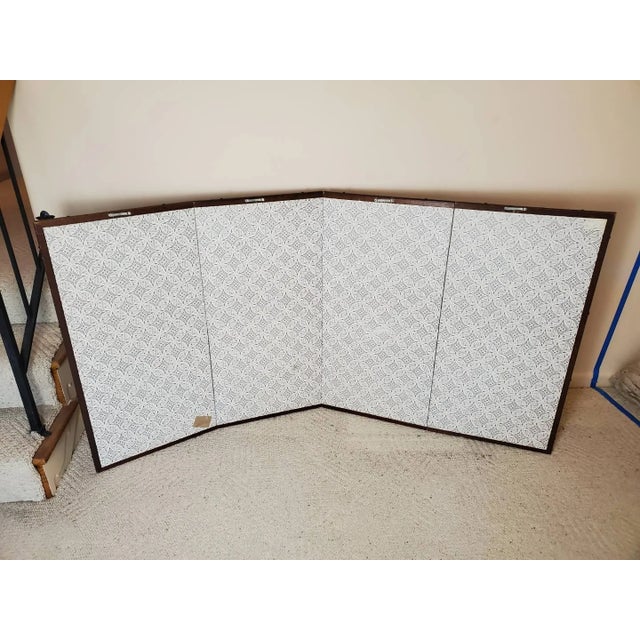
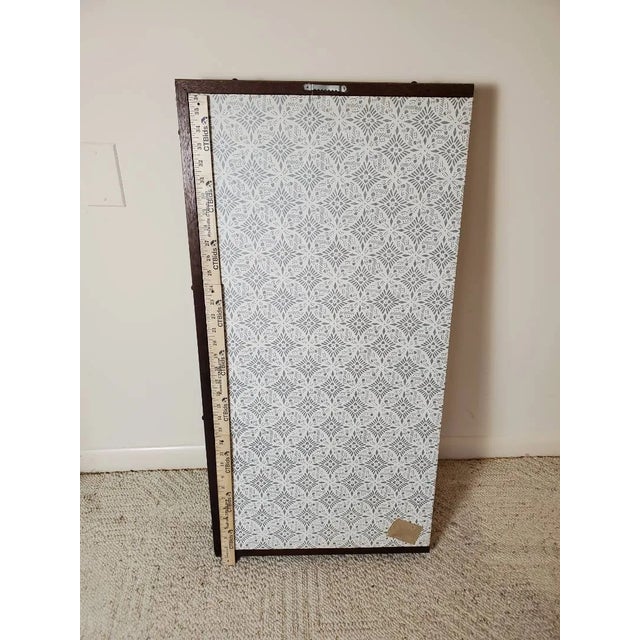
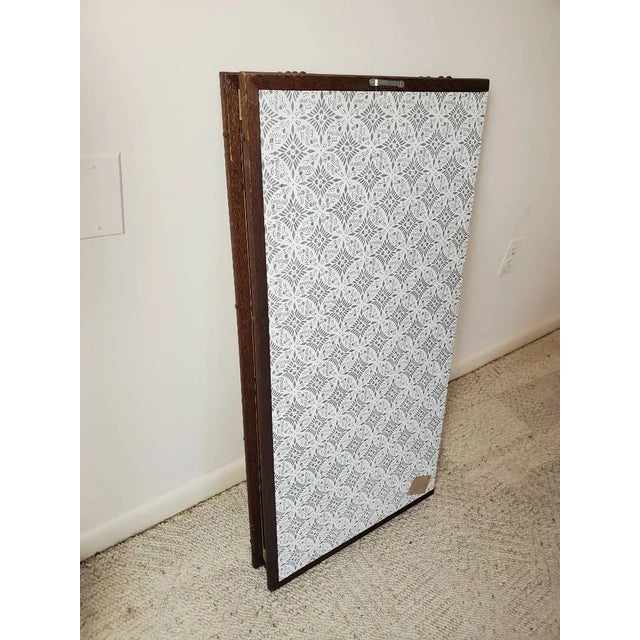
The byobu itself is constructed in the time-honored manner: a bamboo lattice foundation layered with multiple sheets of washi paper, surfaced with kinpaku (gold leaf applied in individual squares — their subtle grid visible in raking light, a hallmark of authenticity). The four panels are joined with traditional paper hinges that allow a full 360-degree fold. The face is bordered by a woven silk brocade in warm tones, and the reverse is finished in a decorative cloud-pattern paper. The wooden frame is dark-stained and fitted with brass hardware.
DIMENSIONS
Displayed on wall: 70"W x 36"H x 1"D
Folded for shipping: 18"W x 36"H x 6"D (four panels fold accordion-style)
WHY THIS PIECE
Byobu were never merely decorative — they were architecture. Literally meaning "protection from the wind," these screens have shaped Japanese interiors since the 8th century, defining space with beauty rather than walls. Gold-leaf screens in particular were symbols of refinement and occasion, displayed during celebrations, tea ceremonies, and seasonal transitions.
This screen commands a room without overwhelming it. Mounted flat on a wall, it becomes a six-foot-wide painting that shifts and glows as the light changes throughout the day — the gold leaf catching morning sun one way and candlelight another. Leaned against a wall or displayed freestanding on a console, it anchors a space with warmth and quiet drama. Behind a sofa, above a credenza, as a headboard alternative — the scale is generous enough to make a statement but restrained enough to live with.
The wheat motif carries deep resonance in Japanese culture: harvest, gratitude, the passage of seasons, sustenance. It is an image of abundance without excess — perfectly suited to interiors that value natural materials, handcraft, and the unhurried beauty of things made with care.
Condition: Good vintage condition with age-appropriate patina. See separate condition notes for full details.
See less
- Dimensions
- 70ʺW × 1ʺD × 36ʺH
- Styles
- Japanese
- Period
- Mid 20th Century
- Country of Origin
- Japan
- Item Type
- Vintage, Antique or Pre-owned
- Materials
- Gold Leaf
- Paper
- Silk
- Wood
- Condition
- Good Condition, Original Condition Unaltered, Some Imperfections
- Color
- Gold
- Condition Notes
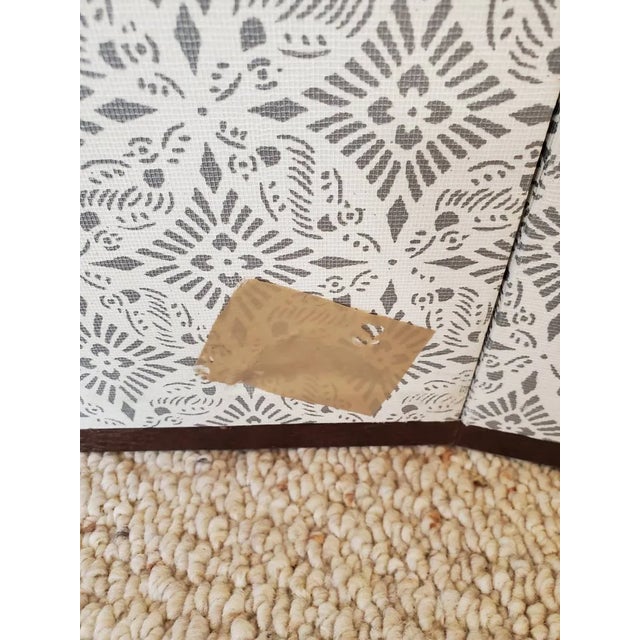
- Good vintage condition consistent with age and use. The gold leaf surface shows typical patina with visible leaf application grid … moreGood vintage condition consistent with age and use. The gold leaf surface shows typical patina with visible leaf application grid lines throughout, which is characteristic of authentic byobu screens. There are scattered small areas of gold leaf surface loss (white spots) across the panels. One notable area of damage: a small tear/puncture (~1-1.5 inches) in the gold leaf and underlying paper near the center-lower section where the substrate is exposed — see close-up photos. Additional minor gold leaf lifting and flaking in the surrounding area. The hand-painted wheat field composition remains vibrant and well-preserved with crisp brushwork. Dark stained wooden frame is sturdy and intact. Brocade silk border shows minor wear. Decorative paper backing on reverse is in good condition. Brass hinges function properly. Please refer to all photos for complete condition details. shipping dimensions to reflect the 4-panel accordion fold: Width: 38" → 18" (70" ÷ 4 panels = 17.5", rounded up to 18") Depth: 6" (kept as-is — accounts for 4 stacked panels plus wrapping/padding) Height: 36" (unchanged) less
Questions about the item?
Returns & Cancellations
Return Policy - All sales are final 48 hours after delivery, unless otherwise specified in the description of the product.
Cancellation Policy - Prior to shipping or local pickup, buyers may cancel an order for up to 48 hours, unless otherwise specified.
Related Collections
- Eames Screens and Room Dividers
- Space Age Screens and Room Dividers
- Screens and Room Dividers in Baltimore
- Herman Miller Screens and Room Dividers
- British Colonial Screens and Room Dividers
- Illustration Screens and Room Dividers
- Vivai del Sud Screens and Room Dividers
- Aesthetic Movement Screens and Room Dividers
- Wool Screens and Room Dividers
- Felt Screens and Room Dividers
- Japanese Screens and Room Dividers
- Asian Screens and Room Dividers
- Coromandel Screens
- Chinoiserie Screens and Room Dividers
- Bamboo Screens and Room Dividers
- Chinese Screens and Room Dividers
- French Screens and Room Dividers
- Fabric Screens and Room Dividers
- Glass Screens and Room Dividers
- Art Deco Screens and Room Dividers
- Asian Antique Screens and Room Dividers
- Lacquer Screens and Room Dividers
- Anglo-Indian Screens and Room Dividers
- Wrought Iron Screens and Room Dividers
- Teak Screens and Room Dividers