

Details
Description
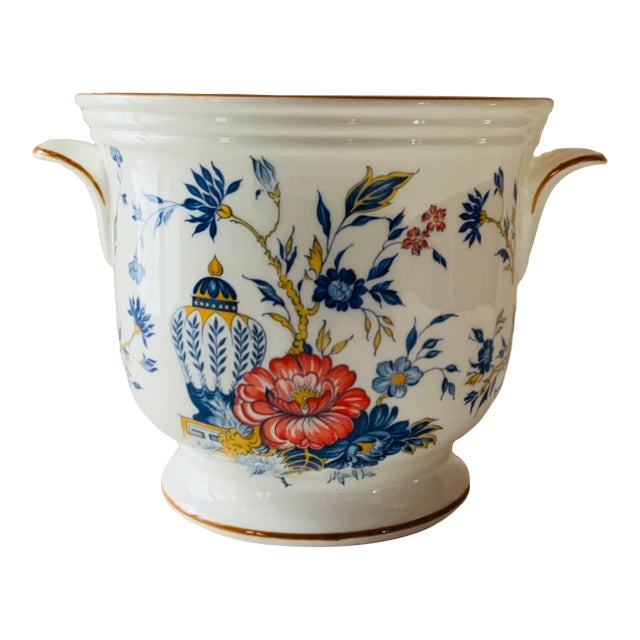
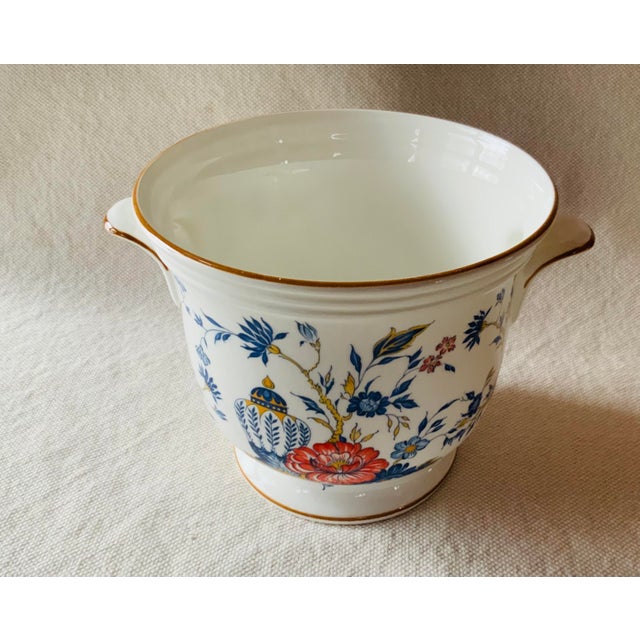
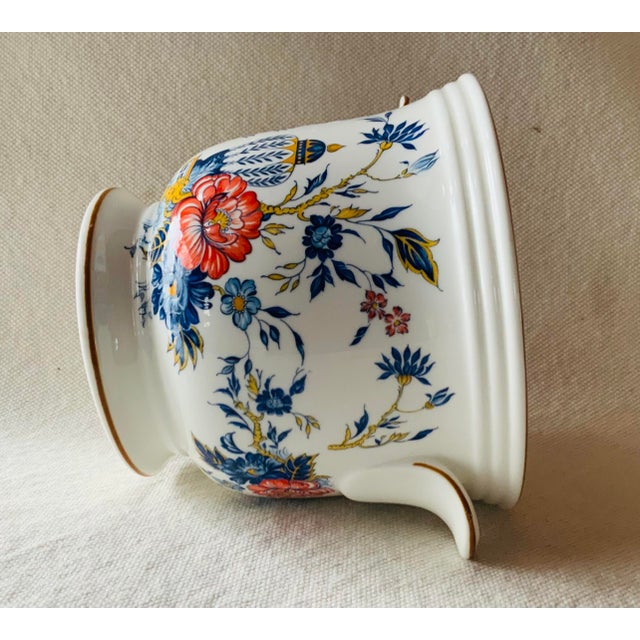
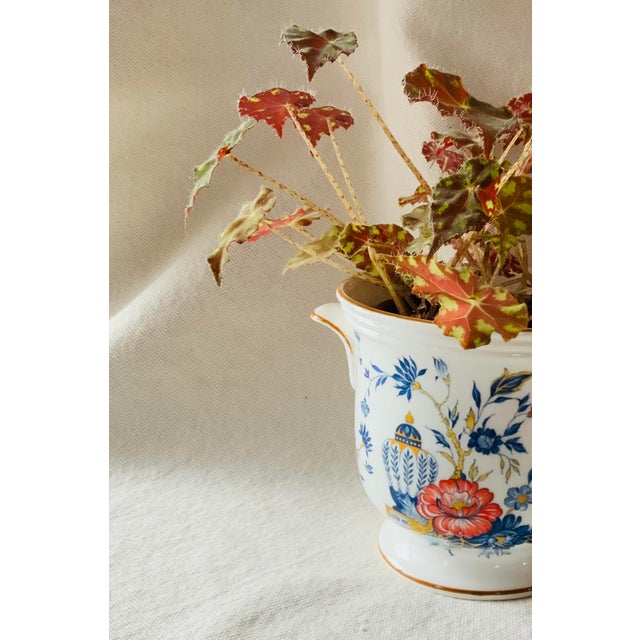
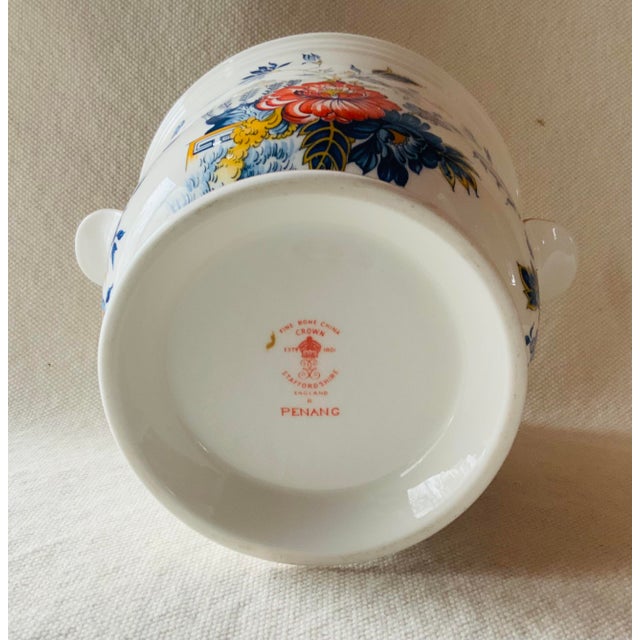
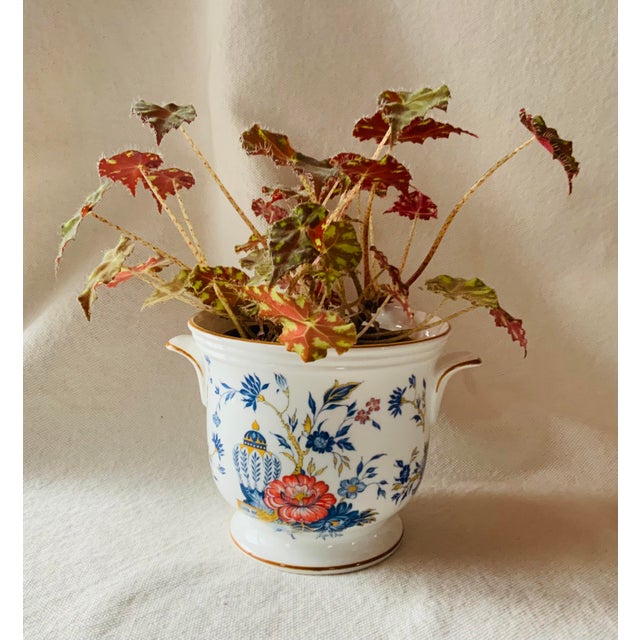
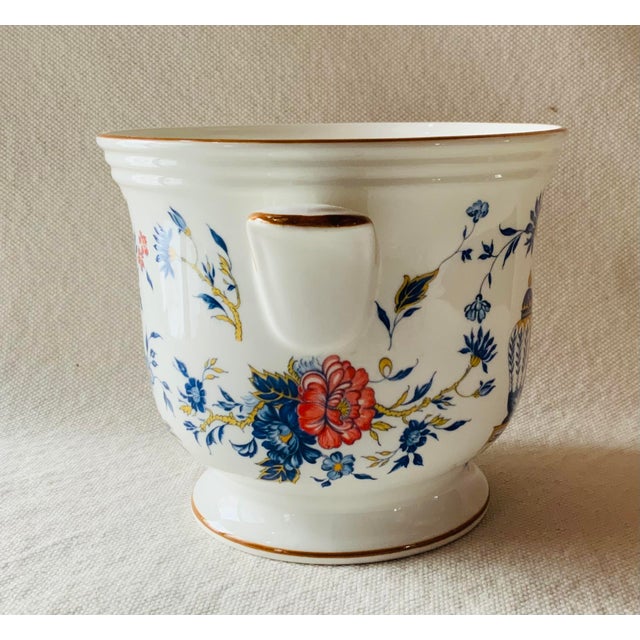
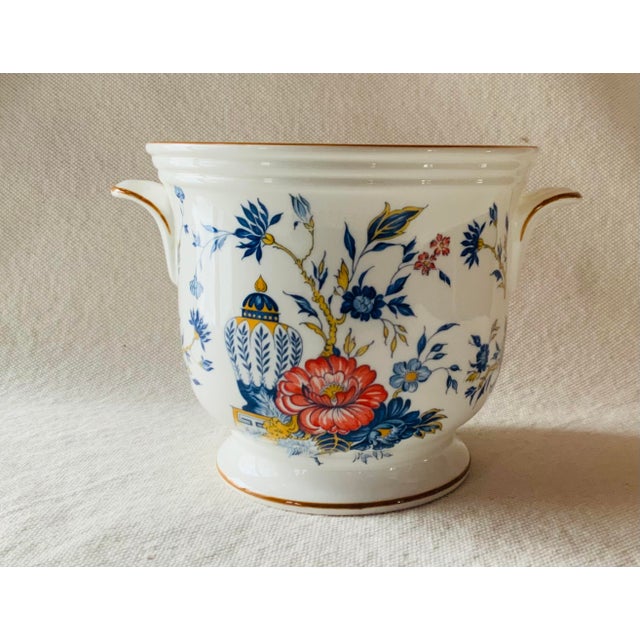
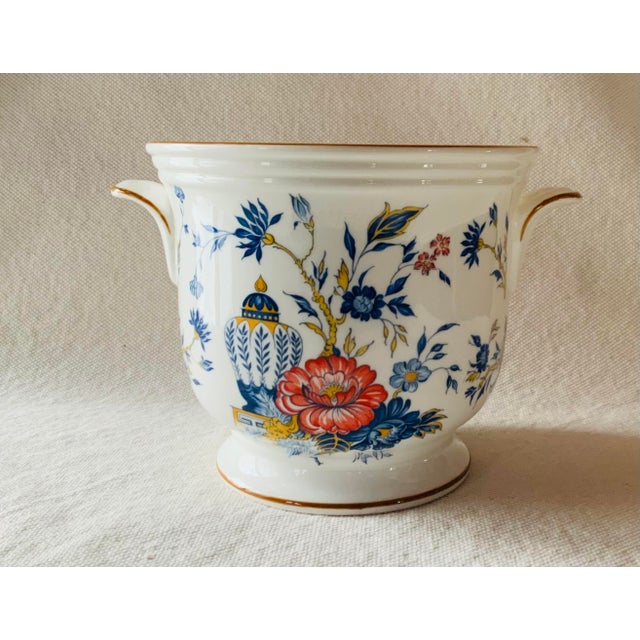
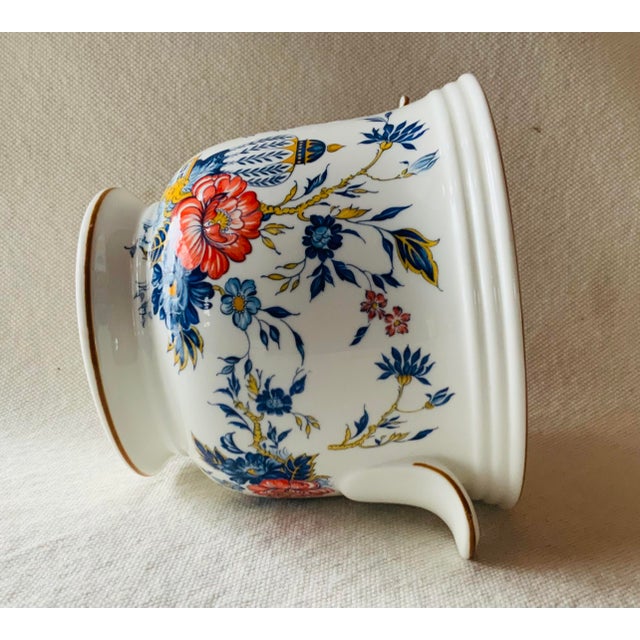
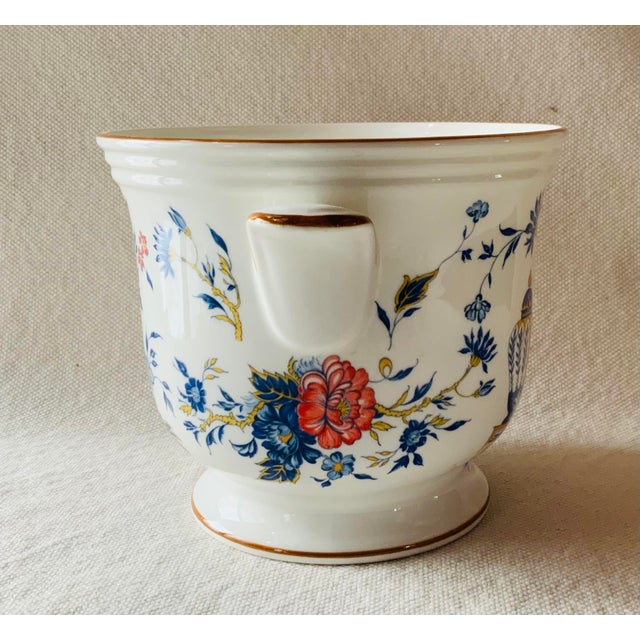
An exquisite English bone china cachepot in the elegant PENANG pattern — that most enduring and romantic of all chinoiserie …
Read more
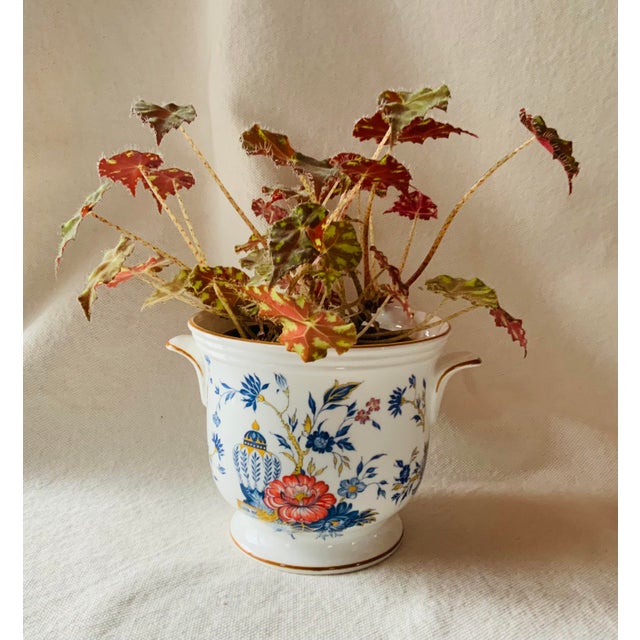
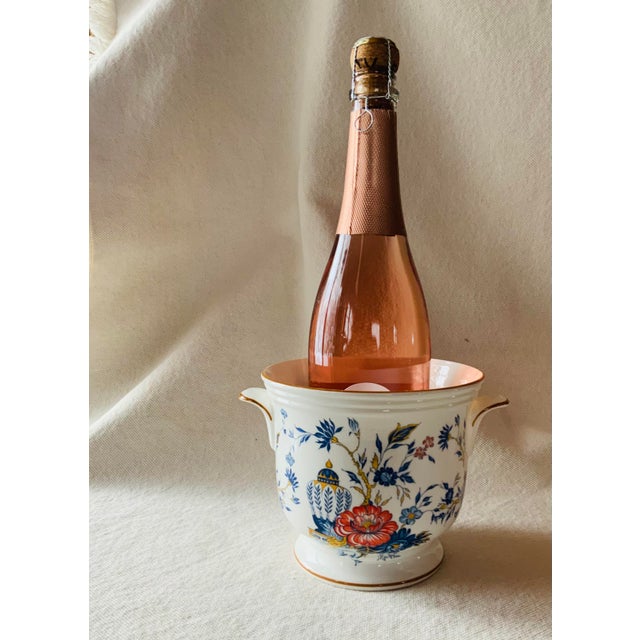
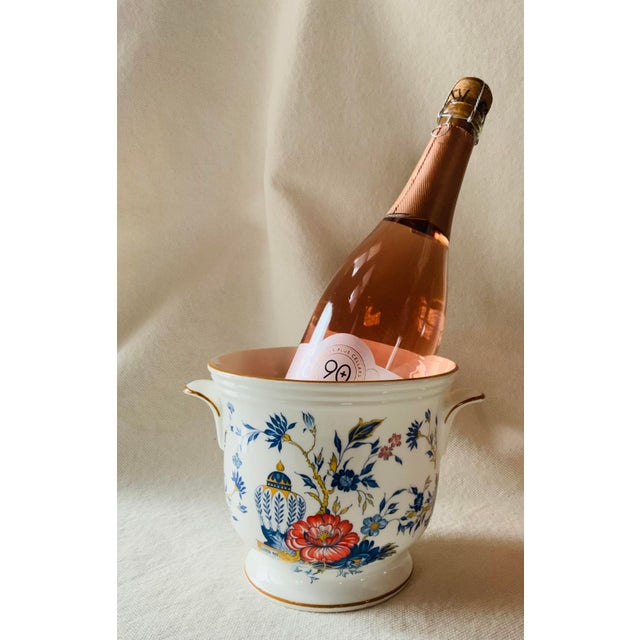
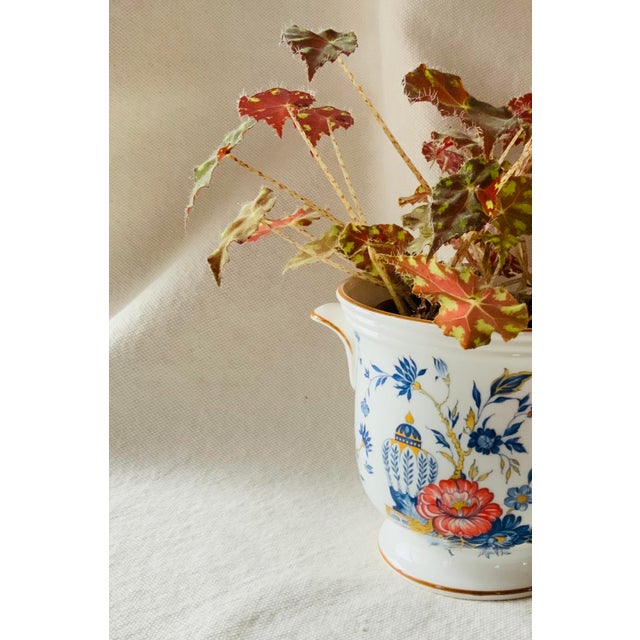
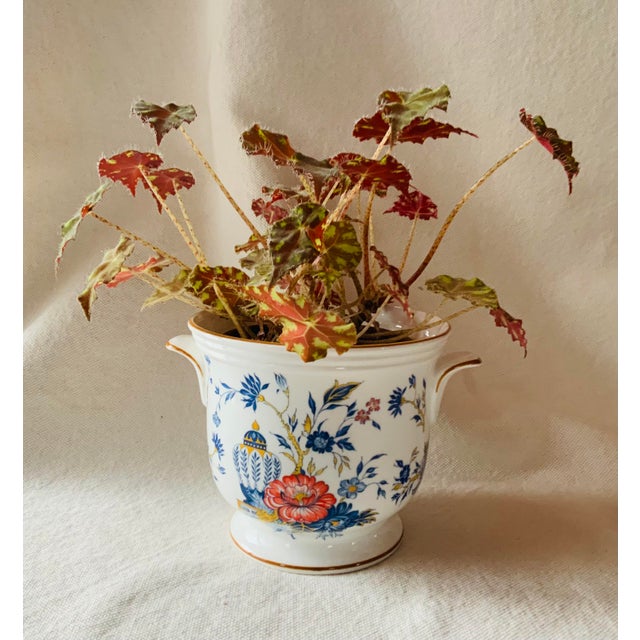
An exquisite English bone china cachepot in the elegant PENANG pattern — that most enduring and romantic of all chinoiserie designs — in a rich cobalt blue and and gold and coral transferware that has graced the finest English tables and mantelpieces since the mid 20th century. IT measures a generous 7.5" wide by 5.5" tall, a perfect proportion for a potted orchid, a trailing ivy, a small arrangement of forced bulbs in winter — or simply to stand alone on a shelf as the beautiful objects they are.
These are the sort of pieces you find yourself moving from room to room, because they improve every surface they land on.
A Little History, Because Beautiful Things Deserve It
The cachepot — from the French cacher (to hide) and pot (pot) — was born of a very elegant problem: how to conceal the humble clay or terracotta of a working flower pot while displaying the plant itself in appropriate grandeur. The solution, naturally, was porcelain.
It was Madame de Pompadour — that incomparable arbiter of 18th century French taste, mistress to Louis XV and patron of the arts at Versailles — who elevated the cachepot to an object of serious desire. Her passion for the productions of the newly established Sèvres manufactory made porcelain plant holders an essential accessory of the aristocratic interior. Where Pompadour led, all of Europe followed. The English potteries of Staffordshire, never ones to miss a fashionable opportunity, obliged magnificently.
Staffordshire — that remarkable region of the English Midlands centered around Stoke-on-Trent — became the beating heart of English ceramic production in the 18th and 19th centuries. The great names were born here: Spode, Wedgwood, Minton, Royal Doulton. And it was here that English bone china — that uniquely British contribution to the world of porcelain, made with a mixture of clay, feldspar and calcined bone ash that gives it its characteristic translucency and warmth — was perfected and produced in quantities that made it available, for the first time, to an aspiring middle class who had watched the aristocracy eat off Chinese export porcelain for a century and wanted some of that beauty for themselves.
The Penang pattern ,developed in England , created by English ceramic artists combining and adapting motifs inspired from designs from China.
The genius of it was the transfer printing process: with the late-18th-century advent of printed underglaze designs in blue on white-bodied ceramics, production of the complex landscapes and geometric borders typical of Chinese porcelains became more cost efficient for the potteries and, thus, more affordable for consumers. Suddenly, the romance of the Orient — pagodas, willows, pavilions, the whole gorgeous invented China that European imagination had been constructing since Marco Polo — could sit on every English sideboard.
See less
- Dimensions
- 7.5ʺW × 5.5ʺD × 5.5ʺH
- Styles
- Chinoiserie
- Designer
- Staffordshire
- Period
- 1960s
- Country of Origin
- United Kingdom
- Item Type
- Vintage, Antique or Pre-owned
- Materials
- Bone China
- Condition
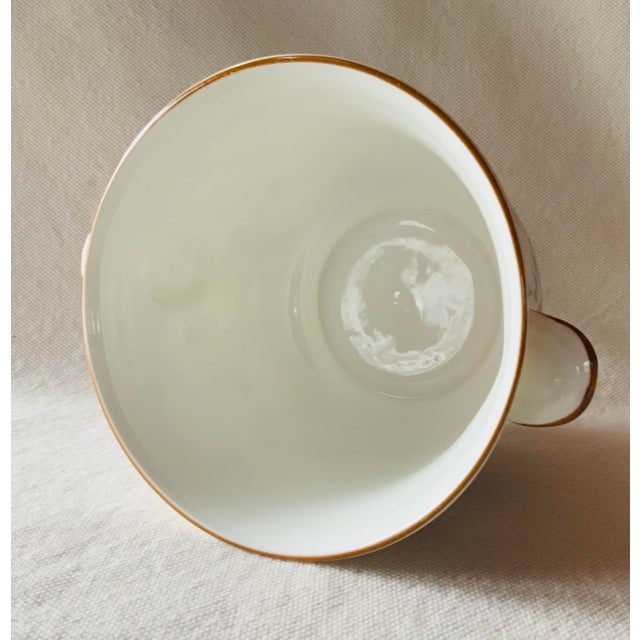
- Good Condition, Original Condition Unaltered, Some Imperfections
- Color
- Blue
- Condition Notes
- Superb Superb less
Questions about the item?
Returns & Cancellations
Return Policy - All sales are final 48 hours after delivery, unless otherwise specified in the description of the product.
Cancellation Policy - Prior to shipping or local pickup, buyers may cancel an order for up to 48 hours, unless otherwise specified.