

Details
Description
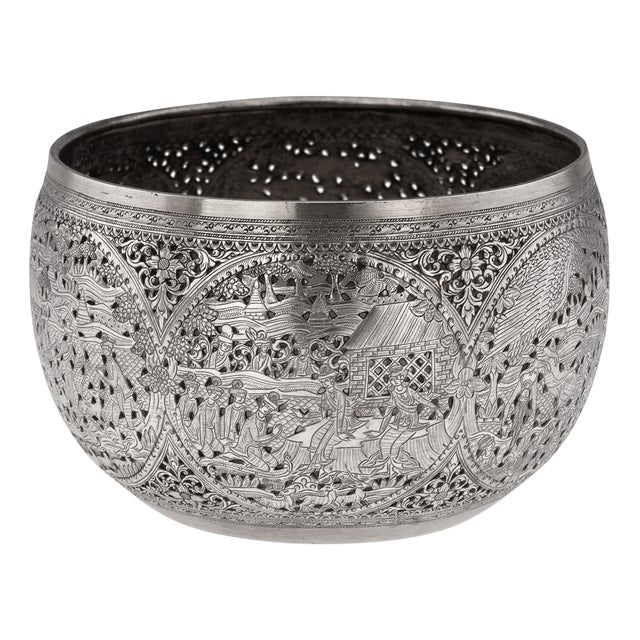
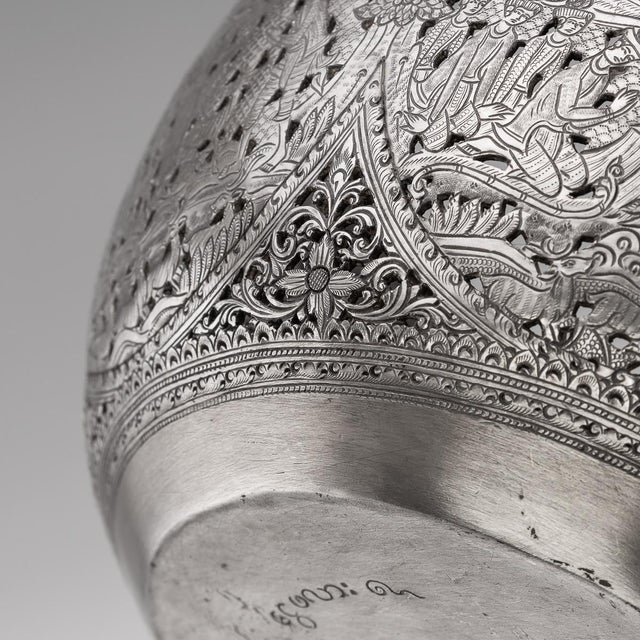
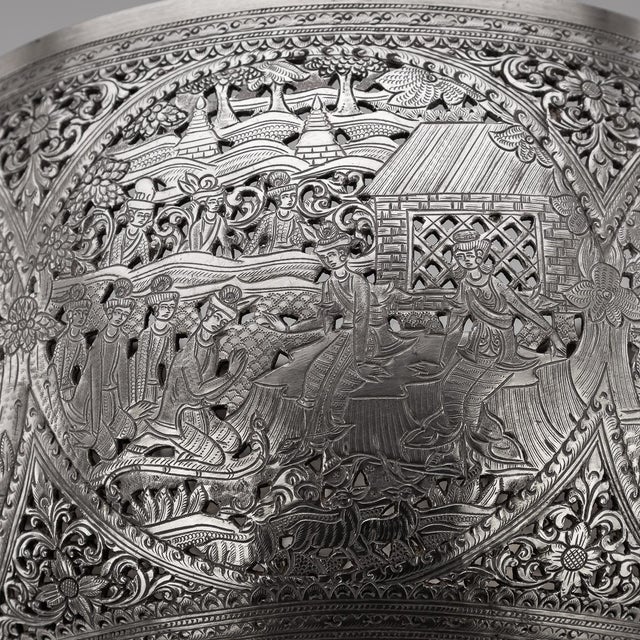
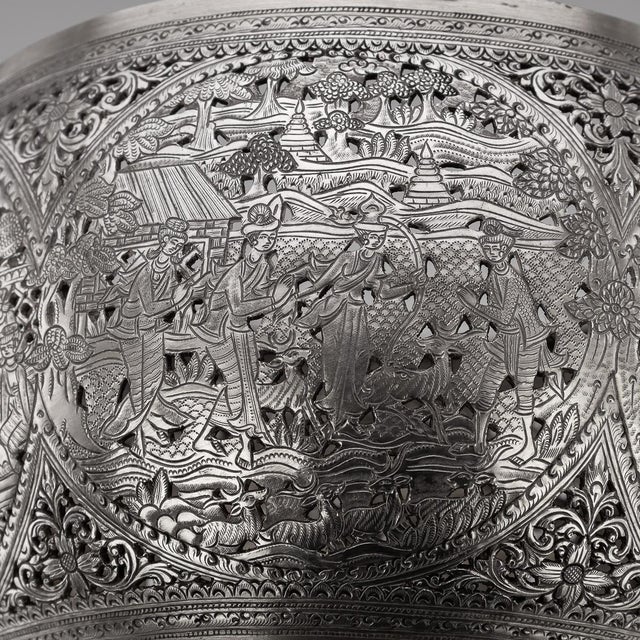
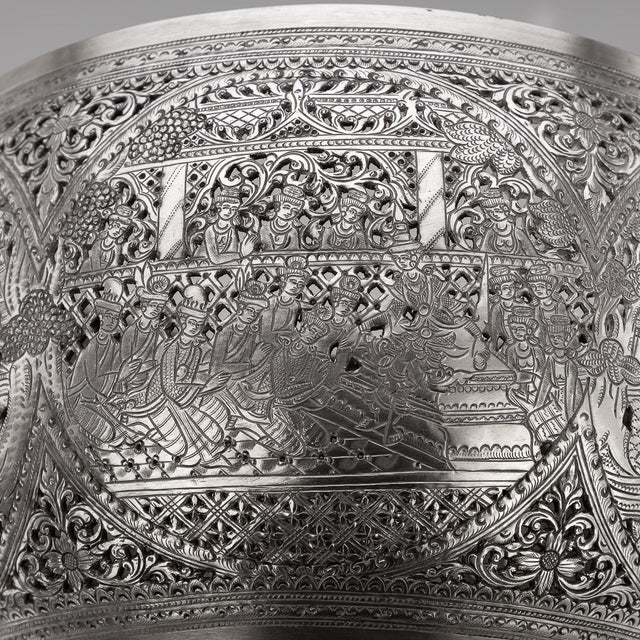
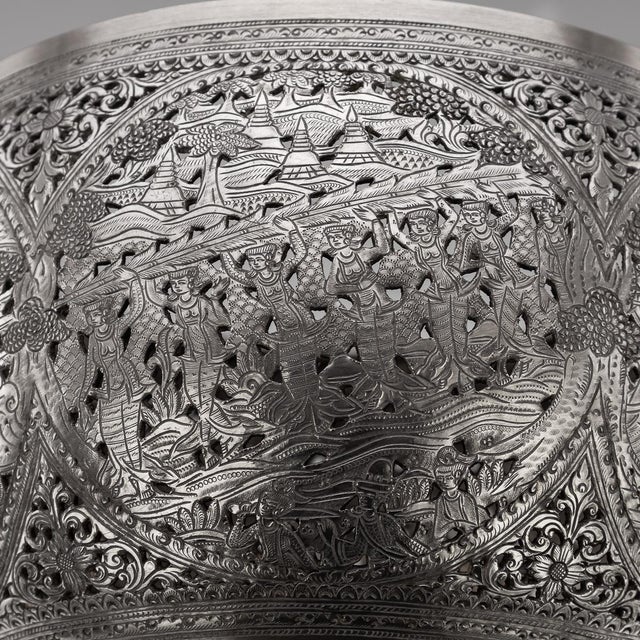
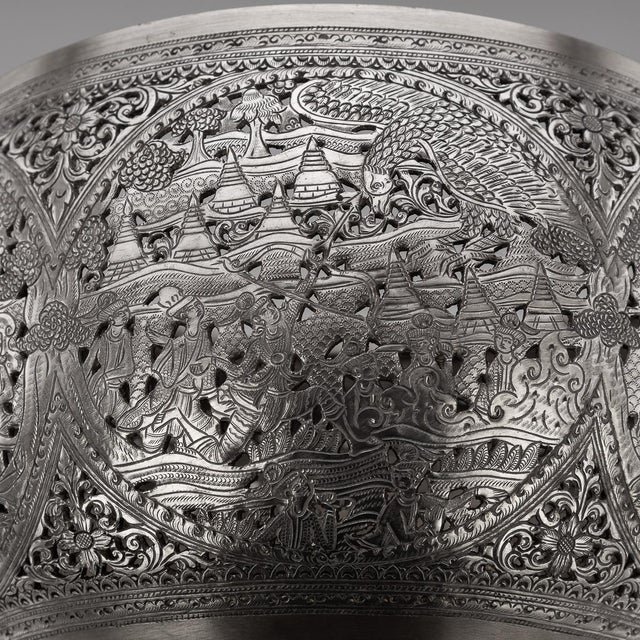
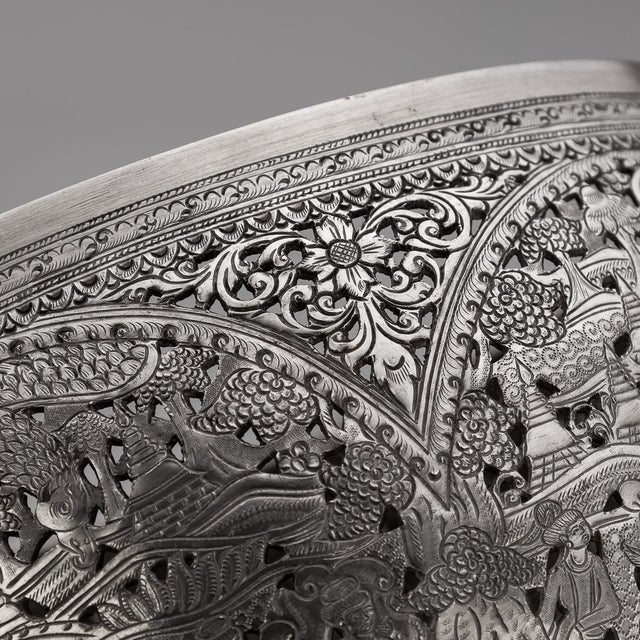
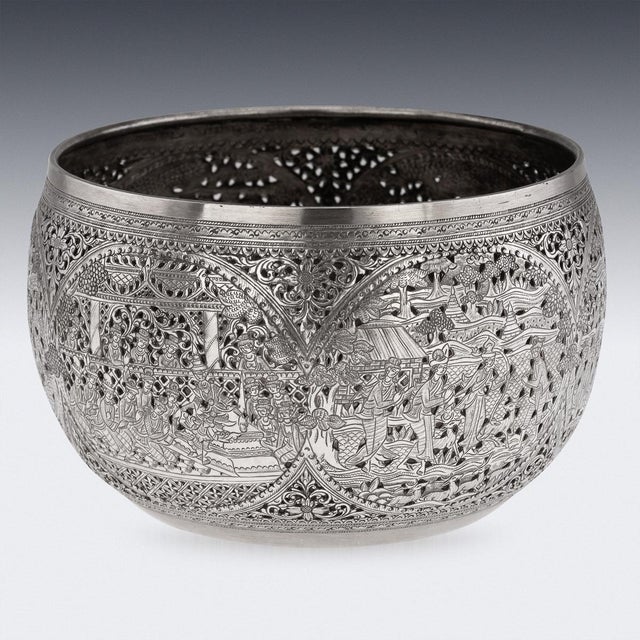
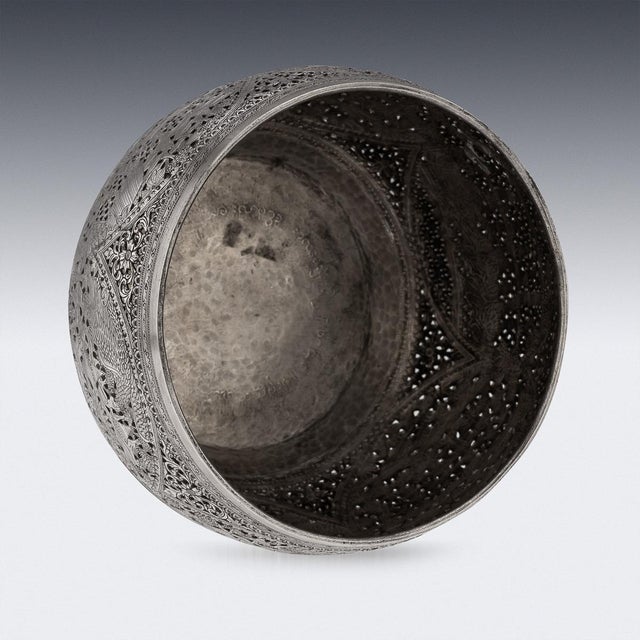
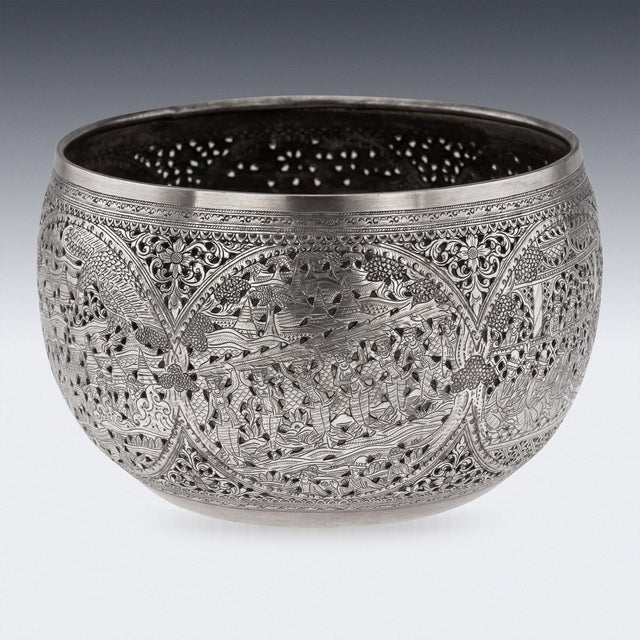
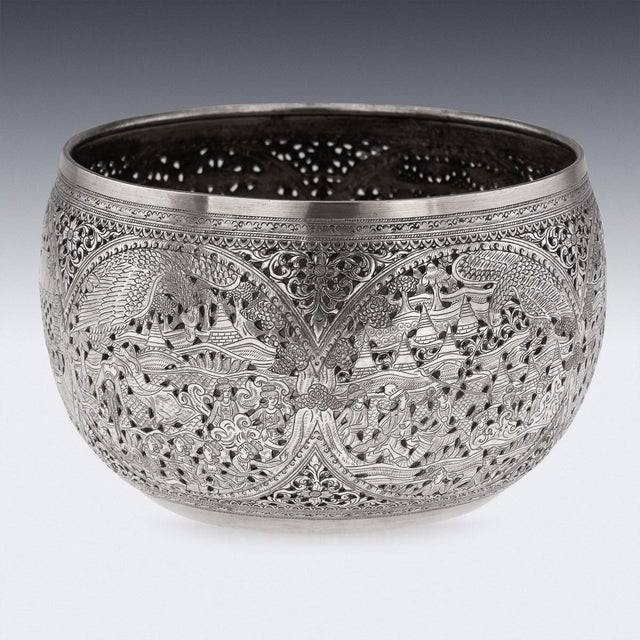
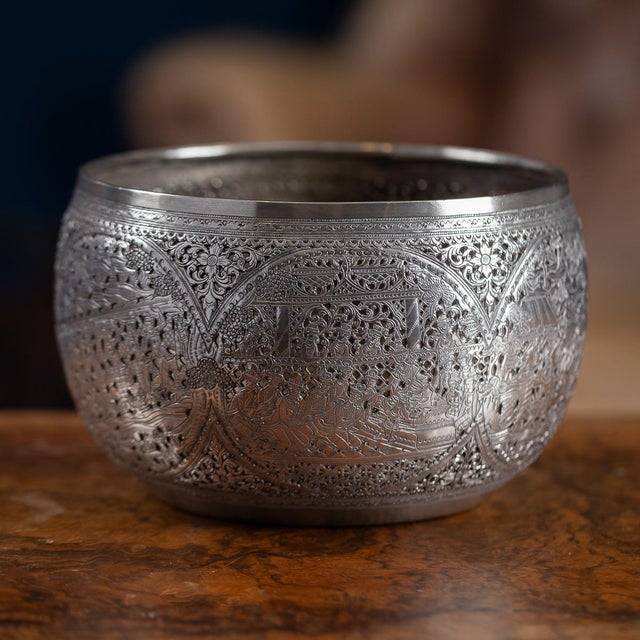
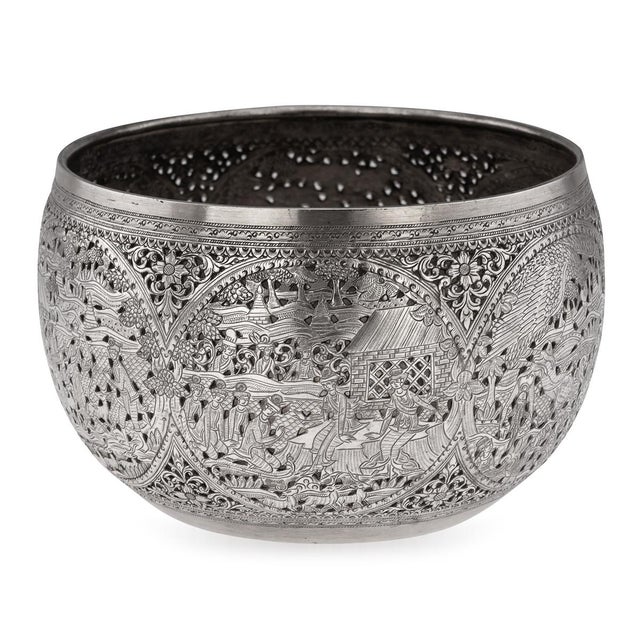
Antique 20th century burmese (myanmar) solid silver bowl of circular form, finely chased and pierced with detailed scenes. The decoration …
Read more
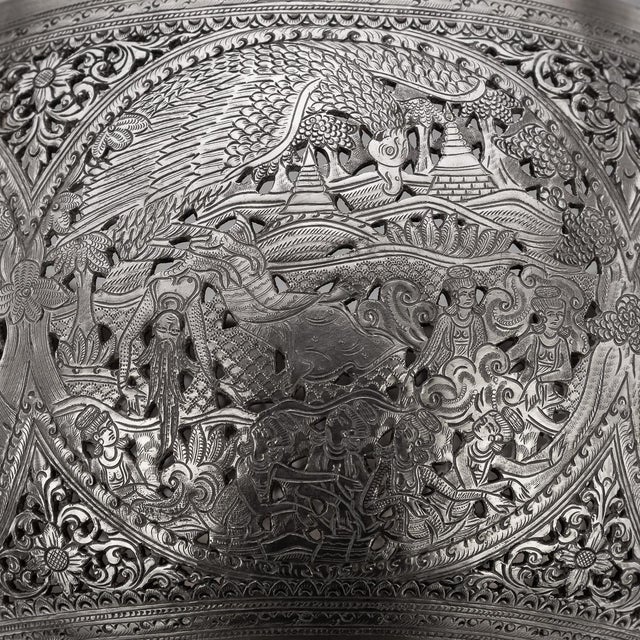
Antique 20th century burmese (myanmar) solid silver bowl of circular form, finely chased and pierced with detailed scenes. The decoration illustrates the konbaung-era telling of an early burmese legend, in which pyusawhti saves the city of pagan from a monstrous bird—one of four beasts endangering its people. In gratitude, king thamoddarit offered pyusawhti his daughter’s hand and named him heir. However, upon the king’s death in 152/153 ce, pyusawhti chose to pass the crown to his teacher, yathekyaung, who reigned for 15 years.
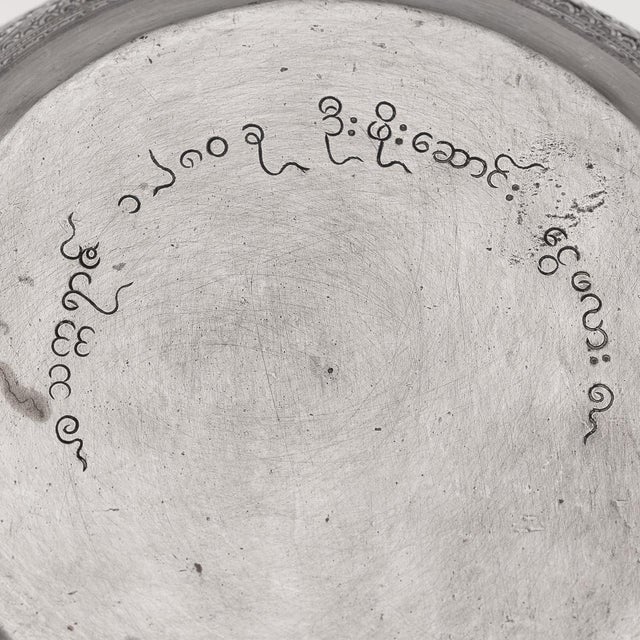
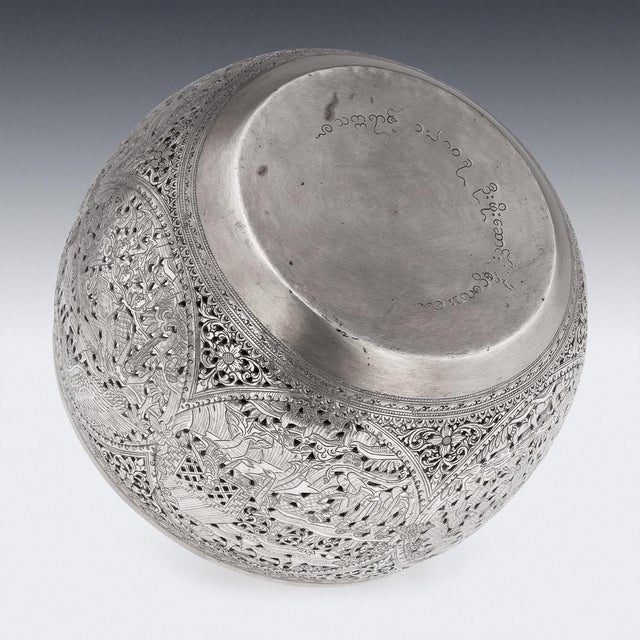
pyusawhti later became king in 167/168 ce following yathekyaung’s death. The underside has an inscription, translated, "1280 [1918 ce]. Mr pho saung's silver bowl". Acid tested, showing a 900+ silver standard.
pyusawhti is a legendary king of pagan, who according to burmese chronicles, reigned from 167 to 242 ce. Prior to 1832, burmese chronicles claimed that pyusawhti was a descendant of a solar spirit and a dragon princess, who founded pagan and with it the burmese monarchy. In 1832, the royal chronicle of the konbaung dynasty, recontextualized burma's monarchy and pyusawhti within the buddhist tradition. A sakya prince is said to have founded burma's first kingdom by establishing the alternative pyu city-state of taguang, which had pyusawhti as one of its scions.
this finely decorated ceremonial offering bowl is the quintessential burmese silver artwork. Its simple geometry follows the shape of traditional alms bowls carried by buddhist monks. Its function in the home was versatile – the offering bowl served as a vessel for temple offerings; as a storyboard for teaching and reinforcing ethical values and spiritual wisdom; as a display of wealth and status; and to simply please the senses when filled with tropic flowers. However, in contrast to burmese silver made for europeans, who were accustomed to hallmarks, most of the silver made for native residents went unsigned, as such a mark would quite likely have been interpreted as a distasteful display of vanity. Instead, it was the owner's name that would be inscribed, for pragmatic religious reasons. In theravada buddhism, the offerings made to monasteries, temples, and shrines generate karmic merit for the donor, and the monetary value of the container used was in part proportionate to the amount of merit earned. Additionally, a highly valuable silver bowl would be lent to community relatives and friends to make offerings themselves, which would generate merit for both the borrower and the owner of the bowl. Therefore, burmese silver offering bowls were prized and shared, then returned to their rightful owners whose names were inscribed underneath.
this item has been published – burmese silver art: masterpieces illuminating buddhist, hindu and mythological stories of purpose and wisdom, 2020, pp.88 & 186, no.s57, fig.3.78 & 4.140.
bonhams, the noble silver collection: treasures from the burmese silver age, 14 – 24 march 2022, new york, lot 915.
condition
in great condition - wear expected with age. Please refer to photographs.
size
height: 12 cm // 4.72 inches
diameter: 20 cm // 7.87 inches
weight: 615 grams
See less
- Dimensions
- 7.87ʺW × 7.87ʺD × 4.72ʺH
- Period
- 1910s
- Item Type
- Vintage, Antique or Pre-owned
- Materials
- Silver
- Condition
- Good Condition, Unknown, Some Imperfections
- Color
- Silver
- Condition Notes
- Patina Consistent with Age and Use Patina Consistent with Age and Use less
Returns & Cancellations
Return Policy - All sales are final 48 hours after delivery, unless otherwise specified in the description of the product.
Cancellation Policy - Prior to shipping or local pickup, buyers may cancel an order for up to 48 hours, unless otherwise specified.
Related Collections
- Ralph Lauren Decorative Bowls
- Bjørn Wiinblad Decorative Bowls
- Gold-Plate Decorative Bowls
- Tyra Lundgren Decorative Bowls
- Carlo Moretti Decorative Bowls
- Port 68 Decorative Bowls
- Piero Fornasetti Decorative Bowls
- Robert Maxwell Decorative Bowls
- Melamine Decorative Bowls
- Memphis Group Decorative Bowls
- Feather Decorative Bowls
- Limestone Decorative Bowls
- Goran and Ann Warff Decorative Bowls
- Tiffany and Co. Decorative Bowls
- Brass Decorative Bowls
- Fenton Art Glass Company Decorative Bowls
- Brass Chinese Decorative Bowls
- Chinese Decorative Bowls
- Lalique Decorative Bowls
- Chinoiserie Decorative Bowls
- Mid-Century Modern Decorative Bowls
- Red Bowls
- Footed Bowls
- Turkish Decorative Bowls
- Japanese Decorative Bowls