






Details
Description
This monumental Japanese cloisonné enamel charger measuring an exceptional 25 inches in diameter stands as a rare and commanding work …
Read more
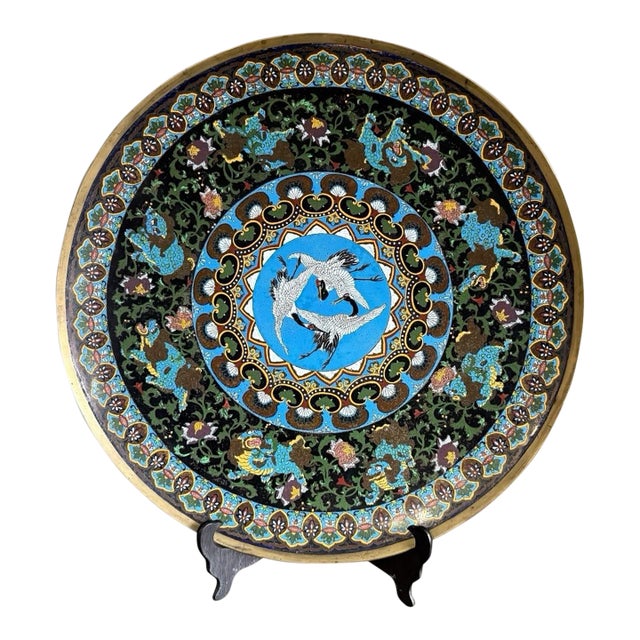
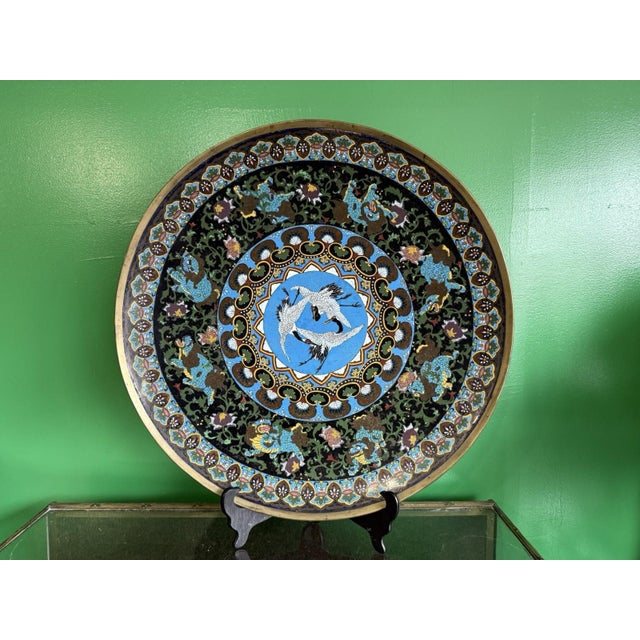
This monumental Japanese cloisonné enamel charger measuring an exceptional 25 inches in diameter stands as a rare and commanding work from the late Meiji period, circa 1880s to 1890s, and is attributed to Hayashi Kodenji based on its scale, technical sophistication, palette, and close correspondence to documented museum examples.
The sheer size of this charger immediately places it in a highly elite category. Cloisonné works of this diameter were extraordinarily difficult to produce due to the technical risks inherent in firing large copper bodies without warping, cracking, or enamel collapse. Very few workshops in Japan possessed both the expertise and infrastructure required to execute pieces of this scale successfully. Hayashi Kodenji’s studio was among the rare exceptions, and large format chargers such as this were almost certainly conceived as exhibition or presentation pieces rather than utilitarian objects.
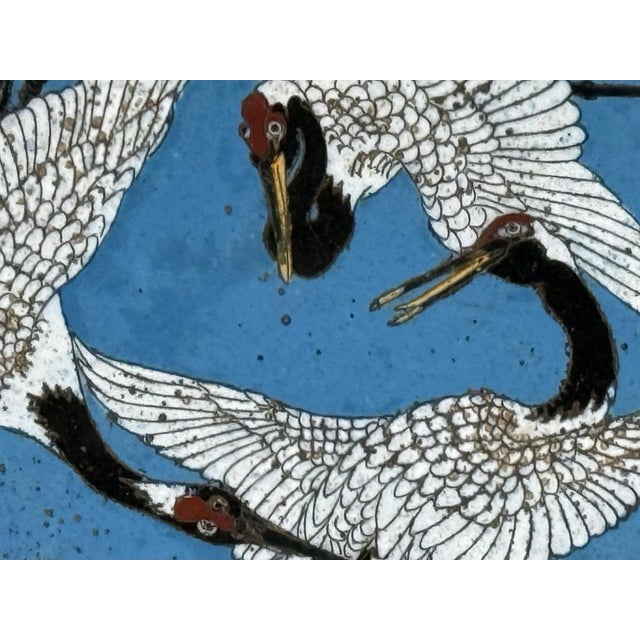
The central medallion depicts three cranes in dynamic circular flight, rendered with remarkable naturalism and vitality. The cranes are executed in finely shaded white enamel with meticulously articulated feathering, accented by black necks and red crowns. Their movement forms a continuous rotational rhythm, symbolizing longevity, harmony, and auspicious fortune. The precision of the wirework outlining each feather and limb demonstrates an advanced mastery of cloisonné technique, with no visual heaviness or stiffness despite the complexity of the forms.
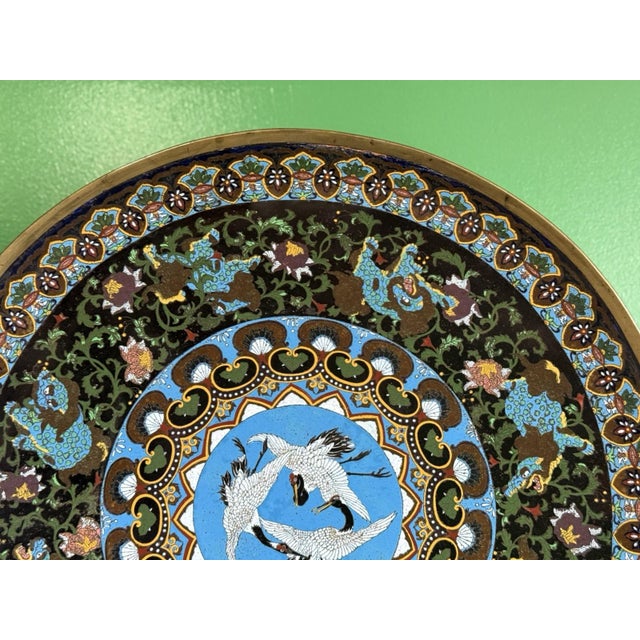
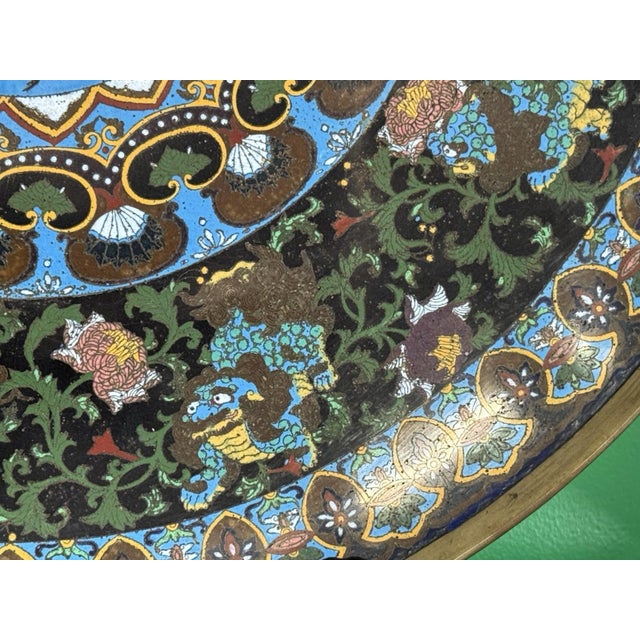
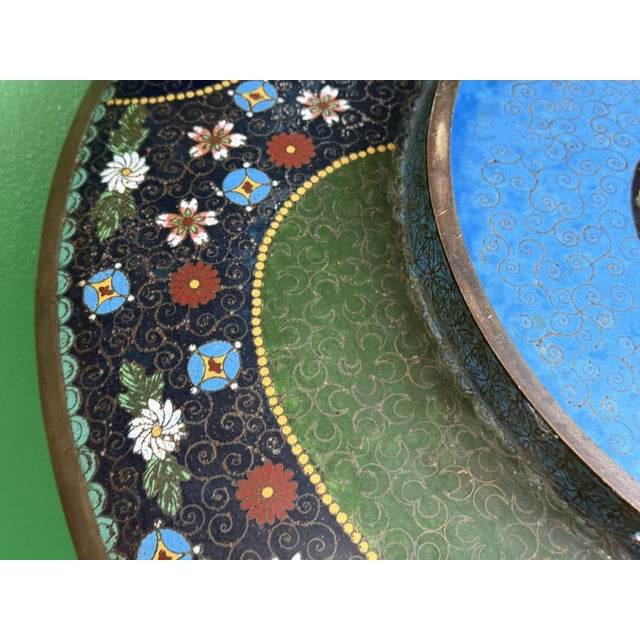
Surrounding the central field is a richly layered series of ornamental borders. The inner band features stylized scrolls and fan motifs in deep browns, blacks, and gold tones, punctuated by white highlights that enhance depth and contrast. Beyond this, the broad outer field is densely populated with mythical beast forms, scrolling vines, and floral elements set against a dark ground. These creatures are rendered in luminous turquoise, greens, yellows, and soft blues, their bodies animated by tightly coiled wirework that creates a tactile, almost relief like surface. The density and confidence of this decoration is characteristic of Hayashi Kodenji’s most ambitious works.
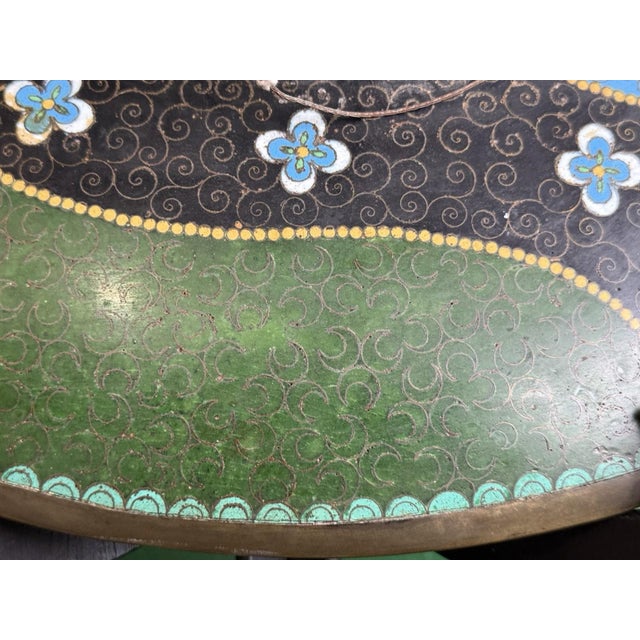
The color palette deserves particular emphasis. The use of saturated turquoise blues, opaque whites, deep blacks, olive greens, and warm earth tones reflects a transitional moment in Meiji cloisonné when artists pushed beyond earlier geometric restraint into more painterly and expressive compositions. The enamels display excellent depth and evenness, with subtle surface variation consistent with hand fired enamels of the highest quality.
The rim border, composed of repeating floral and petal motifs, provides a rhythmic visual anchor while framing the composition with elegance and balance. The brass rim remains visible, lending warmth and grounding the vivid enamel decoration.
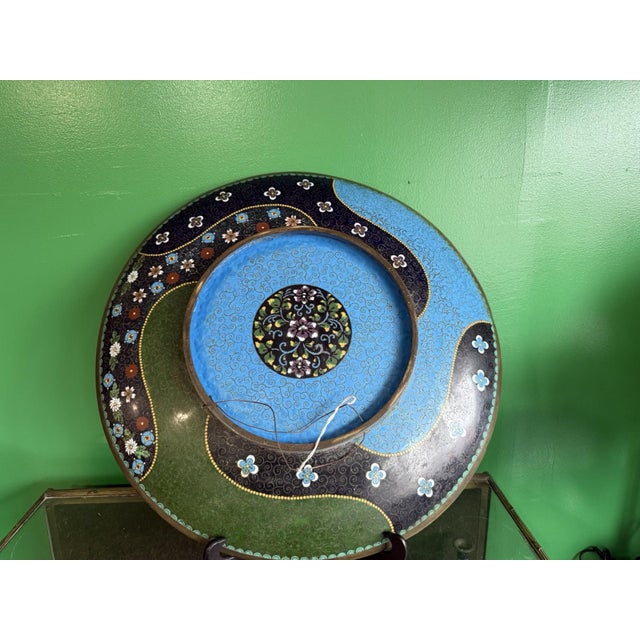
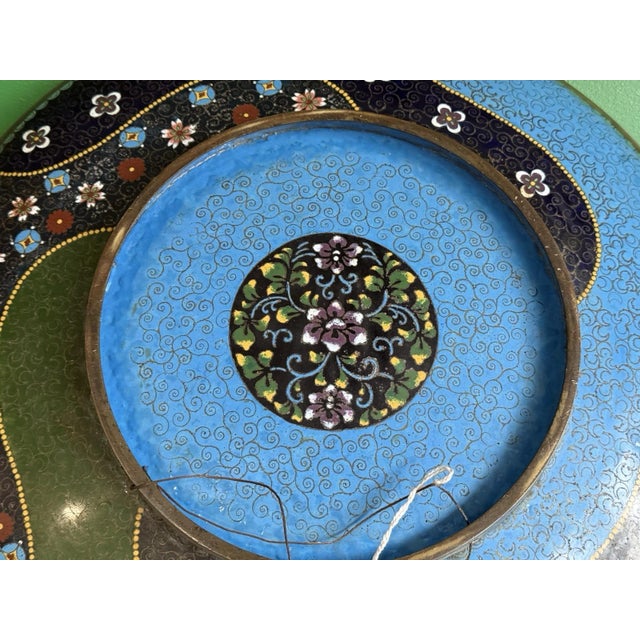
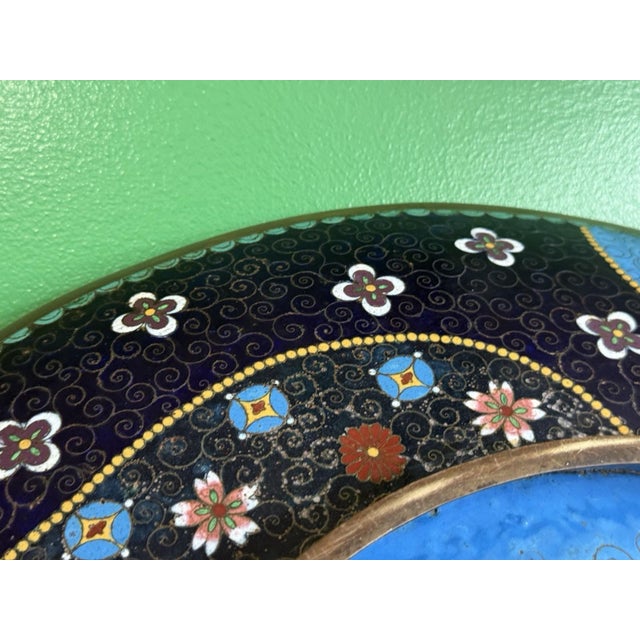
Equally important is the reverse, which is fully decorated rather than left plain. The back exhibits large, flowing abstract panels filled with scrolling motifs and floral medallions, executed with the same care and refinement as the front. Fully enameled reverses are a strong indicator of top tier production and are commonly associated with works intended for imperial presentation, international exhibitions, or discerning elite patrons. This level of finish strongly reinforces the attribution and elevates the charger well beyond decorative export wares.
In terms of attribution, this charger aligns closely with documented Hayashi Kodenji pieces held in museum collections, particularly in its scale, confidence of design, density of decoration, and sophisticated integration of figural and ornamental elements. Hayashi Kodenji is celebrated for pushing cloisonné beyond technical virtuosity into monumental artistic statements, and this charger fits squarely within that tradition.
In summary, this is an exceptional late Meiji cloisonné charger of museum caliber, distinguished by its rare size, ambitious composition, and refined execution. The combination of monumental scale, fully enameled reverse, dynamic figural central scene, and densely worked ornamental fields places it among the most impressive surviving examples of Japanese cloisonné from the period. Works of this nature are seldom encountered outside of institutional collections, and its presence represents a significant addition to any serious collection of Meiji era decorative arts.
See less
Questions about the item?
Returns & Cancellations
Return Policy - All sales are final 48 hours after delivery, unless otherwise specified in the description of the product.
Cancellation Policy - Prior to shipping or local pickup, buyers may cancel an order for up to 48 hours, unless otherwise specified.
Related Collections
- Ralph Lauren Decorative Plates
- Sherle Wagner Decorative Plates
- Nickel Decorative Plates
- Kenneth Ludwig Chicago Decorative Plates
- Soapstone Decorative Plates
- Tatiana Alida Decorative Plates
- Pickard China Decorative Plates
- Silk Decorative Plates
- Tapio Wirkkala Decorative Plates
- Cantagalli Decorative Plates
- Joseph Holdcroft Decorative Plates
- Japanese Decorative Plates
- Chinese Decorative Plates
- Fruit Plates
- Brass Decorative Plates
- Spanish Decorative Plates
- Copper Decorative Plates
- Italian Decorative Plates
- Blue Decorative Plates
- Piero Fornasetti Decorative Plates
- Chinoiserie Decorative Plates
- Wedgwood Decorative Plates
- Green Decorative Plates
- Gold Decorative Plates
- Metal Decorative Plates