



Details
Description
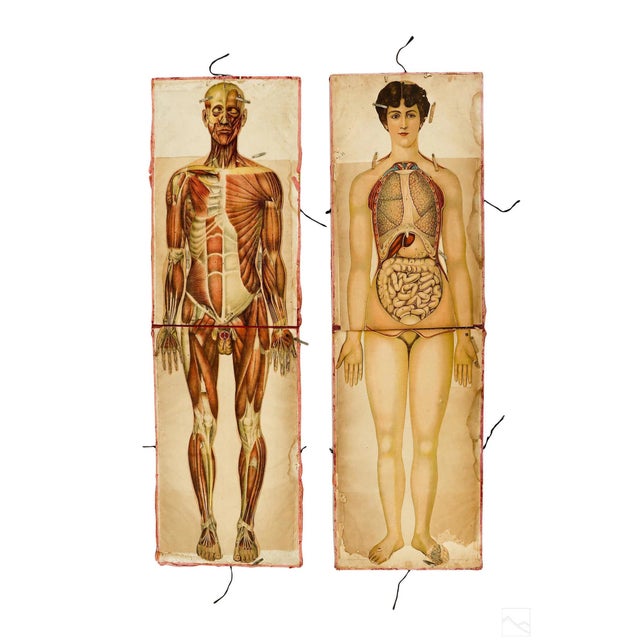
Pair of Rare Life-Sized Pilz Anatomical Flap Manikins, Germany, c. 1890
Imported by American Thermo-Ware Co., New York
An extraordinary …
Read more
Pair of Rare Life-Sized Pilz Anatomical Flap Manikins, Germany, c. 1890
Imported by American Thermo-Ware Co., New York
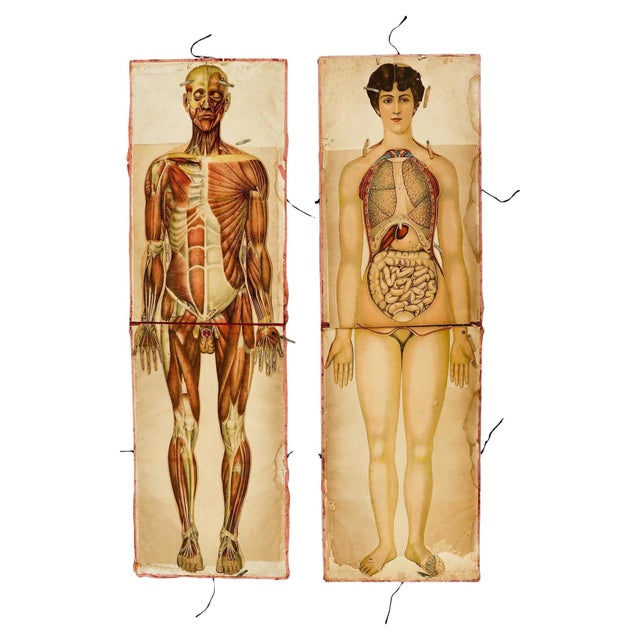
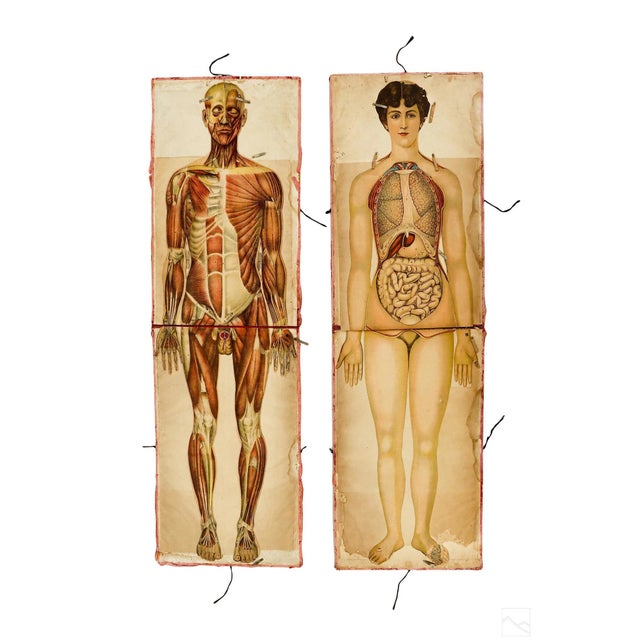
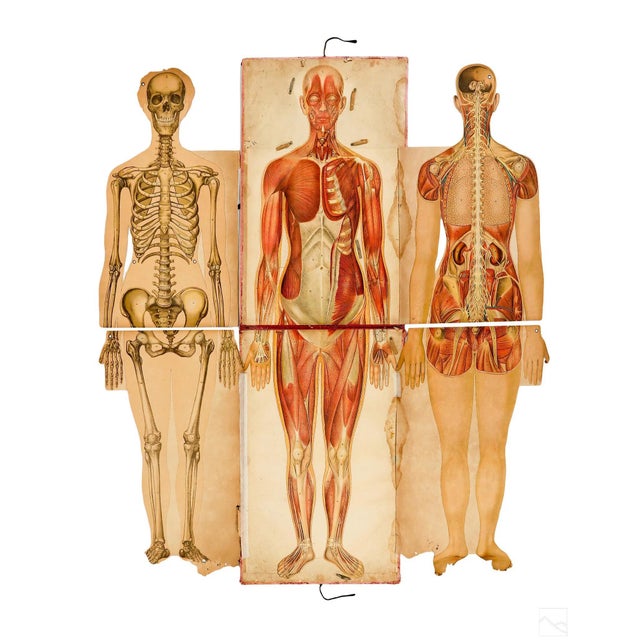
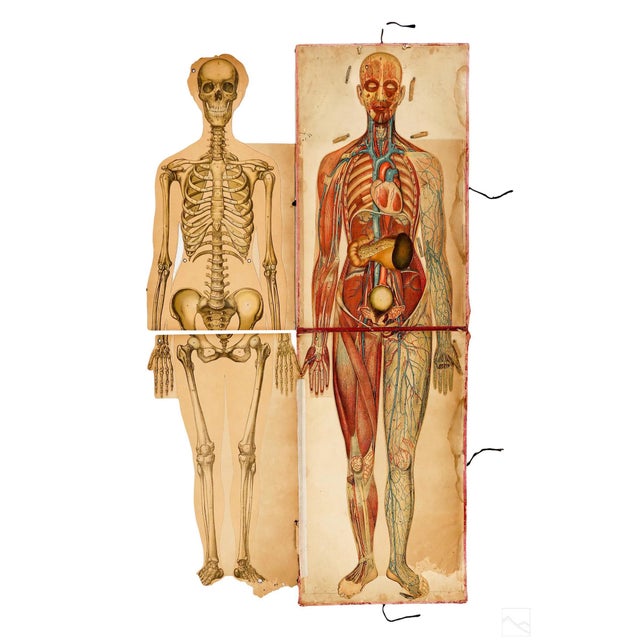
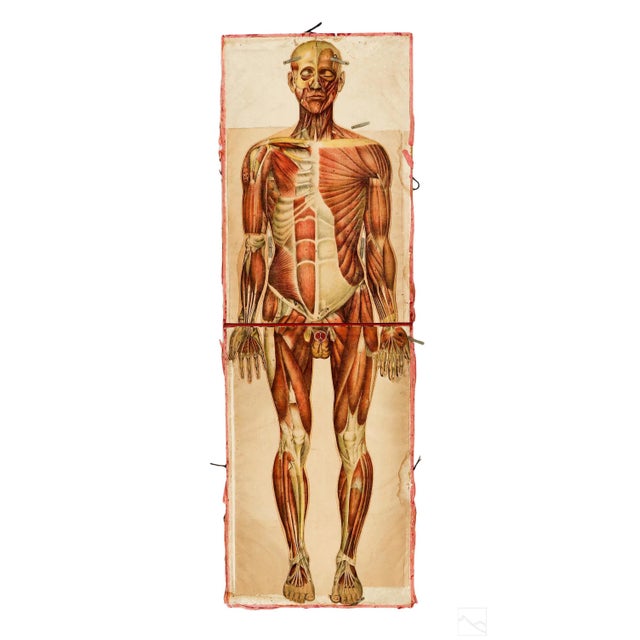
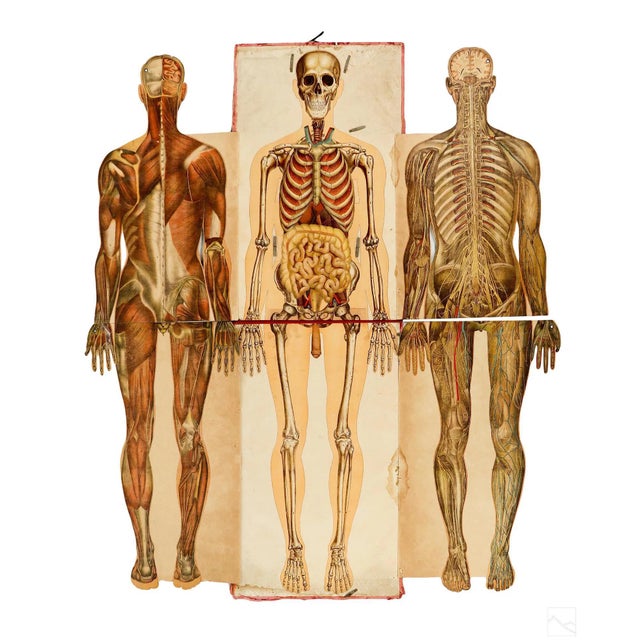
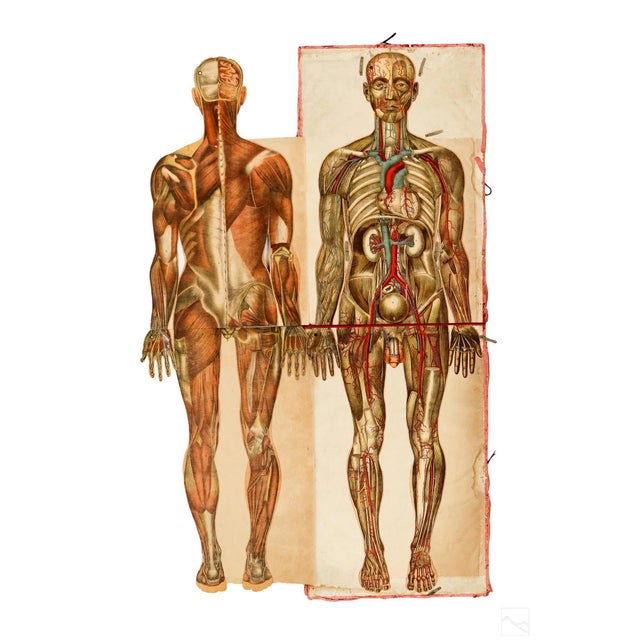
An extraordinary and exceedingly rare pair of life-sized anatomical manikins, one male and one female, produced circa 1890 and labeled Pilz Anatomical Manikin. Published in Germany and imported exclusively by the American Thermo-Ware Company, New York, these educational models represent one of the most sophisticated chromolithographic teaching aids of the late 19th century.
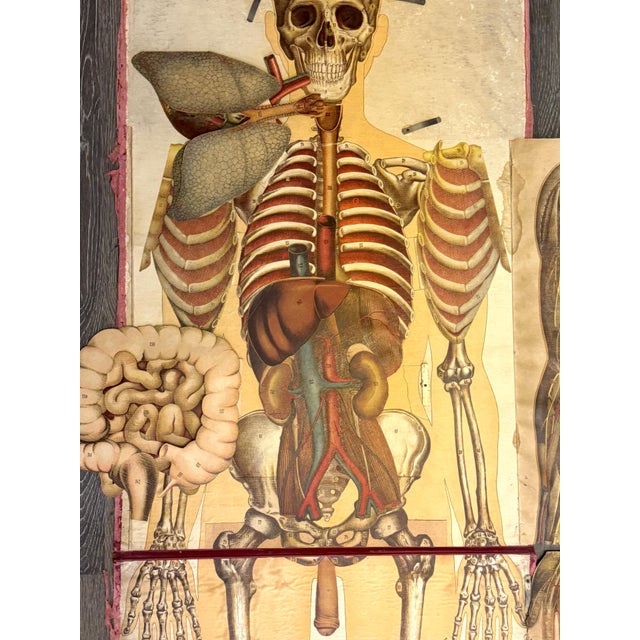
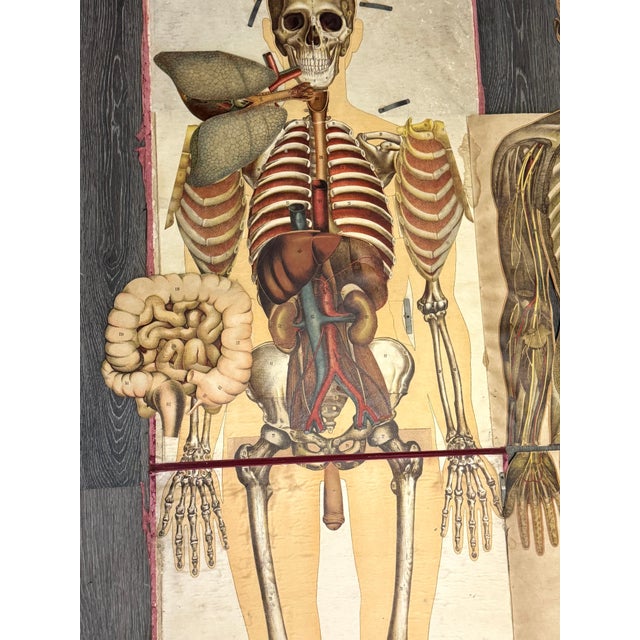
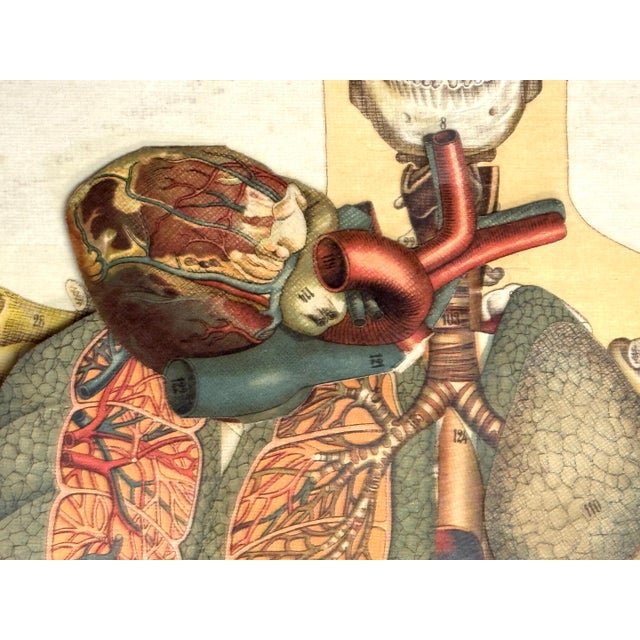
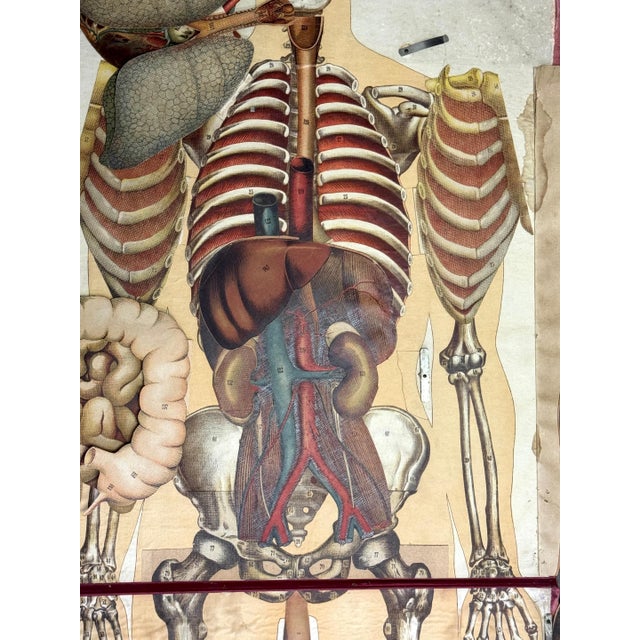
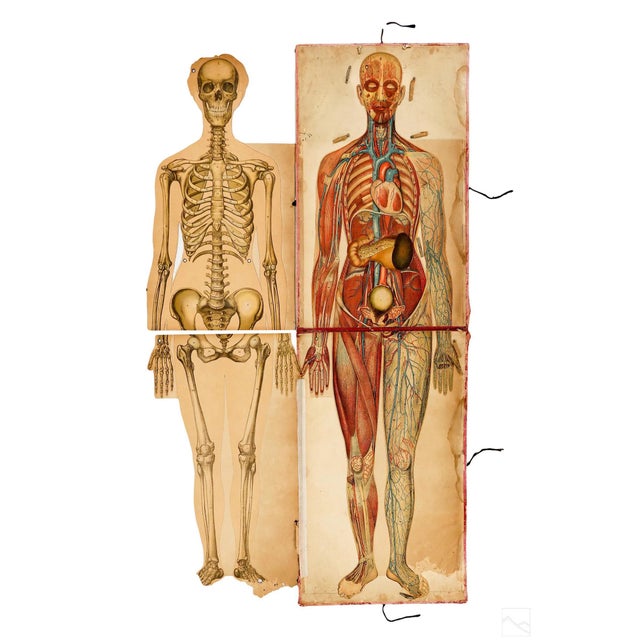
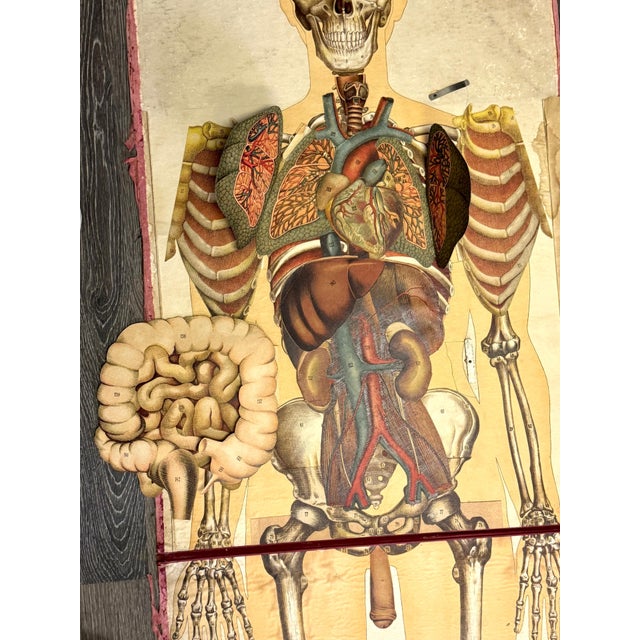
Each manikin depicts the human form in progressive anatomical layers, beginning with the exterior surface and successively revealing musculature, the skeletal system, vascular pathways, the nervous system, and internal organs. The layers are constructed of chromolithographed paper flaps, mounted on heavy boards with cloth edging, and affixed with metal pivot clips that allow the viewer to “peel back” the anatomy in stages. Conceived for medical instruction, academic demonstration, and traveling exhibitions, these flat manikins bridged the gap between two-dimensional wall charts and sculptural écorché models, offering both clarity and portability.
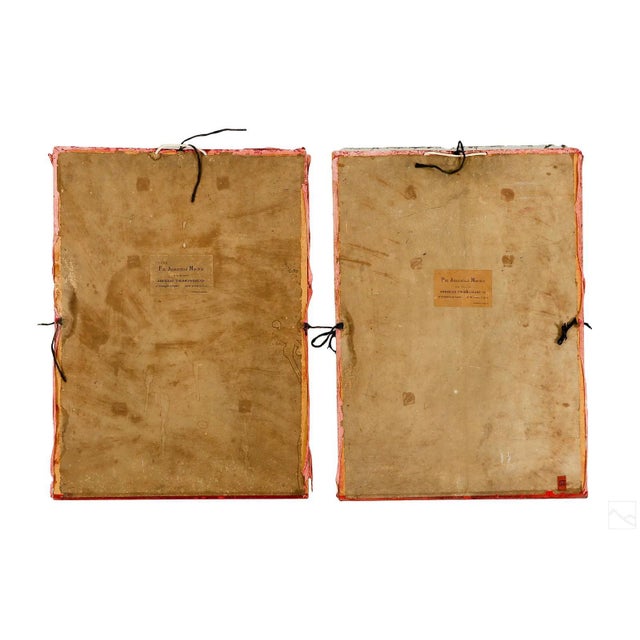
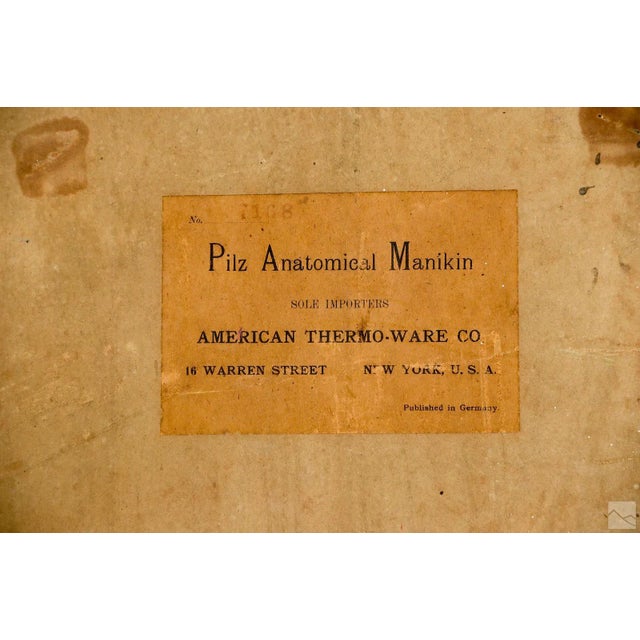
The pairing of male and female examples is of the highest rarity. Most surviving manikins were issued singly, and few complete sets have endured. Each retains its original publisher’s label, reading:
Pilz Anatomical Manikin, Sole Importers American Thermo-Ware Co., 16 Warren Street, New York, U.S.A. Published in Germany.
Dimensions: 64 in. H × 23 in. W × 1 in. D (each)
Condition: Good overall, with some minor wear and small areas of age-related damage at the edges. The surfaces present beautifully, with vibrant and bold original colors that remain striking and highly legible. Structurally stable, retaining all anatomical layers, pivot clips, and original labels.
Provenance & Significance: Such manikins were prized by medical schools, doctors, and hygienic lecturers during the late 19th century, coinciding with a cultural movement toward public health education and scientific visualization. Their survival today, especially as a matched male–female set, represents a remarkable artifact of both medical history and 19th-century print culture.
Value & Collecting Context: Examples of Pilz and related German anatomical flap charts are represented in major institutions, including the Wellcome Collection (London) and the Dittrick Medical History Center (Cleveland). While rarely encountered, especially as a pair, these life-sized manikins exemplify the ingenuity of 19th-century medical pedagogy and chromolithographic printing.
22" w / 32" h size of folded folio
When open, as shown in Lead image 22" w x 64" h
When in triple formation 66" w x 64" h
Condition Report:
Both manikins are present in good overall condition given their age and fragility, with surfaces retaining vivid and bold original chromolithographic colors that remain highly legible and striking. Each retains all anatomical flap layers, pivoting clips, and the original publisher’s labels from the American Thermo-Ware Co., New York.
Observed Wear:
Expected minor edge wear and abrasions consistent with late 19th-century handling and display.
Some small tears and paper losses at the lower corners and edges of individual flaps.
Areas of light staining, toning, and watermarks primarily at margins, not affecting legibility of the anatomical imagery.
Cloth edging shows fraying and wear, though the structural boards remain stable.
Backing boards exhibit age-related scuffs and discoloration, typical of period materials.
Overall Stability:
Both examples remain structurally sound and displayable, with excellent retention of anatomical detail. Importantly, the mechanical integrity of the flap system is intact—flaps lift and fold properly, allowing full demonstration of the progressive anatomical layers.
Summary:
A highly rare survival in this state of preservation, with honest, age-appropriate wear but no major losses or restoration. The colors are unusually strong for this type, enhancing their educational and decorative impact. The condition is best described as good, original, and untouched, with wear consistent with use as 19th-century teaching tools.
See less
- Dimensions
- 22ʺW × 2ʺD × 62ʺH
- Styles
- Folk Art
- Period
- Late 19th Century
- Country of Origin
- Germany
- Item Type
- Vintage, Antique or Pre-owned
- Materials
- Paper
- Condition
- Good Condition, Unknown, Some Imperfections
- Color
- Brown
- Condition Notes
- Good Wear consistent with age and use. Minor losses. Minor structural damages. Minor fading. Good Wear consistent with age and use. Minor losses. Minor structural damages. Minor fading. less
Questions about the item?
Returns & Cancellations
Return Policy - All sales are final 48 hours after delivery, unless otherwise specified in the description of the product.
Cancellation Policy - Prior to shipping or local pickup, buyers may cancel an order for up to 48 hours, unless otherwise specified.
Related Collections
- Wildwood Models and Figurines
- Ardalt Models and Figurines
- Rose Quartz Models and Figurines
- Villeroy and Boch Models and Figurines
- Models and Figurines in Lexington, KY
- Political and Patriotic Models and Figurines
- Unlacquered Brass Finish Models and Figurines
- William Kent Models and Figurines
- Sèvres Porcelain Models and Figurines
- Maison Jansen Models and Figurines
- Jasper Models and Figurines
- Acrylic Paint Models and Figurines
- Vinyl Models and Figurines
- Bright Pink Models and Figurines
- Bennington Potters Models and Figurines
- Brass Models and Figurines
- Staffordshire Dog Figurines
- Italian Models and Figurines
- Elephant Figurines
- Cat Figurines
- Antique Model Ships
- Ceramic Cats
- Bird Figurines
- Dog Figurines
- Jade Models and Figurines