

Details
Description
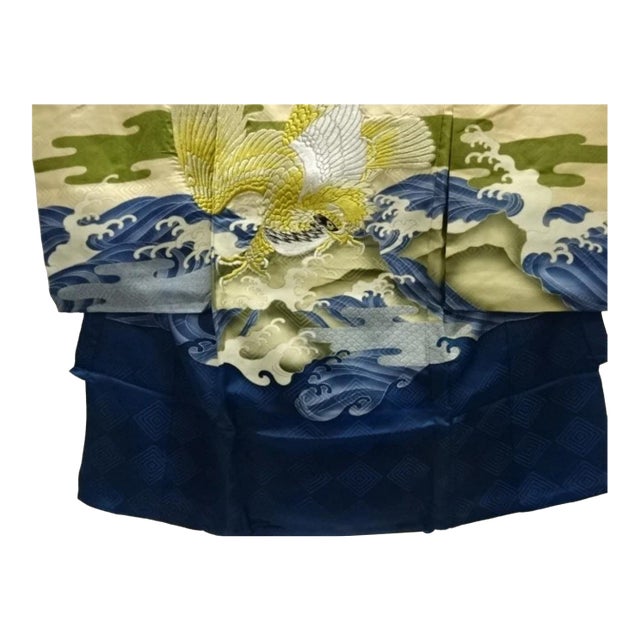
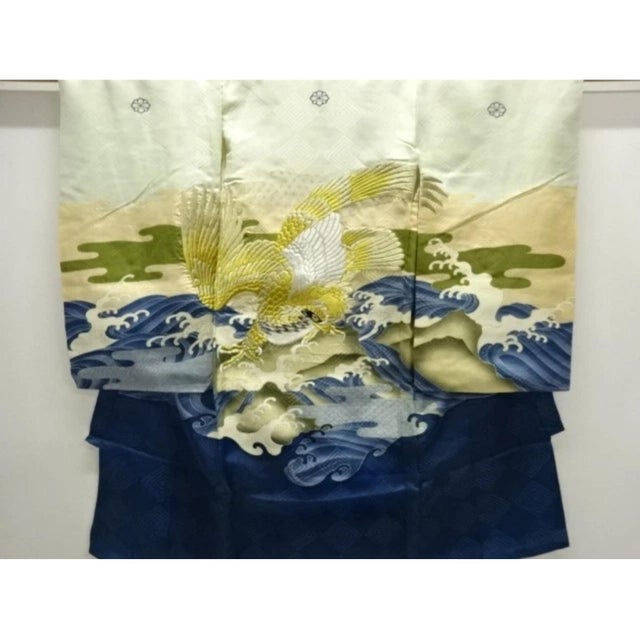
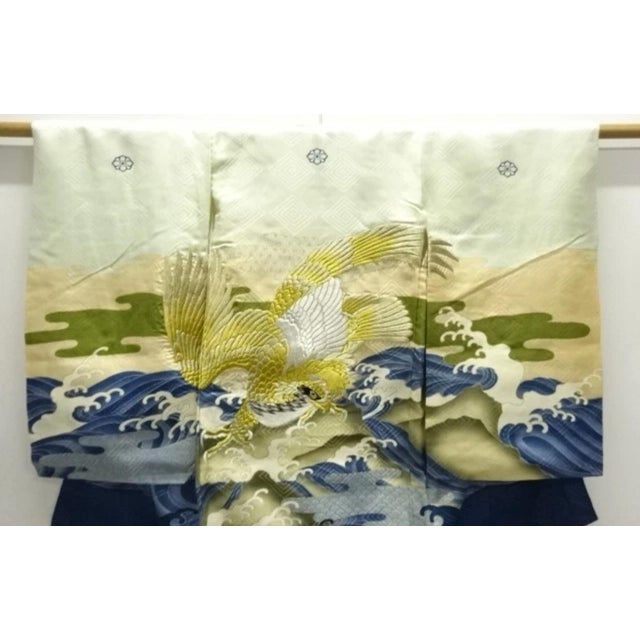
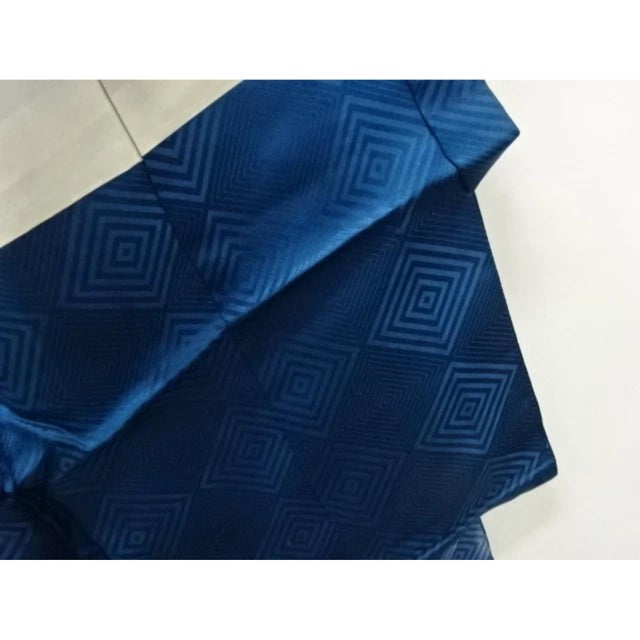
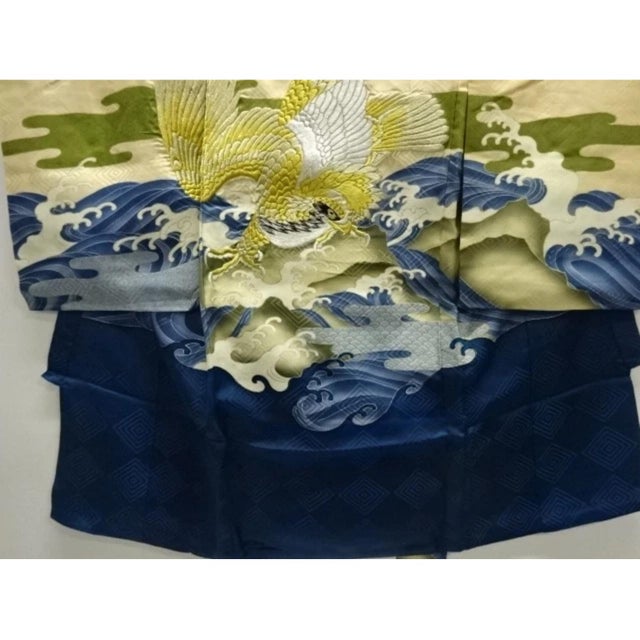
Exquisite Japanese Boy’s kimono in Navy teal silk fully lined in white with a swooping eagle birdmotif.
Length 38 in …
Read more
Exquisite Japanese Boy’s kimono in Navy teal silk fully lined in white with a swooping eagle birdmotif.
Length 38 in x Width 36 inch
Japanese kimonos are intended to be appreciated beyond their function as an art form in their own right showcasing both traditional and one-of-a-kind motifs, as well as the enduring techniques and innovative ideas employed to make these exquisite artworks.
This rinzu* silk miyamairi kimono for a baby boy's first shrine visit captures a scene of extraordinary vitality, depicting a determined eagle flying over a turbulent sea of waves.
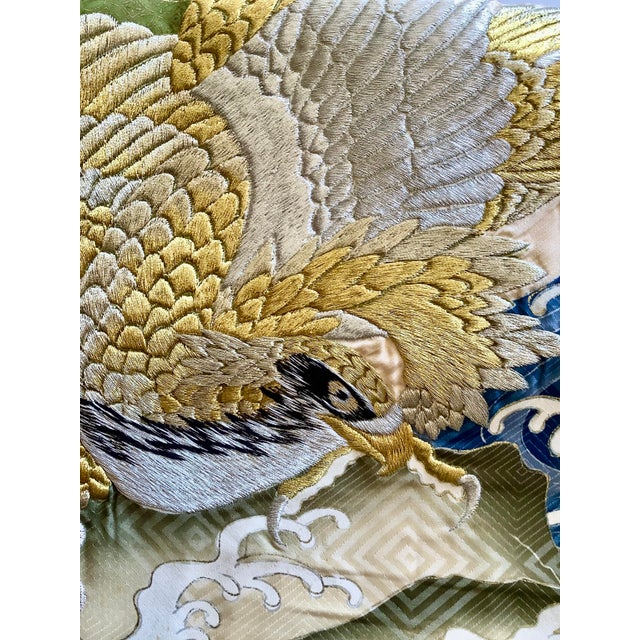
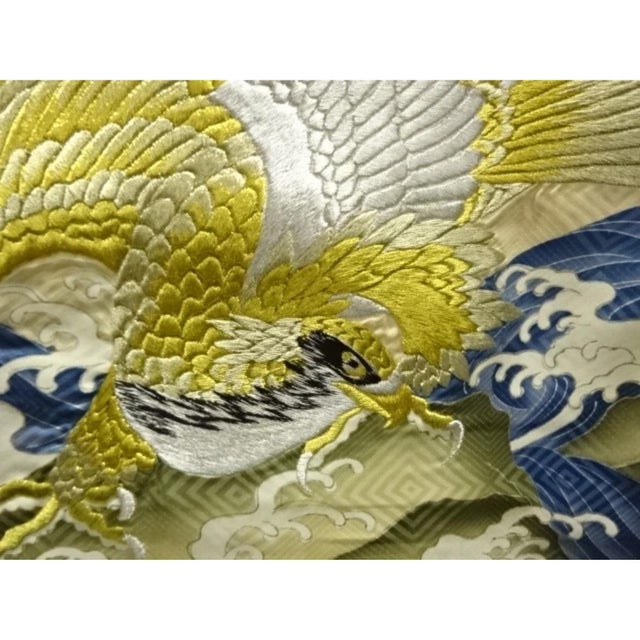
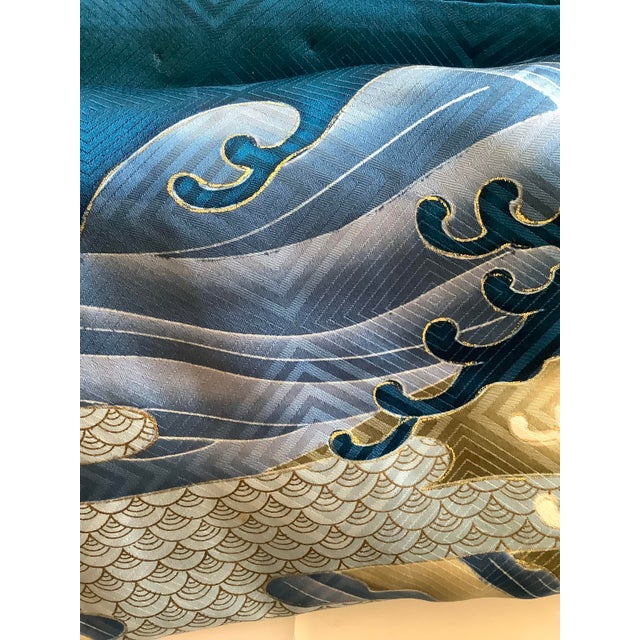
The composition presents a dramatic narrative: the strong ocean waves surge upward with determined energy, their profile accented with graceful curves rendered through metallic embroidery highlights that catch light brilliantly. The falcon bird navigates through these spectacular waves rendered in graduated teal and aqua tones, with white foam bursting around rocky outcroppings. Mount Fuji, while distant, the gray mountain peaks establish atmospheric depth beyond.
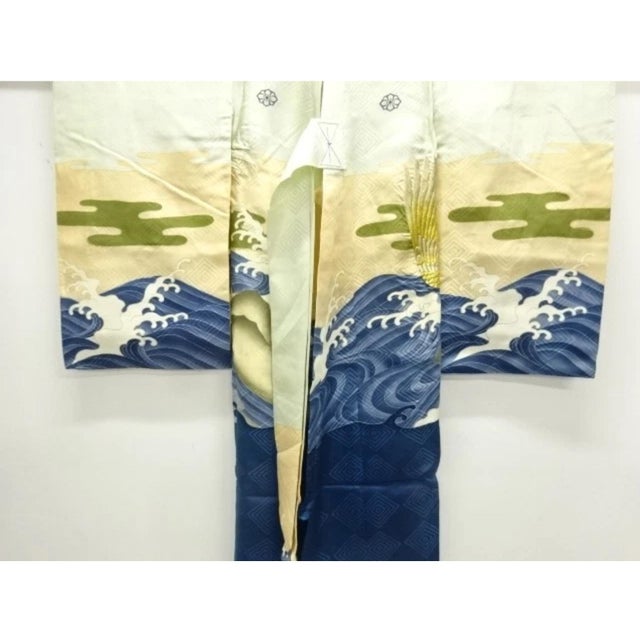
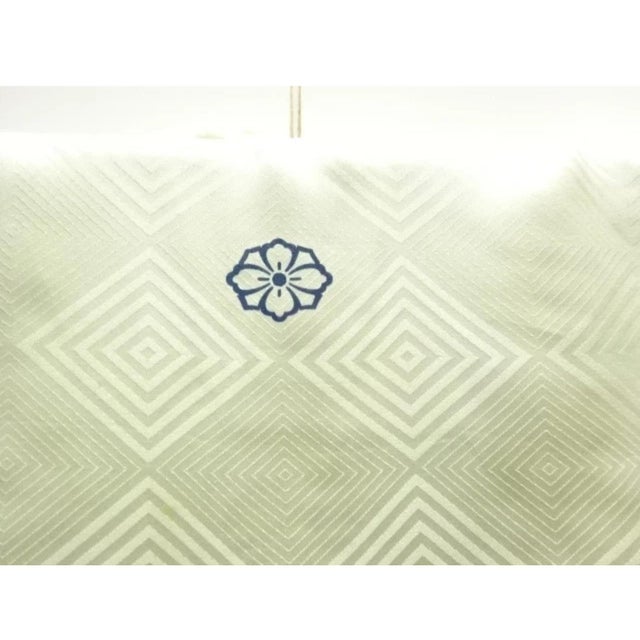
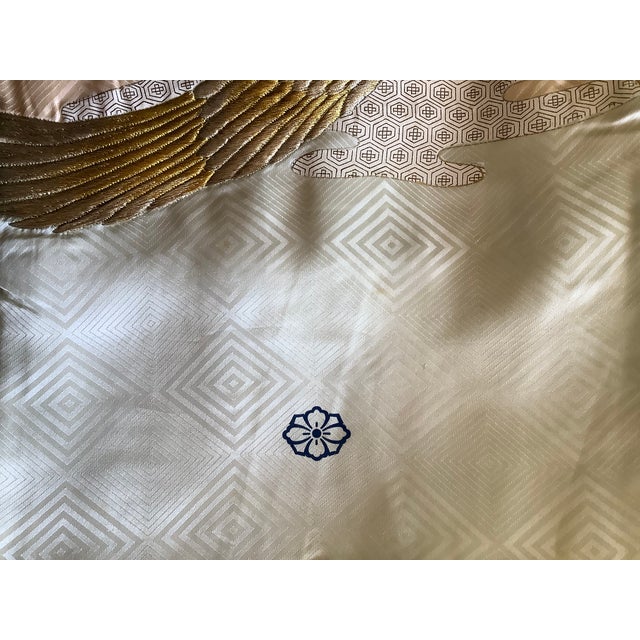
The scene flows through masterful tonal progression—from deep navy blue and teal at the hem through dynamic aqua waters to the pale cream upper ground where three family crests (mon) mark the shoulders. Yūzen-dyeing provides the foundational colors with precise resist-dyed outlines, while painting techniques add naturalistic detail to the bird’s feathers and expression. The metallic embroidery elevates key elements with dimensional shimmer.
This post-war miyamairi kimono embraces a bold modernist aesthetic that reflects Japan's cultural transformation during the mid-20th century. The composition demonstrates a masterful understanding of negative space and asymmetrical balance, with the dramatic contrast between the stark navy lower fields , the flowing central band of lighter hues afinishing in a beige and ivory at the top, creating a sense of dynamic tension. The stylized wave patterns, rendered in subtle gradations of blue and white, evoke the eternal movement of water while providing a stage for the central drama—the magnificent falcon captured in mid-flight with wings spread wide in a display of raw power and grace.
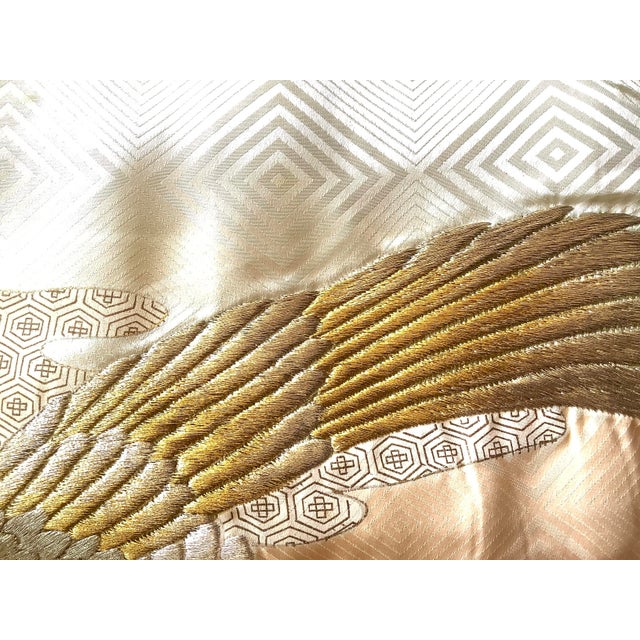
The artist's approach to depicting the raptor shows clear influence from both traditional sumi-e painting and contemporary artistic movements, with the bird's form simplified into essential elements while maintaining remarkable naturalistic detail in the feather work. Each wing feather is individually articulated through careful gradations of silver and gold tones, achieved through the sophisticated interplay of yuzen dyeing and freehand painting techniques enhanced with embroidery highlights that catch light like the natural iridescence of a hawk's plumage. The falcon's positioning—diving toward stylized waves rendered in muted blues —creates a powerful diagonal movement that energizes the entire composition. This kimono exemplifies the aesthetic philosophy of the post-war period, where traditional symbolism (the falcon representing nobility, keen vision, and martial prowess) was reinterpreted through a more restrained, almost minimalist lens that emphasized essential forms over decorative elaboration. The result is a garment that maintains profound spiritual significance while embracing a distinctly modern sensibility, reflecting Japan's evolving cultural identity during an era of reconstruction and renewal.
The flying falcon over the waves adds another layer of meaning, suggesting the child's ability to navigate life's turbulent challenges while maintaining their noble character. This kimono represents honor, wealth, and masculine virtue in this context, creating a garment that serves as both protection and aspiration for the young wearer during his sacred introduction to the Shinto shrine.
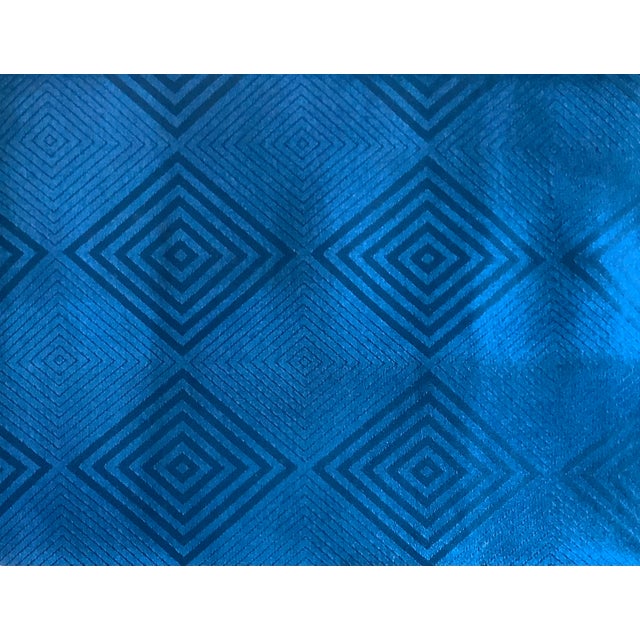
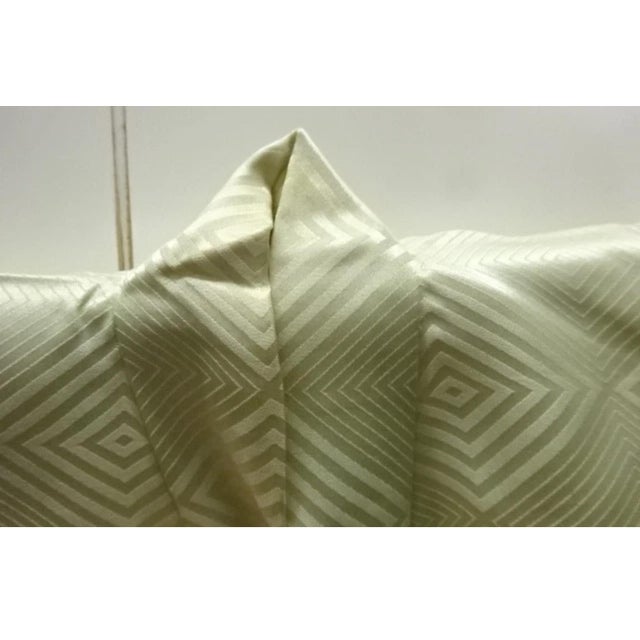
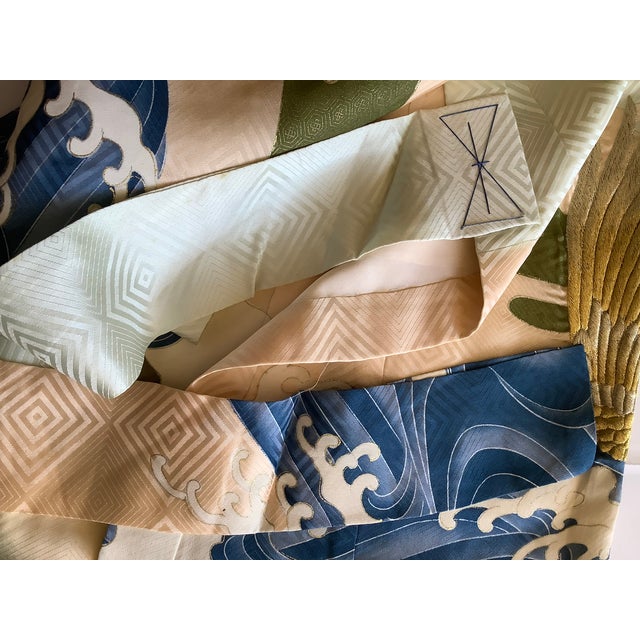
* Rinzu weave - The rinzu weave—a damask technique creating subtle self-patterned designs within the silk—adds textural richness to the ground fabric, elevating the garment's inherent luxury.
See less
- Dimensions
- 36ʺW × 2ʺD × 38ʺH
- Period
- 1950s
- Country of Origin
- Japan
- Item Type
- Vintage, Antique or Pre-owned
- Materials
- Gold
- Silk
- Silver
- Condition
- Good Condition, Original Condition Unaltered, Some Imperfections
- Color
- Gold
- Condition Notes
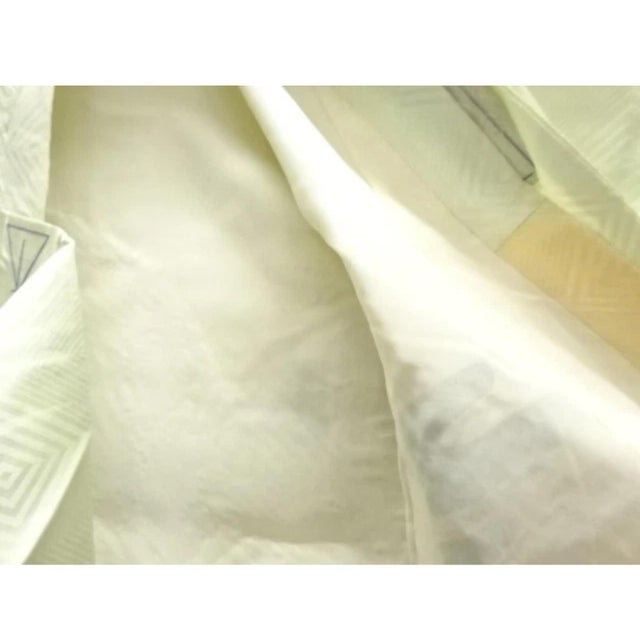
- very good condition, with a few small stains to lining and other minor imperfections. Refer photos for details very good condition, with a few small stains to lining and other minor imperfections. Refer photos for details less
Questions about the item?
Returns & Cancellations
Return Policy - All sales are final 48 hours after delivery, unless otherwise specified in the description of the product.
Cancellation Policy - Prior to shipping or local pickup, buyers may cancel an order for up to 48 hours, unless otherwise specified.
Related Collections
- Loloi Rugs Textile Art
- Louis XIII Textile Art
- Resin Textile Art
- Workaday Handmade Textile Art
- Antique Gold Finish Textile Art
- Kenneth Ludwig Chicago Textile Art
- Chanel Textile Art
- Mid-Century Modern Textile Art
- Chinese Textile Art
- Japanese Textile Art
- Tapestry
- Framed Scarves
- Scandinavian Textile Art
- Aubusson Tapestry
- Edwardian Textile Art
- Märta Måås-Fjetterström Textile Art
- Ralph Lauren Textile Art
- Surrealism Textile Art
- Space Age Textile Art
- Pablo Picasso Textile Art
- Cardboard Textile Art