




Details
Description
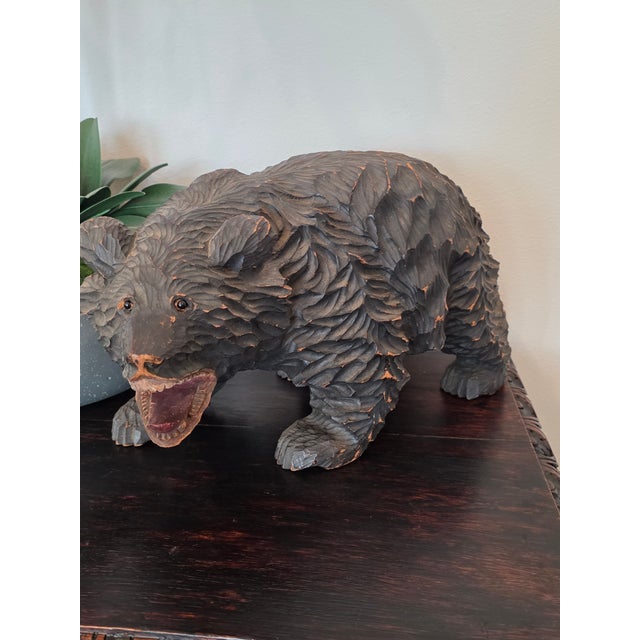
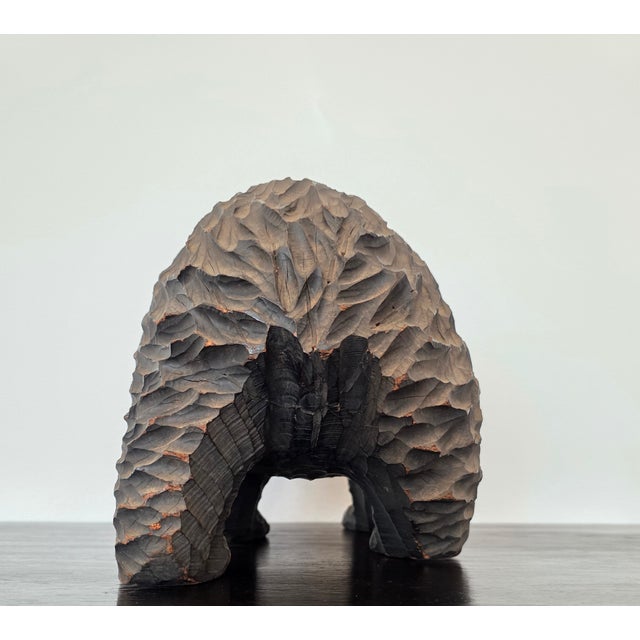
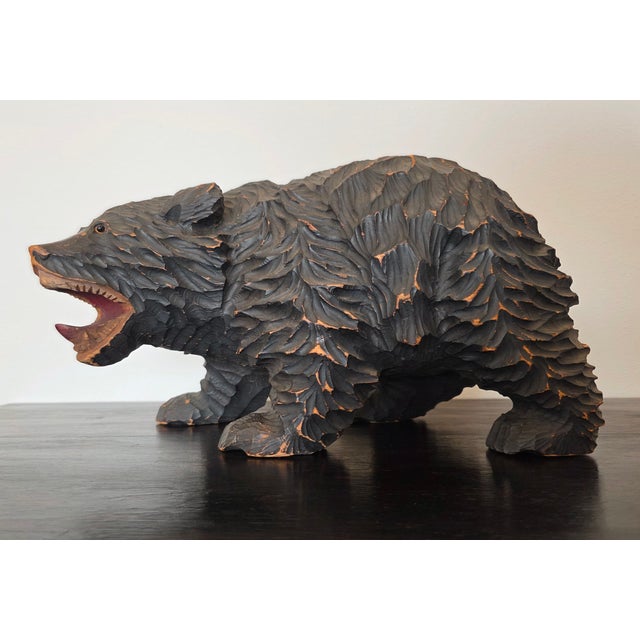
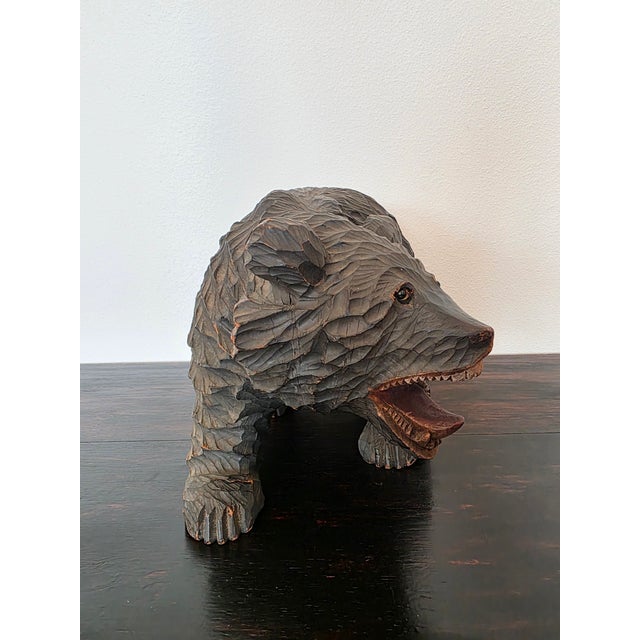
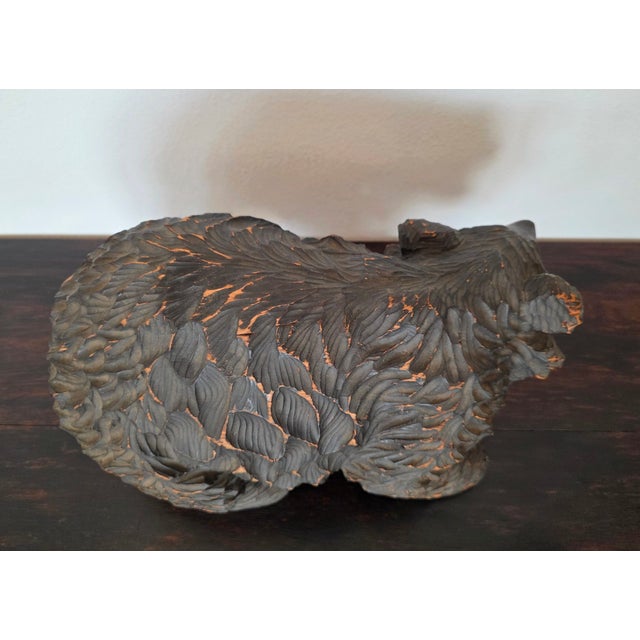
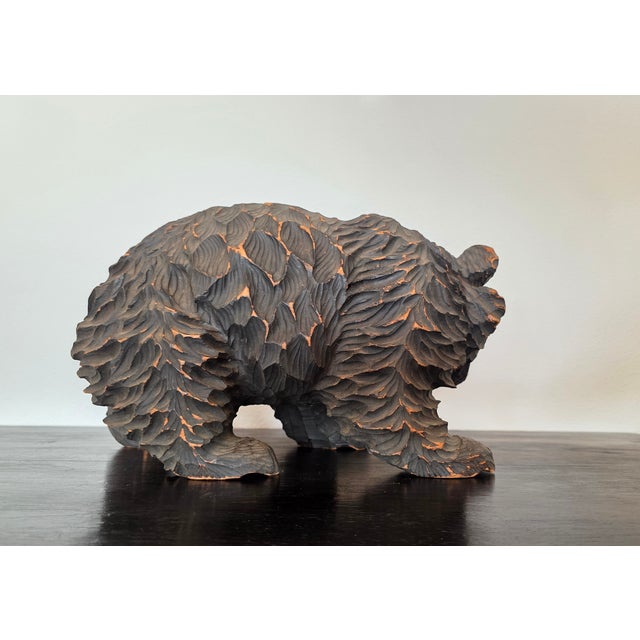
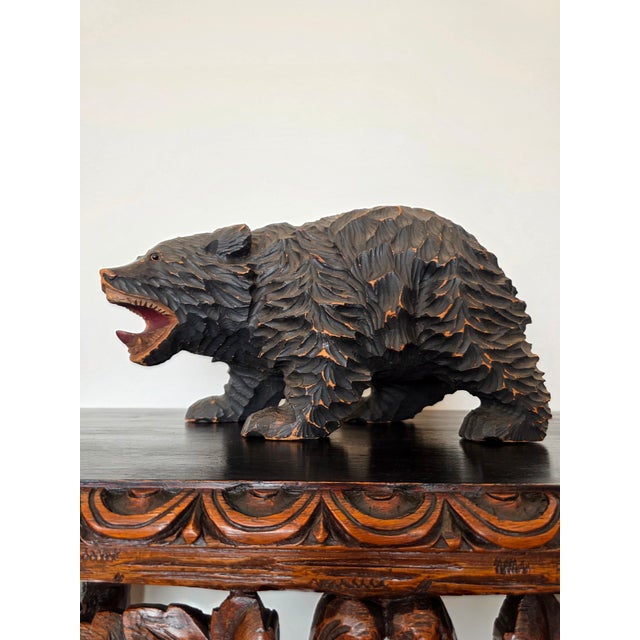
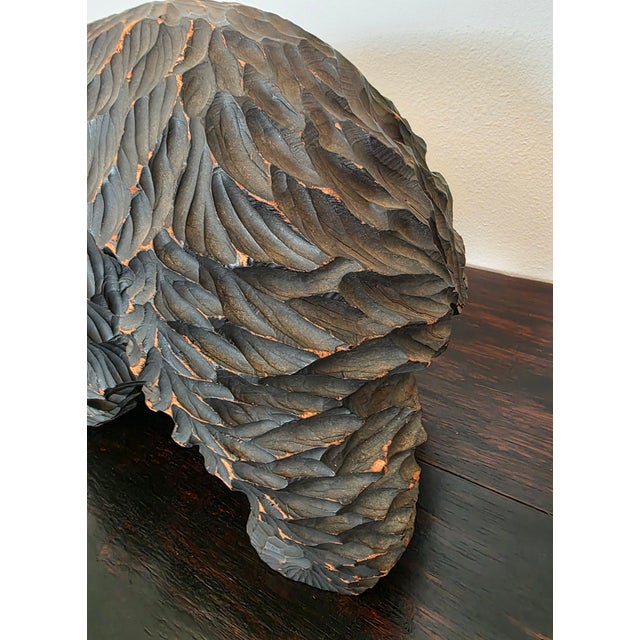
A rare and most impressive 1960s Japanese Ainu bear sculpture. Artist signed and dated.
Indigenous Ainu Peoples, probably Ashikawa, Hokkaido, …
Read more
A rare and most impressive 1960s Japanese Ainu bear sculpture. Artist signed and dated.
Indigenous Ainu Peoples, probably Ashikawa, Hokkaido, Japan's northernmost island.
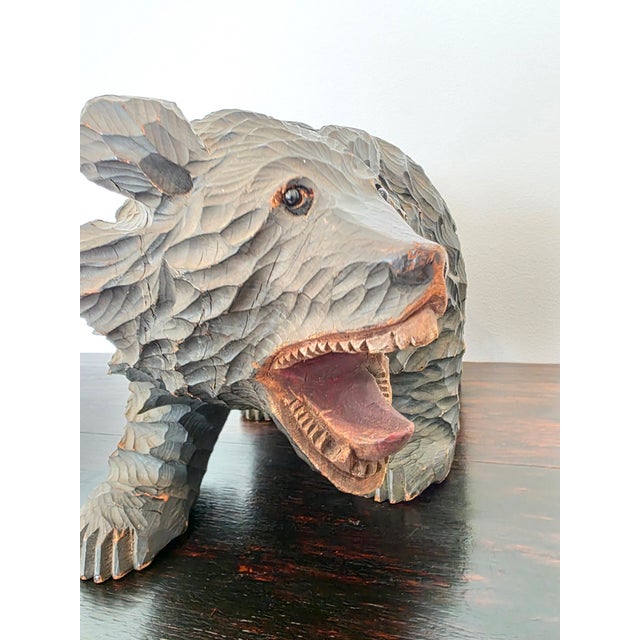
This extraordinary example of Kibori Kuma (木彫り熊) was finely hand carved, chiseled, sculpted and painted from a single solid piece of Japanese hardwood, using primitive traditional techniques and custom knives, the artisan would sit on the hut floor, using their feet as a vice to hold the block of wood, carefully manipulating and turning, wood chips flying, skillfully carving to create this beautiful piece of art!
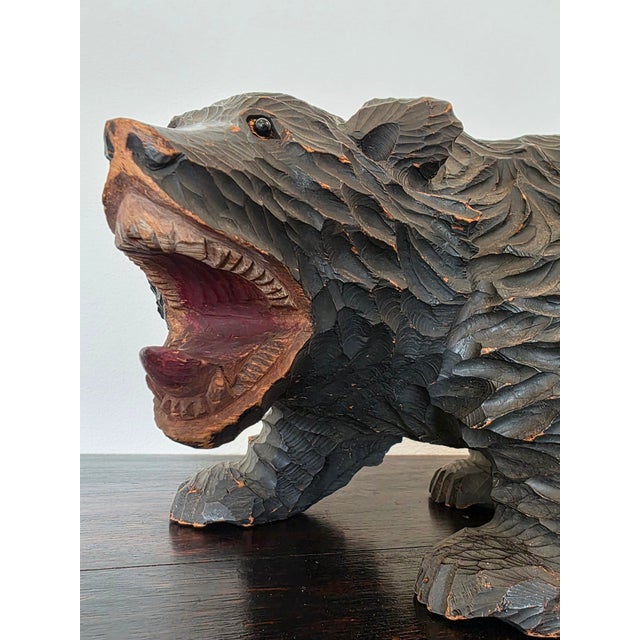
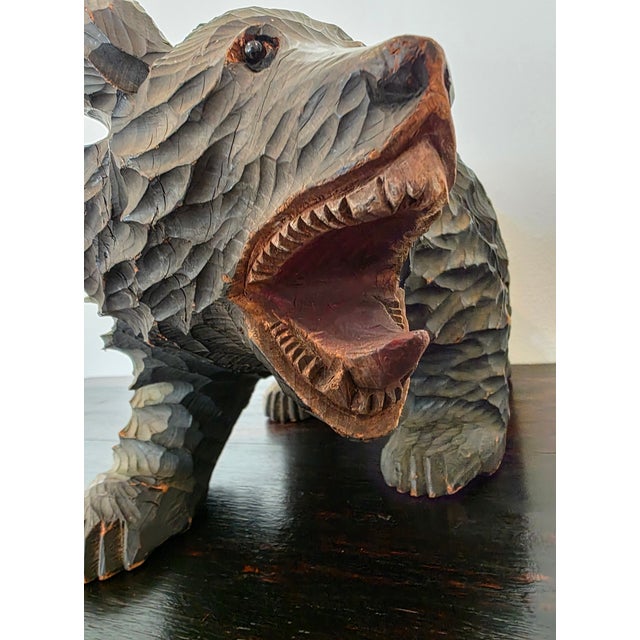
Exceptionally executed, this substantial sized realistic rendering showcases the artisan's extraordinary skills, workmanship, and artistry, the bears aggressive naturalistic appearance comes to life, evoking power, strength, and natural bounty, lending to its fierce dramatic presence.
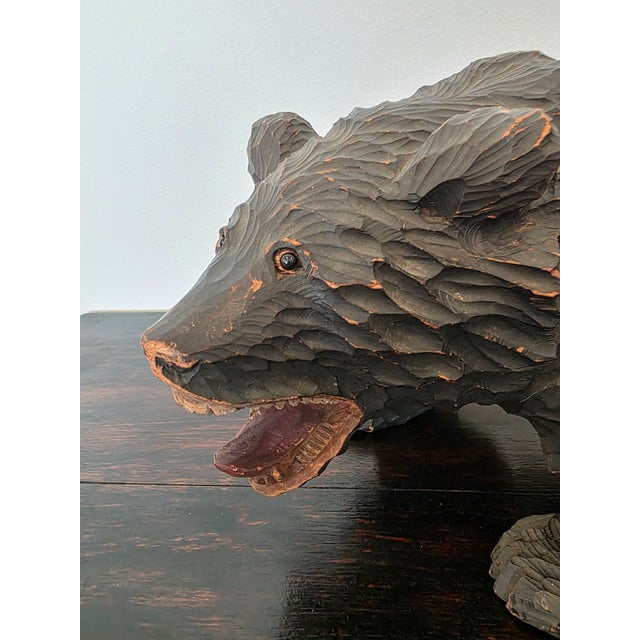
Modeled as a wild Ussuri Brown Bear standing on four legs, with inset black obsidian eyes, mouth open with teeth exposed, the muscular body with most distinct richly textured chip-carved thick fur-like body, this sculpture captures the essence of Ainu reverence for nature, this sacred animal, and their deep connection to the land.
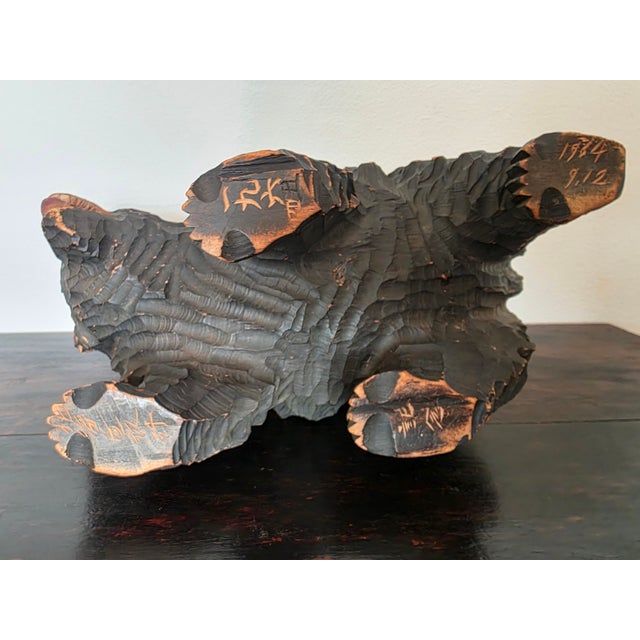
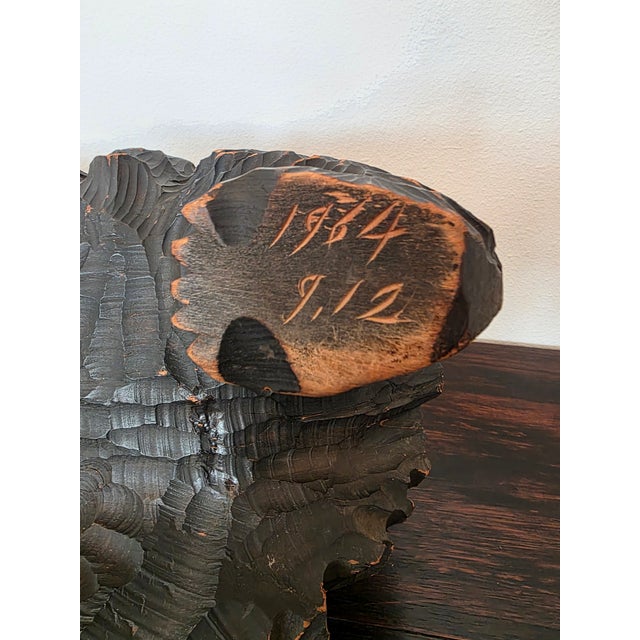
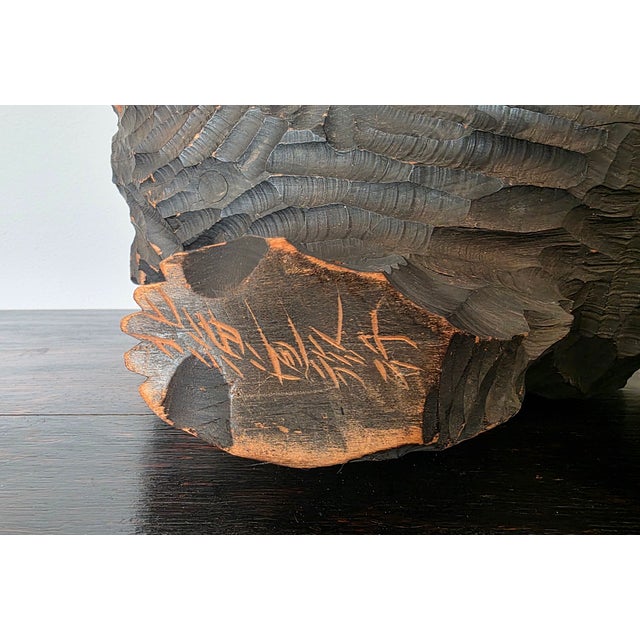
Signed underfoot, with various characters, and dated 9-12-1964
- DIMENSIONS: (approx)
16.25" Wide, 10" High, 8.125" Deep; 10lbs
- HISTORY / BACKGROUND:
The Ainu are an aboriginal hunter/gatherer/fisher people who once inhabited many of the islands that bound the southern half of the Sea of Okhotsk north of the main Japanese island of Honshu and Southern Russia.
Their land was contested by the Japanese Empire and the USSR for centuries, with the Meiji era Japan colonisation of Hokkaido taking place in the 19th century.
Colonisation dispossessed the native Ainu people of their lands and property. Widespread discrimination enforced against them, including their forced relocation into mountain areas and the prohibition of the use of the Ainu language decimated their economy with the eventual aim of the extinction of Ainu culture and its replacement by Yamato Japanese culture.
The history of the Ainu bear is intertwined with the Ainu's spiritual beliefs and way of life. Long revered as a sacred animal, the bear is viewed as a symbol of strength, wisdom, and protection, while also holding a central place in Ainu rituals, with ceremonies conducted to honor and communicate with these powerful creatures, and in Ainu mythology, the bear is often depicted as a divine being, capable of transcending the boundaries between the human and spiritual realms. So it's quite prophetic the bear played such a large role in both the region and cultures revival.
The Hokkaido bear carving story all begins when the “Tiger hunting Lord”, The Marquess (one rank below Prince/Duke and one above Earl/Count) of Owari-Tokugawa Family, Yoshichika Tokugawa went off on his tour of Europe in 1921. On his trip, he happened upon peasant art. Rustic handmade items crafted by farmers in the wintertime in the Swiss Alps and German Black Forest. These primitive decorative objects, such as simple bowls, spoons, figurines, letter openers, figural statue, were sold as souvenirs to help the farmers survive through the winter. Ever on the look out for economic opportunities for his family’s former servants, Yoshichika brought back many of these wooden items, among them were two wooden bears.
Knowing the cultural significance of the bear to the Ainu, and seeing there was no work or cultural entertainment to be had by the Ainu, Yoshichika took the items back to Hokkaido as samples so that like the farmers from Switzerland and Germany, they too could sell the wooden bears as souvenirs. At first he suggested to his farmers that they take inspiration from the Swiss items and carv similar things, but after much trial and error, they made a group decision to focus mainly on carving the bears. Masao Ito carved the first bear in 1924.
Yoshichika encouragingly promised to buy the carvings, good or bad, to support their efforts at first. Being a well connected nobleman, he invited artists, including Kaneyuki Tokura from Tokyo to hold seminars on the art of carving. He also started the first Yagumo Art Show and contest held to promote folk art. They struggled at first because at this time Japanese did not even have a word for “folk art”. Farmers had little understanding or appreciation of art. But Yoshichika and his farmers kept working and chose the best bears, had them stamped with a Yakumo brand and began selling to the public. Production increased and by 1932, these Yakumo bears gained national attention. Also, by this time, the Yakumo bears stylistically diverged significantly from the sample bears brought from Switzerland and Germany; paving the way for what we now recognize as the Hokkaido bears.
Hokkaido became a destination for travelers as well as a many military men who would be stationed there. Decades ago, especially before everyone had cameras, the carved bear souvenirs and artworks were a hit for such travelers. They would bring them back home with pride. And it was big business for craftsmen, artists and even carpenters who wanted to earn some money. Small figures, huge tabletop works, to massive museum quality monumental works were produced. So popular were these brown bear carvings of Hokkaido, that they were once a staple of Japanese Tea Rooms and entry ways. They reached their heyday in the Showa 40’s (1965-1975). And so they were slowly receding from collective memory, but just now have resurged in popularity as seen in a recent article in GQ magazine.
Highly desirable and sought after, collectors are willing to pay as much as a $25,000 for the rarest of these hand carved Ussuri brown bear. Yet, the history of these carved bears of Hokkaido is, in Japanese terms, not a very long one
See less
- Dimensions
- 16.25ʺW × 8.12ʺD × 10ʺH
- Styles
- Black Forest
- Japanese
- Period
- Mid 20th Century
- Country of Origin
- Japan
- Item Type
- Vintage, Antique or Pre-owned
- Materials
- Wood
- Condition
- Good Condition, Original Condition Unaltered, Some Imperfections
- Color
- Brown
- Condition Notes
- Excellent original vintage condition Excellent original vintage condition less
Questions about the item?
Returns & Cancellations
Return Policy - All sales are final 48 hours after delivery, unless otherwise specified in the description of the product.
Cancellation Policy - Prior to shipping or local pickup, buyers may cancel an order for up to 48 hours, unless otherwise specified.
Related Collections
- Wildwood Models and Figurines
- Ardalt Models and Figurines
- Rose Quartz Models and Figurines
- Villeroy and Boch Models and Figurines
- Models and Figurines in Lexington, KY
- Jasper Models and Figurines
- Bennington Potters Models and Figurines
- William Kent Models and Figurines
- Maison Jansen Models and Figurines
- Political and Patriotic Models and Figurines
- Spanish Revival Models and Figurines
- Gucci Models and Figurines
- Acrylic Paint Models and Figurines
- Vinyl Models and Figurines
- Unlacquered Brass Finish Models and Figurines
- Sèvres Porcelain Models and Figurines
- Brass Models and Figurines
- Staffordshire Dog Figurines
- Italian Models and Figurines
- Cat Figurines
- Elephant Figurines
- Antique Model Ships
- Ceramic Cats
- Animal Figurines
- Jade Models and Figurines