



Details
Description
British Sailor's Woolwork of a Tea Clipper,
Circa 1860-65
The large sailor's woolwork or woolie as they are also called …
Read more
British Sailor's Woolwork of a Tea Clipper,
Circa 1860-65
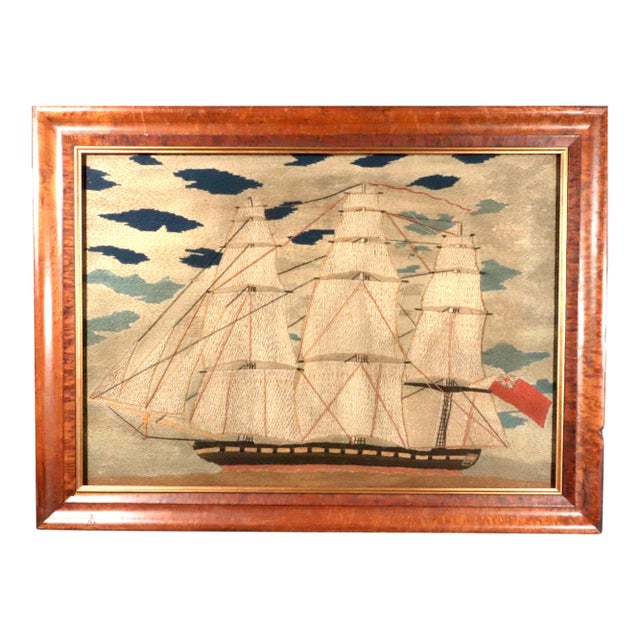
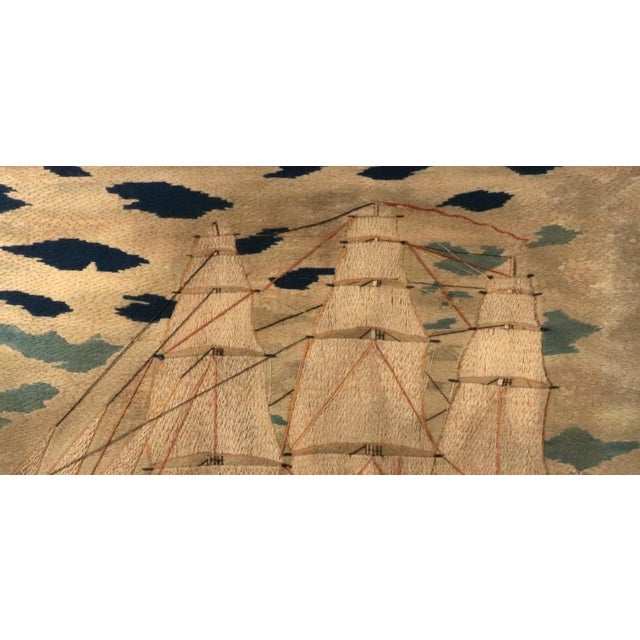
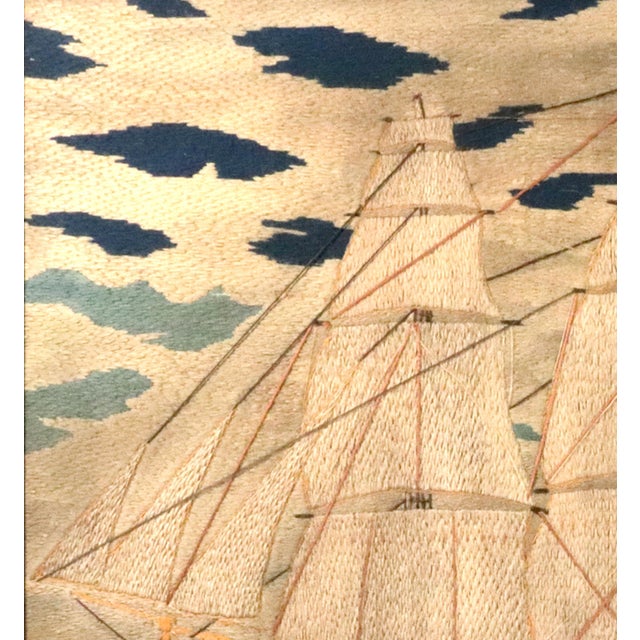
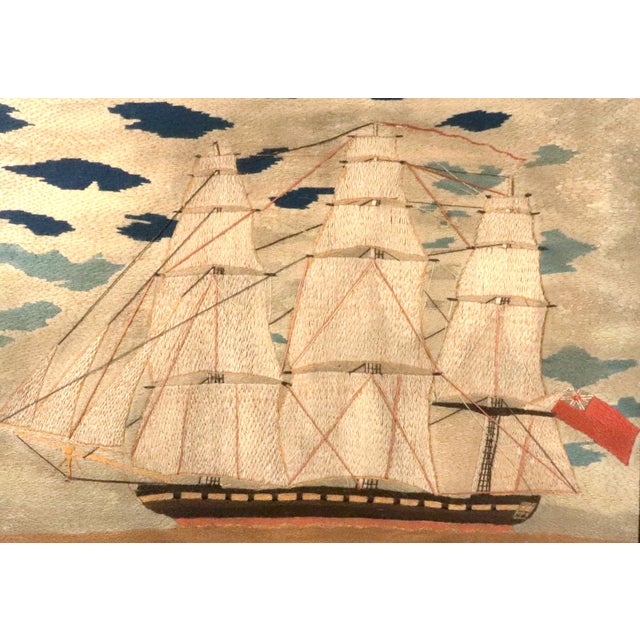
The large sailor's woolwork or woolie as they are also called depicts a port side view of a tea clipper ship. The three masted ship is under full sail out to sea. The ship mostly fills the space within the maple frame. The sea is distinctively depicted with splashes of wavy hues of blue both light and dark against a cloudy sky.
The wool is made with a early and rare chain-stitch.
Dimensions: 22 inches high 29 3/4 inches wide.
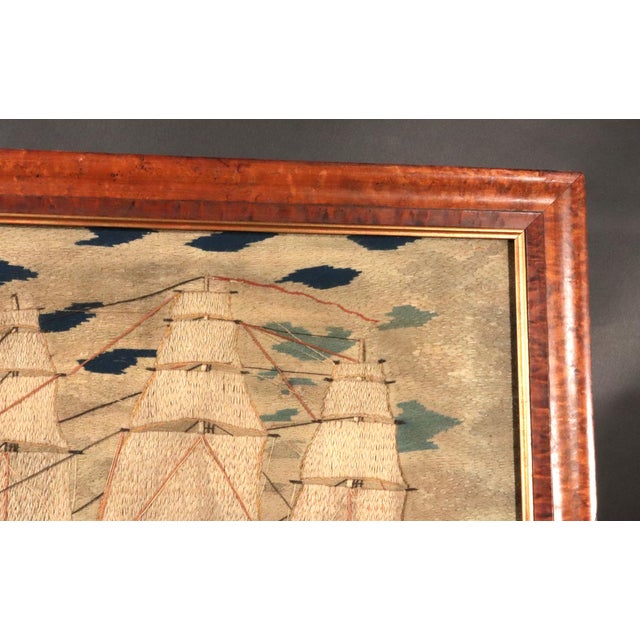
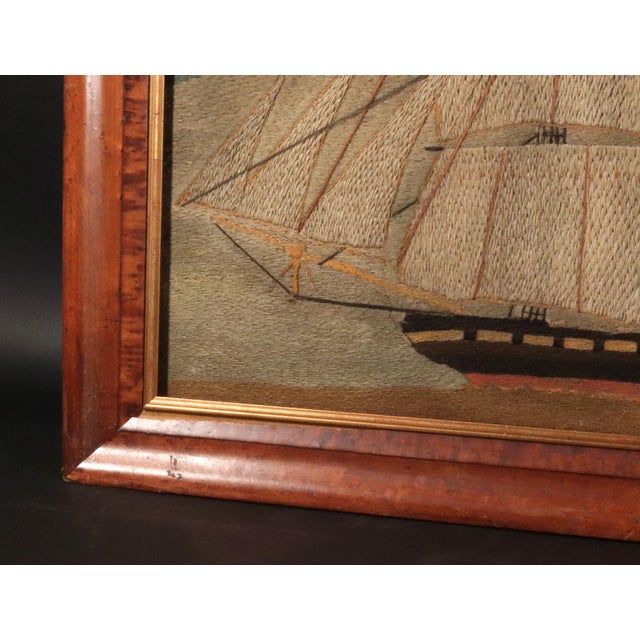
Now elegantly presented, this maritime artwork is housed in a beautiful maple frame featuring a classic ogee-form. The frame is fitted with museum glass, chosen specifically for its ability to significantly reduce reflections while offering substantial UV protection, safeguarding this piece for years to come.
Reference:
Shipbuilding underwent a revolution in the 19th century, resulting in the development of clipper ships, a pinnacle of nautical engineering and design. The term "clipper" referred to their ability to "clip" or cut down passage times, a testament to their speed and efficiency. These vessels, characterized by their long, narrow hulls, sharp bows, and an exceptionally large sail area, were designed for maximum velocity, often at the expense of cargo capacity.
Origins and Evolution
The genesis of clipper ships can be traced to the Baltimore "clippers" of the late 18th and early 19th centuries, smaller, fast schooners used for privateering and smuggling. However, the true "clipper era" dawned in the 1840s, driven by a confluence of economic factors and technological advancements. The burgeoning trade routes, particularly the China tea trade and the California Gold Rush, created an immense demand for rapid transport of high-value goods and passengers.
Key innovations in naval architecture, including refined hull lines based on scientific principles of hydrodynamics and improved sail plans, allowed for the unprecedented speeds these ships achieved. American shipyards, notably those in Boston, New York, and Baltimore, became epicenters of clipper construction, with designers like Donald McKay achieving legendary status for their groundbreaking designs.
Design and Characteristics
The defining features of a clipper ship were:
Sleek Hull: A long, slender hull with a concave or "hollow" bow and a sharp, often raked, stern. This design minimized wetted surface area and reduced resistance through the water.
Extreme Sheer: The upward curve of the deck towards the bow and stern, contributing to their graceful appearance and aiding in shedding water during rough seas.
Massive Sail Area: Clippers carried an enormous amount of canvas across multiple masts (typically three, occasionally four). Square-rigged on all masts, they boasted an intricate arrangement of sails, including skysails, moonrakers, and even studding sails, to harness every available breath of wind. This extensive rigging required large, skilled crews to manage.
Lightweight Construction: While robust, efforts were made to reduce overall weight, often utilizing lighter woods and less robust framing where structural integrity permitted, further contributing to speed.
Operational Significance
Clipper ships fundamentally altered global trade dynamics. Their unparalleled speed dramatically reduced transit times, making perishable goods like tea more accessible and facilitating faster communication. For instance, voyages from New York to San Francisco, which could take over 150 days for traditional vessels, were routinely completed by clippers in 90 days or less, with record runs under 80 days. This speed translated directly into increased profits for merchants.
The competitive nature of the tea races from China to London or New York, where the first ship to arrive with the new season's tea commanded the highest prices, further fueled the drive for faster and more efficient clipper designs. These races captivated the public imagination and pushed the boundaries of shipbuilding.
Decline of the Clipper Era
Despite their technological prowess and romantic appeal, the reign of the clipper ship was relatively short-lived, largely due to the advent of new technologies. The opening of the Suez Canal in 1869 significantly shortened the route to Asia, favoring steamships which, while slower, were not reliant on wind and could maintain a more consistent schedule. Furthermore, advancements in steam engine technology led to more fuel-efficient and powerful steamships that could carry vastly more cargo. The economic advantage shifted decisively towards steam, and by the 1870s, the golden age of sail, epitomized by the clipper, began its irreversible decline.
(Ref: VM98756)
See less
- Dimensions
- 29.75ʺW × 1.5ʺD × 22ʺH
- Period
- Mid 19th Century
- Country of Origin
- United Kingdom
- Item Type
- Vintage, Antique or Pre-owned
- Materials
- Wool
- Condition
- Good Condition, Original Condition Unaltered, Some Imperfections
- Color
- Cream
- Condition Notes
- Good condition and with Museum UV glass Good condition and with Museum UV glass less
Questions about the item?
Returns & Cancellations
Return Policy - All sales are final 48 hours after delivery, unless otherwise specified in the description of the product.
Cancellation Policy - Prior to shipping or local pickup, buyers may cancel an order for up to 48 hours, unless otherwise specified.
Related Collections
- Loloi Rugs Textile Art
- Louis XIII Textile Art
- Chanel Textile Art
- Resin Textile Art
- Workaday Handmade Textile Art
- Kenneth Ludwig Chicago Textile Art
- Antique Gold Finish Textile Art
- Mid-Century Modern Textile Art
- Chinese Textile Art
- Tapestry
- Japanese Textile Art
- Framed Scarves
- Scandinavian Textile Art
- Aubusson Tapestry
- Edwardian Textile Art
- Cardboard Textile Art
- Ralph Lauren Textile Art
- Märta Måås-Fjetterström Textile Art
- Brutalist Textile Art
- Pablo Picasso Textile Art
- Surrealism Textile Art
- Space Age Textile Art