
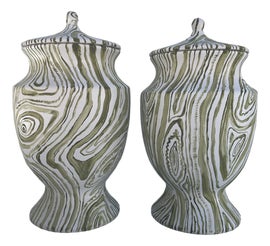
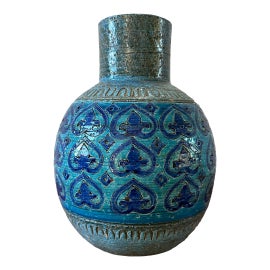
At Chairish, there’s no need to chase the perfect vintage vase. Our collection of vintage and antique vases includes thousands of vases for sale. From Murano vases to ginger jars to studio art vases, our selection of old vases spans the spectrum. No matter your style, you’re sure to find something that brings your vision to life and provides your project with the perfect finish. What can you find within our collection of vintage vases? Browse Italian pottery vases from prominent Mid-Century makers like Bitossi as well as old apothecary jars that are prime for providing character to a space. Discover worldly vases such as cloisonné vases hailing from Asia and Nemadji vases. Prefer glass vases? Shop designs from glass acts like Blenko, Fontana Arte, and Kosta Boda.
Shop on a Vase by Vase Basis. Shop Vintage Vases for Sale.
Need a vase in a particular color such as blue or red? At Chairish, we make it easy to discover vases in the perfect colorway with our color filters. Select any color of the rainbow to easily discover vases that fit your color palette to a tee. You can also use style filters to quickly browse vases that suit a particular aesthetic such as Asian, Italian, or French. Do a deep dive into more specific styles such as Chinoiserie, Tuscan, or Folk Art, too. Because we deal primarily in vintage, virtually all of the old vases you come across are in stock and ready to ship. Say goodbye to long lead times and hello to (near) instant gratification. As a bonus, when you shop vintage with Chairish, you’re also helping to keep a deserving piece out of a landfill and preventing the need for an alternative vase to be created new. So go on, shop exclusive vintage styles you won’t find anywhere else and make Chairish your home base for exceptional vintage vases!
Related Collections
- Pink Fenton Art Glass Company Vases
- Red Fenton Art Glass Company Vases
- Chase Brass and Copper Company Vases
- Glass Archimede Seguso Vases
- Ikea Vases
- Vetro Artistico Vases
- Straw Vases
- Shayla Copas Ginger Jars
- Louis Dage Vases
- Boda Nova Glassworks Vases
- Southeast Asia Vases
- The American School Vases
- Emilia Castillo Vases
- Purple Fenton Art Glass Company Vases
- Simon Pearce Vases
- Blue Baccarat Vases
- Fitz and Floyd Ginger Jars
- Rude Osolnik Vases
- Ruby Vases
- Svenskt Tenn Vases
- Godinger Vases
- Crystal Baccarat Vases
- Ward Bennett Vases
- Clarice Cliff Vases
- Blue Murano Vases