

Cheshire Antiques Consultant LTD
Chester, Cheshire West and Chester
Since 2021100+ sales
3x Super Seller

Details
Description
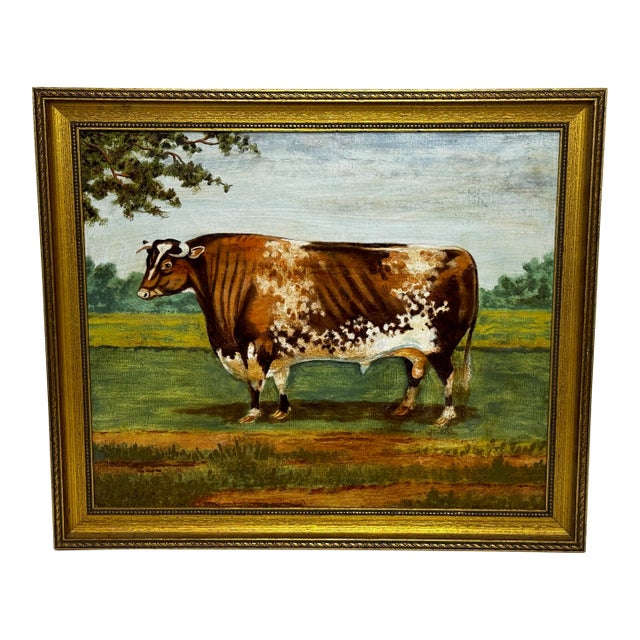
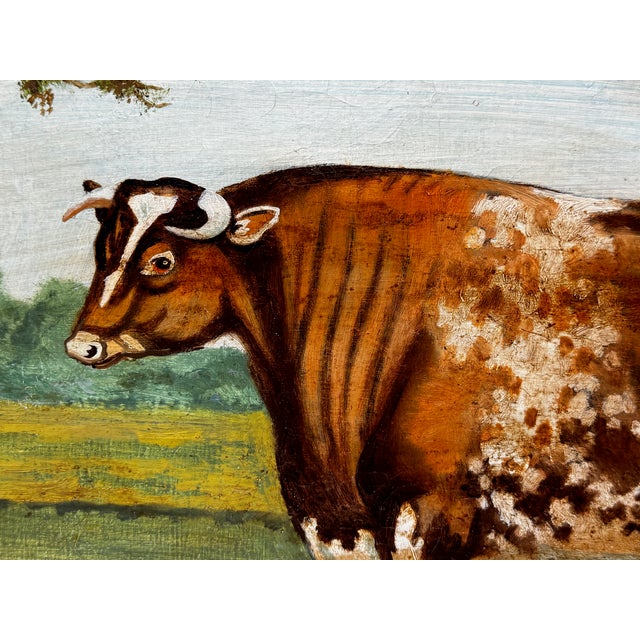
Victorian British Shorthorn Bull Pastoral Oil Painting in Gilt Frame c.1890
An expressive late-Victorian British livestock portrait with rich pastoral …
Read more
Victorian British Shorthorn Bull Pastoral Oil Painting in Gilt Frame c.1890
An expressive late-Victorian British livestock portrait with rich pastoral colouring, documented provenance and an intriguing Bourgeois Aîné Paris artist's support.
Highlights
British School, in the manner of William Ward
Circa 1890
Oil on canvas
Prized Shorthorn bull
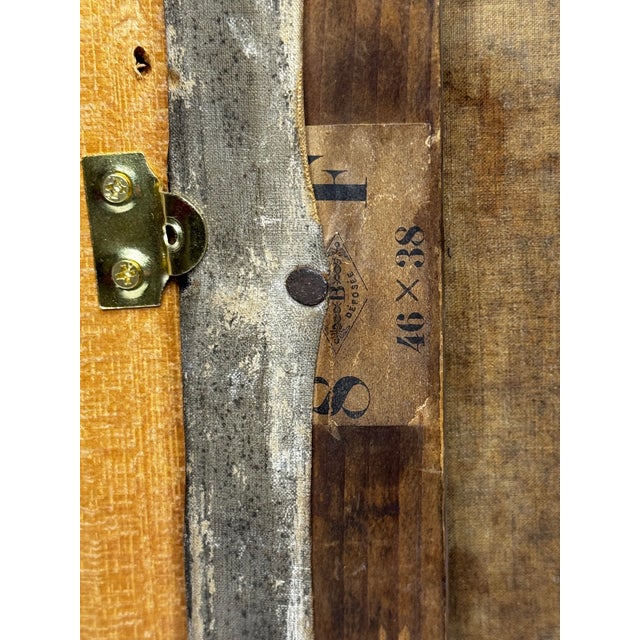
Bourgeois Aîné, Paris F8 support
Golding Young & Mawer provenance
Professionally conserved
Privately loaned and exhibited with the Famous Lord Hill Museum
Decorative gilt frame
Ready to hang
Introduction
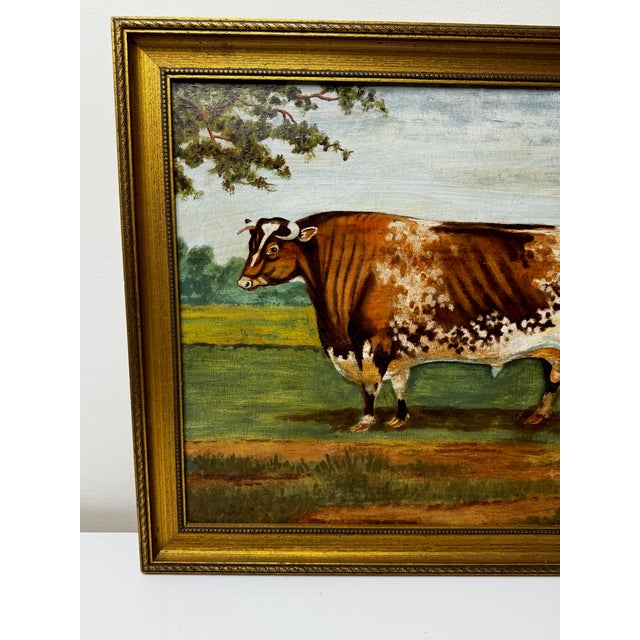
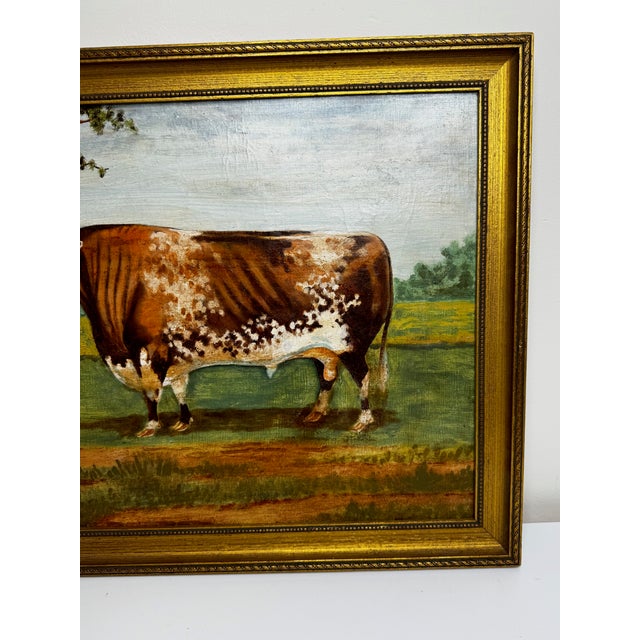
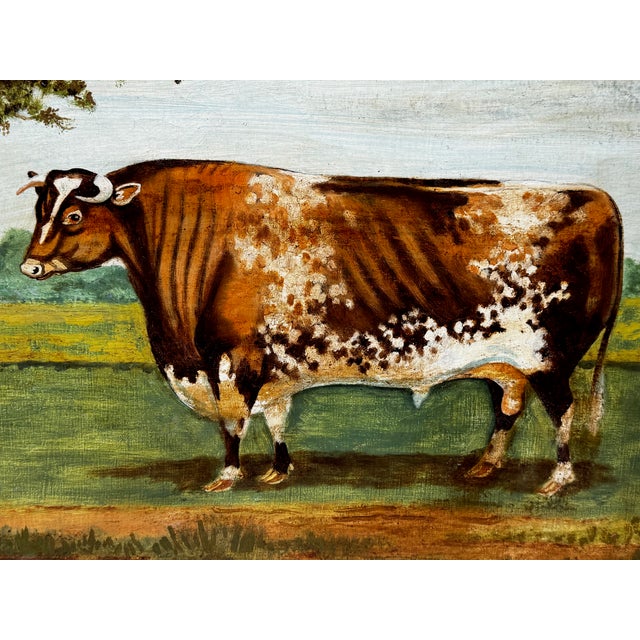
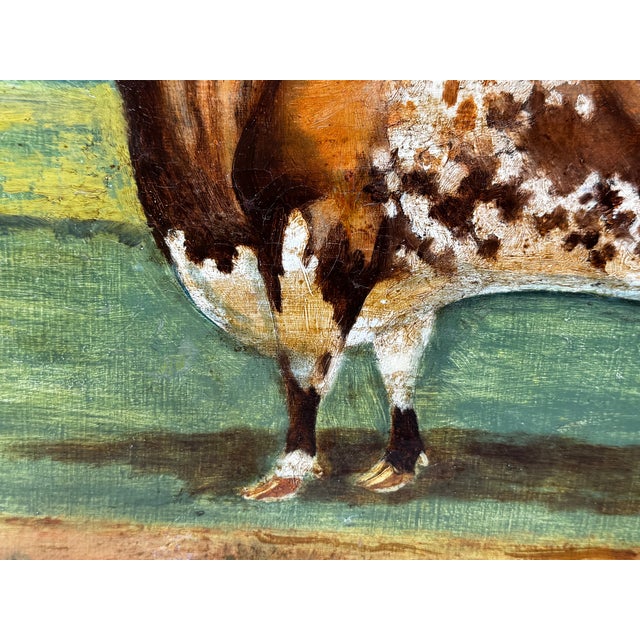
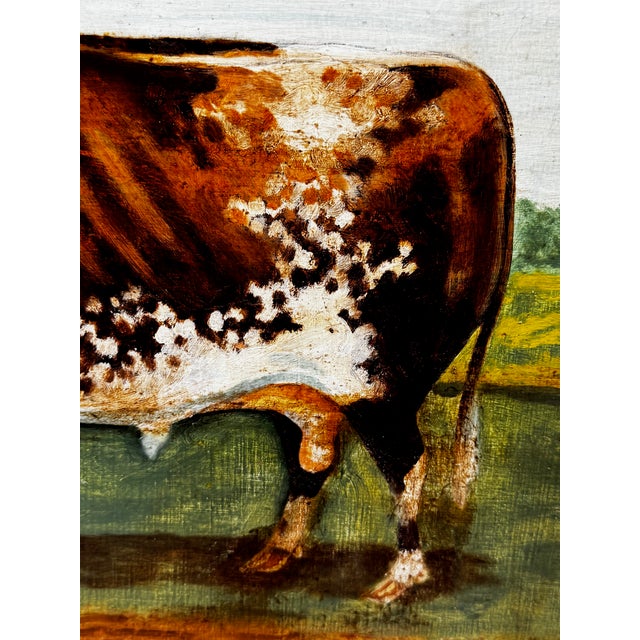
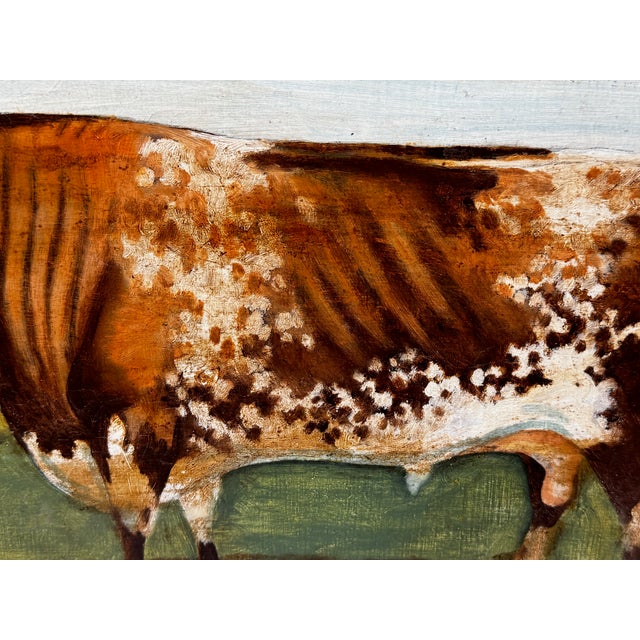
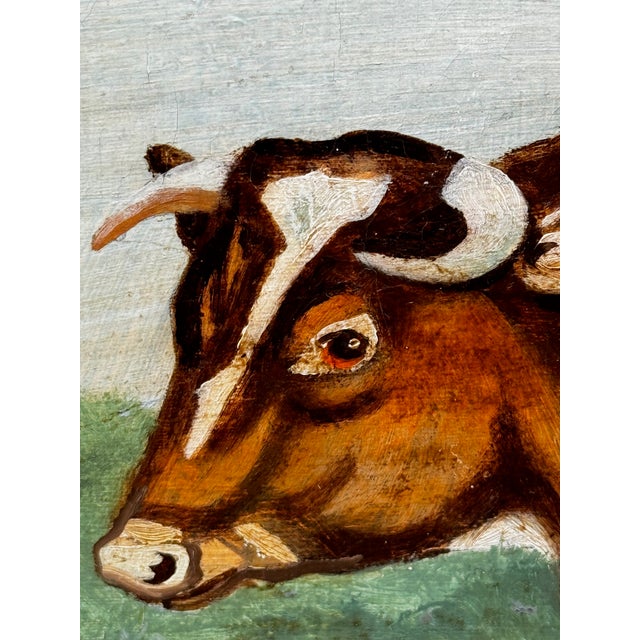
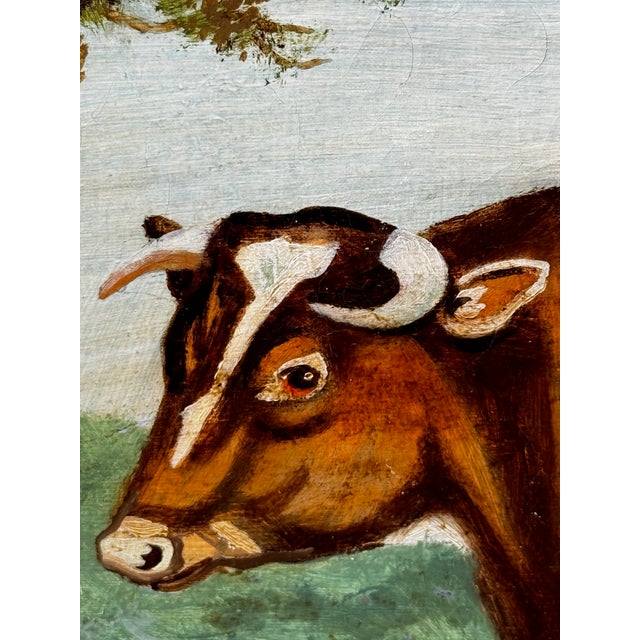
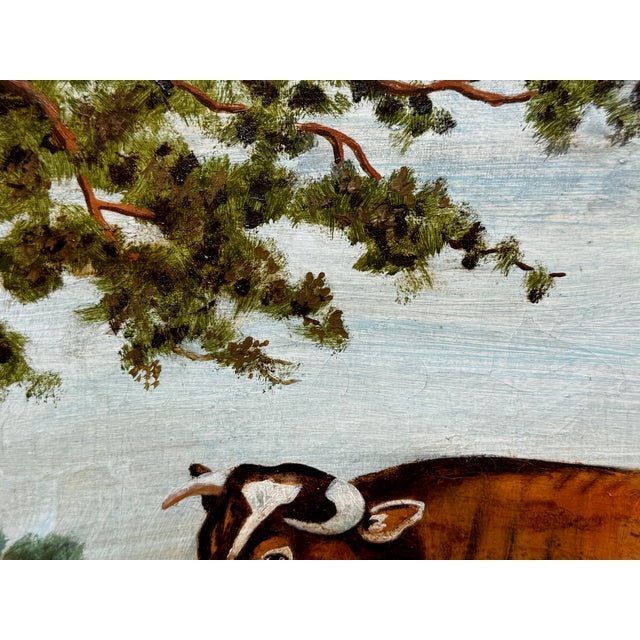
A characterful late-Victorian painting of a prized brown-and-white Shorthorn bull standing prominently within open countryside.
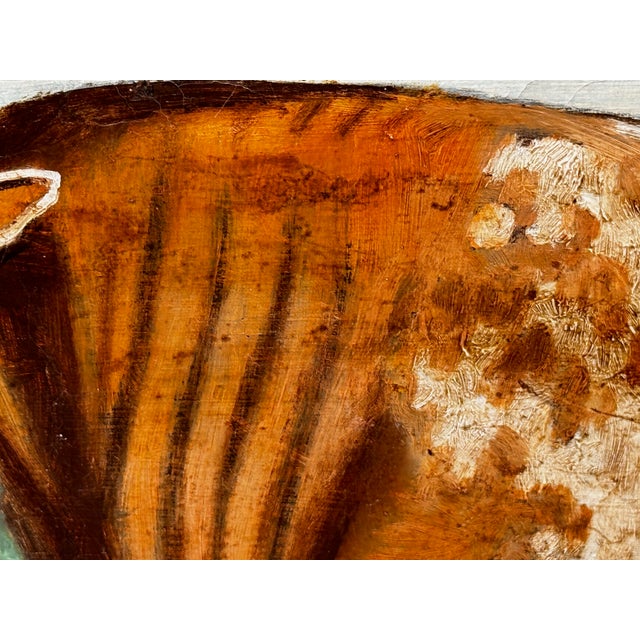
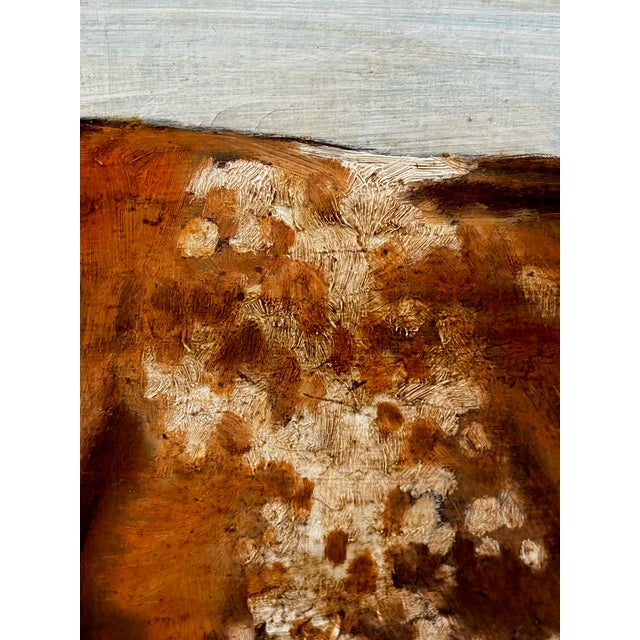
The warm russet and creamy-white animal contrasts beautifully with green pasture and an atmospheric sky, while the decorative gilt frame creates a strong traditional presentation.
British Livestock Portraiture
The bull is presented in full profile, concentrating attention upon its colouring, conformation and individual character.
The direct composition belongs to Britain's longstanding tradition of livestock portraiture and possesses the appealing individuality associated with provincial and naïve animal painting.
Attribution
British School, in the manner of William Ward, circa 1890.
Unsigned.
The attribution is stylistic and deliberately qualified.
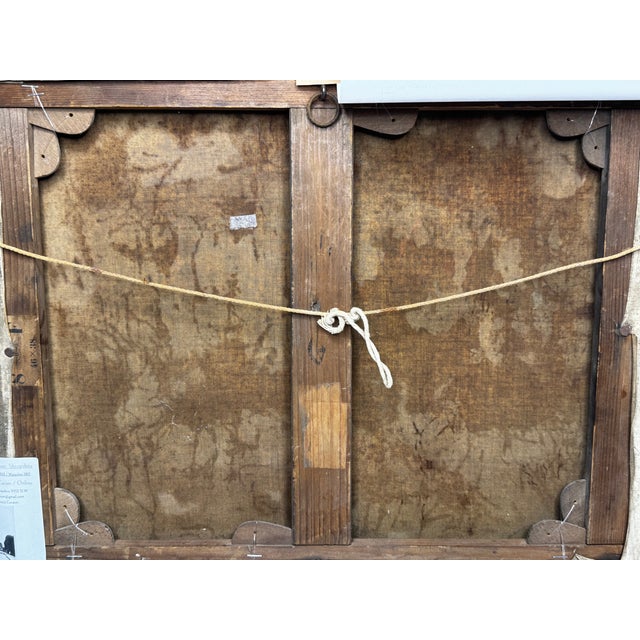
Historic Bourgeois Aîné Support
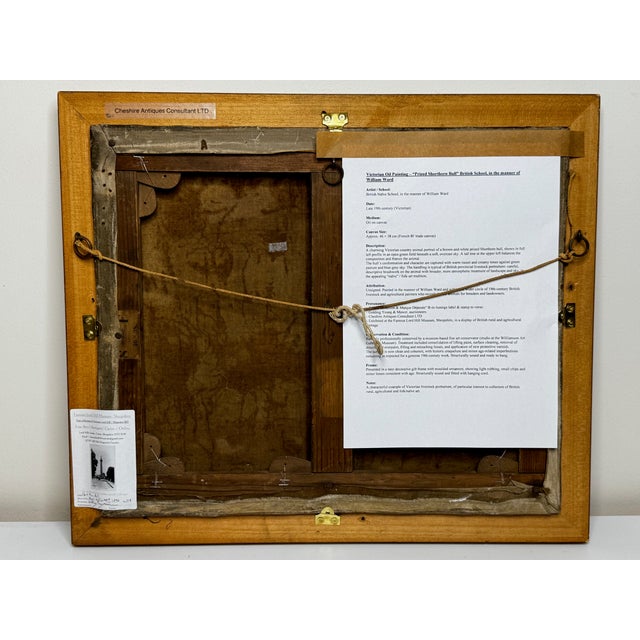
The reverse retains a registered B-in-lozenge trade mark associated with Bourgeois Aîné, Paris.
The support is marked 46 × 38 cm, corresponding to the French F8 standard format.
This provides a fascinating material-history element to the painting and is compatible with its late-19th-century context.
Golding Young & Mawer
Golding Young & Mawer, Lincoln Fine Art Sale, 5 February 2025, Lot 119.
Catalogued as:
“19thC British School. Short horn bull in landscape, oil on canvas.”
Provenance
Private collection.
Golding Young & Mawer, Lincoln Fine Art Sale, 5 February 2025, Lot 119.
Acquired from the above sale.
Thereafter Cheshire Antiques Consultant LTD®.
Private Loan and Exhibition
Privately loaned and exhibited with the Famous Lord Hill Museum, Shropshire.
The painting remained privately owned throughout the loan and exhibition period.
Professional Conservation
Professionally assessed and conserved by Vanessa Andrew M.A., Fine Art Conservator.
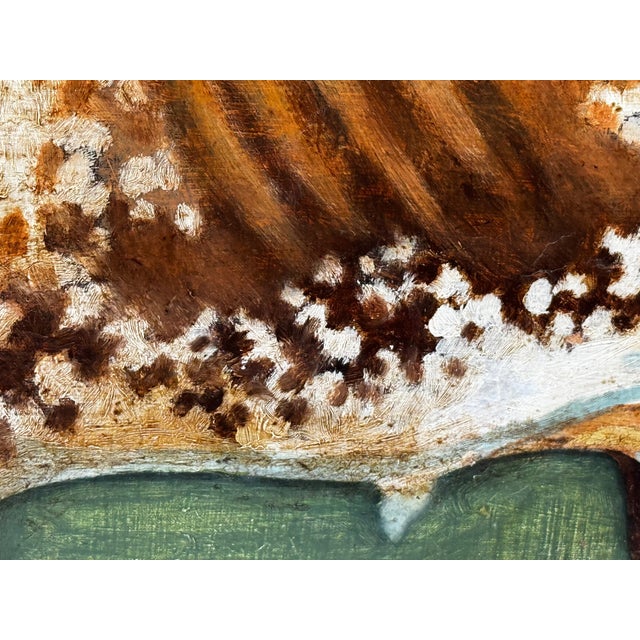
The treatment improved stability and presentation while retaining appropriate historic craquelure and surface texture.
Dimensions
Approximately 45 × 52 × 3 cm framed.
Frame
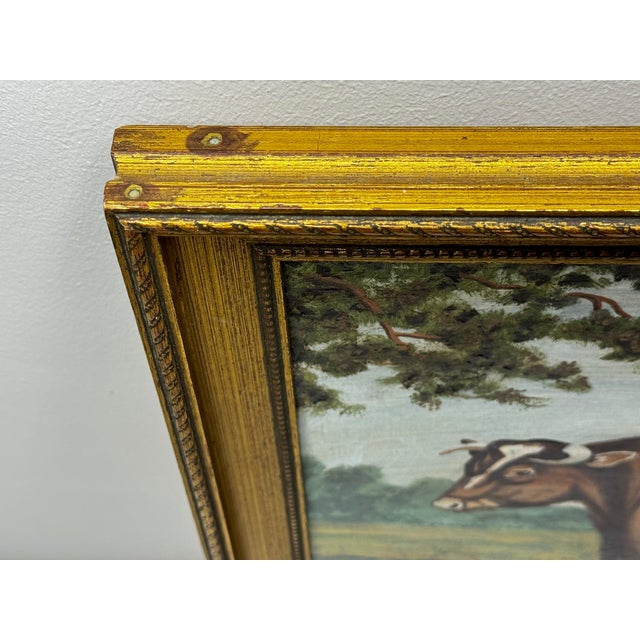
Later decorative gilt frame with moulded ornament and an established country-house appearance.
Expected rubbing, chips, marks and small decorative losses.
Ready to hang.
Certificate of Sale & Dealer Attribution
The artwork will be supplied with a Certificate of Sale & Dealer Attribution issued by Cheshire Antiques Consultant LTD®, recording the artwork’s catalogue details, attribution, provenance as stated, and details of the sale. This document accompanies the work as part of its ongoing ownership and provenance record.
Cheshire Antiques Consultant LTD®
Specialising in carefully curated British and European fine art, antiques and historic works of art.
Every artwork is professionally researched and catalogued using comparative scholarship, published reference material and more than two decades of experience within the international fine art market. We are committed to offering collectors works of artistic and historical merit accompanied by transparent provenance research, detailed catalogue descriptions and professional, client-focused service.
Additional photographs and further information are available upon request.
See less
- Dimensions
- 20.5ʺW × 1.25ʺD × 17.75ʺH
- Styles
- Victorian
- Frame Type
- Framed
- Period
- Late 19th Century
- Country of Origin
- United Kingdom
- Item Type
- Vintage, Antique or Pre-owned
- Materials
- Canvas
- Oil Paint
- Wood
- Condition
- Restored, Needs Restoration
- Color
- Brown
- Condition Notes
- Professional Conservation & Condition The painting has been recently conserved by a museum-based professional fine art conservator, whose studio is … moreProfessional Conservation & Condition The painting has been recently conserved by a museum-based professional fine art conservator, whose studio is based at the Williamson Art Gallery & Museum. Treatment included: Consolidation of lifting and raised paint. Surface cleaning to remove dirt, spots, marks and fibres. Removal of discoloured or unsympathetic overpaint. Filling of small paint losses. Application of a new varnish and careful retouching to losses. Final protective finishing varnish layer. The surface now reads clean and coherent, with the image significantly improved while retaining its antique character. Historic craquelure, age-related texture and minor old imperfections remain visible, as expected for an authentic 19th-century work. Overall, the painting is structurally sound, professionally conserved and ready to hang. Frame The work is presented in a later decorative gilt frame with moulded ornament, giving a classic Victorian country-house look. Areas of age-related wear, small chips, rubbing and minor losses to the high points of the gilding. Some surface dust in the crevices, adding to its period feel. The frame is structurally sound, complements the painting well, and is fitted with a hanging cord so it can go straight on the wall. less
Cheshire Antiques Consultant LTD
Chester, Cheshire West and Chester
Since 2021100+ sales
3x Super Seller
Questions about the item?
Returns & Cancellations
Return Policy - All sales are final 48 hours after delivery, unless otherwise specified in the description of the product.
Cancellation Policy - Prior to shipping or local pickup, buyers may cancel an order for up to 48 hours, unless otherwise specified.
Related Collections
- Photorealism Canvas Paintings
- Ed Ruscha Paintings
- Photorealism Paintings in New York
- Richard Serra Paintings
- Jo Baskerville Paintings
- Louise Nevelson Paintings
- Karen Offutt Paintings
- Nicola Simbari Paintings
- Herman Miller Paintings
- BDDW Paintings
- James McCray Paintings
- Jaanika Peerna Paintings
- Leroy Neiman Paintings
- Jeff Slemmons Paintings
- Milton Avery Paintings
- Vienna Secession Paintings
- Johannes Andersen Paintings
- Pedro Friedeberg Paintings
- Peter Behrens Paintings
- Piet Hein Eek Paintings
- Raphael Paintings
- Photorealism Paintings in Los Angeles
- Carl-Axel Acking Paintings
- Karl-Erik Ekselius Paintings
- Hans Andersen Paintings