




Details
Description
Needlework Estate: Victorian Woolwork of a Country House
Object: Large British Woolwork Picture (Needlepoint/Embroidery)
Origin: Britain
Date: Circa 1860–1880
Medium: …
Read more
Needlework Estate: Victorian Woolwork of a Country House
Object: Large British Woolwork Picture (Needlepoint/Embroidery)
Origin: Britain
Date: Circa 1860–1880
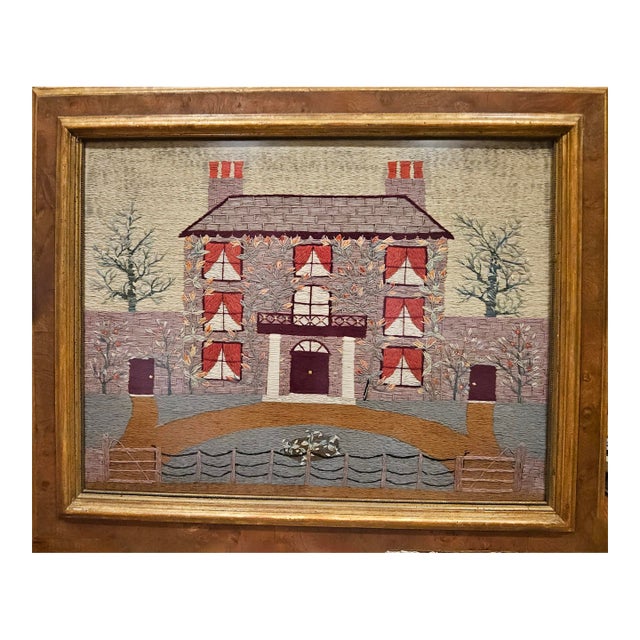
Medium: Worsted Wool on Canvas, Framed
Dimensions: 25 1/4 inches high x 44 1/2 inches wide x 2 1/4 inches deep (64.14 cm x 113.03 cm x 5.72 cm).
Monumental Domestic Art
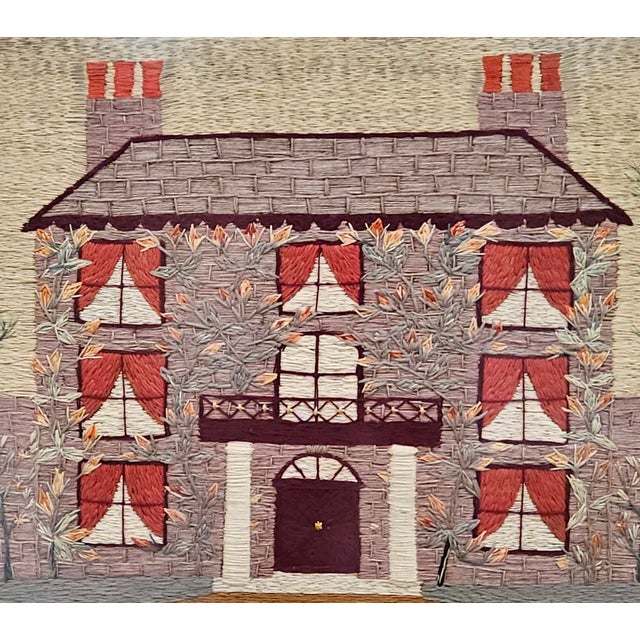
This massive woolwork picture stands as a testament to the ambition and technical skill of Victorian domestic art. Unlike earlier, smaller needlework samplers, this piece transforms the humble craft into a monumental pictorial canvas, meticulously depicting a three-story Georgian English country house set within established gardens and grounds.
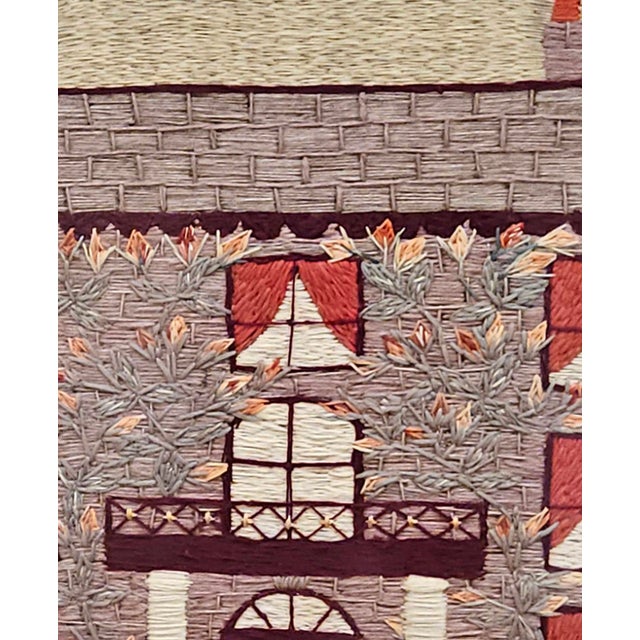
The composition is centered on the symmetrical architecture of the house, which features white classical columns flanking the entrance. The detail work is extraordinary: note the climbing flowering plants covering the brickwork, the wooden picket fence, and the distinctive red draped curtains in the windows, which are stylized to resemble small, single-masted sailboats—a charming, whimsical element that hints at the needleworker’s personal imagination. Two triple chimneys crown the roof, and two discrete black doors are set into the garden walls on either side of the main structure.
Historical Context: The Landscape of Aspiration
Dating to the mid-to-late 19th century, this woolwork reflects the Victorian aspiration toward the landed gentry. The imagery of a comfortable, classical country house, surrounded by carefully maintained gardens, was the ultimate status symbol. Middle-class needleworkers often sought out printed patterns or mezzotints of grand houses to translate into wool, allowing them to symbolically possess the wealth and domestic stability represented by the scene.
The use of woolwork (a form of tapestry or needlepoint) allowed for a dense, durable, and highly textured image. The resulting texture gives the trees, hedges, and roof a tactile quality that distinguishes it sharply from fine art painting, grounding this vision of aristocratic life firmly in the realm of folk craft and domestic labor.
References
Swain, Margaret: Historical Needlework: A Study of Needlework in the Victoria and Albert Museum (General context on British needlework and the transition from samplers to pictorial forms).
Ring, Betty: Needlework: An Illustrated History (Context on European and American domestic textile art, including architectural subjects).
Collection Focus: Similar large-scale domestic landscape textiles are often housed in museums that specialize in British Decorative Arts, such as the Victoria and Albert Museum (V&A) and regional British museums focused on social and textile history.
(Ref: NY10946-nimr)
See less
- Dimensions
- 44.5ʺW × 2.25ʺD × 25.25ʺH
- Styles
- Folk Art
- Period
- Mid 19th Century
- Country of Origin
- United Kingdom
- Item Type
- Vintage, Antique or Pre-owned
- Materials
- Wool
- Condition
- Good Condition, Original Condition Unaltered, Some Imperfections
- Color
- Purple
- Condition Notes
- good condition good condition less
Questions about the item?
Returns & Cancellations
Return Policy - All sales are final 48 hours after delivery, unless otherwise specified in the description of the product.
Cancellation Policy - Prior to shipping or local pickup, buyers may cancel an order for up to 48 hours, unless otherwise specified.
Related Collections
- Louis XIII Textile Art
- Cashmere Textile Art
- Edwardian Textile Art
- Ralph Lauren Textile Art
- Textile Art in Santa Fe
- Workaday Handmade Textile Art
- Cork Textile Art
- Old New House Textile Art
- Hair on Hide Textile Art
- Loloi Rugs Textile Art
- Antique Gold Finish Textile Art
- Chanel Textile Art
- Mid-Century Modern Textile Art
- Framed Scarves
- Tapestry
- Chinese Textile Art
- Japanese Textile Art
- Scandinavian Textile Art
- Aubusson Tapestry
- Brutalist Textile Art
- Märta Måås-Fjetterström Textile Art
- Surrealism Textile Art
- Space Age Textile Art
- Asian Style Textile Art