




Details
Description
René Lalique, France, 1912
An Extremely Rare Art Nouveau Box D’Orsay
Few works embody the spirit of early 20th-century France …
Read more
René Lalique, France, 1912
An Extremely Rare Art Nouveau Box D’Orsay
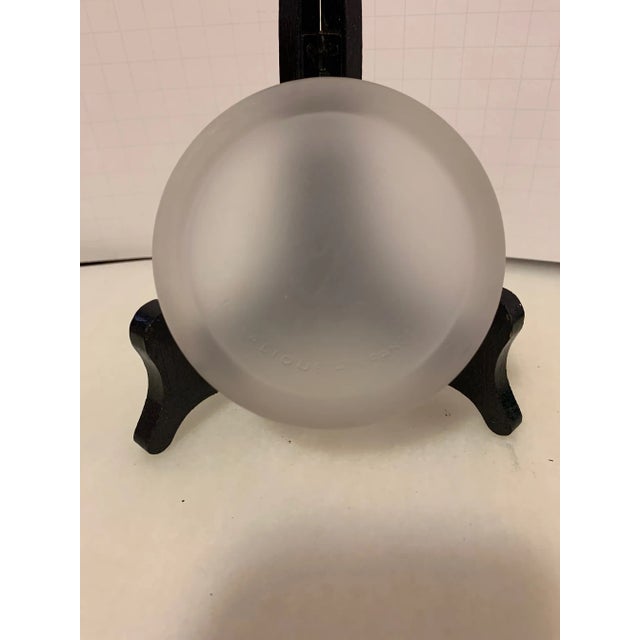
Few works embody the spirit of early 20th-century France as elegantly as this rare Box D’Orsay by René Lalique, created in 1912 at the height of the Art Nouveau movement. Sculpted in luminous glass, three nude figures encircle in graceful rhythm, their movements so fluid and untouchable that they seem to dissolve into light itself.
This piece exists in dialogue with Henri Matisse’s celebrated painting La Danse (1909–1910), a Fauvist masterpiece rooted in Impressionist freedom of expression. Where Matisse conveyed vitality through color and brushstroke, Lalique distilled the same energy into transparency and form. Together, they reflect a France alive with creativity, passion, and the exploration of new artistic languages.
Created in the same extraordinary moment of early French modernism, the sculpted nude figures display a striking visual affinity with Henri Matisse’s The Dance (1909–1910). Their simplified bodies, circular rhythm, linked movement, and expressive use of negative space create a remarkable dialogue between Matisse’s painted dancers and Lalique’s sculptural treatment of the human figure in glass.
To hold this box is to hold that dialogue — between glass and paint, between Art Nouveau curves and Fauvist color, between two masters speaking in harmony across mediums. With its rarity, artistry, and cultural resonance, this Lalique masterpiece stands as both a collectible treasure and a testament to the enduring brilliance of French modern art.
Details
René Lalique (1860–1945), French
Model: Trois Figurines / D’Orsay
Date: circa 1912
Material: molded clear and frosted glass
Decoration: three dancing nude female figures in relief
Dimensions: approximately 4" diameter × 1.5" high
Mark: molded R. LALIQUE FRANCE
Period: Early 20th century
Style: Art Nouveau / Belle Époque
Condition
Excellent
Rene Lalique Clear & frosted Glass "Three Dancing Figurines' Box. Moulded makers mark, 'R. LALIQUE FRANCE'.
See less
- Dimensions
- 4ʺW × 4ʺD × 1.5ʺH
- Artist
- René Lalique
- Brand
- René Lalique
- Designer
- René Lalique
- Period
- 1910s
- Country of Origin
- France
- Item Type
- Vintage, Antique or Pre-owned
- Materials
- Art Glass
- Crystal
- Condition
- Good Condition, Original Condition Unaltered, Some Imperfections
- Color
- Gold
- Condition Notes
- Good/Great - Lightly used, with very light scratches, or minor cosmetic wear, but has no structural issues. Most antique and … moreGood/Great - Lightly used, with very light scratches, or minor cosmetic wear, but has no structural issues. Most antique and vintage items fit this condition. less
Questions about the item?
Returns & Cancellations
Return Policy - All sales are final 48 hours after delivery, unless otherwise specified in the description of the product.
Cancellation Policy - Prior to shipping or local pickup, buyers may cancel an order for up to 48 hours, unless otherwise specified.
Related Collections
- Feather Decorative Bowls
- Tyra Lundgren Decorative Bowls
- Carlo Moretti Decorative Bowls
- Port 68 Decorative Bowls
- Hermès Decorative Bowls
- Nymphenburg Porcelain Decorative Bowls
- Sèvres Porcelain Decorative Bowls
- Furstenberg Porcelain Decorative Bowls
- Gucci Decorative Bowls
- Tiffany and Co. Decorative Bowls
- Brass Chinese Decorative Bowls
- Lalique Decorative Bowls
- Fenton Art Glass Company Decorative Bowls
- Brass Decorative Bowls
- Chinoiserie Decorative Bowls
- Chinese Decorative Bowls
- Maitland - Smith Decorative Bowls
- Japanese Decorative Bowls
- Murano Glass Decorative Bowls
- Mid-Century Modern Decorative Bowls
- Red Bowls
- Copper Decorative Bowls
- Footed Bowls
- Blown Glass Decorative Bowls
- Mixing Bowls