

Details
Description
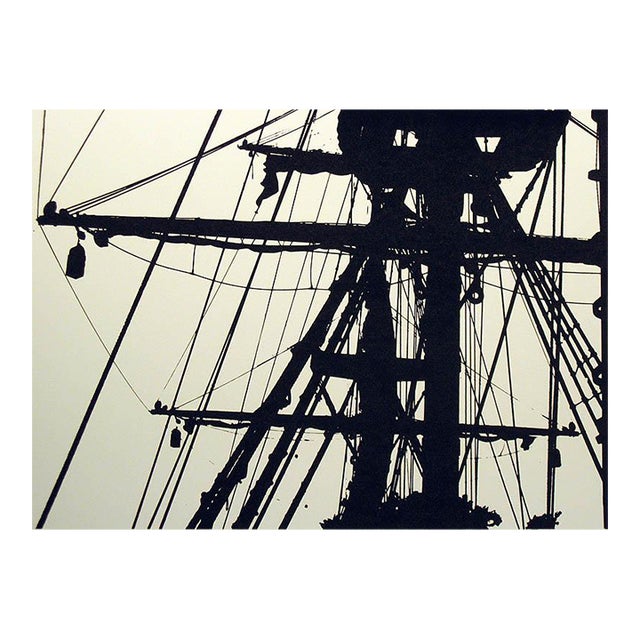
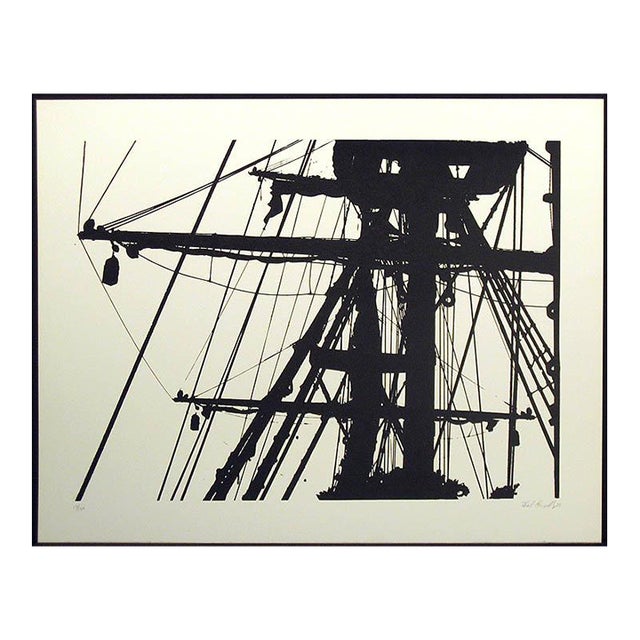
by Hal Connelly
Unframed
Limited Edition Serigraph
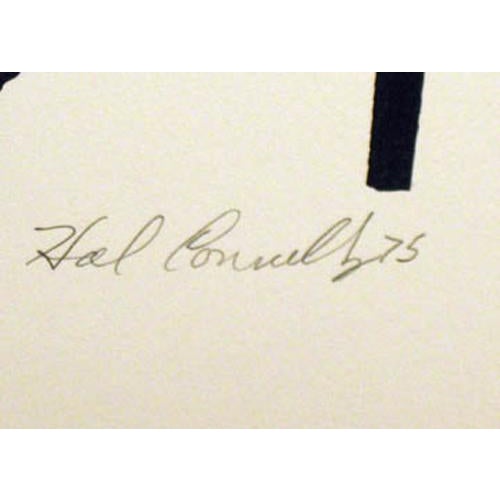
Hand Signed by the artist
Size: 20" x 26"
Edition Number: 4/150
Condition …
Read more
by Hal Connelly
Unframed
Limited Edition Serigraph
Hand Signed by the artist
Size: 20" x 26"
Edition Number: 4/150
Condition of the artwork is Excellent
Retail $200.00 unframed
MAKE AN OFFER!!
Hal Connelly
Hal Connelly is a serigraph artist "par excellence". After doing his own prints and those of other artists for several years, Hal turned to commercial serigraphy for several years.This experience gave him expertise far beyond that normally associated with fine art printing. He understands the use of many inks and additives not generally used by artists. By incorporating these periodically into his fine art, his work takes on a truly unique quality.
Hal has had a life long love affair with Oriental art. While his work is contemporary, he utilizes the Oriental techniques of simplicity and quiet understatement to give his work a special sense of beauty and serenity.
Serigraph definition:
A stencil method of printmaking in which an image is imposed on a screen of silk or other fine mesh, with blank areas coated with an impermeable substance, and ink is forced through the mesh onto the printing surface. Also called silkscreen process and screen-printing. A serigraph is a print made by this method.
The word Serigraph is a combination of two Greek words, seicos, meaning silk, and graphos, meaning writing. Silkscreen printing and other stencil-based printing methods are the oldest forms of printmaking.
Printmaking is a process for producing editions (multiple originals) of artwork. Painting, on the other hand, is a process for producing a single original piece of artwork. In printmaking, each print in an edition is considered an original work of art, not a copy.
Silkscreen printing can be traced as far back as 9000 BC, when stencils were used to decorate Egyptian tombs and Greek mosaics. From 221-618 AD stencils were used in China for production of images of Buddha. Japanese artists turned screen printing into a complex art by developing an intricate process wherein a piece of silk was stretched across a frame to serve as the carrier of hand cut stencils.
Silkscreen printing found its way to the west in the 15th century. The original material used in screen printing was silk, hence the name Silkscreen printing. Today polyester is the fabric of choice.
See less
- Dimensions
- 26ʺW × 0.2ʺD × 20ʺH
- Styles
- Impressionist
- Frame Type
- Unframed
- Art Subjects
- Abstract
- Period
- 1970s
- Country of Origin
- United States
- Item Type
- Vintage, Antique or Pre-owned
- Materials
- Paper
- Printmaking Materials
- Condition
- Good Condition, Original Condition Unaltered, Some Imperfections
- Color
- Black
- Condition Notes
- mint mint less
Questions about the item?
Returns & Cancellations
Return Policy - All sales are final 48 hours after delivery, unless otherwise specified in the description of the product.
Cancellation Policy - Prior to shipping or local pickup, buyers may cancel an order for up to 48 hours, unless otherwise specified.
Related Collections
- Rattan Original Prints
- Soicher Marin Original Prints
- Medium-Density Fibreboard Original Prints
- Johannes Kip Original Prints
- Silver Finish Original Prints
- Sam Francis Original Prints
- Dye Transfer Original Prints
- Original Prints in Lexington, KY
- John Kiraly Original Prints
- Damien Hirst Original Prints
- Donald Sultan Original Prints
- Original Prints in Panama City, FL
- Original Prints in Salt Lake City
- Ralph Lauren Original Prints
- Botanical Prints
- Framed Prints
- Bird Prints
- Woodblock Prints
- Screen Prints
- Japanese Woodblock Prints
- Thomas McKnight Original Prints
- George Barbier Original Prints
- Frank Stella Original Prints
- Gustave Baumann Original Prints
- Teak Original Prints