




Details
Description
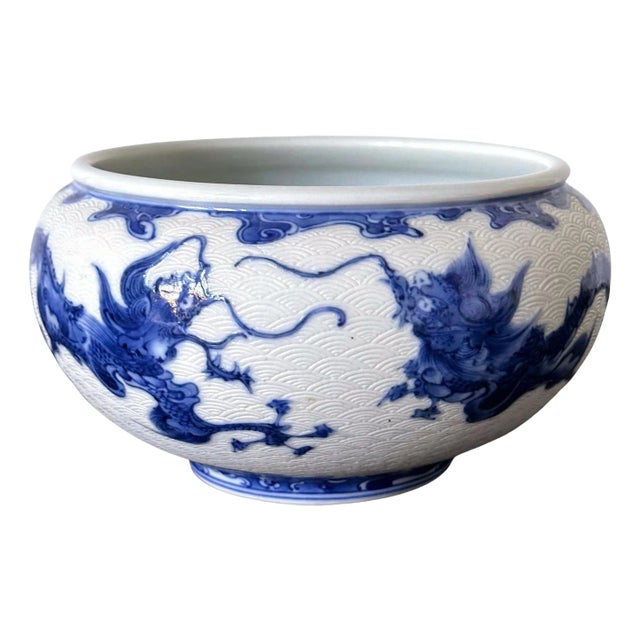
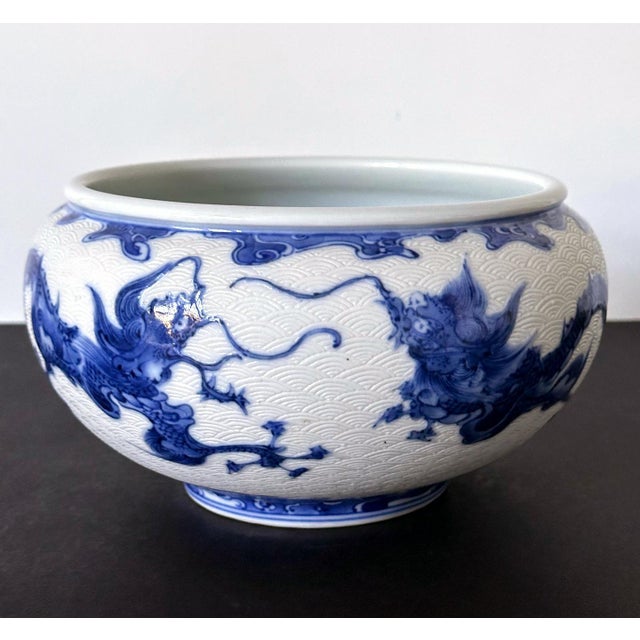
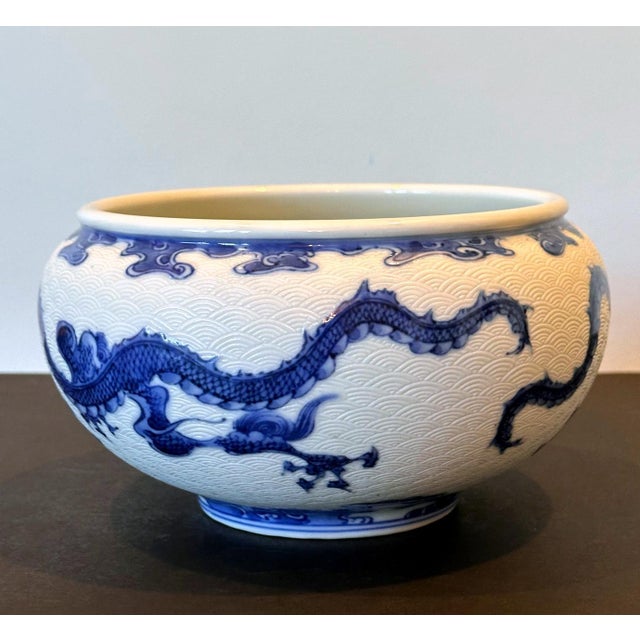
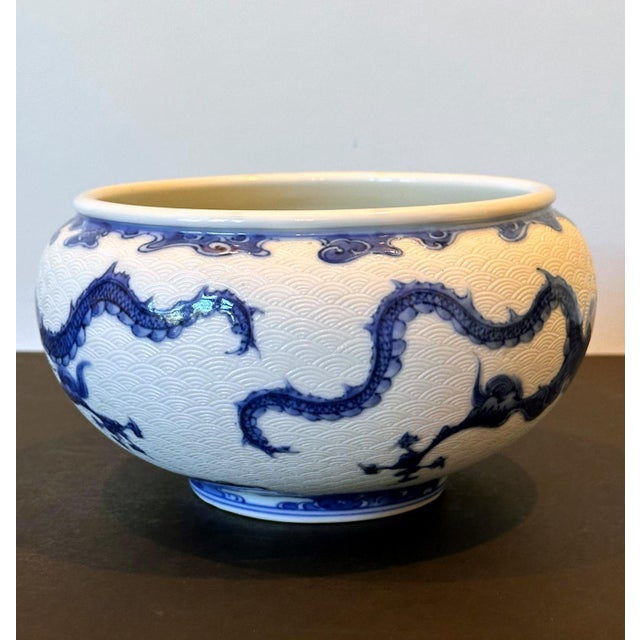
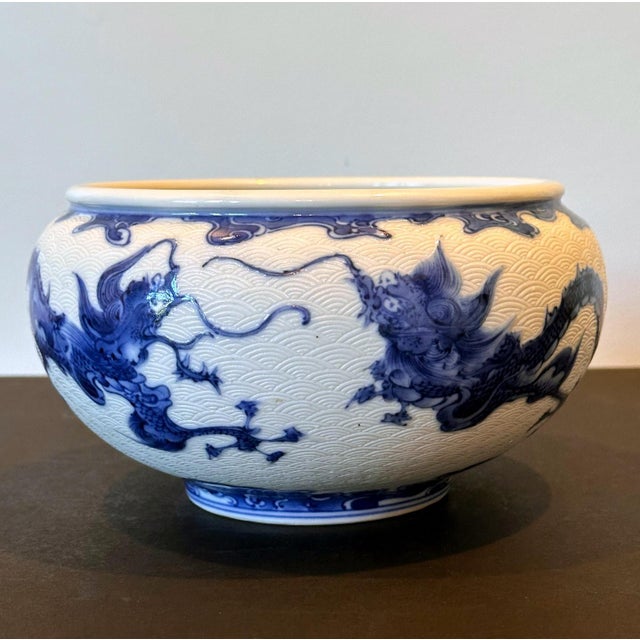
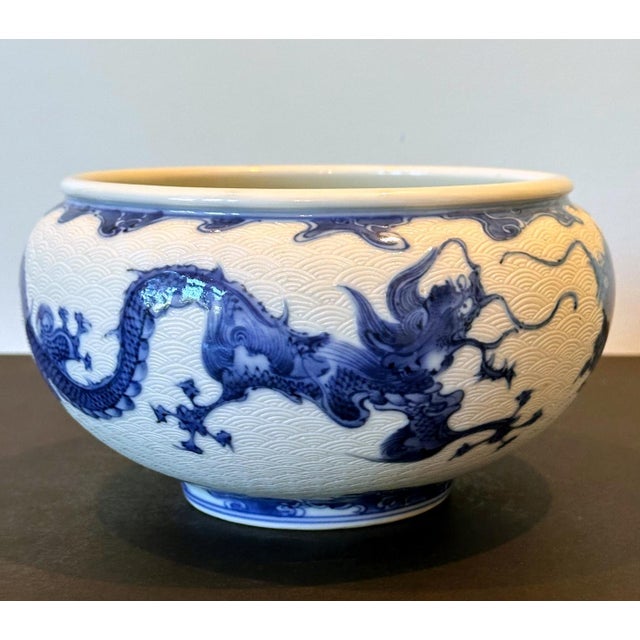
A ceramic bowl by Japanese Imperial potter Makuzu Kozan (1842-1916) circa 1891 of late Meiji period. A very fine example …
Read more
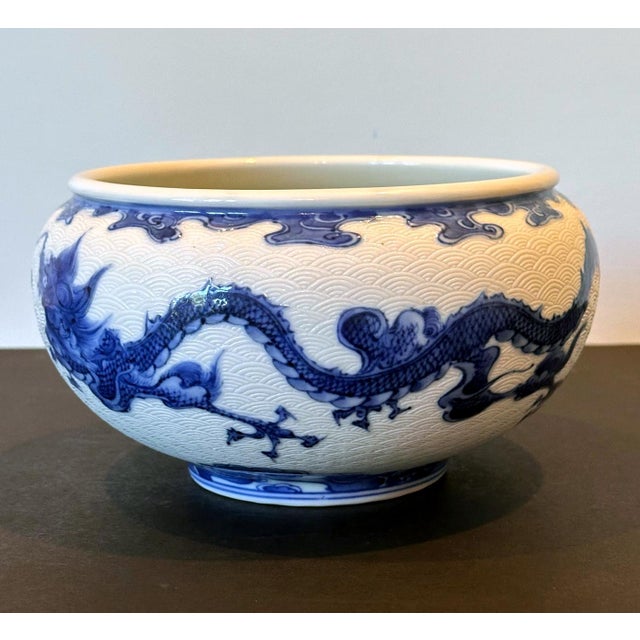
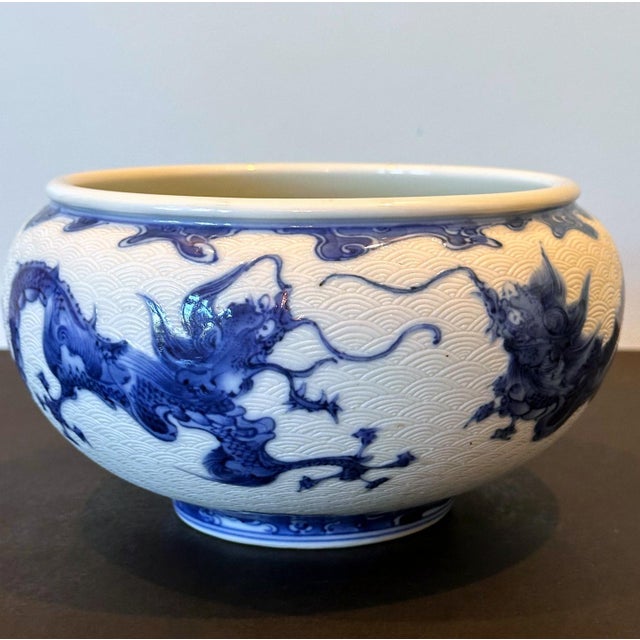
A ceramic bowl by Japanese Imperial potter Makuzu Kozan (1842-1916) circa 1891 of late Meiji period. A very fine example of the artist's work that belongs to the middle period of his underglaze paint phase (started around 1887 until his death in 1916).
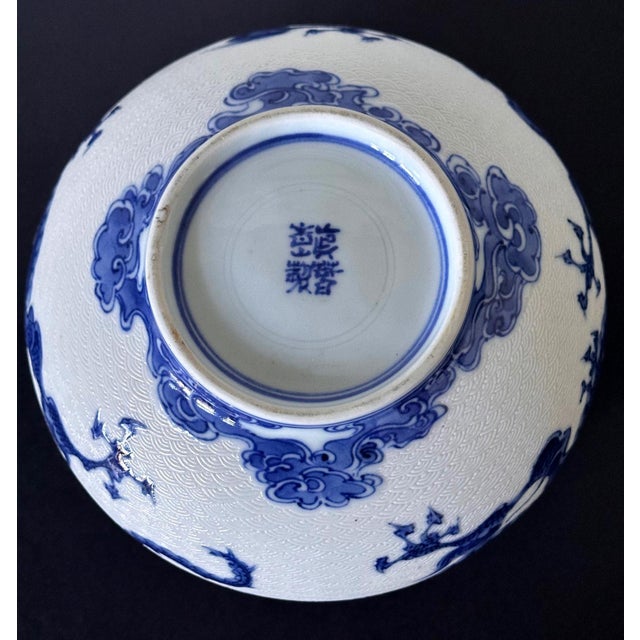
The bowl is in the shape of an Alms bowl, which monks traditionally carried to collect donations and foods, but it was probably used as a decorative and presentation piece. The surface of the koro was finely carved in a tight ocean wave pattern. On this background, two slithering dragons were painted in underglaze blue. The lively mythological creature was a frequent motif in Kozan's work. The rendition of the dragons was impressive in details: their undulating body with tiny scales circumvent the entire exterior. Scrolling clouds circles the upper and lower borders, completing the design in a wholesome manner.
The base is signed in underglaze blue "Makuzu Kiln Kozan Sei"
A vase with identical design motif of ocean wave carving, underglaze blue dragon as well as the signature was identified as made in 1891 and is illustrated on page 132 in the book "Makuzu Kozan I" by Dr. Yamamoto. Shown in the last picture of the listing.
Also known as Miyagawa Kozan (1842–1916), Makuzu Kozan was one of the most established and collected ceramist from Meiji Period. Born as Miyagawa Toranosuke, Kozan established his pottery studio in Yokohama around 1870s and later became one of the appointed artists to the Japanese Imperial household. His work was exhibited in many international fairs that the Meiji government participated at the turn of the century and won many grand prizes. Being one of the most creative ceramists, Kozan started experimenting with new chemical colors from the West in the format of his porcelain glaze around 1880s. New colors allowed him to create underglaze designs that appeared bright, smooth and glossy. He even invented his own receipt of cobalt blue to achieve a much brighter yet softer shade, as evident on this vase. To create landscape that is realistic and dimensional, more common in the western paintings, he was inspired by the native Japanese ink painting technique developed around 1900 by Yokoyama Taikan (1868-1958) and Hishidan Shunso (1874-1911) called Morotai (Hazy style) and used cobalt blue on the porcelain like ink on paper. The fuki-e technique was demanding and uniquely featured in the works of Kozan studio. Some of work from his studio also features fine low relief carving in combination with underglaze paint. This bowl is a superb example.
See less
- Dimensions
- 8.25ʺW × 8.25ʺD × 4.25ʺH
- Styles
- Japanese
- Period
- Late 19th Century
- Country of Origin
- Japan
- Item Type
- Vintage, Antique or Pre-owned
- Materials
- Ceramic
- Condition
- Good Condition, Unknown, Some Imperfections
- Color
- White
Questions about the item?
Returns & Cancellations
Return Policy - All sales are final 48 hours after delivery, unless otherwise specified in the description of the product.
Cancellation Policy - Prior to shipping or local pickup, buyers may cancel an order for up to 48 hours, unless otherwise specified.
Related Collections
- Gucci Decorative Bowls
- Sèvres Porcelain Decorative Bowls
- Furstenberg Porcelain Decorative Bowls
- Arzbeg Porcelain Decorative Bowls
- Derby Porcelain Decorative Bowls
- Feather Decorative Bowls
- Classical Greek Decorative Bowls
- Nymphenburg Porcelain Decorative Bowls
- Pickard China Decorative Bowls
- Port 68 Decorative Bowls
- Hermès Decorative Bowls
- Brass Chinese Decorative Bowls
- Lalique Decorative Bowls
- Tiffany and Co. Decorative Bowls
- Fenton Art Glass Company Decorative Bowls
- Chinoiserie Decorative Bowls
- Brass Decorative Bowls
- Maitland - Smith Decorative Bowls
- Chinese Decorative Bowls
- Japanese Decorative Bowls
- Murano Glass Decorative Bowls
- Mixing Bowls
- Dough Bowls
- Crystal Mikasa Decorative Bowls
- Blown Glass Decorative Bowls