

Details
Description
Rare 18th-Century Staffordshire Creamware Cauliflower Creamer Jug
This charming and historically significant creamer jug is a fine example of the …
Read more
Rare 18th-Century Staffordshire Creamware Cauliflower Creamer Jug
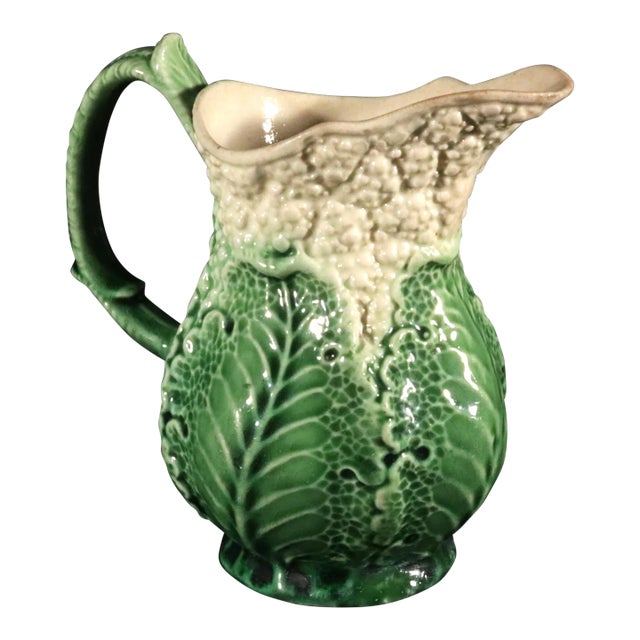
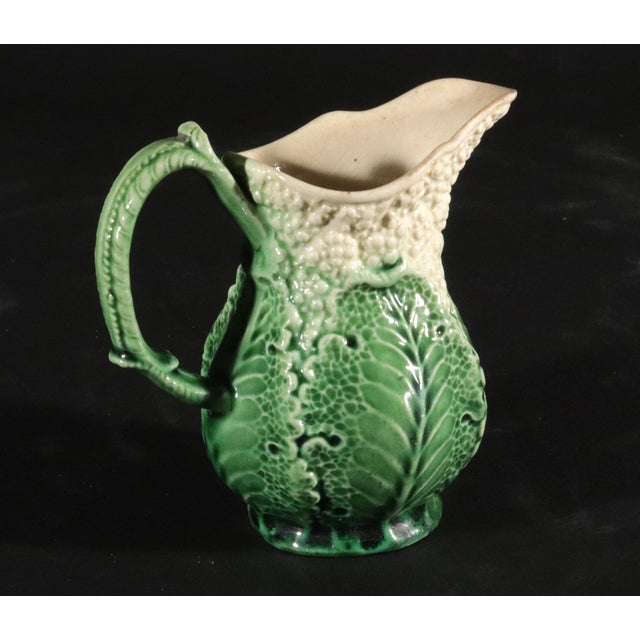
This charming and historically significant creamer jug is a fine example of the highly sought-after Cauliflower Ware produced in Staffordshire during the mid-18th century (circa 1765). This style perfectly encapsulates the Georgian era's fascination with naturalism and the Rococo taste for playful, highly decorative table settings.
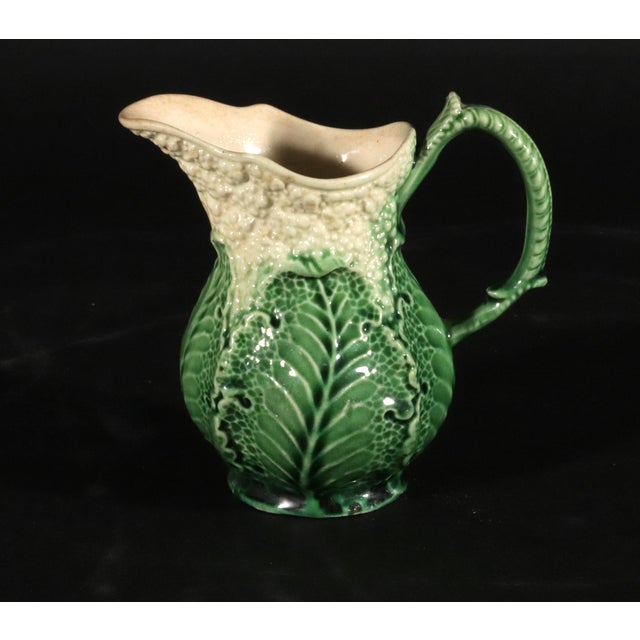
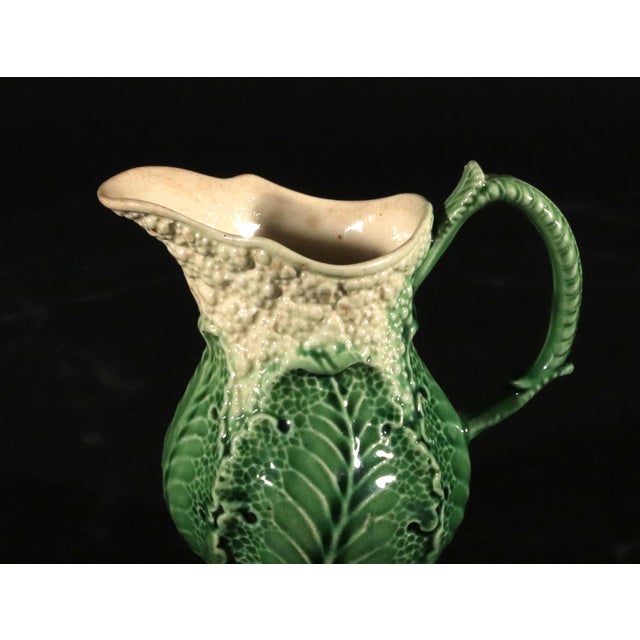
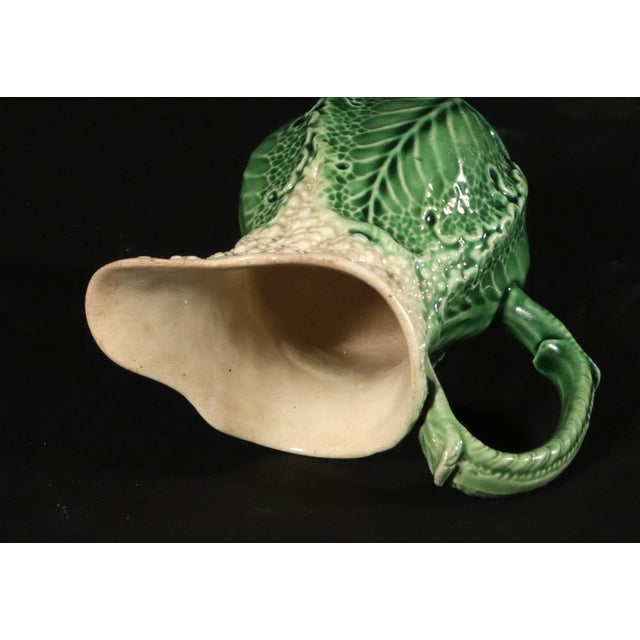
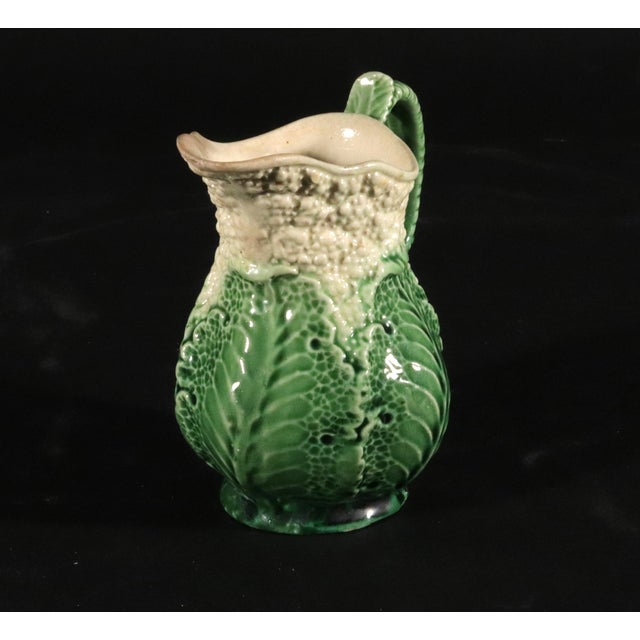
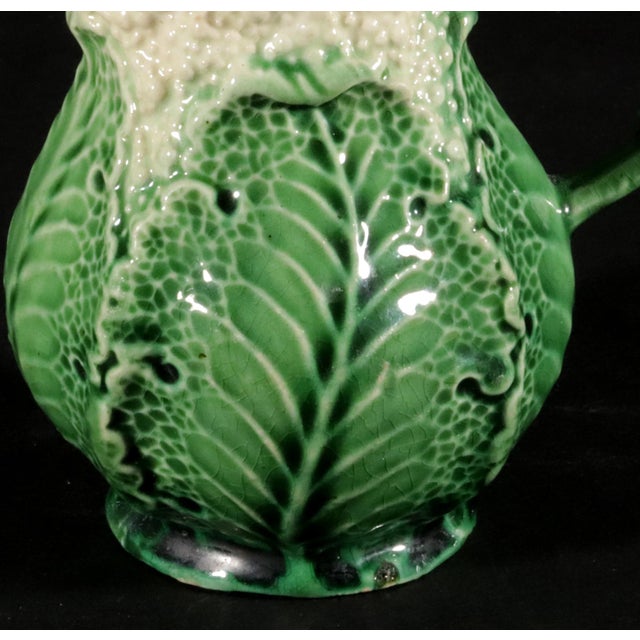
The lead-glazed earthenware piece is expertly molded in a baluster form to convincingly mimic the structure of a cauliflower. The lower body is molded with four prominent, scrolling leaves covered in a brilliant green glaze, achieved by adding copper oxide to the lead glaze. Above this, the shoulder and spout are textured to resemble the florets, left in the natural creamy-white color of the refined earthenware. The piece is completed by a gracefully molded loop handle, similarly decorated with a foliate (leaf) design and a green glaze.
Often made en suite with teapots, tea caddies, and coffee pots, these wares represent the cutting edge of domestic pottery at the time. This specific type of creamware is strongly attributed to, or associated with, the collaboration between master potter William Greatbatch (who often supplied molded blanks) and Josiah Wedgwood (who perfected many of the glazes) at their Staffordshire works.
Dimensions: 3 3/4 inches high x 4 inches wide x 2 1/2 inches deep (8.89 cm high x 10.16 cm wide x 6.35 cm deep).
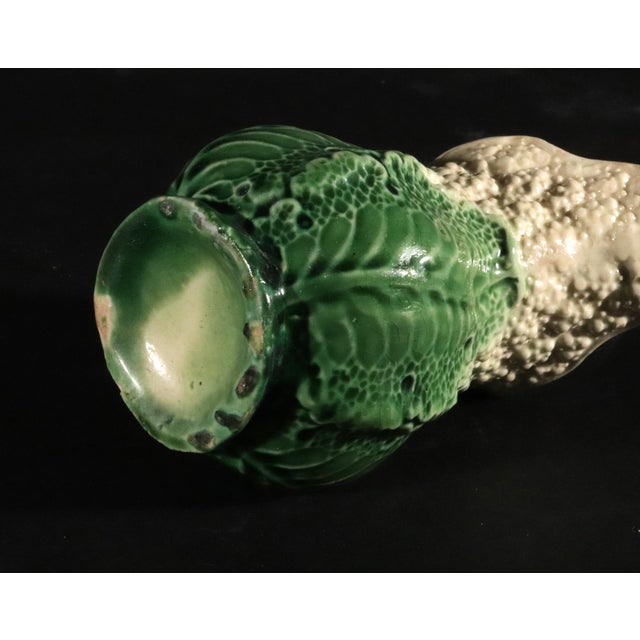
Condition: Good antique condition, with a professionally and invisibly repaired tiny chip to the foot.
Historical Context: Cauliflower Ware and the Mid-18th Century
The Rococo and Naturalism: This jug is a product of the mid-eighteenth century (Georgian period), when the aesthetic focus shifted toward the Rococo style, which emphasized asymmetry, fluidity, and, crucially, naturalistic themes. English potters, drawing influence from European porcelain factories like Meissen, embraced this movement by producing domestic wares that disguised themselves as the food they were meant to accompany. Cauliflower, melon, and pineapple wares were tremendously popular for tea and coffee services, satisfying the era's demand for novelty and sophistication at the table.
The Greatbatch-Wedgwood Connection: Cauliflower Ware represents a key moment in the history of English ceramics. It was produced from a superior earthenware body known as creamware, a durable, light-colored ceramic that could hold a clear lead glaze. Historical evidence, including excavation shards and invoices, links the production of these specific molded forms to William Greatbatch's factory in Fenton, Staffordshire. Greatbatch supplied molded wares to several prominent figures, including Josiah Wedgwood, who himself was instrumental in developing the precise green and yellow glazes used on these wares. This collaboration produced some of the most charming, naturalistic, and technically successful earthenwares of the 18thcentury, making this jug a highly collectible piece of early industrial pottery.
(Ref: NY10646-crr)
See less
- Dimensions
- 4ʺW × 2.5ʺD × 3.74ʺH
- Styles
- Georgian
- Brand
- Josiah Wedgwood
- Period
- Mid 18th Century
- Country of Origin
- United Kingdom
- Item Type
- Vintage, Antique or Pre-owned
- Materials
- Creamware
- Condition
- Good Condition, Original Condition Unaltered, Some Imperfections
- Color
- Green
- Condition Notes
- Good condition Good condition less
Questions about the item?
Returns & Cancellations
Return Policy - All sales are final 48 hours after delivery, unless otherwise specified in the description of the product.
Cancellation Policy - Prior to shipping or local pickup, buyers may cancel an order for up to 48 hours, unless otherwise specified.