

Details
Description
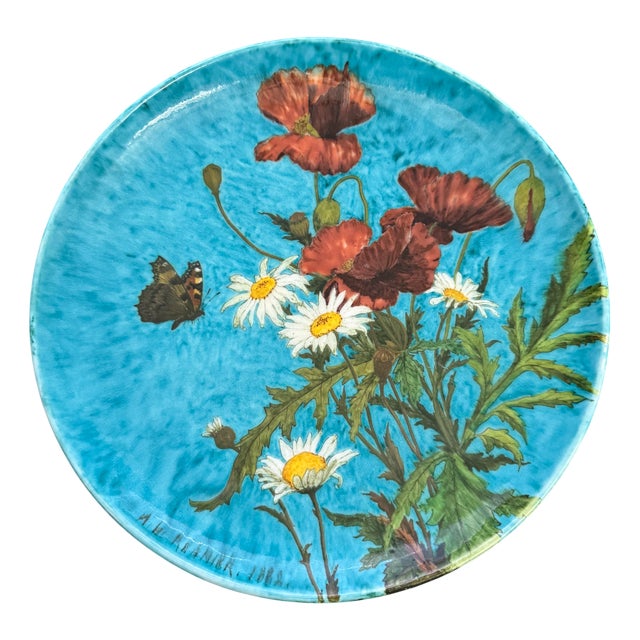
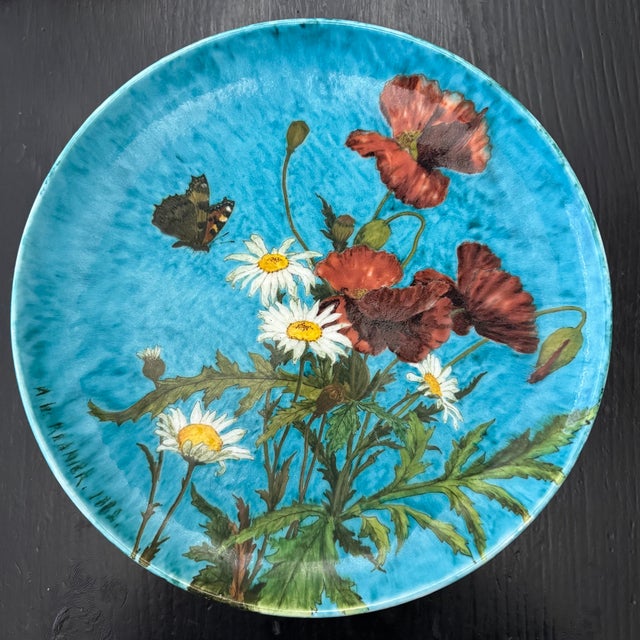
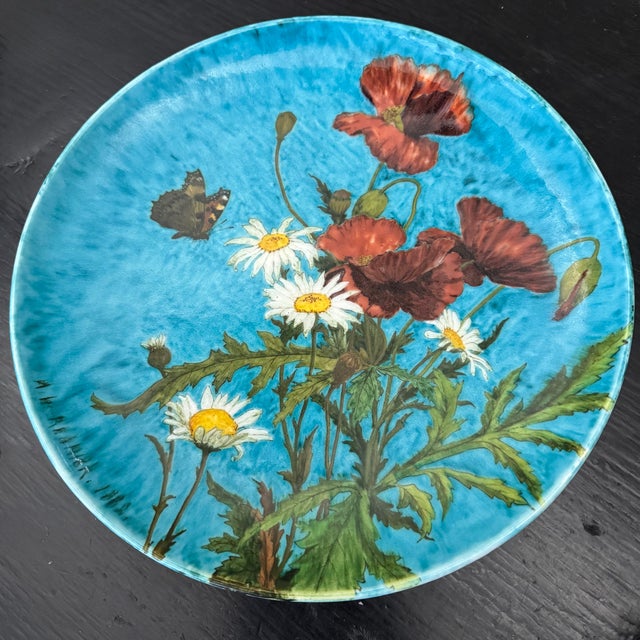
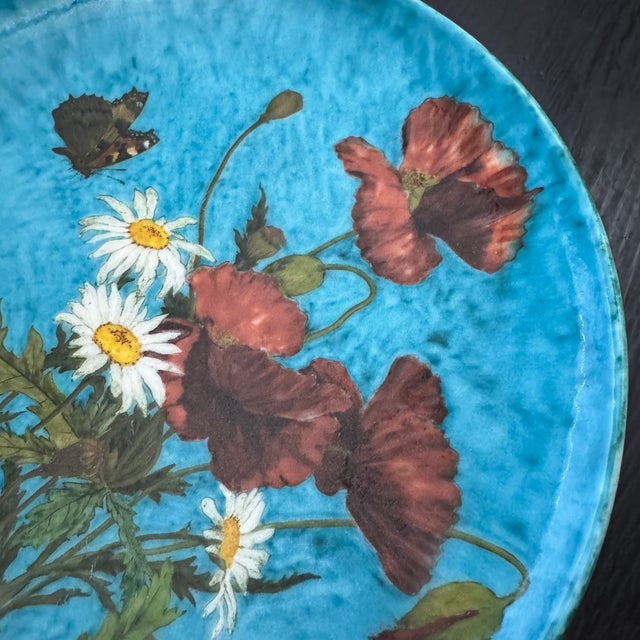
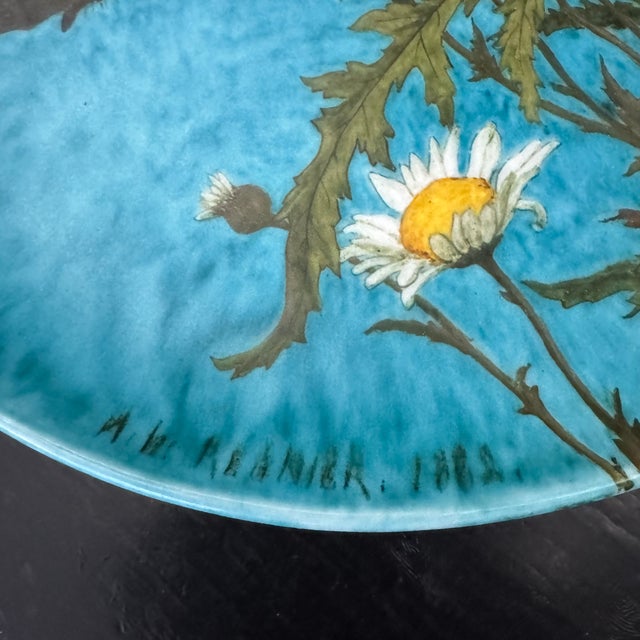
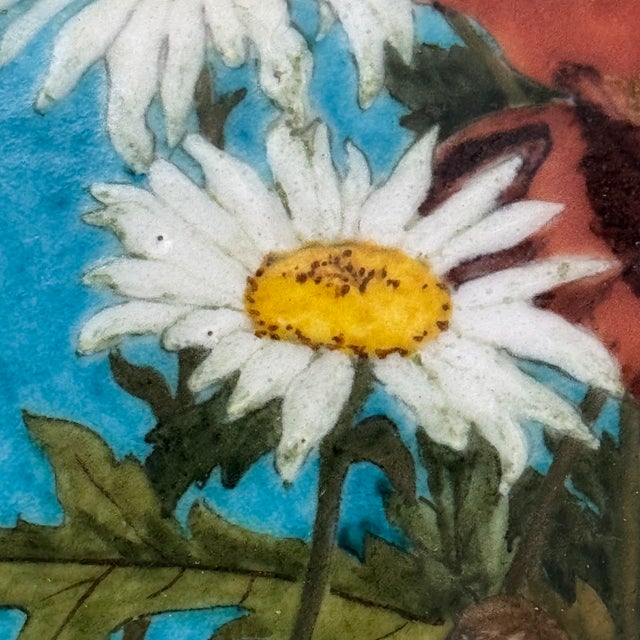
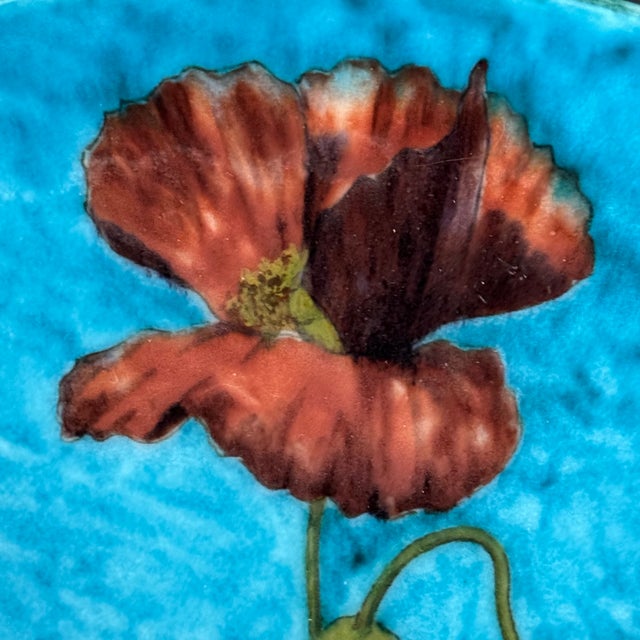
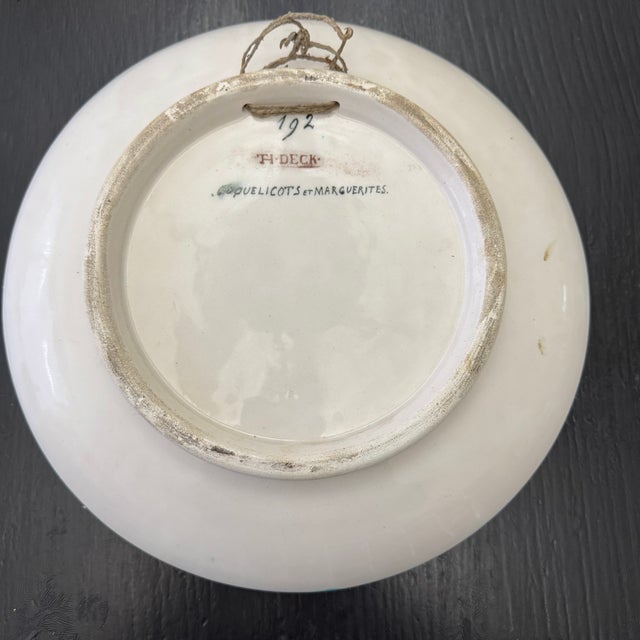
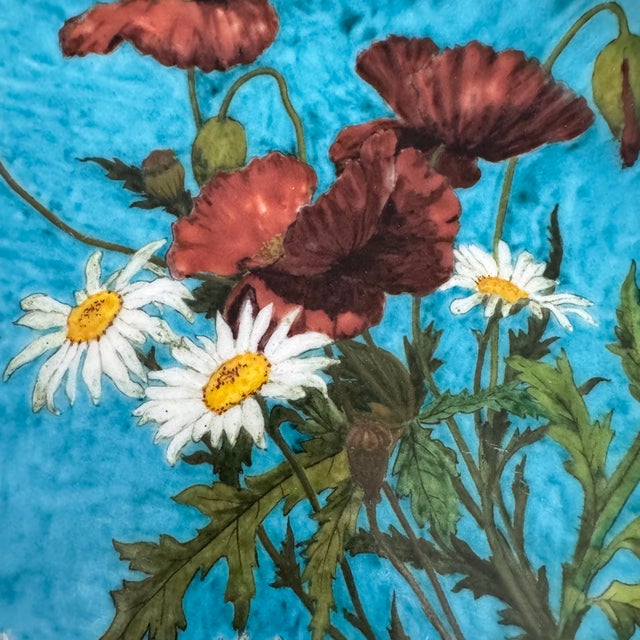
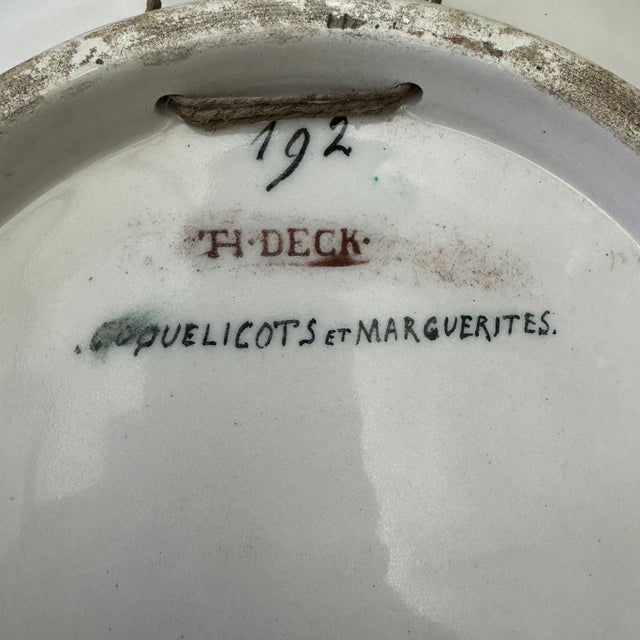
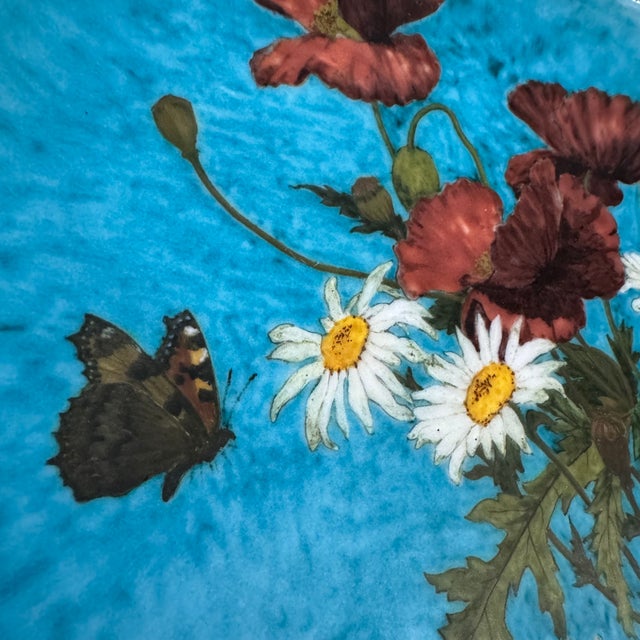
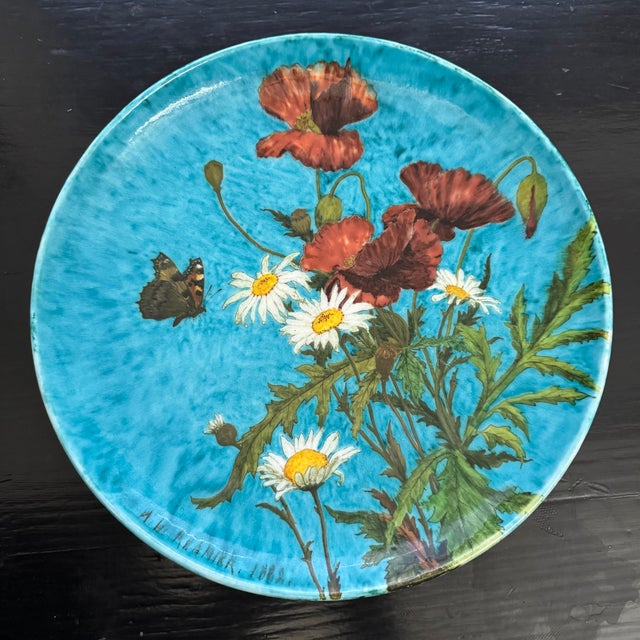
Superb and rare ceramic dish by Théodore Deck Coquelicots et Marguerites signed and numbered 192 on the back.Théodore Deck, born …
Read more
Superb and rare ceramic dish by Théodore Deck Coquelicots et Marguerites signed and numbered 192 on the back.Théodore Deck, born January 2, 1823 in Guebwiller in Alsace in the Haut-Rhin department and died May 15, 1891 in Paris, is a ceramist French. Son of Richard Deck, silk dyer in Guebwiller, Joseph Théodore Deck, confronted at a very young age with the alchemy of colors, became passionate about this field and physical sciences. After three years at the college of La Chapelle-Sous-Rougemont, near Belfort, the death of his father in 1840 forced him to return to Guebwiller and take over, with his older brother, the family business. The young team struggled to balance in a very competitive context, the business collapsed and was sold. Young Théodore made his choice and began his apprenticeship with Master Stovemaker Hügelin in Strasbourg in 1841. He stayed there for two years and finalized his training with a major companionship tour in Germany, Austria and Hungary. Arriving in Paris in 1847, he was hired by the Bavarian earthenware manufacturer Vogt, but returned to Alsace during the revolution of 1848. Deck returned to Paris in 1851, hired in the workshop of the Widow Dumas, his work was rewarded by the medal obtained by this factory at the Universal Exhibition of 1855. The Deck brothers created their company in 1858 and settled in 1859 at 46 boulevard Saint-Jacques, later the workshops moved to rue de Vaugirard. In addition to the production of stove tiles, facade cladding and ceramic shaped parts were quickly added. First recognition for the Théodore Deck company in 1861, with a silver medal at the Salon Arts et Industrie, with pieces covered in the famous Persian blue, which made it famous and which would later be called "Deck blue". New success at the Universal Exhibition in London in 1862, with pieces in the Renaissance and Iznik style and especially the gigantic Alhambra vase, later acquired by the South Kensington Museum. 1867, silver medal at the Universal Exhibition, the progress and technical advances that he highlights are recognized, in particular the inclusion of gold under cover. In 1869 Deck opened a sales store in Paris in the prestigious Opera district. 1873: Universal Exhibition in Vienna, success confirmed with the presentation of a planter, designed by Emile Auguste Reiber, two meters wide, with a four-meter high panel in the background, a piece which is kept in Geneva at the Ariana Museum. Theodore Deck will be able to secure the collaboration of many popular artists, Jean-Charles Davillier, Legrain, Carrier, Emmanuel Benner, Albert Anker, Eugène Gluck, Raphaël Collin, Paul Helleu, Emille-Auguste Reiber, Amedée Jullien, Joseph Ranvier, the list is not exhaustive. These artists, in exchange for their work on the design and decoration of the ceramics, received remuneration corresponding to 50% of the value of the piece. Appointed in 1875 at the head of the improvement commission of the Sèvres Manufacture, he took over the management of this prestigious factory in 1887, a year which also saw the publication of his Treatise on Earthenware and in which he will relate all the developments which he has benefited the profession of ceramist. He has been resting since 1891 in Paris at the Montparnasse cemetery. It was his friend Auguste Bartholdi who created his funerary monument on which is engraved the phrase: "He snatched fire from the sky". His pieces are present in many museums, among others, Musée des Arts Decoratifs de Paris, Musée du Florival collection Théodore Deck Guebwiller, Musée des Arts Décoratifs de Marseille, Musée Unterlinden Colmar, Musée de l'Impression sur Etoffes Mulhouse, Metropolitan Museum New -York, Hermitage Museum Saint Petersburg, Vicoria & Albert Museum London, Gulbekian Foundation Lisbon. This piece has an attribution mark,
I am sure that it is completely authentic and take full responsibility for any authenticity
issues arising from misattribution
See less
- Dimensions
- 11.81ʺW × 1.57ʺD × 11.81ʺH
- Period
- 19th Century
- Country of Origin
- France
- Item Type
- Vintage, Antique or Pre-owned
- Materials
- Ceramic
- Condition
- Good Condition, Original Condition Unaltered, Some Imperfections
- Color
- Blue
Returns & Cancellations
Return Policy - All sales are final 48 hours after delivery, unless otherwise specified in the description of the product.
Cancellation Policy - Prior to shipping or local pickup, buyers may cancel an order for up to 48 hours, unless otherwise specified.
Related Collections
- Ralph Lauren Decorative Plates
- Sherle Wagner Decorative Plates
- Tatiana Alida Decorative Plates
- Nickel Decorative Plates
- Kenneth Ludwig Chicago Decorative Plates
- Soapstone Decorative Plates
- Pickard China Decorative Plates
- Silk Decorative Plates
- Tapio Wirkkala Decorative Plates
- Cantagalli Decorative Plates
- Joseph Holdcroft Decorative Plates
- Ox Bow Decor Decorative Plates
- Japanese Decorative Plates
- Chinese Decorative Plates
- Fruit Plates
- Brass Decorative Plates
- Spanish Decorative Plates
- Copper Decorative Plates
- Italian Decorative Plates
- Blue Decorative Plates
- Piero Fornasetti Decorative Plates
- Chinoiserie Decorative Plates
- Wedgwood Decorative Plates
- Green Decorative Plates
- Metal Decorative Plates