

Details
Description
An unusual antique Islamic cast-bronze lion sculpture, conservatively dated to the late 19th or early 20th century, circa 1900. Attributed …
Read more
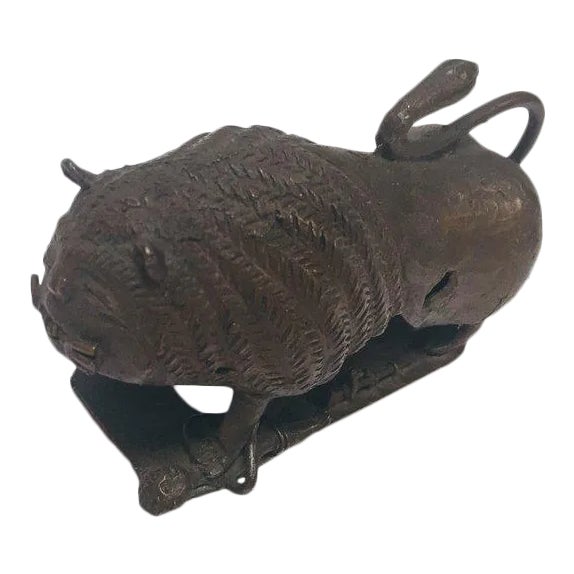
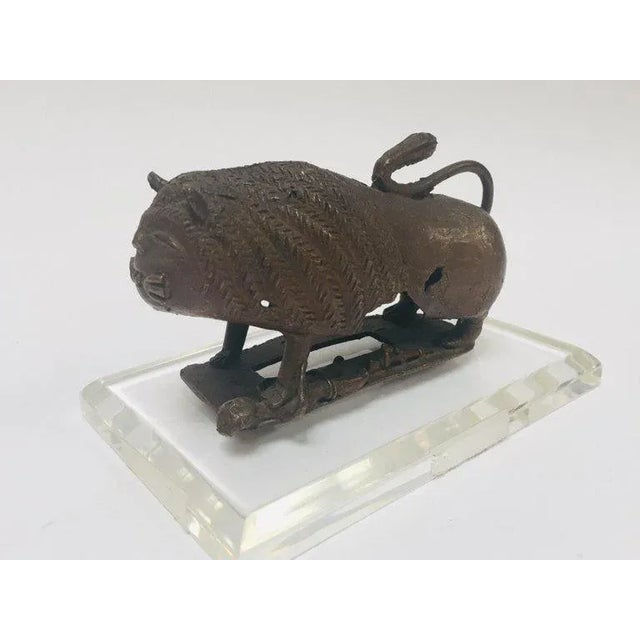
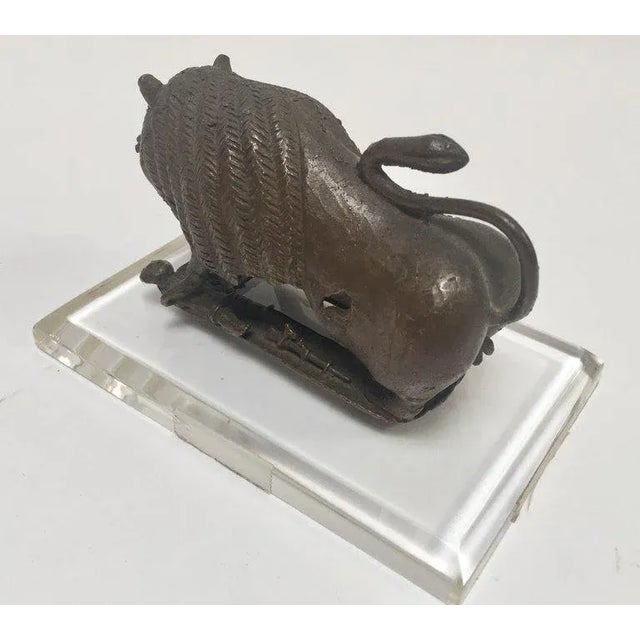
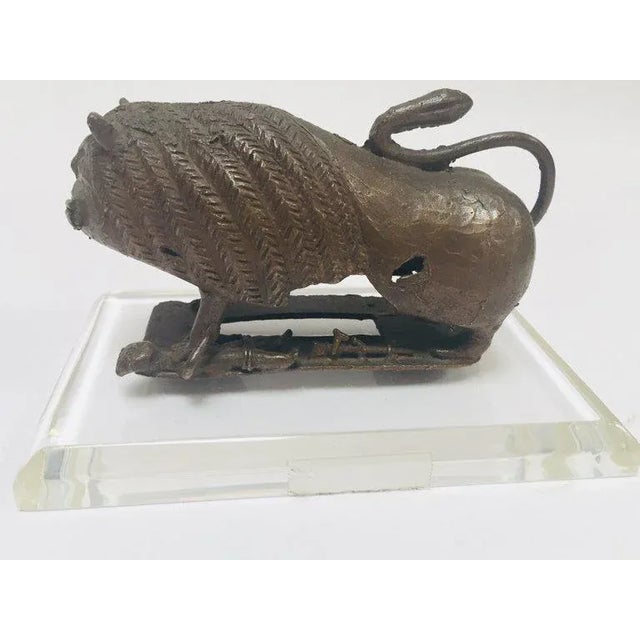
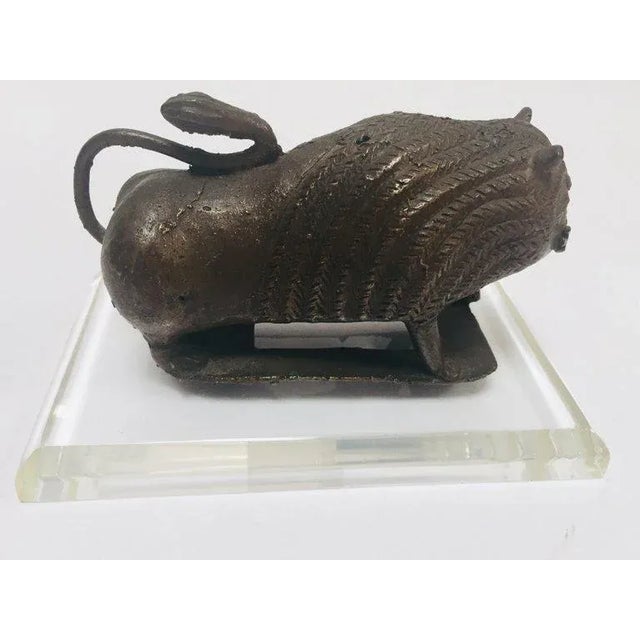
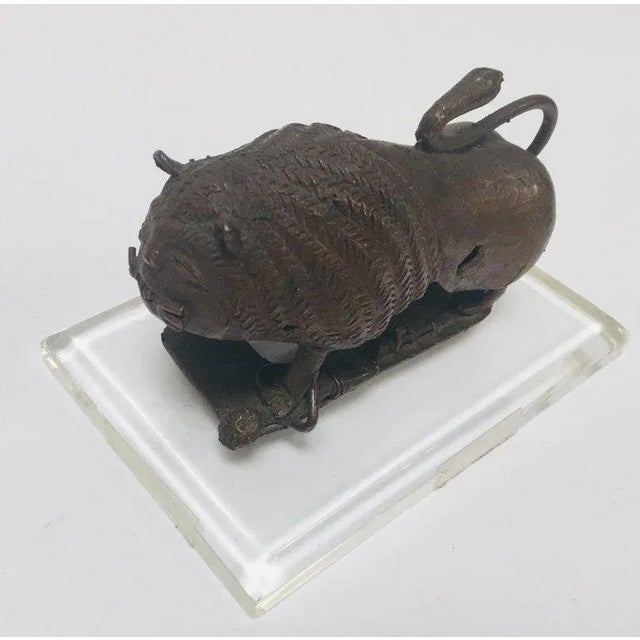
An unusual antique Islamic cast-bronze lion sculpture, conservatively dated to the late 19th or early 20th century, circa 1900. Attributed broadly to West Asia, this compact but expressive animal figure reflects the visual vocabulary of Persianate and Seljuk-style metalwork without making an unsupported claim that it is a medieval Seljuk-period object.
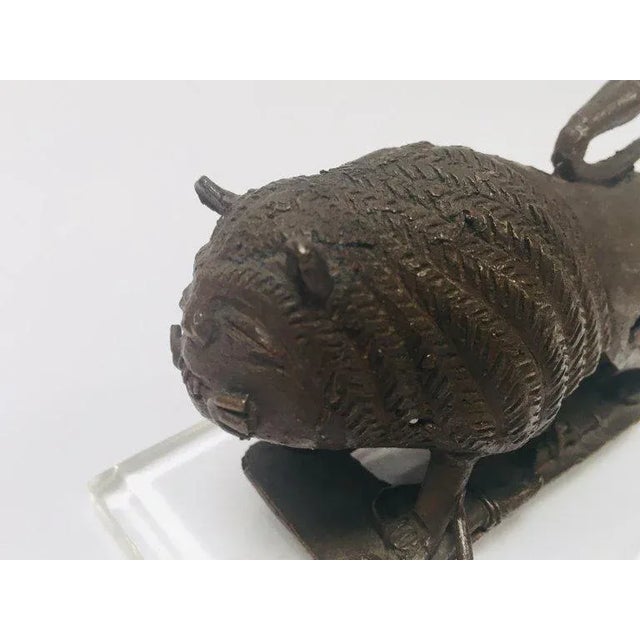
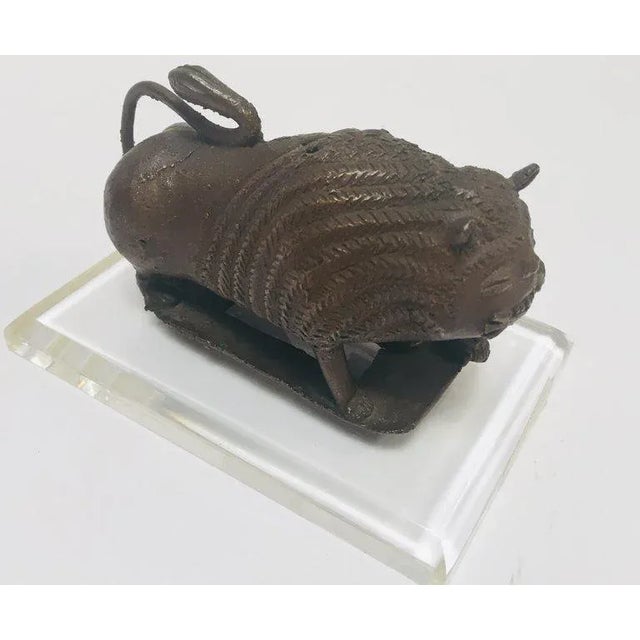
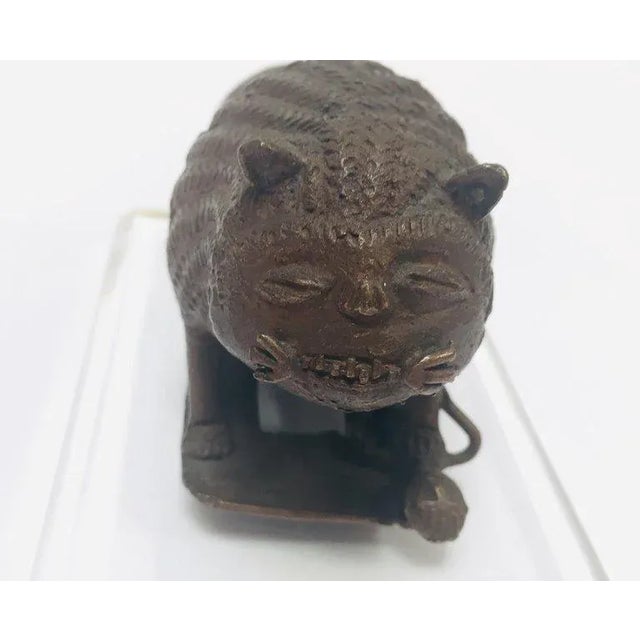
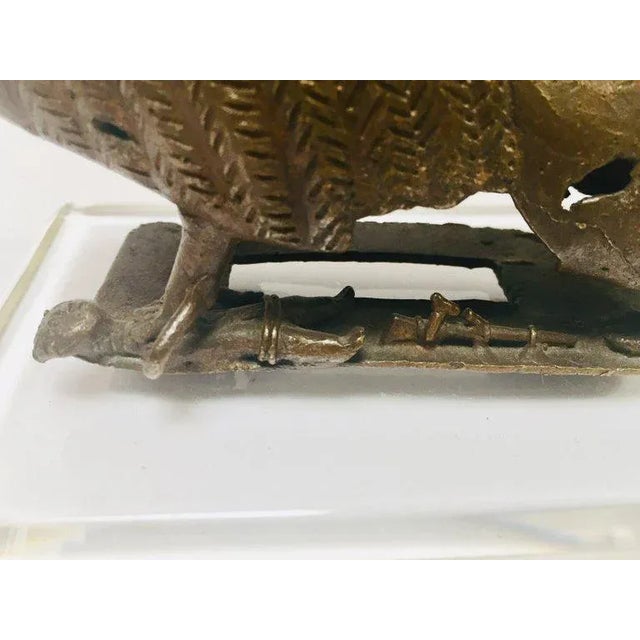
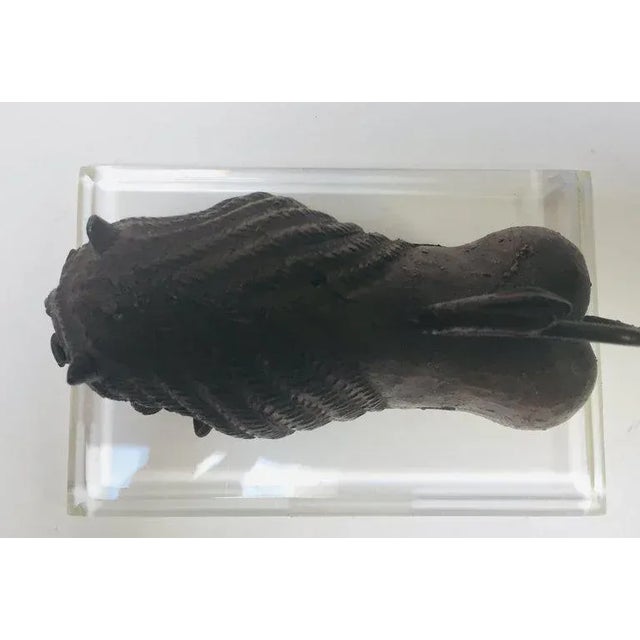
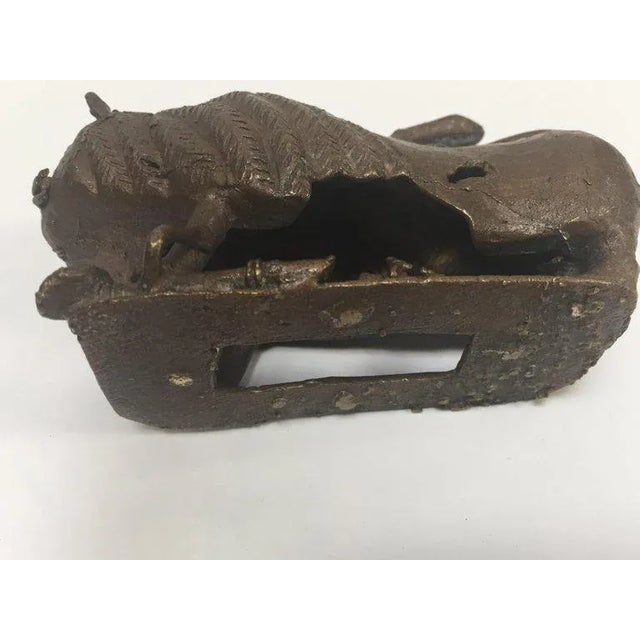
The mythical lion stands firmly on four short, pointed legs, with an elongated body, prominently modeled head and richly patterned surface. Its anthropomorphic facial expression, incised mane and stylized proportions give the sculpture a powerful and enigmatic character. Beneath the lion’s raised front paw is a small human or prey figure. This detail may represent a vanquished hunter, captive or symbolic adversary, although its precise narrative meaning remains undocumented. The long tail curls dramatically back across the body in a distinctive double-loop formation and terminates in a stylized leaf- or fork-shaped tip.
Lions were important symbols throughout Islamic, Persianate, Middle Eastern and Central Asian art. They were frequently associated with authority, protection, courage and royal power. Zoomorphic bronze objects were especially prominent in the Islamic metalworking traditions of greater Khorasan and the wider Seljuk cultural world. This sculpture’s compact proportions, patterned body, expressive face and tightly curled tail recall that historic tradition, while its exact place of manufacture remains unknown.
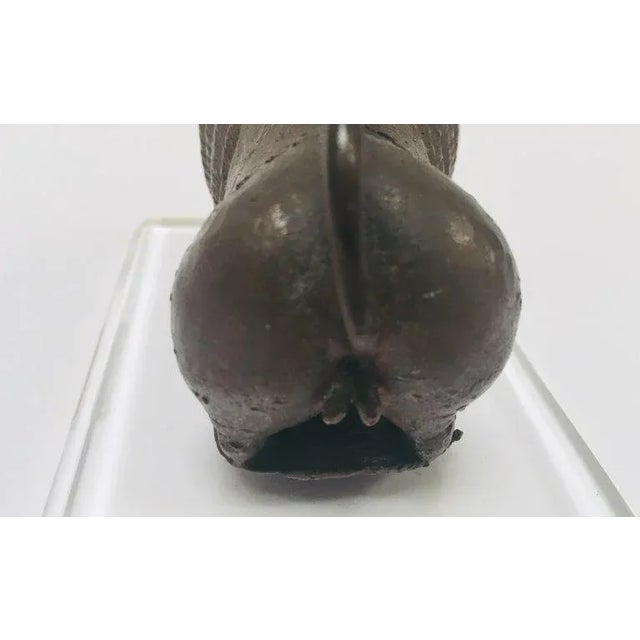
The figure is cast in a dark copper alloy traditionally described as bronze. Its surface displays a deep aged patina, irregular casting texture, areas of oxidation, small openings and losses consistent with its age and method of manufacture. These characteristics contribute to its archaeological appearance and should not be confused with the finish of a newly produced bronze. The sculpture is presented on a later clear acrylic display plinth, allowing it to be viewed as a small museum-style object.
Although modest in scale, this antique bronze lion has considerable sculptural presence. It would make a distinctive addition to a collection of Islamic art, Persianate decorative objects, antique animal sculpture, historic metalwork or scholarly curiosities. It could be displayed on a desk, library shelf, mantel, console, pedestal or within a glass cabinet. Its dark patina also provides an appealing contrast against contemporary stone, pale wood, parchment or plaster interiors.
This listing does not claim that the sculpture was made during the medieval Seljuk period. The designation “Seljuk-style” refers solely to its observable artistic vocabulary and resemblance to historic Islamic feline bronzes. The attribution to West Asia is based on stylistic comparison rather than documented archaeological provenance. A specialist examination or metallurgical analysis may provide additional information regarding its alloy, date and place of manufacture.
Dimensions are approximately 3 inches high, 5 inches wide and 2.5 inches deep.
Measurements does not include the later acrylic plinth.
The sculpture is in distressed antique condition, with aged patina, oxidation, casting irregularities, surface wear, small losses and openings. The transparent acrylic stand is later and is included with the object unless otherwise noted. Please examine all photographs closely as they form an important part of the condition description.
Category: Decorative Objects → Sculptures → Animal Sculptures
Place of origin: Asia
Style: Folk Art or Islamic Revival
Period: Early 20th Century
Date: Circa 1900
Materials: Bronze or cast copper alloy; acrylic display base
Techniques: Cast, incised and hand-finished
Condition: Distressed
Creator: Unknown
The stylistic comparison is reasonable because documented medieval feline bronzes are associated with Seljuk Iran and greater Khorasan, but this piece should remain conservatively cataloged as “Seljuk-style.” The Metropolitan Museum of Art provides a useful institutional comparison.
See less
- Dimensions
- 5ʺW × 2.5ʺD × 3ʺH
- Period
- Early 20th Century
- Item Type
- Vintage, Antique or Pre-owned
- Materials
- Bronze Finish
- Condition
- Good Condition, Original Condition Unaltered, Some Imperfections
- Color
- Bronze
- Condition Notes
- Wear consistent with age and use. Minor losses. Minor structural damages. Wear consistent with age and use. Minor losses. Minor structural damages. less
Questions about the item?
Returns & Cancellations
Return Policy - All sales are final 48 hours after delivery, unless otherwise specified in the description of the product.
Cancellation Policy - Prior to shipping or local pickup, buyers may cancel an order for up to 48 hours, unless otherwise specified.
Related Collections
- Wildwood Models and Figurines
- Rose Quartz Models and Figurines
- Ardalt Models and Figurines
- Models and Figurines in Lexington, KY
- Villeroy and Boch Models and Figurines
- Unlacquered Brass Finish Models and Figurines
- Sèvres Porcelain Models and Figurines
- Vinyl Models and Figurines
- Jasper Models and Figurines
- Bennington Potters Models and Figurines
- William Kent Models and Figurines
- Maison Jansen Models and Figurines
- Political and Patriotic Models and Figurines
- Spanish Revival Models and Figurines
- Gucci Models and Figurines
- Acrylic Paint Models and Figurines
- Brass Models and Figurines
- Staffordshire Dog Figurines
- Italian Models and Figurines
- Elephant Figurines
- Cat Figurines
- Antique Model Ships
- Ceramic Cats
- Bird Figurines
- Dog Figurines