

Details
Description
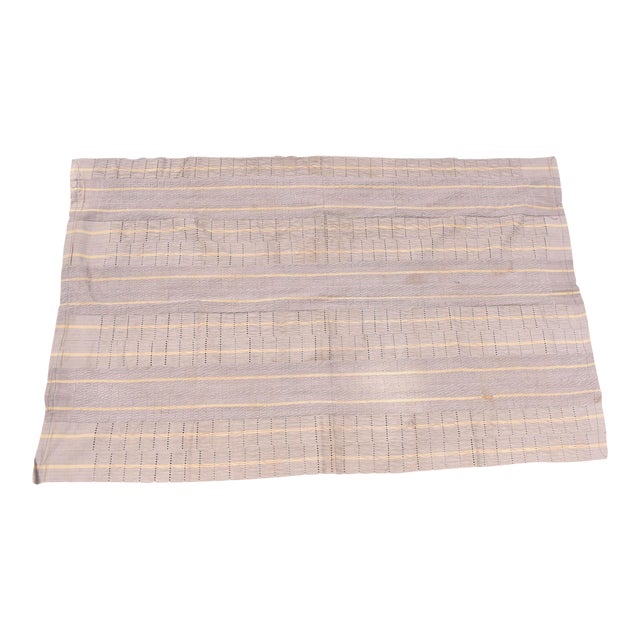
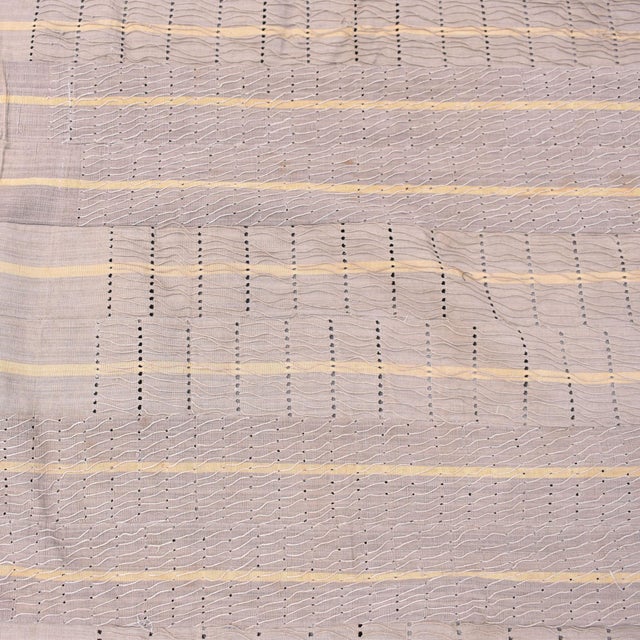
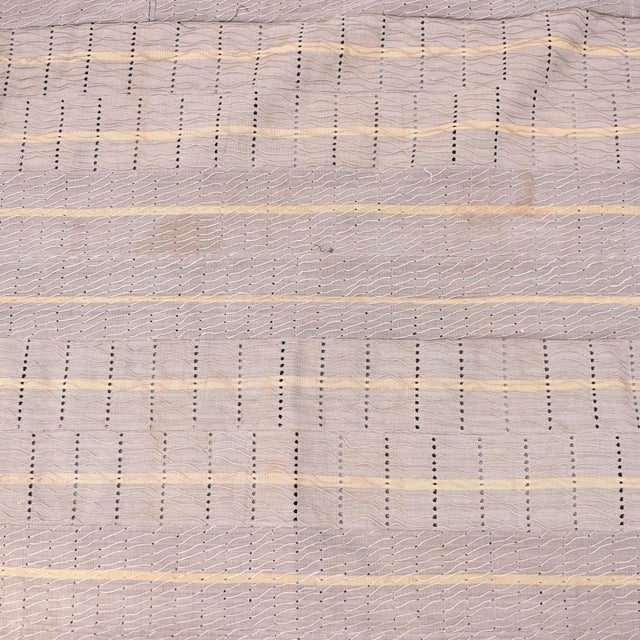
Aso Oke weaving is done on narrow-head looms. The fabric used is either cotton or wild silk, usually beige. The …
Read more
Aso Oke weaving is done on narrow-head looms. The fabric used is either cotton or wild silk, usually beige. The weavings are used for special occasions, including engagements, weddings, naming ceremonies for babies, chieftaincy title ceremonies, and religious holidays, both Christian and Islamic.
Supplementary weft float and brocade patterning are common, as is the distinctive openwork made by using weft threads to tie together a group of warps. Lurex from Japan, a metallic thread, is sometimes used. Men have traditionally done the weaving, but some women weave as well.
See less
- Dimensions
- 72.5ʺW × 0.2ʺD × 47ʺH
- Period
- Mid 20th Century
- Country of Origin
- Nigeria
- Item Type
- Vintage, Antique or Pre-owned
- Materials
- Cotton
- Rayon
- Condition
- Good Condition, Original Condition Unaltered, Some Imperfections
- Color
- Beige
- Condition Notes
- Some stains and loose threads. Some stains and loose threads. less
Questions about the item?
Returns & Cancellations
Return Policy - All sales are final 48 hours after delivery, unless otherwise specified in the description of the product.
Cancellation Policy - Prior to shipping or local pickup, buyers may cancel an order for up to 48 hours, unless otherwise specified.
Related Collections
- Loloi Rugs Textile Art
- Louis XIII Textile Art
- Cashmere Textile Art
- Textile Art in Santa Fe
- Workaday Handmade Textile Art
- Antique Gold Finish Textile Art
- Ralph Lauren Textile Art
- Chanel Textile Art
- Mid-Century Modern Textile Art
- Framed Scarves
- Chinese Textile Art
- Tapestry
- Japanese Textile Art
- Scandinavian Textile Art
- Aubusson Tapestry
- Brutalist Textile Art
- Cardboard Textile Art
- Märta Måås-Fjetterström Textile Art
- Pablo Picasso Textile Art
- Space Age Textile Art
- Surrealism Textile Art
- Cork Textile Art
- Old New House Textile Art
- Asian Style Textile Art