





Details
Description
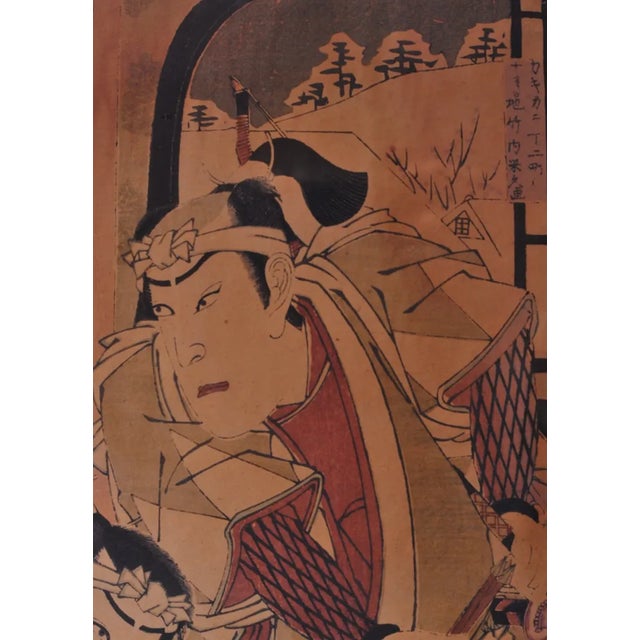
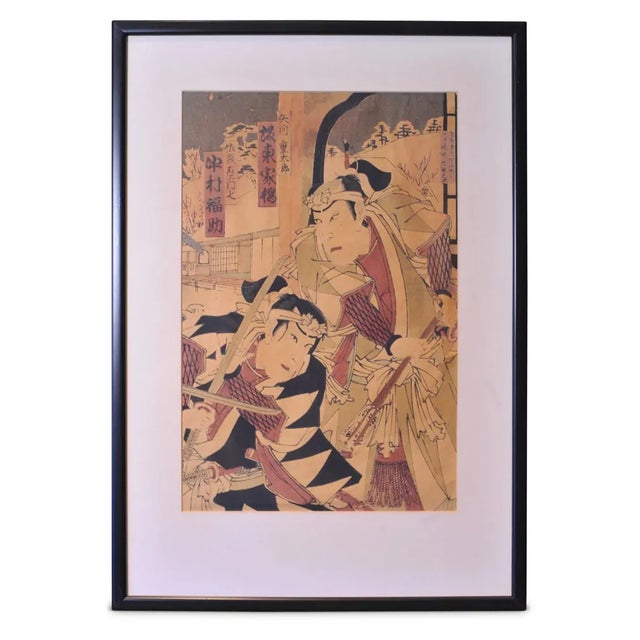
Beginning around 1810 kunisada used the studio name "gototei", which refers cryptically to his father's ferry-boat business. Until 1842 this …
Read more
Beginning around 1810 kunisada used the studio name "gototei", which refers cryptically to his father's ferry-boat business. Until 1842 this signature appeared on nearly all of his kabuki designs. Around 1825 the studio name "kochoro" appeared, and was often used on prints not related to kabuki. This name was derived from a combination of the pseudonyms of master painter hanabusa itcho, and that of his successor hanabusa ikkei, with whom kunisada had studied a new style of painting around 1824–1825. In 1844, he finally adopted the name of his master toyokuni i, and for a brief time used the signature "kunisada becoming toyokuni ii". Starting in 1844-1845, all of his prints are signed "toyokuni", partially with the addition of other studio names as prefixes, such as "kochoro" and "ichiyosai". Although kunisada referred to himself as "toyokuni ii", he must be regarded, however, as "toyokuni iii". The question is unsettled as to why he intentionally ignored toyoshige, a pupil and son-in-law of toyokuni i and who had borne the name "toyokuni", as legitimate head of the utagawa school, from 1825 until his own death in 1835.
the date of kunisada's death was the 15th day of the 12th month of the first year of genji. Most sources erroneously report this as having been in the year 1864, though this date in the japanese calendar corresponds to the date january 12, 1865, in the gregorian calendar. Kunisada died in the same neighborhood in which he had been born.
almost from the first day of his activity, and even at the time of his death in 1865, kunisada was a trendsetter in the art of the japanese woodblock print. Always at the vanguard of his time, and in tune with the tastes of the public, he continuously developed his style, which was sometimes radically changed, and did not adhere to stylistic constraints set by any of his contemporaries. This piece has an attribution mark,
i am sure that it is completely authentic and take full responsibility for any authenticity
issues arising from misattribution
See less
- Dimensions
- 1.18ʺW × 0.39ʺD × 19.29ʺH
- Art Subjects
- Figure
- Period
- 19th Century
- Country of Origin
- Japan
- Item Type
- Vintage, Antique or Pre-owned
- Condition
- Good Condition, Unknown, Some Imperfections
- Color
- Condition Notes
- Good — This vintage item remains fully functional, but it shows sign of age through scuffs, dings, faded finishes, minimal … moreGood — This vintage item remains fully functional, but it shows sign of age through scuffs, dings, faded finishes, minimal upholstery defects, or visible repairs\. Light surface wear. less
Returns & Cancellations
Return Policy - All sales are final 48 hours after delivery, unless otherwise specified in the description of the product.
Cancellation Policy - Prior to shipping or local pickup, buyers may cancel an order for up to 48 hours, unless otherwise specified.
Related Collections
- Gustave Baumann Original Prints
- Medium-Density Fibreboard Original Prints
- Louis XIII Original Prints
- Original Prints in Lexington, KY
- Soicher Marin Original Prints
- Silver Finish Original Prints
- Robert Kipniss Original Prints
- Dye Transfer Original Prints
- Sam Francis Original Prints
- Damien Hirst Original Prints
- Johannes Kip Original Prints
- Rattan Original Prints
- Original Prints in Panama City, FL
- Original Prints in Salt Lake City
- Ralph Lauren Original Prints
- Botanical Prints
- Framed Prints
- Bird Prints
- Woodblock Prints
- Screen Prints
- Japanese Woodblock Prints
- Thomas McKnight Original Prints
- George Barbier Original Prints
- Frank Stella Original Prints
- Teak Original Prints