

Details
Description
Authentic 1970s Oushak Eshme flat-weave kilim in an XL ~6x10 ft room size, woven in wool on wool with natural …
Read more
Authentic 1970s Oushak Eshme flat-weave kilim in an XL ~6x10 ft room size, woven in wool on wool with natural dyes by Yoruk villagers and preserved unused for decades — a true vintage floor piece for living or dining spaces.
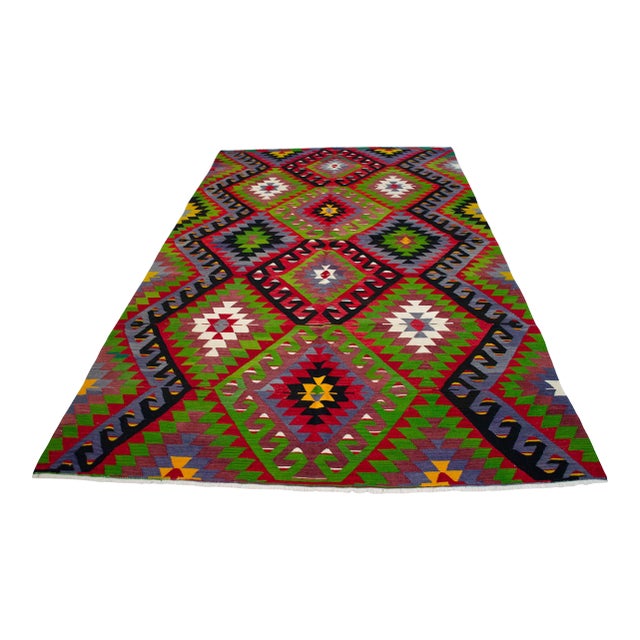
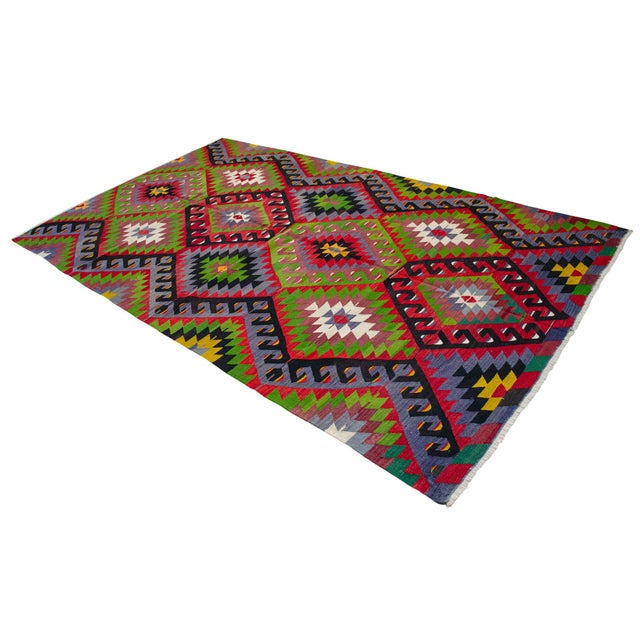
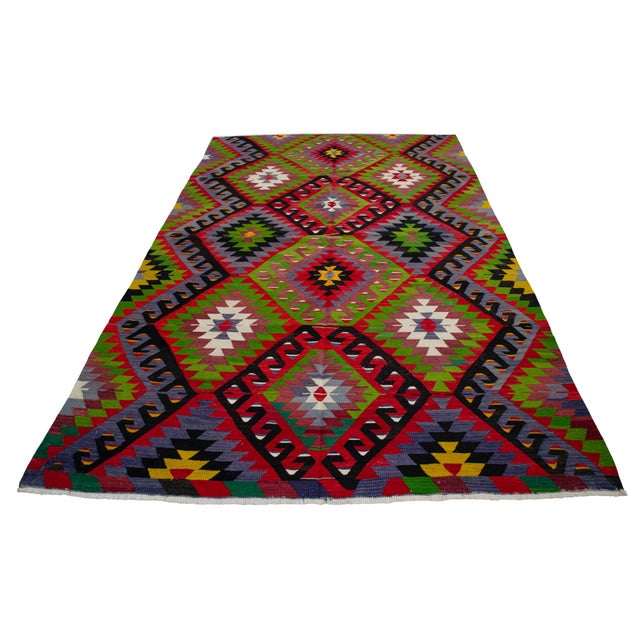
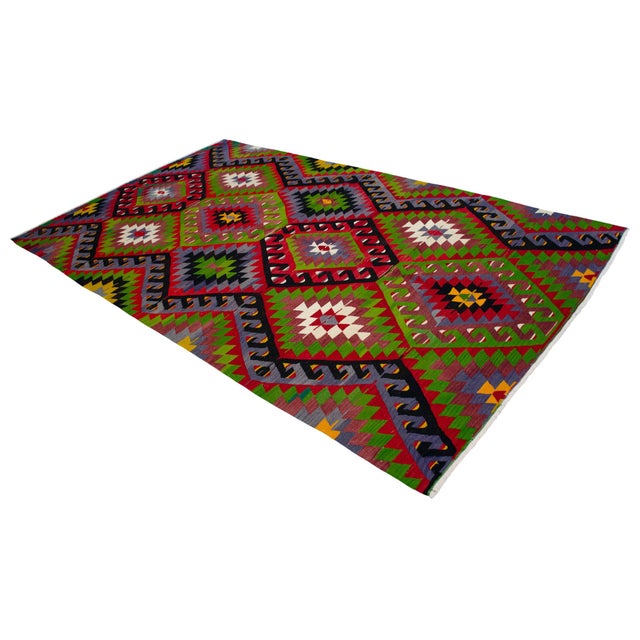
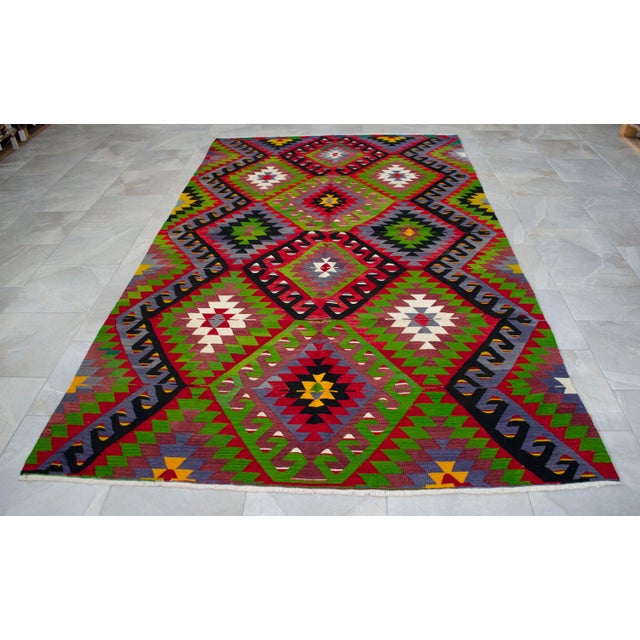
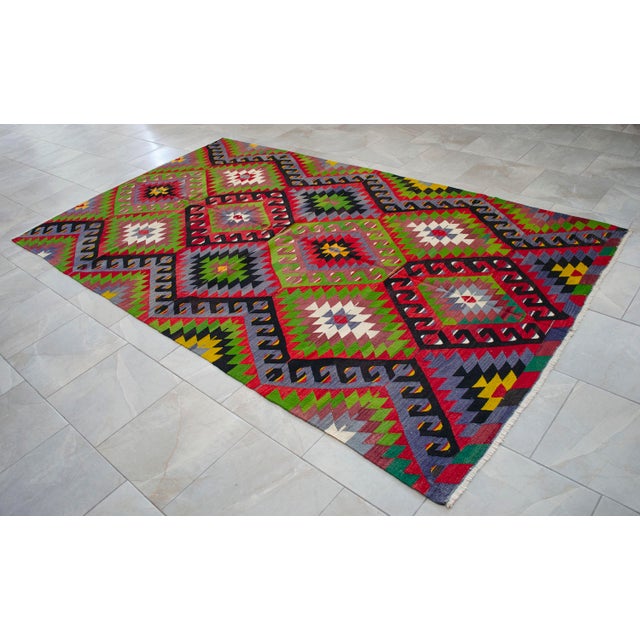
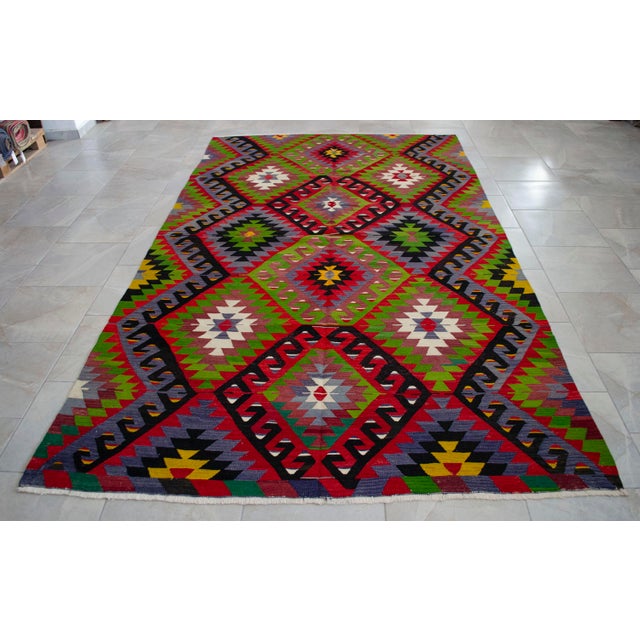
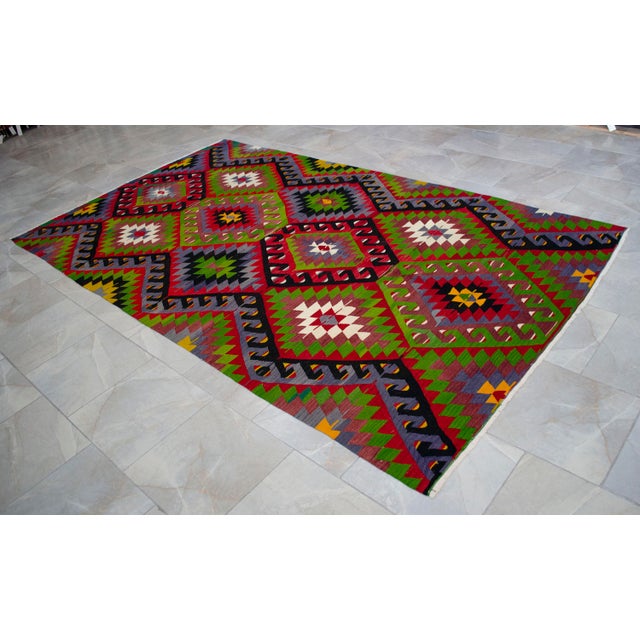
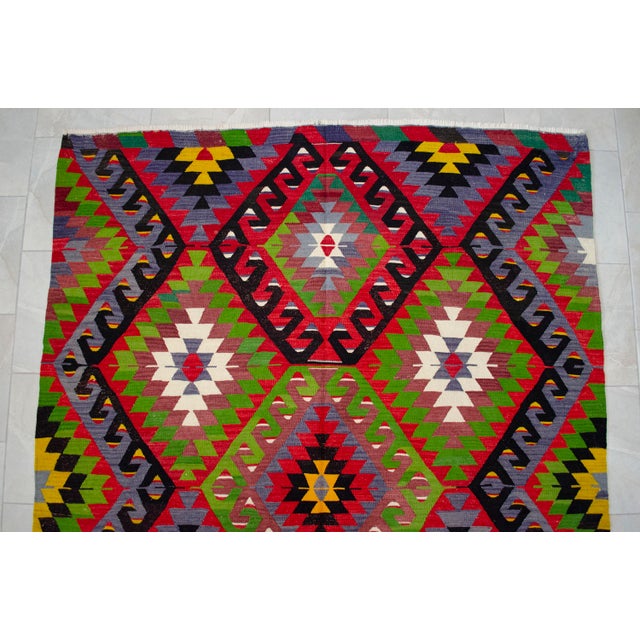
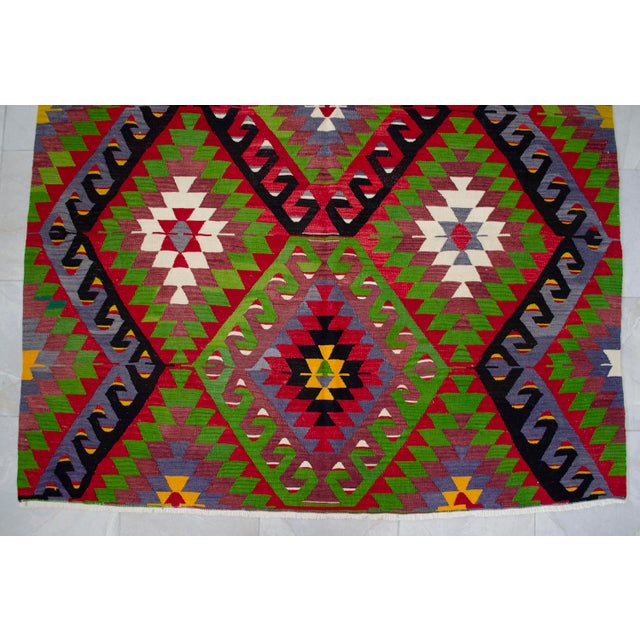
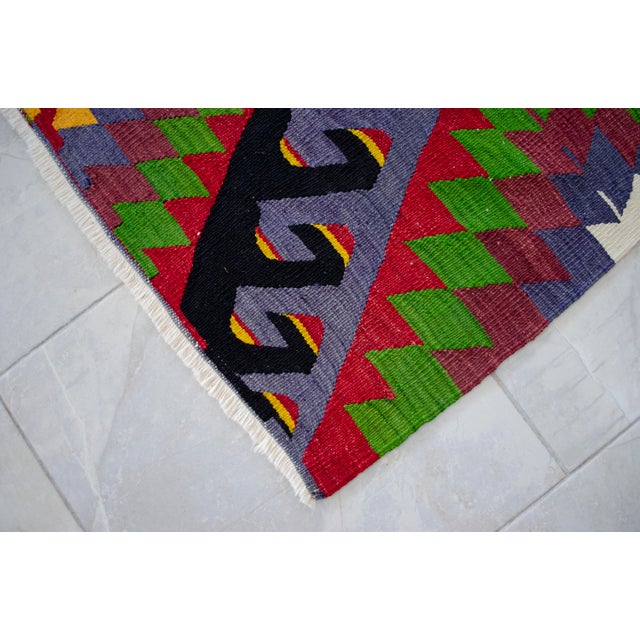
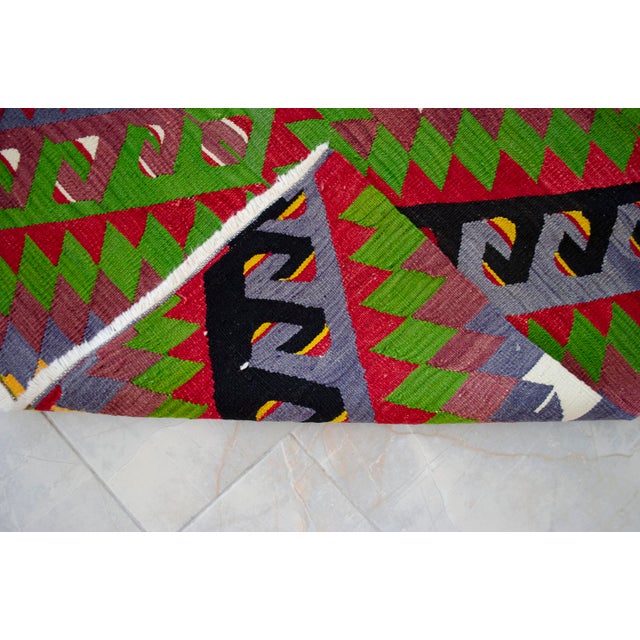
This kilim hits you immediately as powerful and intentional: tightly woven stepped diamond medallions repeat in a disciplined grid, framed by a bold hooked “ram’s horn” band at one end. The layout feels high-contrast and rhythmic, the work of a practiced village weaver, not factory production.
It was woven by Yoruk (nomadic/seminomadic) families from the Oushak for personal household use — not for export — using wool on cotton and natural dyes. According to the family, it’s roughly 60+ years old and was kept folded in storage rather than walked on, which is why the surface still reads crisp and the structure is strong.
Practical use today: this rug is an XL floor piece. It sits beautifully in a main living room, under a dining table, or in an open loft / studio where you want a single statement textile to define the space. Because it’s a flat weave, furniture sits level and chairs slide easily.
Condition is excellent vintage/unused: professionally cleaned, odorless, structurally sound. As with most true handwoven village kilims, it is not a machine-perfect rectangle, which is normal and part of the authenticity.
Technical Details
Measurements: 5 ft 10 in x 10 ft 2 in (177 x 310 cm)
Calculated Title Size Class: ~6x10 ft (XL room size)
Thickness / Pile Height: Flat / ~0.2 in
Weight: 21.4 lbs (9.7 kg)
Product Type: Area Rug – Kilim / Hand-woven flat weave
Region / Origin: Anatolia / Oushak / Eshme
Production Period / Age: 1970s (approx. 50+ years old)
Materials & Technique: wool on cotton
Dyeing Process: natural dyes
Condition: Vintage but unused in excellent condition; professionally cleaned; odorless; minor natural irregularities in shape due to hand-weaving
Suggested Use: large living room anchor, dining room rug, open studio
Weaving Subtype: flat-weave kilim
Motifs & Symbolism
The main field is built from rows of stepped diamond medallions, each constructed from sharply serrated edges. This repeating diamond vocabulary is common in Central Anatolian village weaving and is often associated with protection and watchfulness in Yoruk visual language. Along one full end of the kilim, you see a continuous running border of bold hooked elements that read like ram’s horns. That “ram’s horn” form (koçboynuzu) is a classic strength / vitality symbol in Turkish tribal weaving, traditionally linked to ideas of prosperity, pride, and household security.
Color Palette & Design Insight
Vibrant raspberry red and deep madder tones forming the dominant diamond outlines
Lively leaf green and lime accents layered through stepped geometric fields
Contrasting midnight black hooks and outlines sharpening the central motifs
Bands of indigo, denim blue, and lavender grey creating depth and rhythm across the edges
Golden yellow, mustard, and buttercream bursts enlivening the inner medallion
Because the colors come from natural dyes worked directly into hand-spun village wool, they don’t feel flat or printed — they have that subtle tonal drift you only get from real dyestuff, age, and time in storage. The contrast between the disciplined diamond repeat and the wilder ram’s-horn end panel gives the piece personality: one part organized grid, one part folkloric energy.
Color Disclaimer & Photography
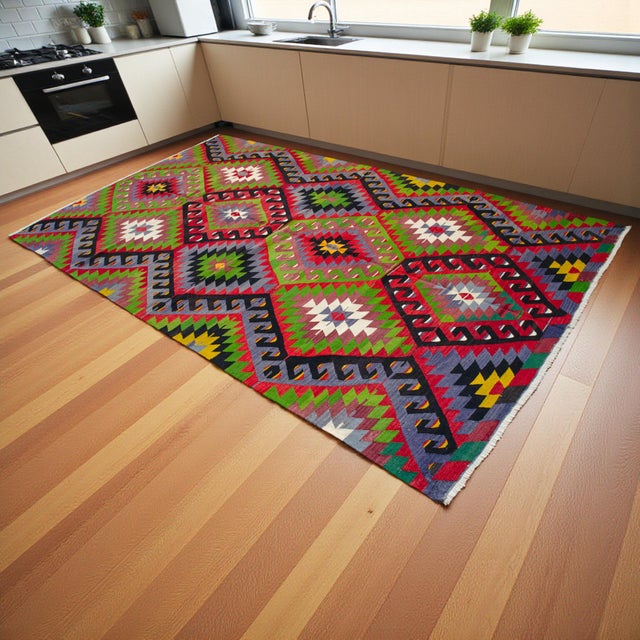
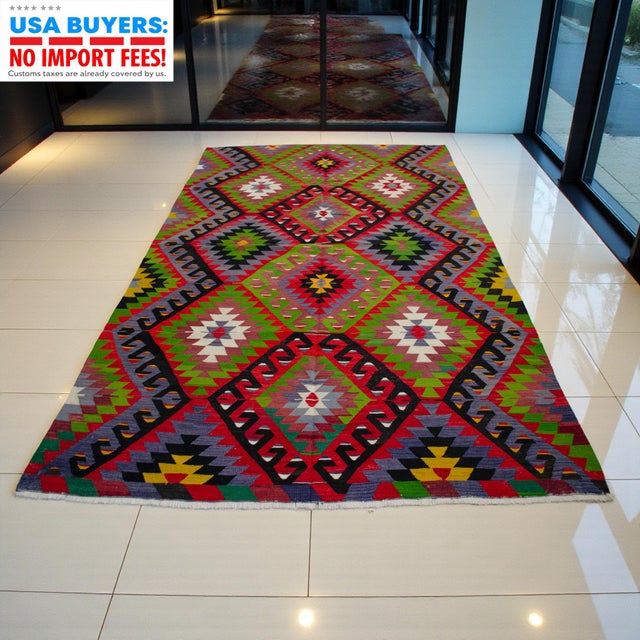
All images shown are real photographs of the actual rug you will receive, captured by us indoors under natural daylight conditions on a clean, hygienic floor in our physical showroom using a professional camera. We’ve done our very best to present the most accurate visuals possible. (Some interior or exterior lifestyle images you may see are AI-generated for styling purposes.) Please note that colors may vary from screen to screen, and therefore the tones you see on your device might appear slightly different from the rug’s true colors.
International Shipping
We ship all of our rugs via expedited, trackable carriers and take great care to package each item securely and carefully. Most shipments arrive in the buyer’s country within just a few days. However, please understand that customs clearance and courier delays are beyond our control, and we kindly ask for your patience should such situations occur.
Customs Notice
U.S. Buyers – Relax and Shop with Confidence: All customs duties and import taxes for U.S. shipments are fully covered by us.
Outside of U.S.A Buyers Please Note: a) Import duties, taxes, and charges are not included in the item price or shipping cost. These fees are the buyer’s responsibility. b) Please check with your country’s customs office before purchasing to determine what additional costs may apply.
What Is a Turkish Kilim?
A Turkish kilim is a traditional flat-woven textile made without a high wool pile. Instead of knotting wool strands up from a foundation (like in a piled carpet), the weaver interlocks colored weft yarns back and forth across a fixed warp. The result is a strong, flexible, reversible fabric that can be used on the floor, hung on a wall, draped over furniture, or even used historically as a household storage cover or bedding layer.
Unlike factory rugs, village kilims were usually woven for a specific family: a young bride’s dowry, a gift within the household, or a practical floor covering for a tent or village home. Motifs were not random decoration; they carried meaning. Diamonds, hooks, ram’s horns, and amulet-like forms can speak to wishes for protection, fertility, pride, and prosperity. Over decades, each region in Anatolia — Central Anatolia, the Mediterranean coast, the Aegean, Eastern highlands — developed its own rhythm of pattern and color choices.
This specific piece is Yoruk work from the Oushak Eshme. That matters. Yoruk weaving traditions come from mobile or semi-mobile pastoral life, where textiles functioned as architecture, insulation, identity, and storytelling. The fact that this kilim was woven in the 1970s using wool on wool, dyed naturally, and then carefully stored instead of being worn down by daily foot traffic is significant. You are not just buying floor decor. You are buying a surviving piece of Anatolian domestic culture — a textile that still carries the memory of the household that made it.
Search Terms
turkish kilim rug, vintage kilim, handwoven wool rug, anatolian rug, yoruk kilim, 1970s tribal rug, large area rug, xl floor rug, boho living room rug, dining room rug, turkish flat weave, geometric diamond kilim, collector textile, wool on wool kilim, central anatolia rug, eskisehir kilim, natural dyed rug, folk art weaving, authentic yoruk rug, nomadic tribal kilim, traditional turkish rug, hand loomed area rug, oversized kilim rug, flatweave area rug, bohemian floor rug
See less
- Dimensions
- 5′10″ × 10′2″ and 0.1″ thick
- Rug Construction
- Flatweave
- Pattern
- Diamond
- Period
- 1970s
- Country of Origin
- Turkey
- Item Type
- Vintage, Antique or Pre-owned
- Materials
- Cotton
- Wool
- Condition
- Good Condition, Original Condition Unaltered, Some Imperfections
- Color
- Kelly Green
- Condition Notes
- Vintage but unused in excellent condition; professionally cleaned; odorless; minor natural irregularities in shape due to hand-weaving Vintage but unused in excellent condition; professionally cleaned; odorless; minor natural irregularities in shape due to hand-weaving less
Questions about the item?
Returns & Cancellations
Return Policy - All sales are final 48 hours after delivery, unless otherwise specified in the description of the product.
Cancellation Policy - Prior to shipping or local pickup, buyers may cancel an order for up to 48 hours, unless otherwise specified.
Related Collections
- Seagrass Rugs
- Bamboo Fabric Rugs
- Cashmere Rugs
- Classical Greek Rugs
- Josef Albers Rugs
- Beaux-Arts Rugs
- Rugs in Chicago
- Moroccan Rugs
- Scandinavian Rugs
- Persian Rugs
- Rugs in New York
- Art Nouveau Rugs
- Spanish Rugs
- Rugs in Dallas
- Early American Rugs
- Rugs in Los Angeles
- Rugs in Washington DC
- Khotan Rugs
- Rugs in San Francisco
- Karastan Rugs
- Art Deco Rugs
- Chinese Rugs
- Rya Rugs
- Wool Rugs
- Rugs in Philadelphia