

Details
Description
Handwoven in Turkey in the early 1900s, this rare prayer rug embodies centuries of nomadic heritage and Seljuk symbolism. A …
Read more
Handwoven in Turkey in the early 1900s, this rare prayer rug embodies centuries of nomadic heritage and Seljuk symbolism. A deeply personal piece originally created for devotion or display, it now offers timeless character and cultural resonance for modern interiors.
Narrative Description
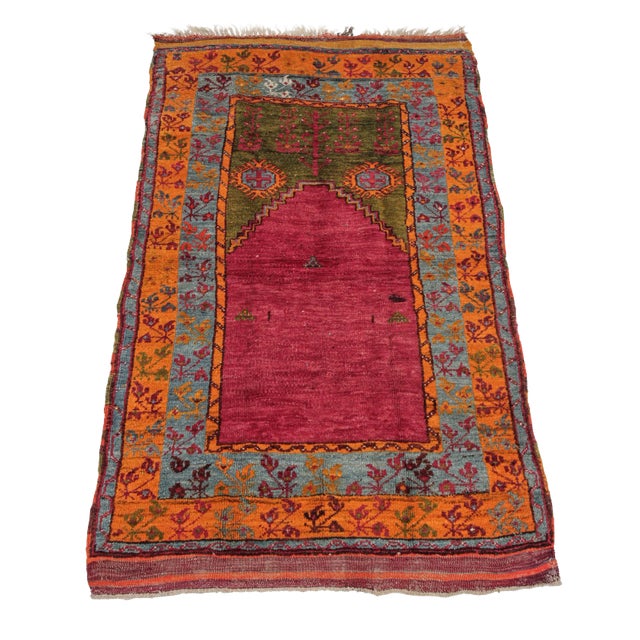
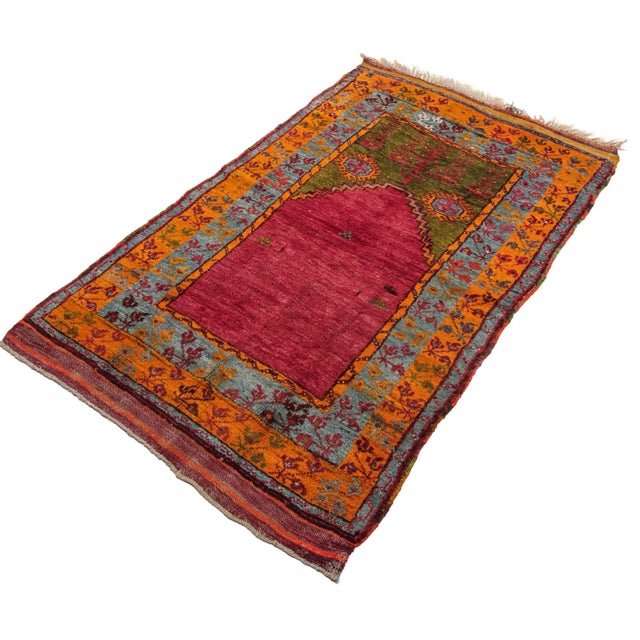
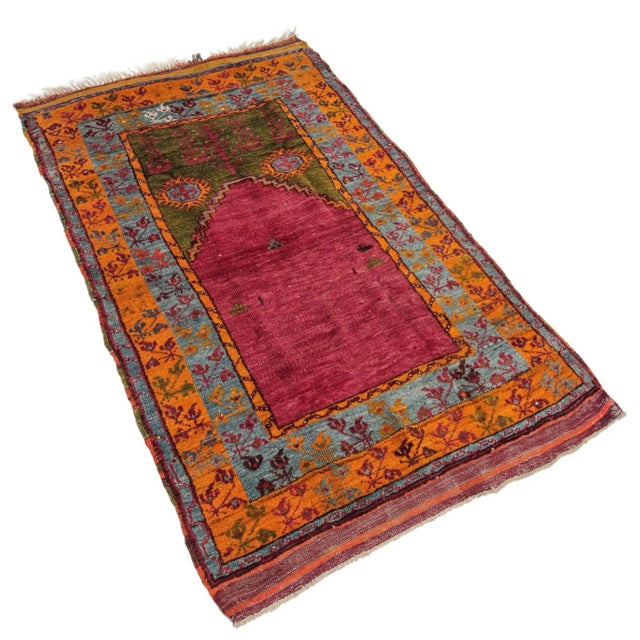
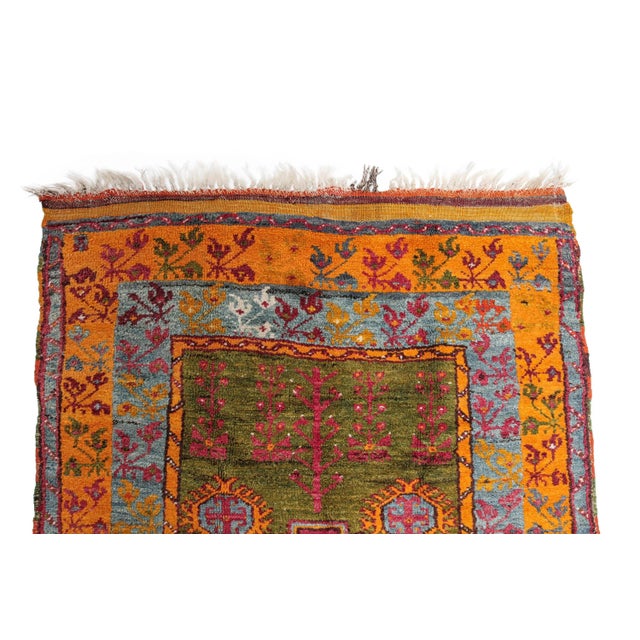
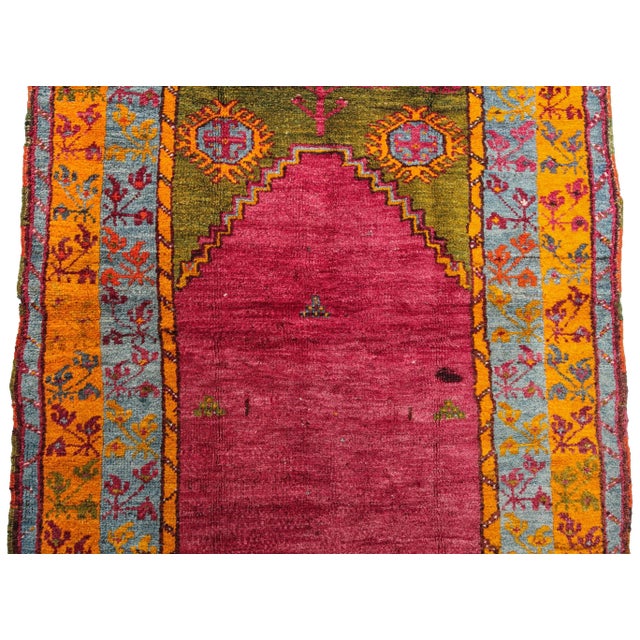
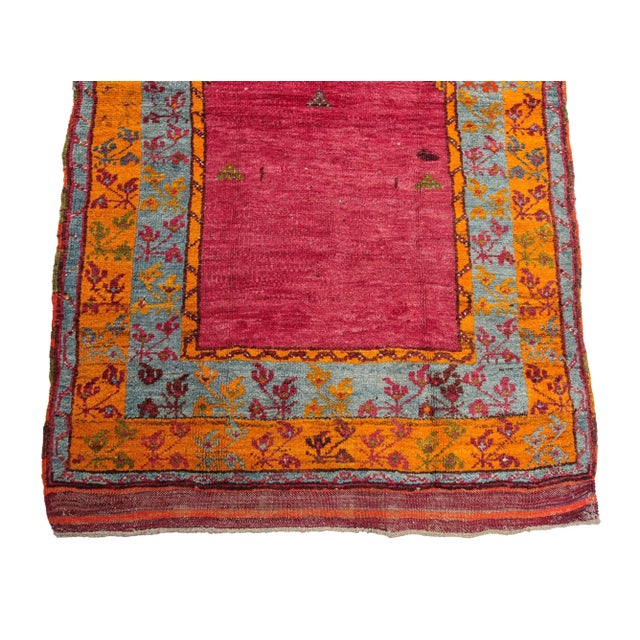
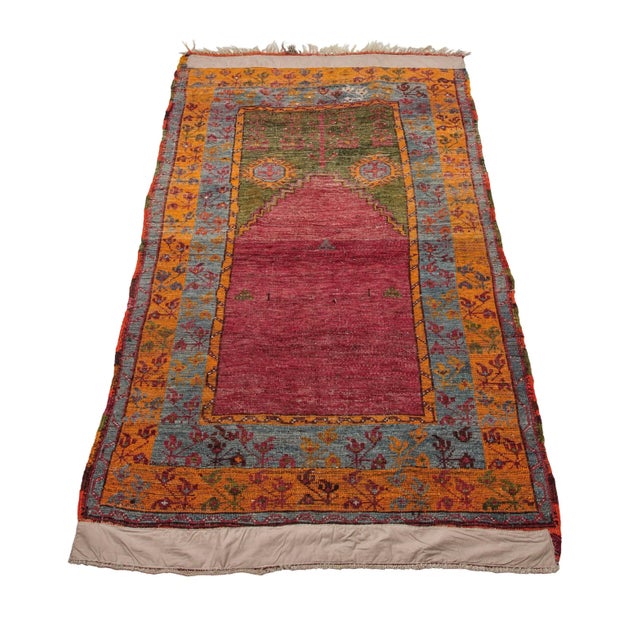
This rare early-20th-century Turkish prayer rug is a remarkable artifact of Anatolian weaving culture — a hand-knotted wool-on-wool piece created by Yoruk villagers in the Taurus region. It was woven not for commerce but for personal devotion, as evidenced by the worn foot area at the base of the mihrab, a trace of many prayers over generations.
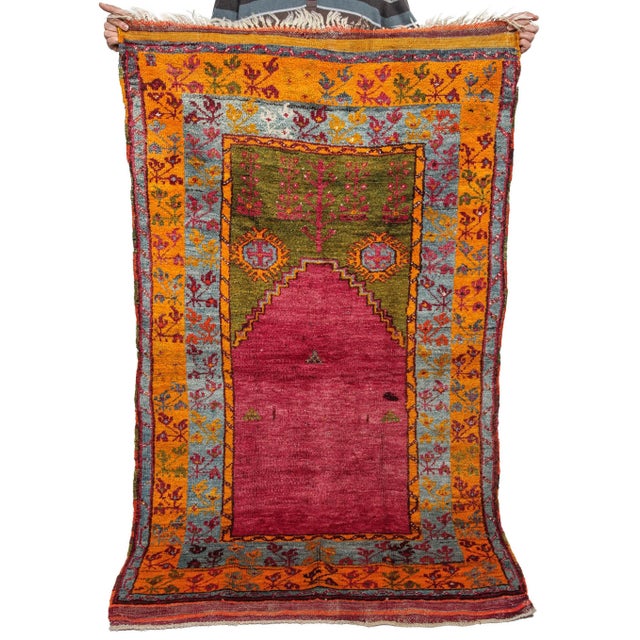
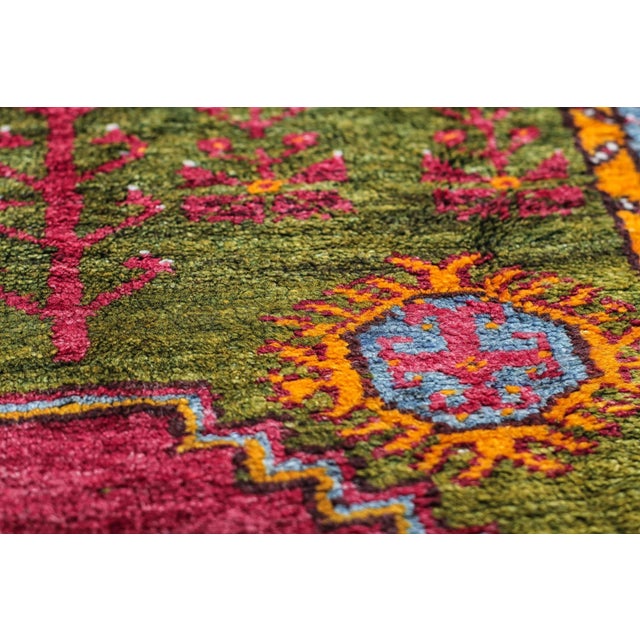
Its design reflects a convergence of spiritual tradition and historical influence. The stepped mihrab niche, framed by five stylized Tree-of-Life motifs, is exceptionally unusual — most rugs featuring this symbol depict a single central tree, but here a vertical row of five symbolizes continuity, growth, and connection between worlds. Above the niche, twin cross medallions reference the Christian influences present during the Seljuk period, creating a rare visual dialogue between faiths.
For today’s collector or designer, this piece transcends function to become a curatorial statement. It brings depth and narrative to modern interiors — anchoring a minimalist reading corner, layering beautifully beneath a console, or hanging as a textile artwork. More than a rug, it’s a living testament to Anatolia’s cultural mosaic and the enduring artistry of its nomadic weavers.
Technical Details
Design origin: Taurus Mountains, Anatolia (nomadic Yoruk style)
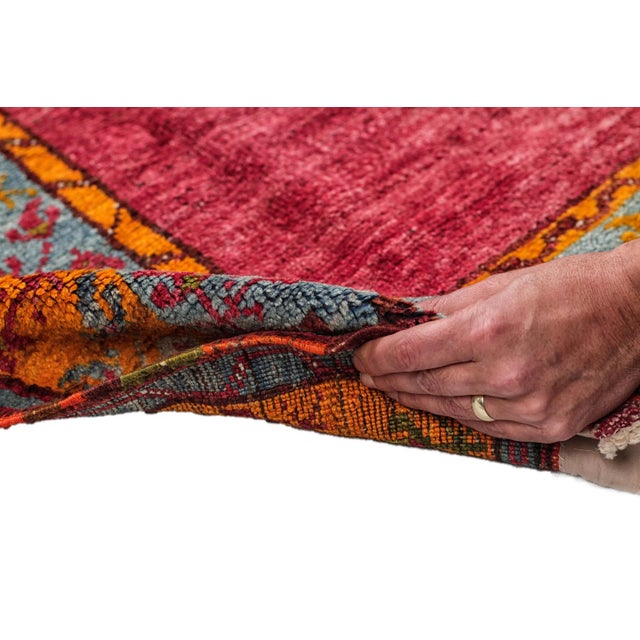
Construction: Hand-knotted pile rug
Materials: Wool on wool
Dyeing Process: Vegetable-dyed
Weaving subtype: Pile / hand-knotted
Measurements: 3′4″ × 5′8″ (102 × 172 cm)
Weight: 7.6 lbs (3.46 kg)
Pile height: ~0.25 in
Finishing: Ready for wall hanging (rear revisions completed)
Condition: Used, very good; professionally cleaned; odorless; no repairs
Recommended usage: Wall display, devotional space, collector’s textile
Care: Rug pad recommended; vacuum gently without beater bar; rotate periodically
Motifs & Symbolism
This rug’s symbolic language is rich and intentional. The five Tree-of-Life motifs represent the continuum of existence — roots in the past, branches reaching toward eternity. The stepped mihrab signifies a spiritual threshold, guiding the worshipper’s focus. Twin cross medallions, a rare element in Islamic prayer rugs, reveal traces of Anatolia’s pre-Islamic Christian past and the syncretic nature of Seljuk art. Together, these symbols weave a story of continuity, faith, and cultural exchange.
Color Palette & Design Insight
Crimson claret — grounds the design with timeless depth
Moss olive — adds organic richness and historical warmth
Amber ochre — frames the composition with vibrant contrast
Powdered steel blue — softens the palette and enhances layering
Maroon plum — enriches decorative detail with subtle depth
These tones lend themselves beautifully to curated interiors. In a minimalist loft, they introduce warmth and narrative. In a farmhouse setting, they echo heritage while adding a layer of artisanal texture. As a wall-hung textile, the palette reads like an antique painting, drawing the eye and anchoring the space.
Color Disclaimer & Photography
All images shown are real photographs of the actual rug you will receive, captured by us indoors under natural daylight conditions on a clean, hygienic floor in our physical showroom using a professional camera. We’ve done our very best to present the most accurate visuals possible. (Some interior or exterior lifestyle images you may see are AI-generated for styling purposes.) Please note that colors may vary from screen to screen, and therefore the tones you see on your device might appear slightly different from the rug’s true colors.
Shipping Information
We ship all rugs via expedited, trackable carriers and take great care to package each item securely and carefully. Most shipments arrive in just a few days. However, customs clearance and courier delays are beyond our control, and we kindly ask for your patience should such situations occur.
Customs Notice
U.S. Buyers – Relax and shop with confidence: All customs duties and import taxes for U.S. shipments are fully covered by us.
What Is a Turkish Rug?
Origins
Turkish rugs trace their lineage back over a millennium, from nomadic tents on the Central Asian steppes to the opulent courts of the Seljuk and Ottoman empires. Initially functional — insulating homes, dividing interior spaces, and serving as prayer mats — they evolved into highly expressive works of art, embodying the cultural diversity and historical depth of Anatolia.
Symbolism
Each motif in a Turkish rug carries meaning, transforming wool and dye into a woven narrative. The Elibelinde figure represents fertility and motherhood; the Ram’s Horn conveys strength and virility; and the Tree of Life symbolizes eternal connection between earth and heaven. These designs, often passed down through generations, are not merely decorative but deeply personal expressions of hope, faith, and identity.
Weaving Technique
Turkish rugs are renowned for their durability and complexity. Crafted on wooden looms, artisans knot individual tufts of wool onto a sturdy foundation, a process that can take months for even modest-sized pieces. Flat-woven kilims, prized for their versatility and lightweight character, contrast with pile rugs like this one, whose plush texture and depth make them ideal for warmth and ceremonial use.
Modern Relevance
Today, Turkish rugs seamlessly bridge past and present. Whether layered beneath a coffee table, anchoring an entryway, or hung as a wall tapestry, they infuse interiors with story, texture, and timeless beauty. Authentic handwoven pieces — like this early-1900s prayer rug — are more than décor: they are heirloom investments, tangible links to a living tradition.
Search Terms :
vintage prayer rug, Turkish prayer rug, Anatolian hand-knotted rug, early 1900s rug, antique collector rug, tree of life rug, Seljuk motif rug, devotional textile, wool on wool rug, nomadic Yoruk rug, wall hanging rug, antique Anatolian carpet, historical Turkish rug, handmade Turkish rug, farmhouse accent rug, rustic boho rug, heritage wool rug, Turkish cultural textile, rare collector piece, antique wall decor, small prayer carpet, early 20th century rug, vintage handwoven rug, timeless design rug, Turkish heritage rug
See less
- Dimensions
- 3′4″ × 5′8″ and 0.2″ thick
- Styles
- Traditional
- Turkish
- Pattern
- Other
- Rug Construction
- Hand Knotted
- Period
- Early 21st Century
- Country of Origin
- Turkey
- Item Type
- Vintage, Antique or Pre-owned
- Materials
- Wool
- Condition
- Good Condition, Original Condition Unaltered, Some Imperfections
- Color
- Maroon
- Condition Notes
- Excellent - Minor wear consistent with age and history Excellent - Minor wear consistent with age and history less
Questions about the item?
Returns & Cancellations
Return Policy - All sales are final 48 hours after delivery, unless otherwise specified in the description of the product.
Cancellation Policy - Prior to shipping or local pickup, buyers may cancel an order for up to 48 hours, unless otherwise specified.
Related Collections
- Bamboo Fabric Rugs
- Louis XVI Rugs
- Beaux-Arts Rugs
- Josef Albers Rugs
- Classical Roman Rugs
- Napoleon III Rugs
- Classical Greek Rugs
- Seagrass Rugs
- Rugs in New York
- Persian Rugs
- Rugs in Chicago
- Rugs in Los Angeles
- Scandinavian Rugs
- Art Deco Rugs
- Southwestern Rugs
- French Rugs
- Rugs in Philadelphia
- Wool Dragon Rugs
- Karastan Rugs
- Rugs in San Francisco
- Rugs in Washington DC
- Chinese Rugs
- Moroccan Rugs
- Art Nouveau Rugs
- Wool Rugs