

Details
Description
Howard G. Charing writes "The Shipibo-Conibo are an indigenous people people (currently numbering only about 20,000) who live along the …
Read more
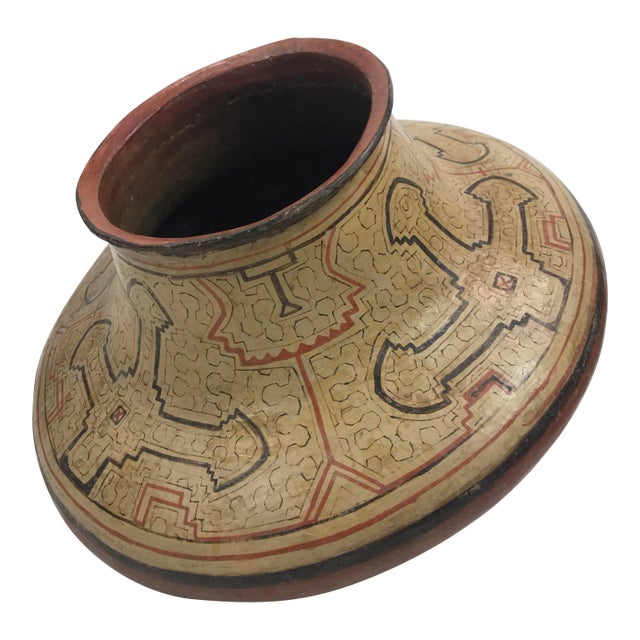
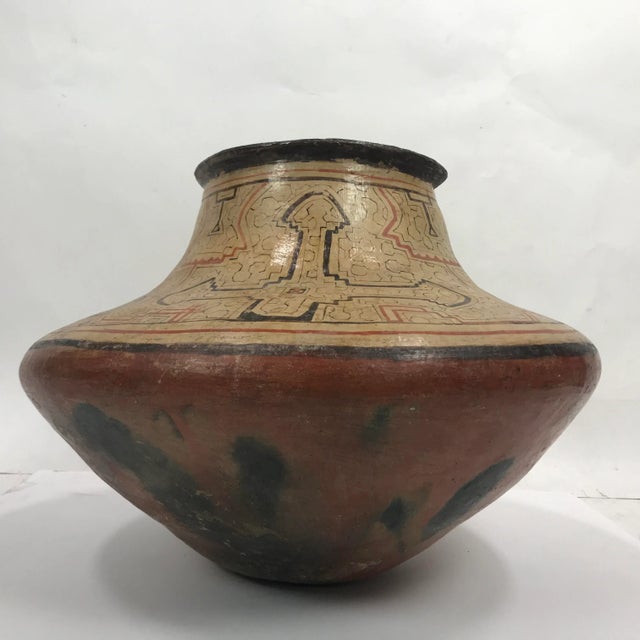
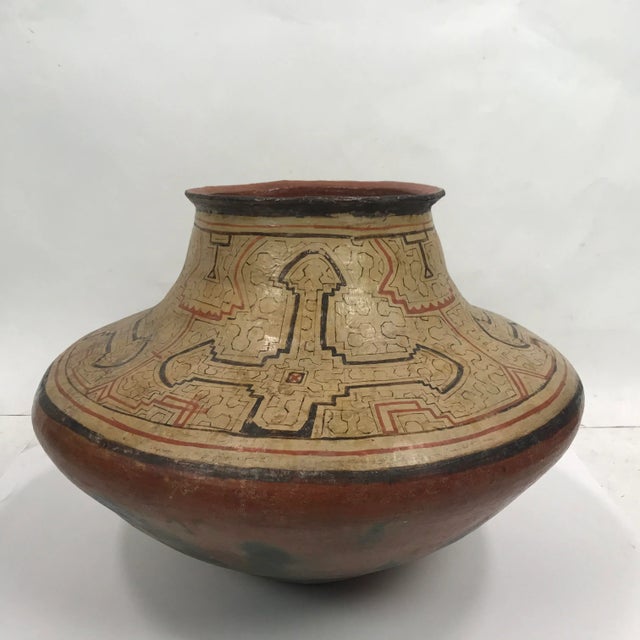
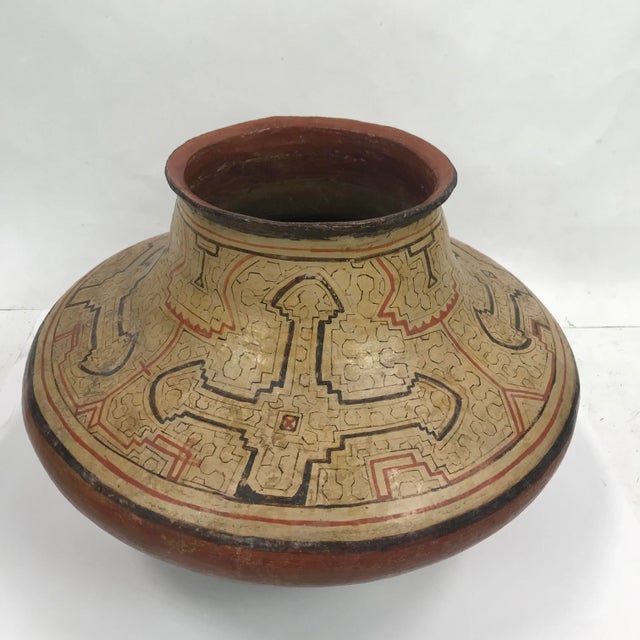
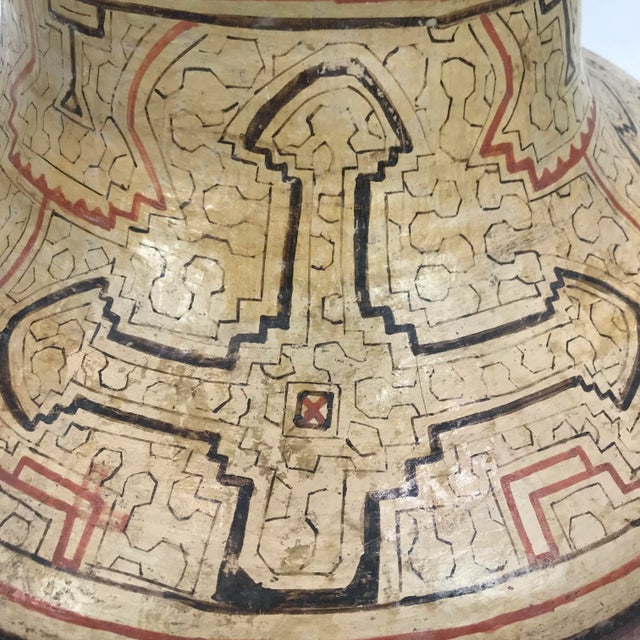
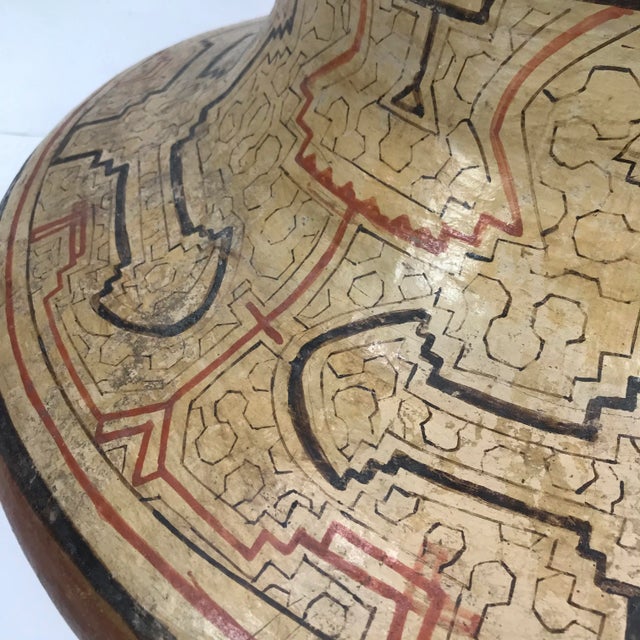
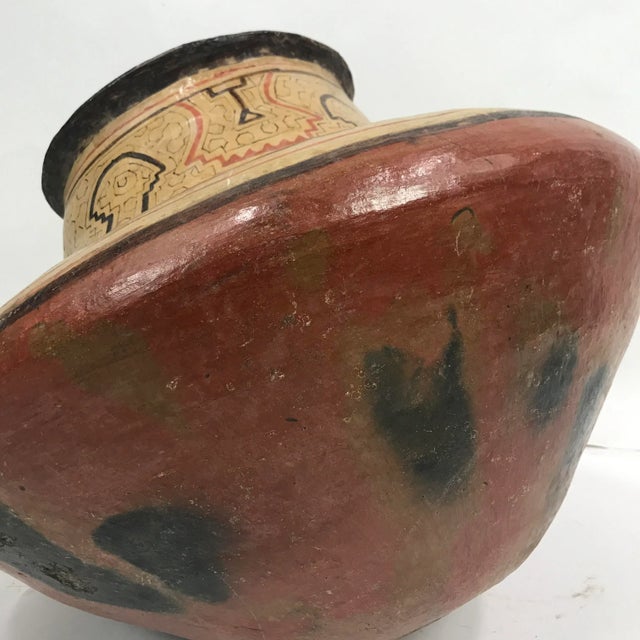
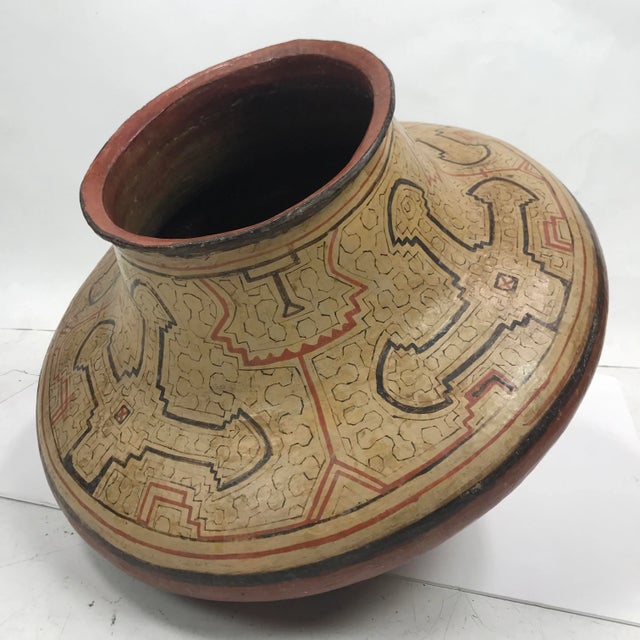
Howard G. Charing writes "The Shipibo-Conibo are an indigenous people people (currently numbering only about 20,000) who live along the Ucayali river in the Amazon basin east of the Andes. Though an increasing portion of the Shipibo population have become urbanized in settlements such as Pucallpa, their traditions remain strong. They are expressed in their shamanistic religion and in their visionary arts – notably in the patterns that the Shipibo women paint on their pottery, clothing, textiles and their bodies. The ethnologist Angelika Gebhart-Sayer terms their art “visual music”.
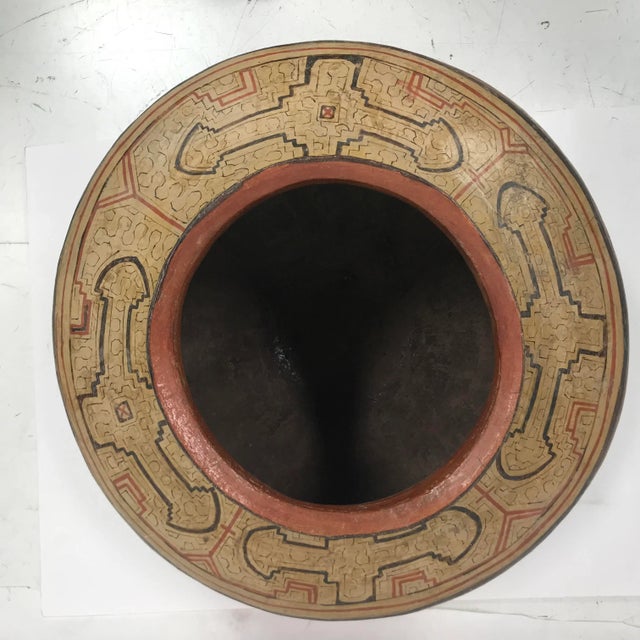
The Shipibo are known for labyrinthine geometric designs that reflect their culture and their cosmology. The main elements of the designs are the square, the rhombus, the octagon and the cross, which “represents the southern Cross constellation which dominates the night sky and divides the cosmos into four quadrants…”* Other symbols featured in the designs are the Cosmic Serpent, the Anaconda and various plant forms, notably the caapi vine used in the preparation of the sacramental drug Ayahuasca. There is an intriguing tie between the visual and aural in Shipibo art: “the Shipibo can listen to a song or chant by looking at the designs, and inversely paint a pattern by listening to a song…”
The designs are traditionally drawn with natural huito berry pigments on hand-woven cotton fabrics that are worn as wrap-around skirts. The fabric is either natural or dyed with a red-brown dye made from mahogany bark. Today most of the fabric is machine-woven, purchased from traders, and increasingly the hand-drawn designs are supplemented with patterns embroidered with bright-colored commercial yarns. The results can be stunning. The truly psychedelic color combinations are consistent with ayahuasca visions. More often than not the designs are asymmetrical within a border or frame – like a landscape viewed through an airplane window: “Although in our cultural paradigm we perceive that the geometric patterns are bound within the border of the textile or ceramic vessel, to the Shipibo the patterns extend far beyond these borders and permeate the entire world.”*
From an esteemed collection in Santa Fe.
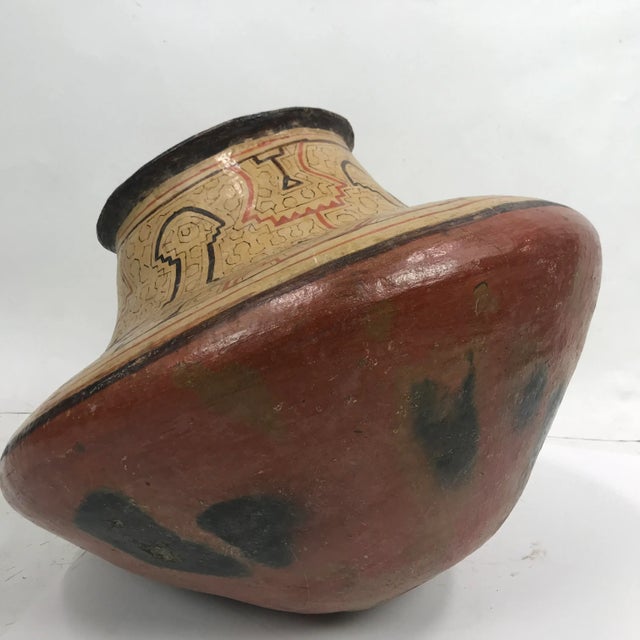
20" high x 28' wide x 28" deep
See less
- Dimensions
- 28ʺW × 28ʺD × 20ʺH
- Art Subjects
- Abstract
- Period
- 1900 - 1909
- Country of Origin
- Peru
- Item Type
- Vintage, Antique or Pre-owned
- Materials
- Clay
- Cotton
- Fabric
- Mahogany
- Paint
- Pottery
- Condition
- Good Condition, Original Condition Unaltered, Some Imperfections
- Color
- Tan
- Condition Notes
- Excellent condition. No chips to rim. Excellent condition. No chips to rim. less
Questions about the item?
Returns & Cancellations
Return Policy - All sales are final 48 hours after delivery, unless otherwise specified in the description of the product.
Cancellation Policy - Prior to shipping or local pickup, buyers may cancel an order for up to 48 hours, unless otherwise specified.
Related Collections
- Straw Sculpture
- Constantin Brancusi Sculpture
- Louis XIV Sculpture
- Fernando Botero Sculpture
- Bakelite Sculpture
- Albert Ernest Carrier-Belleuse Sculpture
- Polished Brass Finish Sculpture
- Sculpture in Panama City, FL
- Recycled/Repurposed Sculpture
- Worlds Away Sculpture
- Flavio Poli Sculpture
- Witco Sculpture
- Barovier and Toso Sculpture
- Sculpture in Columbus
- Bentwood Sculpture
- Far Pavilions Sculpture
- Georgian Sculpture
- Maison Jansen Sculpture
- Magenta Sculpture
- Antique Iron Finish Sculpture
- Photography Sculpture
- Gold-Plate Sculpture
- Austin Productions Sculpture
- Alabaster Sculpture
- Mid-Century Modern Sculpture