

Details
Description
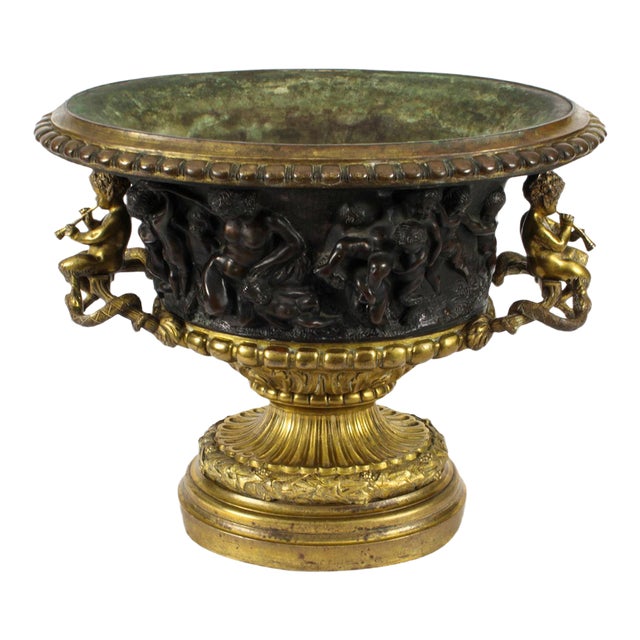
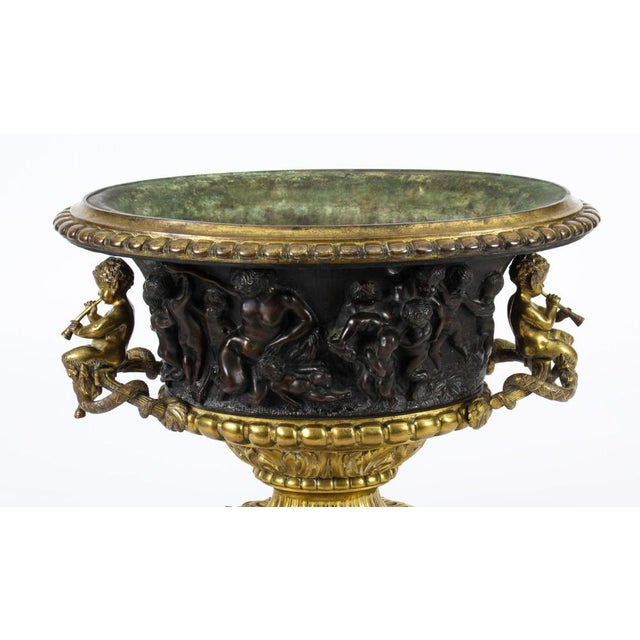
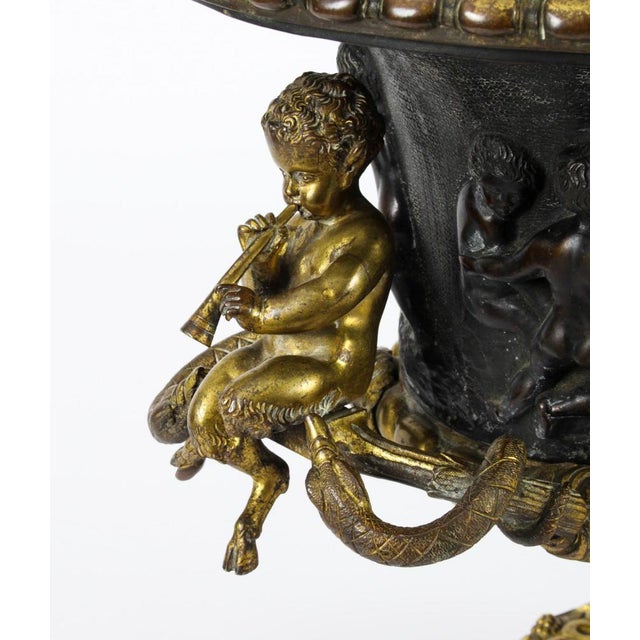
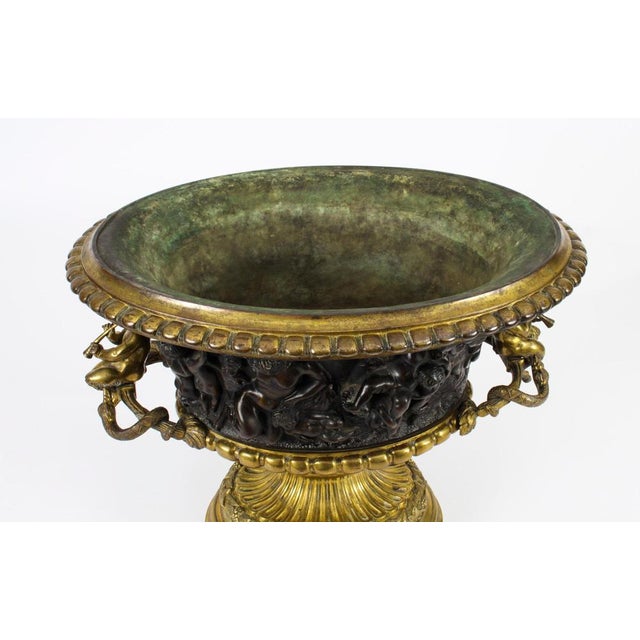
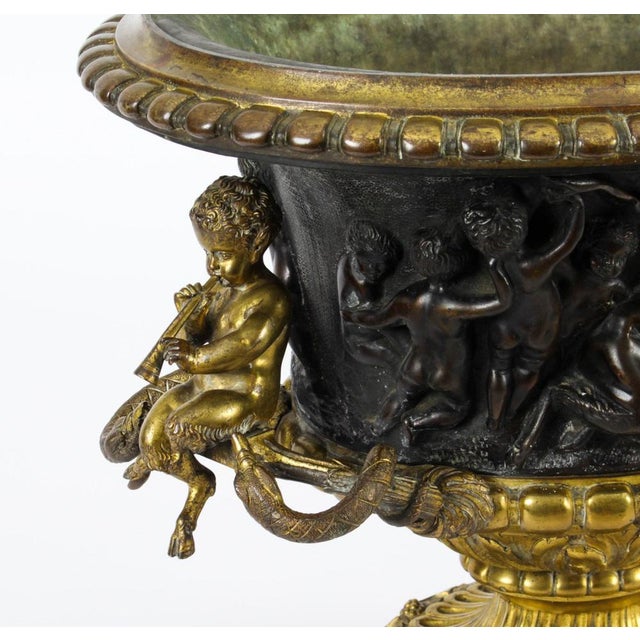
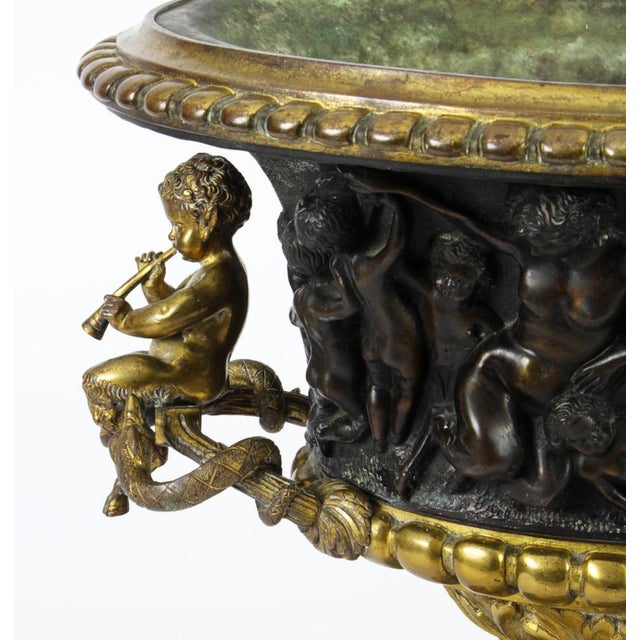
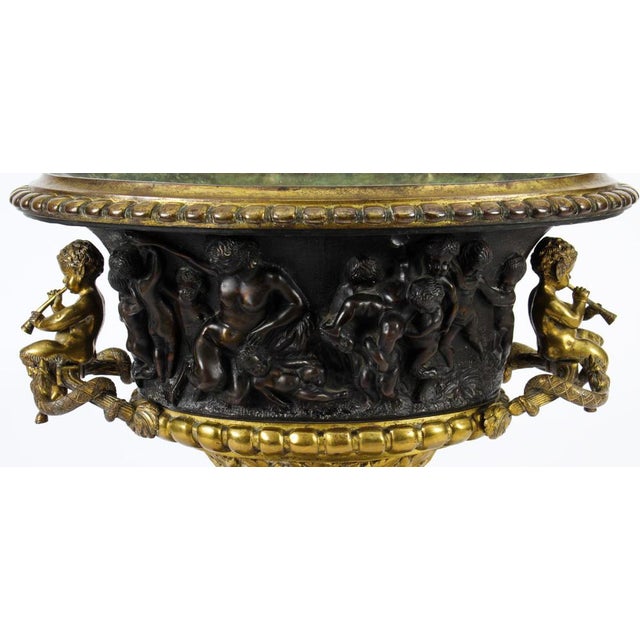
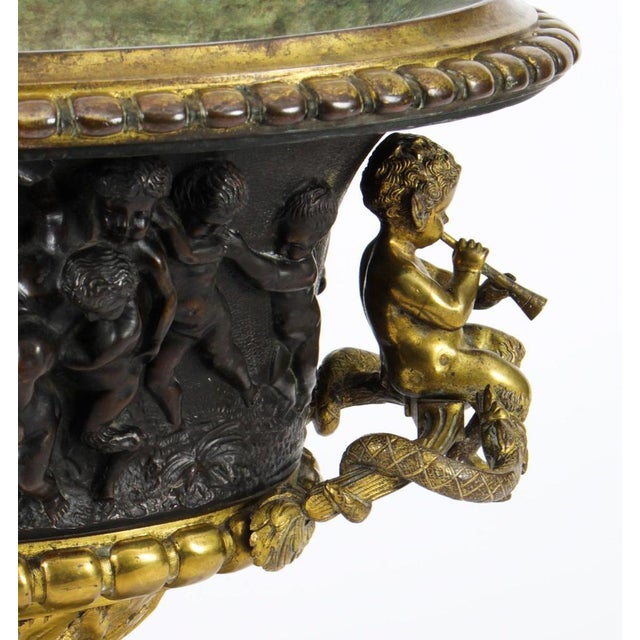
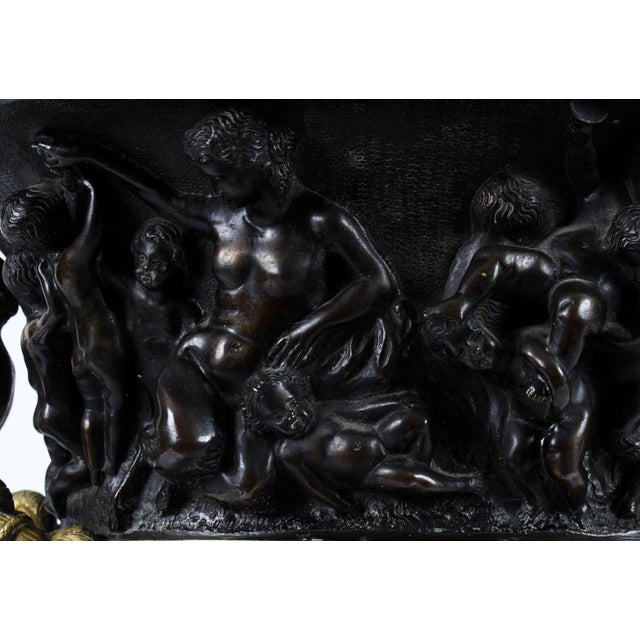
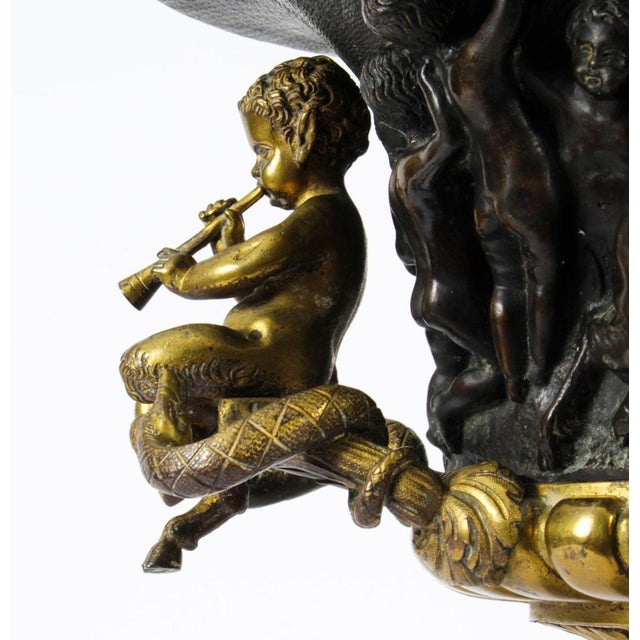
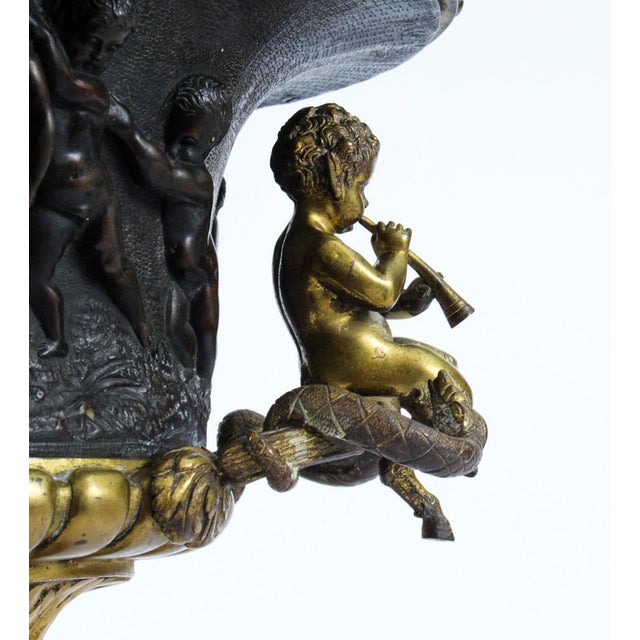
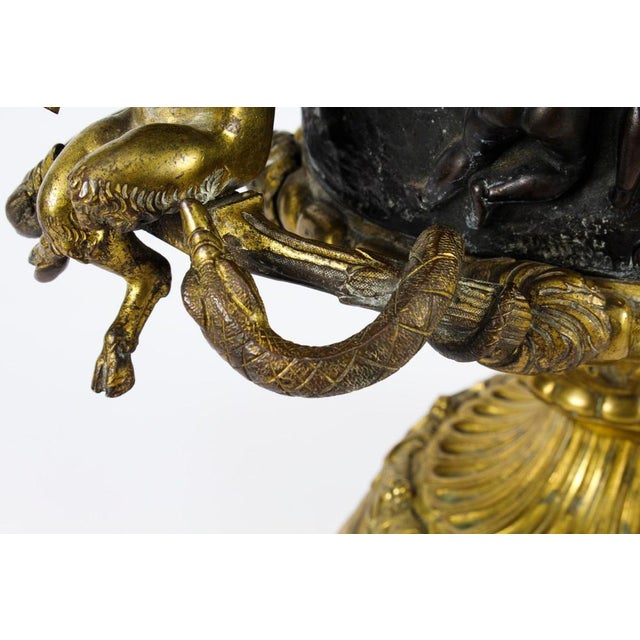
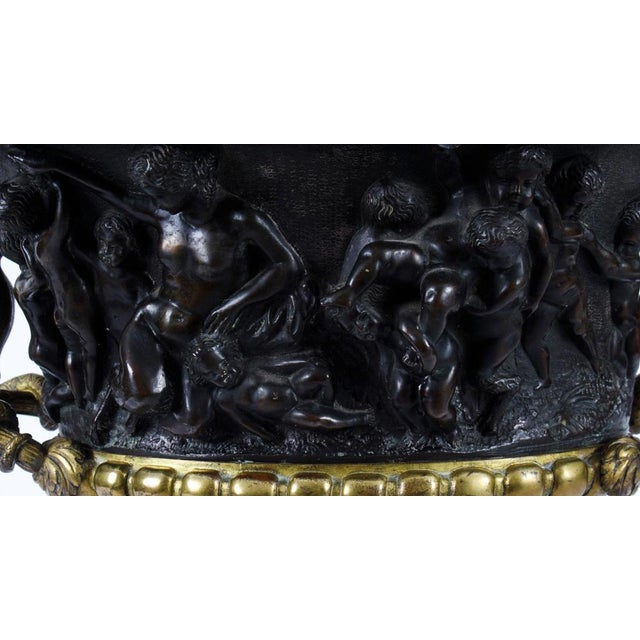
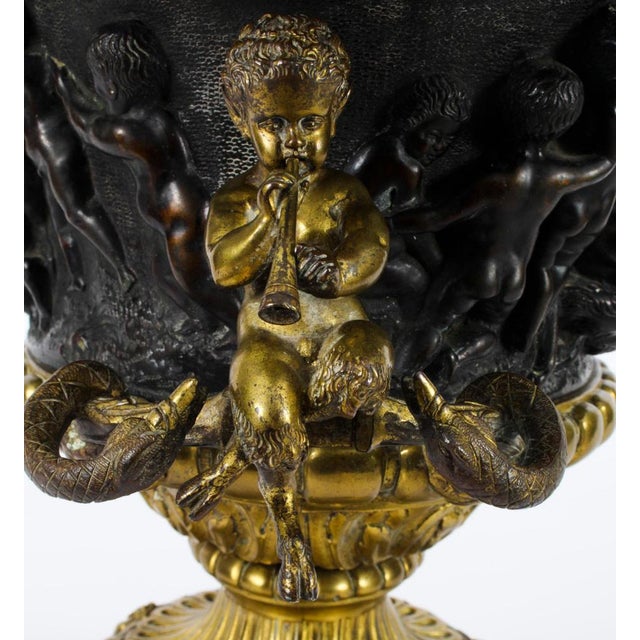
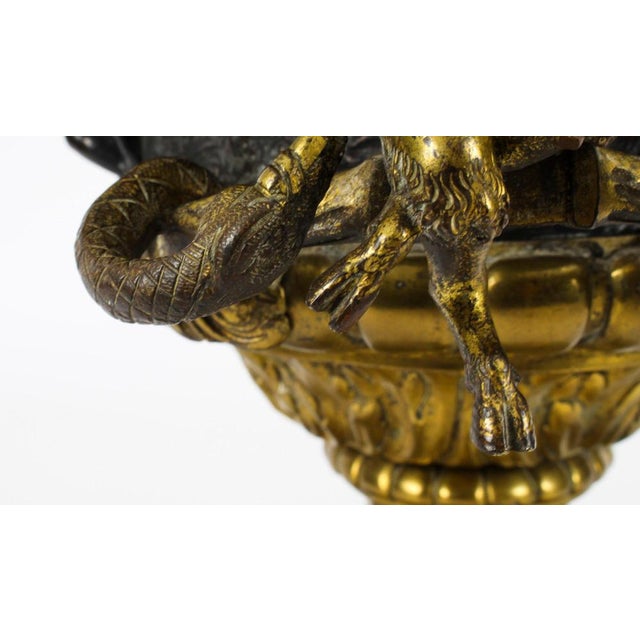
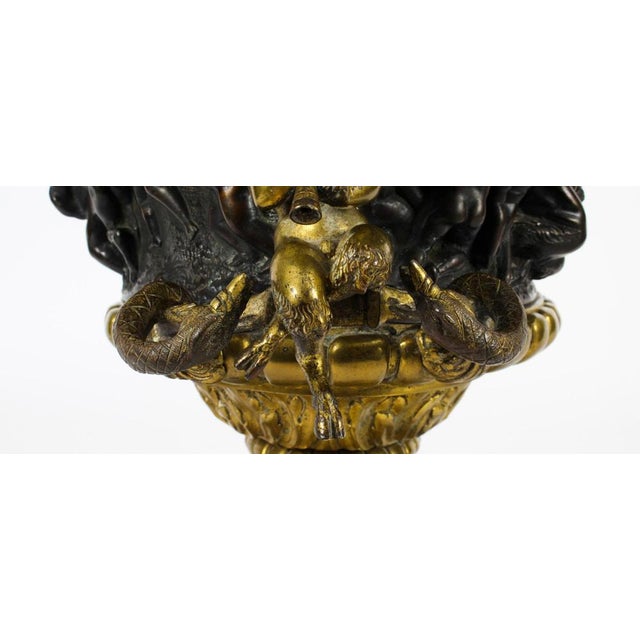
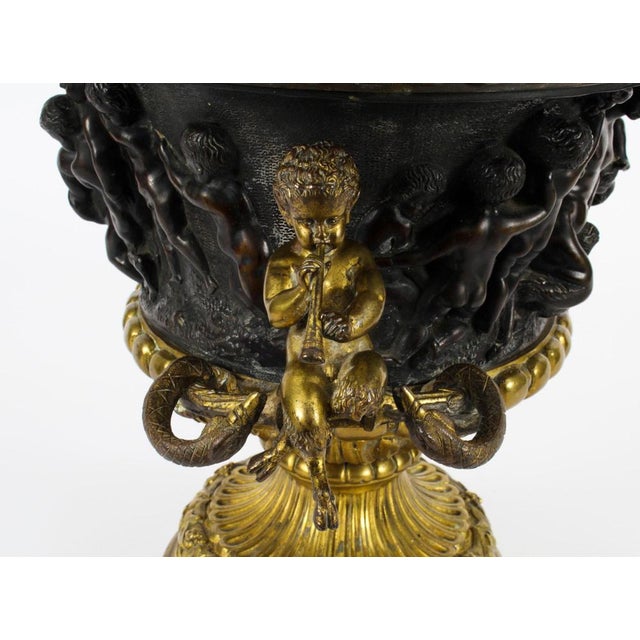
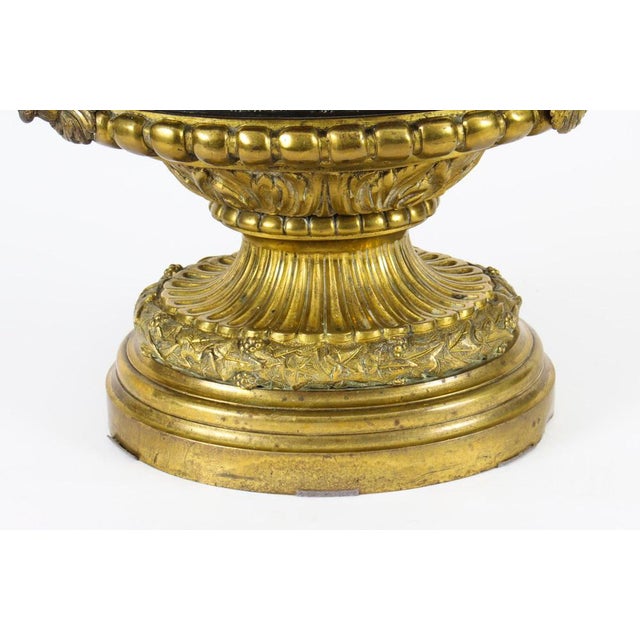
This is a beautiful large antique French Grand Tour dark patinated bronze and ormolu jardiniere, Circa 1830 in date. This … Read more This is a beautiful large antique French Grand Tour dark patinated bronze and ormolu jardiniere, Circa 1830 in date. This stunning bronze is superbly cast and has an elegant brown patina. The jardiniere features a beaded rim, bifurcated vinestock handles with ormolu cherubs blowing trumpets and a body cast with frolicking cherubs. It is raised on an oval ormolu base with laurel leaf decoration, retains the original liner and weighs just under 20 kgs ( 44lbs). The attention to detail throughout this piece is second to none and this high quality bronze is made from the lost wax process 'cire perdue'. Provenance: Property from The Manor House, Stanford in the Vale Condition: In excellent condition. As an antique item its show minor signs of use commensurate with age, these minor condition issues are mentioned for accuracy and, as seen in the accompanying photographs, the jardiniere displays beautifully. Dimensions in cm: Height 36 x width 46 x depth 34 Weight 19.55 kg Dimensions in inches: Height 1 foot, 2 inches x width 1 foot, 6 inches x depth 1 foot, 1 inch Weight 43.1 lbs The Manor House, Stanford in the Vale A simply sublime country home with a fascinating history. One of Oxfordshire’s finest country residences, The Manor House enjoys a prominent setting in the idyllic village of Stanford-in-The-Vale, nestled at the foot of the ancient Ridgeway and surrounded by farmland and open countryside. As you would expect from a property of this age, The Manor House has a glorious and fascinating past. There has been a manor at Stanford in the Vale since the 11th Century. The current Manor House dates from the 15th Century and was remodelled in the early 18th Century in a Georgian style. In 1474, Anne Beauchamp, 16th Countess of Warwick, conferred all her estates on her two daughters. Stanford was among those she passed to Anne Neville who later became Queen Consort to King Richard III. It is thought that the neighbouring church of St Denys may have been the site of their wedding as the South Porch, built in the 1470’s, bears the arms of York and Warwick. Ormolu - Gilt Bronze (from French 'or moulu', signifying ground or pounded gold) is an 18th-century English term for applying finely ground, high-carat gold in a mercury amalgam to an object of bronze.The mercury is driven off in a kiln leaving behind a gold-coloured veneer known as 'gilt bronze'. The manufacture of true ormolu employs a process known as mercury-gilding or fire-gilding, in which a solution of nitrate of mercury is applied to a piece of copper, brass, or bronze, followed by the application of an amalgam of gold and mercury. The item was then exposed to extreme heat until the mercury burned off and the gold remained, adhered to the metal object. After around 1830 because legislation had outlawed the use of mercury other techniques were used instead. Electroplating is the most common modern technique. Ormolu techniques are essentially the same as those used on silver, to produce silver-gilt\. See less
- Dimensions
- 18.11ʺW × 13.39ʺD × 14.17ʺH
- Country of Origin
- France
- Item Type
- Vintage, Antique or Pre-owned
- Materials
- Bronze
- Condition
- Unknown, Some Imperfections
- Color
- Black
- Condition Notes
- Very Good — This vintage item has no defects, but it may show slight traces of use. Very Good — This vintage item has no defects, but it may show slight traces of use. less
Returns & Cancellations
Return Policy - All sales are final 48 hours after delivery, unless otherwise specified in the description of the product.
Related Collections
- Danish Modern Cachepot
- Anglo-Indian Cachepot
- Bunny Williams Home Cachepot
- Almond Cachepot
- Manufacture de Sevres Cachepot
- Steel Cachepot
- Chinoiserie Cachepot
- Metal Cachepot
- Chinese Cachepot
- Brass Cachepot
- Cornflower Blue Cachepot
- Wrought Iron Cachepot
- Turkish Cachepot
- Pewter Cachepot
- Forest Green Cachepot
- Leather Cachepot
- Persian Cachepot
- British Colonial Cachepot
- Kenneth Ludwig Chicago Cachepot
- Herend Cachepot
- Cachepot in Cleveland
- Richard Ginori Cachepot
- Faux Bamboo Cachepot